

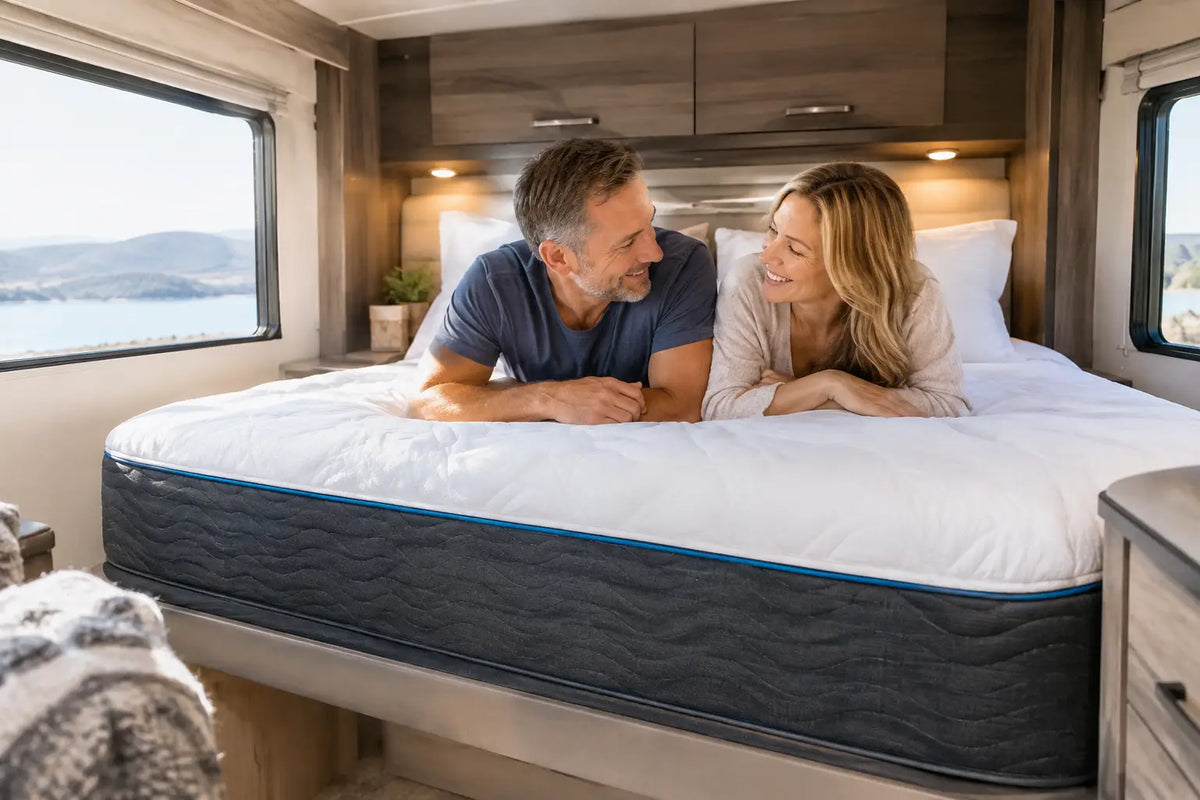
A couple upgraded their fifth wheel mattress after one too many mornings of waking up tired, stiff, and ready to blame the campground. The real problem was sitting under their sheets: a thin factory mattress that trapped heat, bottomed out at the hips, and transferred every turn from one sleeper to the other. Their fifth wheel was built for long stays and big miles. Their mattress was not.
For couples, an RV mattress upgrade is rarely about wanting something softer. It is about getting consistent, restorative sleep in a space where every inch matters. A good replacement needs to fit the platform correctly, support two different body types, manage heat in a compact bedroom, and stay comfortable after months of travel. That is a higher standard than simply finding a mattress with the same label on it.
What Changed When This Couple Upgraded Their Fifth Wheel Mattress
The first improvement was not subtle: neither partner felt the other getting in or out of bed. Many stock fifth wheel mattresses use basic foam with little structure. It compresses quickly, especially where two adults sleep night after night. When one person moves, the whole sleep surface reacts.
A better construction changes that equation. Pocketed coils move independently, so pressure stays more localized instead of rippling across the bed. Layered foam can add contouring at the shoulders and hips, while a stronger support core keeps the pelvis from sinking too far. For a couple with different sleep schedules, that motion isolation can be the difference between waking up at 5 a.m. and sleeping through a partner's early departure.
They also noticed a meaningful change in temperature. Fifth wheel bedrooms can run warm, particularly when the bed sits against an exterior wall or above storage. Standard foam often holds onto body heat. A mattress designed with cooling materials and more breathable construction helps prevent the familiar cycle of waking up hot, throwing off the covers, then getting cold an hour later.
The upgrade did not turn their RV into a larger bedroom. It made the bedroom they already had work harder.
Start With the Actual Mattress Platform, Not the RV Label
The most expensive mistake in RV mattress shopping is ordering based on the name printed in a brochure. “RV king” and “RV queen” are useful starting points, but they are not guarantees. Fifth wheel floor plans vary, and a previous owner may have already replaced the original mattress or altered the platform.
Before choosing a mattress, remove the bedding and measure the sleeping surface itself. Measure width and length at the platform, then check the available height around slide-outs, closets, overhead cabinets, and bedroom doors. A mattress that technically fits the platform can still create an annoying daily problem if it blocks a cabinet, rubs a slide, or makes it difficult to make the bed.
Write down four measurements before placing an order:
- Mattress width and length
- Maximum usable mattress height
- Bed platform shape, including rounded corners or cutouts
- Clearance at nearby cabinets, slides, and doors
Choose Support for Two Sleepers, Not One Showroom Test
A mattress can feel great for five minutes and still fail after a week of travel. Couples should think about support over a full night, not just initial softness. The key question is whether the mattress keeps each sleeper aligned while reducing pressure at the shoulders, lower back, and hips.
Side sleepers usually need enough pressure relief to avoid numb arms and sore shoulders. Back sleepers often need steadier lumbar support so the midsection does not sag. Stomach sleepers generally need a flatter, more supportive feel. When partners have different preferences, the answer is not automatically the softest or firmest option. It is usually a balanced mattress with responsive support beneath comfort layers.
This is where zoned pocketed coils are valuable. Stronger support through the center of the mattress can help prevent the heavier midsection from dropping too deeply, while more adaptive areas at the shoulders and legs improve comfort. For couples, that structure is more useful than a generic foam slab that feels plush at first but softens unevenly over time.
A thicker mattress is not always better, either. Height can improve cushioning and support, but fifth wheel clearance is real. The right mattress is the thickest, most capable model that fits the RV bedroom without creating access issues.
Cooling Matters More in a Fifth Wheel Bedroom
Heat can make an otherwise comfortable mattress feel like a bad purchase. RV bedrooms are smaller than most residential rooms, have less air circulation around the bed, and may receive direct sun on one side of the coach. Add two sleepers, layered bedding, and a warm climate, and a heat-retaining mattress becomes a nightly problem.
Look for cooling that is built into the mattress rather than relying entirely on a fan or breathable sheets. Conductive cooling materials can help pull heat away from the body, while gel memory foam and coil systems allow more airflow than dense, conventional foam. The goal is not to make the mattress cold. It is to help it stop holding the heat that causes restless sleep.
For couples, cooling also protects comfort over the long haul. One sleeper who runs hot should not have to compromise with a mattress that leaves both partners tossing and turning. If you routinely wake up sweaty despite reasonable indoor temperatures, cooling should be a core buying requirement, not an optional feature.
Do Not Ignore Edge Support and Mattress Stability
In a fifth wheel, couples often sit on the edge of the bed to dress, put on shoes, or reach into a nearby cabinet. Weak edges make that daily routine uncomfortable. They also reduce usable sleep space, which matters on narrower RV beds.
A stable perimeter keeps the mattress from feeling like it collapses when you sit or sleep near the edge. Better edge support is particularly helpful when one partner needs more room, when a dog claims a corner, or when getting in and out of bed requires a little extra leverage. It is a small feature until you live with a mattress that does not have it.
Stability also matters while traveling. A well-made RV mattress should retain its shape and perform consistently after repeated movement, changes in climate, and extended use. Buying a mattress designed specifically for RV life gives couples a better chance of avoiding early sagging and uneven wear.
Give the Upgrade a Fair Trial
The first night on a new mattress may feel dramatically better, but the body can still need time to adjust. This is especially true if the old mattress had been sagging or forcing you into poor alignment for years. Give the new setup several weeks with your normal pillows and bedding before making a final judgment.
Use that period to notice specific changes. Are you waking up less often? Is lower-back stiffness reduced? Does one person move without disturbing the other? Are you sleeping cooler toward morning? Those are better indicators than whether the mattress felt familiar on day one.
A 365-night satisfaction guarantee gives couples room to evaluate their purchase through real conditions: summer heat, cold-weather bedding, weekend trips, and longer stays. That matters because an RV mattress is not a decorative upgrade. It is the foundation of how you recover between driving days, hikes, family visits, and everything else that makes RV travel worth doing.
Polar RV Mattress builds RV-specific options around the priorities factory mattresses routinely miss: proper fit, cooling, pressure relief, motion isolation, and serious support. The best choice still depends on your dimensions, sleep positions, and available clearance, but the standard should stay the same. You should not have to accept poor sleep just because your bedroom has wheels.
Before your next trip, pull back the sheets, measure the platform, and be honest about what is waking you up. A fifth wheel should give you the freedom to travel farther, not another reason to dread bedtime.
Share:
RV Mattress Versus Home Mattress Differences
RV Hybrid Review: Is It Worth the Upgrade?