

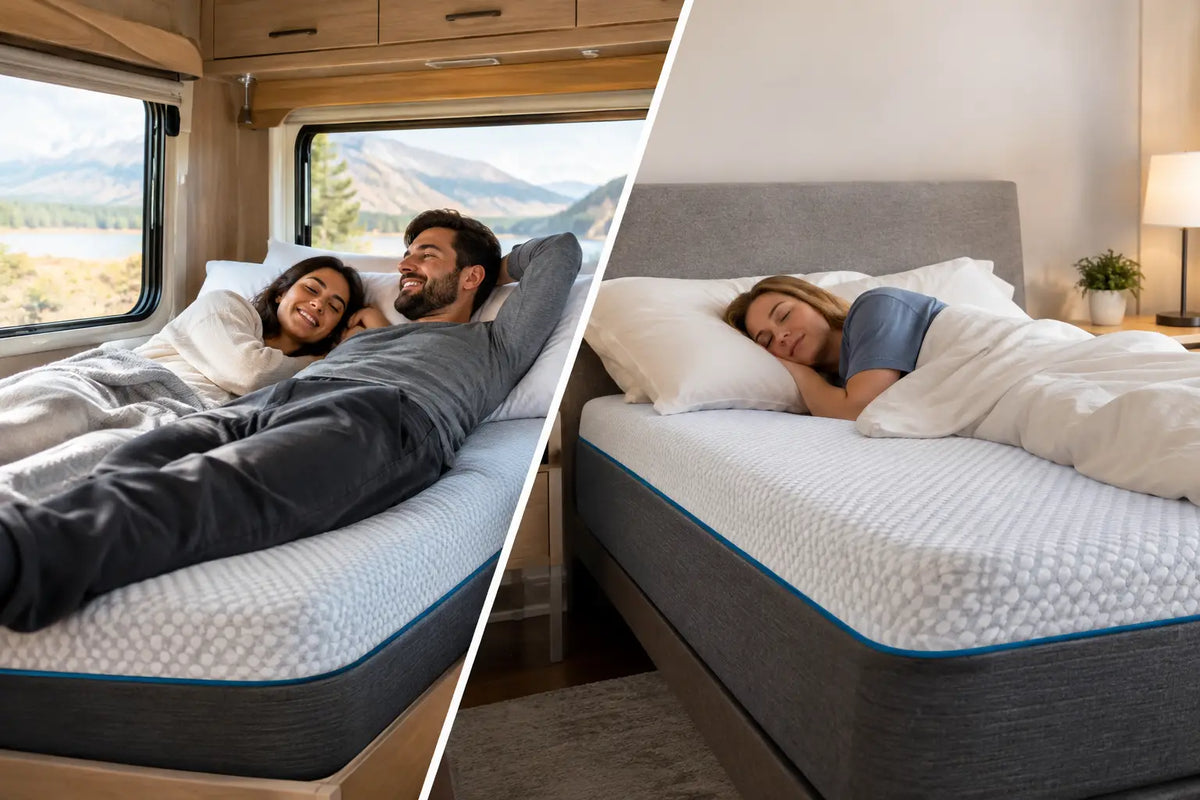
A mattress that feels perfect in a stationary bedroom can become a daily frustration when it is squeezed into an RV platform, blocks a cabinet, or adds more weight than your rig can comfortably carry. The RV mattress versus home mattress decision is not simply about where you sleep. It is about getting residential-level comfort in a space with nonstandard dimensions, tighter clearances, changing temperatures, and life on the move.
For occasional campers, a home mattress may be a workable shortcut. For full-time RVers, long-haul travelers, and anyone replacing a thin factory bed, an RV-specific mattress is usually the smarter long-term investment. Here is what separates the two and how to choose without guessing.
RV Mattress Versus Home Mattress: The Fit Difference
The first issue is the one most shoppers discover too late: a mattress label does not guarantee a standard size. A residential queen is typically 60 by 80 inches. An RV queen may be 60 by 74, 75, or 80 inches, depending on the floor plan. RV kings, short queens, three-quarter beds, and bunk mattresses can vary even more.
That six-inch difference matters. A mattress that is too long can press into a wall, cover access to storage, interfere with a slide-out, or force you to bend the corners. A mattress that is too narrow can shift on the platform and leave uncomfortable gaps. Neither is acceptable when the goal is quality sleep.
Before comparing comfort layers, measure the actual sleeping platform. Measure the width and length at the base, then check for rounded corners, wheel-well cutouts, cabinets, ladders, and headboard clearance. Also measure the opening through which the mattress must pass. A king-size mattress might fit the bed frame but still be difficult to maneuver through a narrow RV door or hallway.
An RV mattress is built around these realities. It is available in RV-specific dimensions and can be designed to flex, compress for shipping, and install more easily in a confined space. A home mattress is built around residential frames, standard bedrooms, and wide access points.
Thickness Is Not Just a Comfort Preference
Many home mattresses are 12 to 16 inches thick, especially premium hybrid and pillow-top models. That height can be excellent in a house, where bed frames, nightstands, and sheets are designed around conventional dimensions. In an RV, an overly tall mattress can create a new set of problems.
It may sit above a window line, make it harder to climb into an elevated bed, reduce headroom in a bunk, or prevent an overhead cabinet from opening. It can also make fitted sheets difficult to secure, particularly on a corner bed with limited access on one side.
That does not mean an RV mattress has to be thin. It means the height should work with the rig. A well-built 10- to 12-inch RV mattress can deliver serious pressure relief, support, and cooling without overwhelming the space. The right profile depends on your platform height, how much clearance you have, and whether you need to lift the mattress to reach under-bed storage.
Factory RV mattresses are often thin because manufacturers prioritize cost and space. Replacing one with another thin foam pad rarely solves the underlying sleep problem. Look for a purpose-built mattress with meaningful comfort layers and a support system that holds its shape night after night.
Weight Matters More in a Moving Home
A home mattress stays in one room for years. An RV mattress travels over highways, around corners, through elevation changes, and across campsites. Every pound counts toward cargo capacity, especially once you add water, gear, food, tools, and passengers.
A heavier residential mattress is not automatically better, but it can create unnecessary load. Large traditional innerspring beds, dense all-foam mattresses, and thick pillow tops may be difficult to carry into the RV and cumbersome to remove later. If the bed lifts for storage, excessive mattress weight also makes that storage far less useful.
The best RV mattress balances substantial materials with practical weight. Pocketed coils can provide targeted support and motion isolation without the flat, bouncy feel of basic open-coil construction. High-quality foams can relieve pressure without requiring an excessively thick, heavy design. The goal is not the lightest mattress available. It is a mattress that performs like a real bed while respecting the limits of a mobile space.
Support Has to Work on an RV Platform
Residential mattresses are often paired with a box spring, foundation, slatted frame, or adjustable base. RV mattresses typically sit on plywood, a lift-up platform, closely spaced slats, or a built-in pedestal. That foundation changes how a mattress feels and performs.
A mattress designed for a proper support system may feel firmer on solid plywood or may retain more heat because airflow beneath it is limited. On the other hand, a weak foam mattress can bottom out quickly when placed directly on a hard RV platform. You may wake with shoulder pressure, hip pain, or lower-back stiffness even if the mattress seemed acceptable during a quick test.
This is where construction becomes more than marketing language. Zoned support can provide firmer reinforcement through the lumbar area while allowing more give at the shoulders. Pocketed coils respond independently, helping reduce partner disturbance when one person gets up early or shifts positions. Gel memory foam and responsive comfort foam can cushion joints while keeping the body from sinking too deeply.
For side sleepers, pressure relief at the shoulder and hip deserves special attention. Back and stomach sleepers usually need stronger midsection support to prevent the hips from dropping. Couples need both, along with reliable motion isolation. A good RV mattress should not make you choose between comfort and alignment.
Cooling Is Harder Inside an RV
RVs heat up and cool down faster than houses. Afternoon sun on one side of the coach, a warm overnight parking spot, limited airflow, and a running furnace can all affect sleep temperature. That makes a heat-trapping mattress especially noticeable.
Basic polyurethane foam, common in stock RV beds, tends to retain body heat and compress quickly. Traditional memory foam can also sleep warm when it lacks breathable design and temperature-regulating materials. A home mattress may offer cooling features, but those features are not useful if the bed does not fit or creates clearance problems in your RV.
For warm sleepers, prioritize a mattress that combines airflow and conductive cooling. Breathable covers, ventilated foam, gel-infused layers, and coil-based support systems can help move heat away from the body instead of trapping it around the hips and shoulders. Cooling does not replace climate control, but it can make a major difference when the air conditioner cycles off or the campsite temperature stays high.
When a Home Mattress Can Make Sense
There are situations where a home mattress is a reasonable choice. If your RV has a true 60-by-80-inch queen platform, plenty of overhead room, a wide entry, and enough cargo capacity, a residential queen may fit. This is most common in larger fifth wheels and destination trailers with more house-like layouts.
It can also work if you already own a newer mattress that matches the platform exactly and you only use the RV a few weekends each year. Even then, check the warranty guidance, weight, ventilation needs, and whether the mattress can withstand being moved through the RV.
The trade-off is convenience versus certainty. A residential mattress may save time if the fit is exact. An RV mattress removes more variables: size, height, maneuverability, platform performance, and the specialized needs of sleeping in a moving home.
How to Choose the Right RV Mattress
Start with fit, then narrow by sleep style and construction. Record your exact platform dimensions instead of relying on the name printed in the RV brochure. Determine your maximum mattress height, especially near cabinets, windows, slides, and bunk ceilings. Finally, consider the platform beneath it and the practical weight you are comfortable adding.
Then focus on the sleep issues you want to fix. If you wake hot, make cooling materials a priority. If your back hurts after travel days, choose stronger support with pressure-relieving comfort layers. If your partner’s movement wakes you, look for individually responsive coils or dense motion-absorbing foam. If you are upgrading from a stock mattress, avoid replacing it with another low-density foam slab that will sag before the season is over.
Polar RV Mattress is built for this exact decision, with RV-specific sizing and premium constructions designed around cooling, pressure relief, motion isolation, and dependable support. More importantly, a serious RV mattress should give you time to assess it in your own rig, on your own platform, during real nights of sleep.
Your RV is where you recover between drives, hikes, family visits, and long days outside. Measure carefully, choose construction that matches how you sleep, and give the bed the same standard you would expect at home. The next great campsite feels better after a genuinely restful night.

Share:
Why RV Edge Support Matters for Better Sleep
How a Couple Upgraded Their Fifth Wheel Mattress