

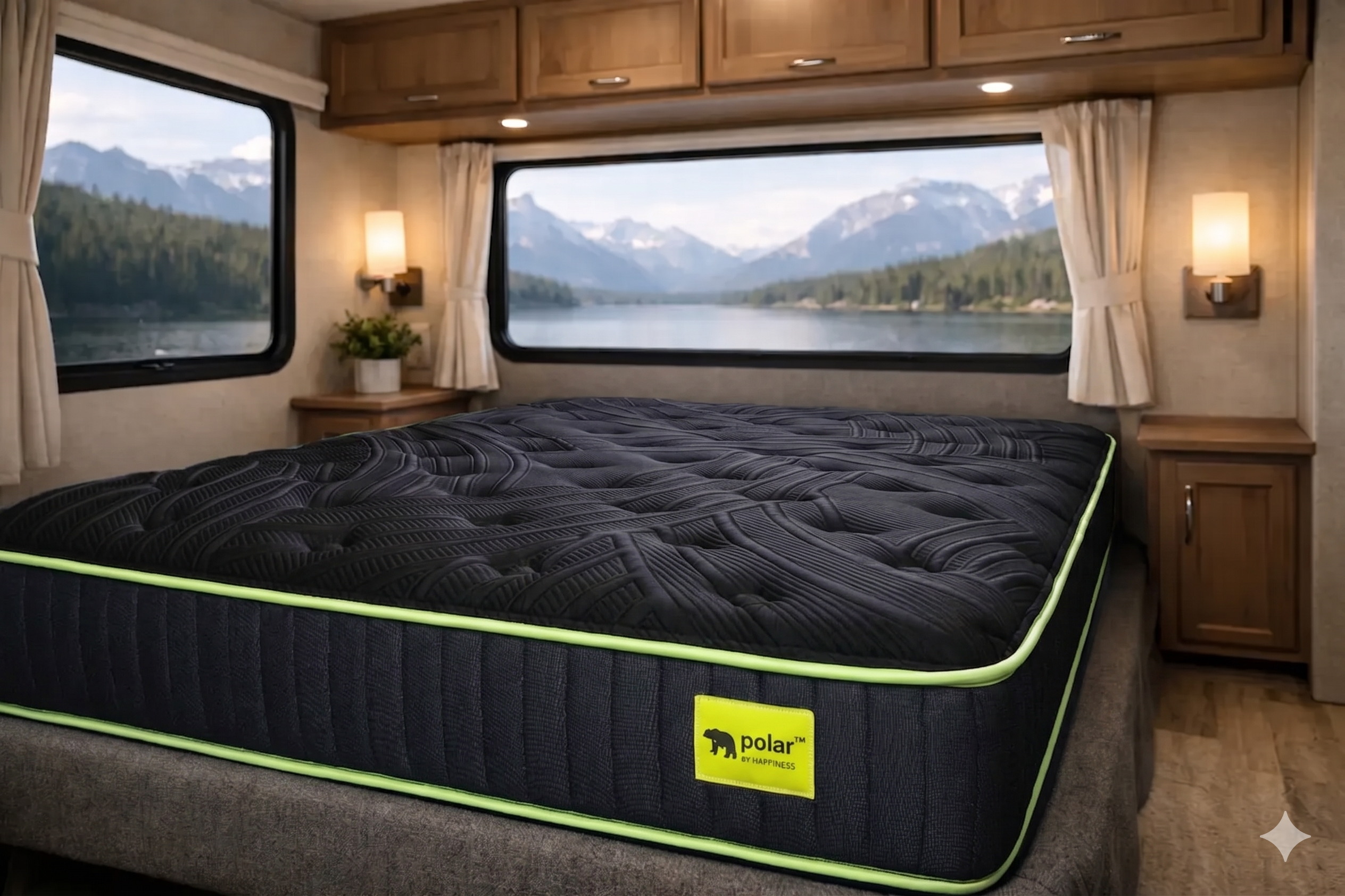
If your current RV bed feels too narrow, too hot, or too flimsy by the second night of a trip, a 66 x 80 RV Olympic queen mattress is often the fix people wish they had made sooner. This size gives you more width than a standard RV queen without jumping all the way to a king, which makes it one of the smartest upgrades for couples who want real sleep in a compact RV bedroom.
The catch is simple: size alone does not solve bad sleep. A mattress can be the right dimensions and still leave you dealing with pressure points, sagging, motion transfer, and overheating. In an RV, where factory mattresses are often built to meet a price point rather than a comfort standard, those issues show up fast.
Why a 66 x 80 RV Olympic Queen Mattress Matters
A 66 x 80 RV Olympic queen mattress gives you six extra inches of width compared with a standard 60 x 80 queen. That may not sound dramatic on paper, but in practice it can make a meaningful difference for couples, especially if one or both sleepers change positions often or simply want a little more personal space.
For many RV owners, this size hits the sweet spot. It offers a roomier sleep surface without demanding the footprint of an RV king. If your floor plan allows it, the extra width can make the bedroom feel far more livable at night while still preserving walk-around space, cabinet clearance, or access to storage.
That said, this size is only useful if your RV platform is actually designed for it. A close-enough fit is usually not close enough in an RV. Tight corners, side walls, bed lifts, and slide clearances can turn a sizing mistake into a daily headache.

Before You Buy, Confirm the Fit
This is where many shoppers get burned. They assume that because the listing says Olympic queen, it will work in any RV with a slightly oversized queen platform. Not necessarily.
Measure the sleeping platform itself, not just the old mattress. Then measure the usable space around it. In RVs, the right width and length can still fail if the mattress is too tall for overhead cabinetry, too rigid for a hinged platform, or too bulky to get through the door and around interior turns.
A few details matter more than people expect. Corner shape is one. Some RV beds have radius corners or cut corners to improve walkway clearance. Mattress height is another. A taller mattress can feel more luxurious, but if it blocks a nightstand, crowds the slide, or hits a cabinet when you sit up, it becomes a poor fit no matter how comfortable the materials are.
What Makes a Good RV Mattress Different
A serious RV mattress should not just be a residential mattress cut to a smaller size. RV sleep comes with different demands. Weight matters more. Temperature swings are more noticeable. Support problems show up faster when the foundation below the mattress is thinner or less forgiving.
The best options are built for mobile living while still delivering the comfort people expect at home. That means support that holds up under regular use, pressure relief that works for shoulders and hips, and cooling features that do more than sound good in a product description.
For most RV owners shopping this size, the core priorities come down to four things: correct fit, strong support, temperature control, and motion isolation.
Choosing Comfort and Support in a 66 x 80 RV Olympic Queen Mattress
If you wake up with lower back tightness, numb shoulders, or sore hips, the problem is usually not just firmness. It is support design.
A mattress that is too soft can let the midsection dip out of alignment. A mattress that is too firm can create pressure points and force restless sleep. The better approach is balanced construction, where the support layer keeps your body aligned and the comfort layers reduce pressure without swallowing you.
For couples, zoned support can be especially useful. It adds more reinforcement through heavier areas like the hips and lower back while allowing more give around the shoulders. That matters in RVs because thinner, cheaper mattresses tend to compress unevenly and lose support quickly.
If one partner moves a lot, a hybrid design with quality foam over pocketed coils usually performs better than a basic innerspring. You get more stability, better contouring, and less disturbance across the mattress surface. That is a major upgrade from the light, bouncy mattresses many RVs come with from the factory.

Cooling Should Be a Real Feature, Not a Marketing Word
A lot of RV owners shop for comfort and overlook temperature until they spend a humid night trapped in heat. That is a mistake.
RVs hold heat differently than houses. Depending on the season and your setup, your bedroom can warm up fast, and traditional memory foam tends to make that worse. If you already sleep warm, cooling is not a luxury feature. It is part of basic sleep performance.
Look for materials that actively address heat buildup, such as conductive cooling fabric, gel-infused foams, or breathable coil systems that allow more airflow through the mattress. These features can make a measurable difference compared with solid foam beds that trap heat around the body.
Cooling does involve trade-offs. Ultra-plush foam can feel great at first touch, but if airflow is poor, it may sleep warmer. On the other hand, a coil-based design usually feels more breathable and easier to move on. The right choice depends on whether your top priority is deep contouring, cooler sleep, or a balance of both.
Foam, Hybrid, or Coil-on-Coil?
This is where your sleep style should drive the decision.
All-foam mattresses can work well for sleepers who want strong pressure relief and a quieter, more cushioned feel. They are also easier to compress for shipping. But not all foams are equal, and lower-grade foam is one of the quickest ways to end up with body impressions and trapped heat.
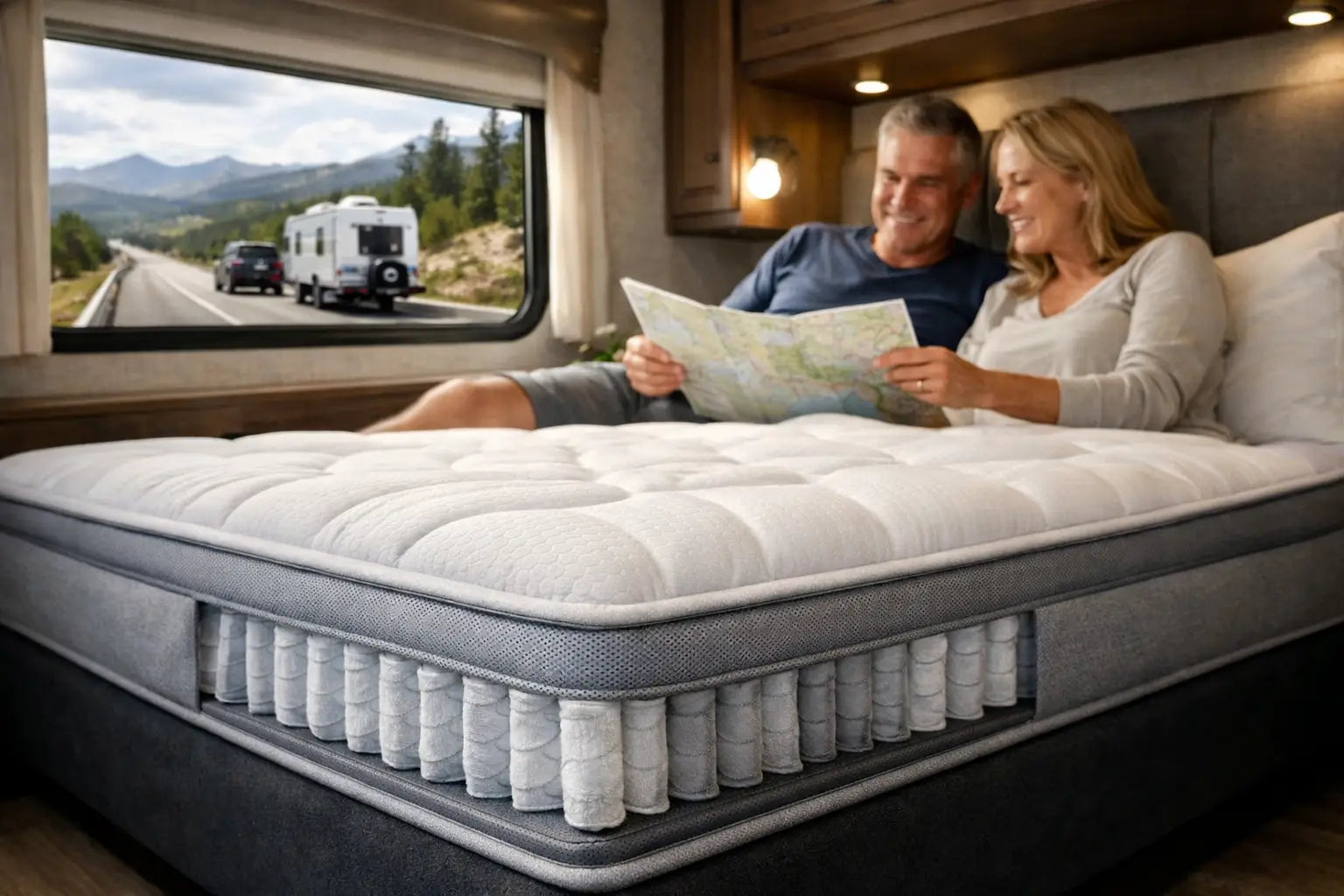
Hybrid mattresses are often the safest choice for the broadest range of RV owners. They combine contouring foam layers with pocketed coils for stronger support, more airflow, and better edge stability. For couples sharing a 66 x 80 RV Olympic queen mattress, that combination tends to feel the most balanced.
Coil-on-coil systems push support even further. They are a premium option for shoppers who want a more durable, residential-style feel with stronger pushback and stability. If your current RV mattress feels flat or collapses under your hips, this category is worth a serious look.
Don’t Ignore Mattress Height and Weight
A mattress can be excellent on paper and still be wrong for your RV.
Heavier, taller mattresses often feel more substantial, but they can create practical problems. If you use under-bed storage, lifting a very heavy mattress every day gets old quickly. If your RV has limited overhead space, an extra inch or two of height can affect how easily you get in and out of bed.
This is why specialized RV sizing matters. The right mattress should improve sleep without making the room harder to live in. A brand that focuses on RV mattresses will usually think through these constraints better than a general mattress company treating RV sizes as an afterthought.
What to Expect From a Real Upgrade
When RV owners replace a stock mattress with a premium 66 x 80 RV Olympic queen mattress, the biggest difference is usually consistency. Less tossing. Less waking up sore. Less feeling your partner every time they turn over.
You should also expect better temperature control, stronger edge support, and materials that hold their shape longer. A true upgrade is not just softer or thicker. It is more supportive, more breathable, and better matched to the way two people actually sleep in a smaller space.
That is where specialty brands stand apart. Companies focused on RV sleep tend to build around exact sizing, premium support systems, and cooling technology rather than trying to force a standard mattress into a non-standard bedroom. Polar RV Mattress is one example of that approach, with constructions designed specifically around RV fit, comfort, and support rather than generic one-size-fits-all beds.
How to Know You’re Buying the Right One
A good purchase decision usually comes down to three questions. First, does the mattress fit your platform exactly, including any corner or height constraints? Second, does the construction match your sleep needs, especially for cooling, pressure relief, and motion isolation? Third, does the company make the buying process lower risk with clear sizing help, fast shipping, and a meaningful trial period?
If the answer to any of those is shaky, keep looking. RV mattress shopping should not feel like guesswork, and it definitely should not leave you settling for whatever is closest in size.
The right mattress does more than fill the bed frame. It changes how you feel the next morning, which changes the whole trip. When your RV bedroom finally sleeps like a real bedroom, every mile gets easier.


Share:
Olympic Queen Mattress 66" x 80" Explained
Olympic Queen Mattress Size and RV Fit