

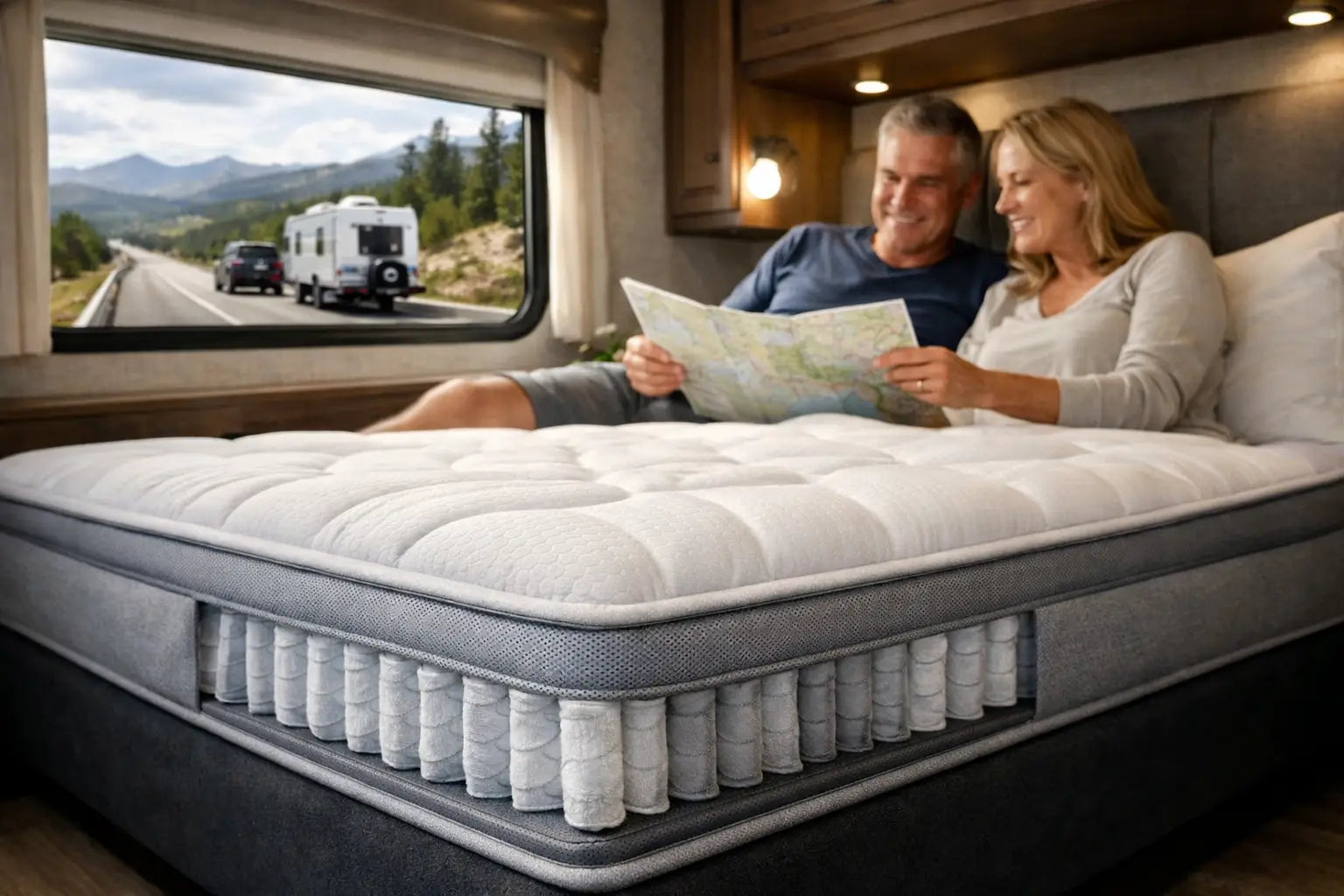
A bad RV mattress makes itself known fast. Your hips ache after a night at the campground, your lower back feels unsupported by morning, and every time your partner turns over, you feel it. A zoned coil RV mattress is built to solve those exact problems with support that responds differently under your shoulders, hips, and legs - while still fitting the unusual dimensions of an RV bed platform.
That distinction matters. An RV mattress is not simply a smaller residential mattress. It has to work in a moving environment, fit an RV-specific footprint correctly, and deliver real sleep performance without the thin, heat-trapping feel common in factory-installed beds.
What Makes a Zoned Coil RV Mattress Different?
A zoned coil system uses pocketed coils arranged in areas with different levels of support. Rather than giving every part of your body the same pushback, the mattress can provide firmer reinforcement where most adults carry weight - usually through the hips and lower back - and a more forgiving feel around the shoulders and legs.
This is a meaningful upgrade from basic continuous-coil or foam-only RV mattresses. Those designs can feel acceptable at first, but they often allow the heaviest parts of the body to sink too far. Over time, that can leave your spine out of alignment and turn a weekend trip into a sore morning.
Pocketed coils also move independently. When one person gets in or out of bed, the coils directly beneath them respond without pulling the entire sleep surface along. For couples in an RV Queen or RV King, that better motion control can make the difference between waking up repeatedly and sleeping through the night.
Targeted Support Where RV Sleep Needs It Most
The real benefit of zoning is not a technical feature list. It is how your body feels after a full night on the road.
When you lie on your side, your shoulder needs enough pressure relief to avoid numbness or soreness. At the same time, your hips need support to keep them from dropping below the rest of your body. A well-designed zoned coil system handles those competing needs more effectively than a flat, one-feel mattress.
Back sleepers typically benefit from the extra reinforcement under the lumbar region. Stomach sleepers often need a slightly firmer overall surface to prevent excessive midsection sink. Your ideal feel still depends on body type and sleep position, but zoned support gives the mattress a stronger foundation for maintaining alignment across the night.
This is especially valuable for full-time RVers and frequent travelers. One uncomfortable night is frustrating. Hundreds of nights on a mattress that does not support your back properly is a problem worth fixing.
Zoned coils are not the same as a firm mattress
A common mistake is assuming stronger support means a hard sleep surface. It does not have to. The coil unit provides the underlying structure, while comfort layers above it determine the initial feel against your body.
Gel memory foam, responsive foam, or other pressure-relieving layers can cushion shoulders and hips without eliminating the support below. The goal is not to feel the coils. The goal is to feel comfortably supported rather than stuck, sagging, or bottoming out.
For many RV owners, a medium or medium-firm zoned mattress offers the best balance. It gives couples enough support for changing positions and enough cushioning for side sleeping. A heavier sleeper, dedicated stomach sleeper, or anyone managing lower-back discomfort may prefer a firmer build.
Cooler Sleep Starts With Better Airflow
Heat is one of the most common complaints about stock RV beds. Warm climates, limited overnight ventilation, and dense low-quality foam can make the bed feel uncomfortably hot long before morning.
A zoned coil RV mattress has a natural advantage here because its coil core leaves open space for airflow. Air can move more freely through the mattress than it can through a solid foam block. That does not make every coil mattress automatically cool, but it creates a better base for temperature regulation.
The strongest cooling designs pair that breathable coil system with materials that address heat at the surface, where sleepers actually feel it. Conductive cooling fabrics can pull heat away from the body, while gel-infused comfort foam helps reduce the heat buildup associated with traditional memory foam.
Cooling performance still depends on your RV environment. A mattress cannot replace air conditioning, shade, window coverings, or proper ventilation during a hot summer stop. But it can prevent the bed itself from becoming another source of trapped heat.
Why Pocketed Coils Work Well for Couples
RV bedrooms are compact, but shared sleep should not feel cramped. If one partner sleeps lightly, moves often, or gets up early, mattress motion transfer becomes a bigger concern than many shoppers expect.
Unlike a connected coil system, pocketed coils are individually wrapped and designed to compress more locally. That helps isolate movement instead of sending a ripple across the bed. Comfort foams above the coils can further soften partner disturbance.
There is a trade-off: highly responsive coil mattresses may feel easier to move on than deep memory foam, but they may not create the ultra-still sensation of a thick all-foam bed. For most RV couples, that is a worthwhile exchange. You get better mobility, more airflow, and reliable support without every small movement becoming a wake-up call.
Fit Matters as Much as Mattress Construction
Even the best support system is the wrong choice if the mattress does not fit your RV. RV bed sizes often differ from standard residential dimensions, sometimes by only a few inches. Those few inches can affect whether a mattress clears a nightstand, fits a slide-out, or leaves gaps around the platform.
Measure the bed base before ordering. Measure length and width at the platform itself, not the old mattress. Then check for rounded corners, wall clearance, lift-up storage, overhead cabinets, and any space restrictions at the bedroom entry.
Height deserves attention as well. A thicker mattress can feel more luxurious, but it may interfere with cabinet doors, windows, or access around the bed. If your RV has a folding platform or a tight hallway, confirm that the mattress can be delivered and maneuvered into place.
Polar RV Mattress specializes in RV-specific sizing because getting the fit right should not require trimming foam, forcing a residential mattress into a corner, or accepting a poor substitute for your actual bed dimensions.
How to Choose the Right Zoned Coil Construction
Not every zoned coil mattress is built the same. Look beyond the word “zoned” and consider how the whole mattress works together.
First, focus on the comfort level. Side sleepers generally need more contouring at the shoulder and hip, while back and stomach sleepers often benefit from a firmer surface. Couples with different preferences should usually avoid extremes and choose a balanced medium or medium-firm design with meaningful pressure relief.
Next, consider the comfort layers. Cooling covers and gel memory foam are useful for people who sleep hot, while more responsive foams can make repositioning easier. If you dislike the slow, sinking sensation of traditional memory foam, a coil-forward design with a thinner comfort layer may suit you better.
Finally, think about longevity. An RV mattress should hold up to more than occasional vacation use. Look for a substantial support system, durable edge construction if you sit on the side of the bed, and a trial period that gives you time to judge how the mattress performs in your real sleep environment.
A Better Morning Is the Point
A zoned coil RV mattress is not about adding another premium feature to a spec sheet. It is about waking up ready to drive, hike, explore, or simply enjoy a slower morning outside your rig.
The right mattress should support your back without feeling punishing, relieve pressure without trapping heat, and let both people sleep without constant disturbance. When your RV bed finally performs like the rest of your home on wheels, every stop becomes easier to enjoy.


Share:
How to Stop Overheating in Your RV Bed Tonight
Best Mattress Features for Campers That Matter