


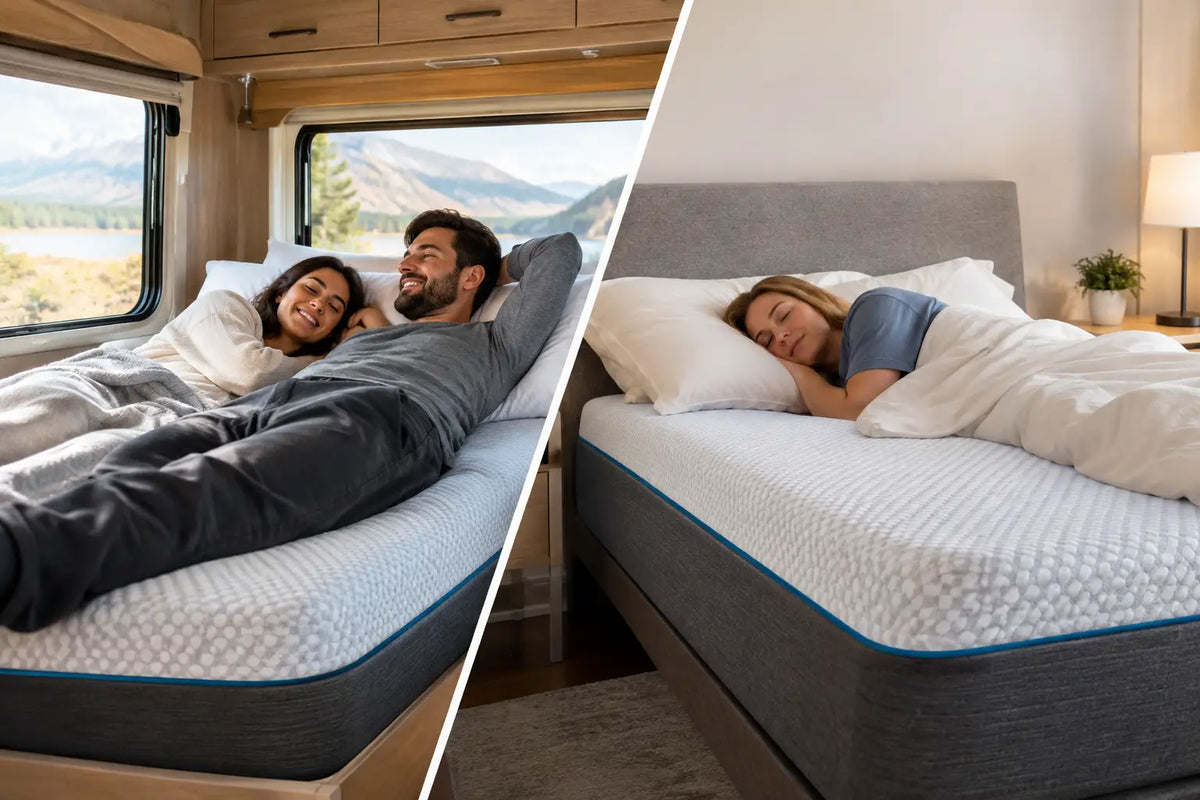
A great campsite cannot make up for a mattress that leaves you hot, sore, and wide awake at 3 a.m. Factory RV mattresses are often built to meet a price point, not to provide the kind of support you need after a long drive or an active day outside. Knowing when to replace an RV mattress can turn your rig from a place you tolerate sleeping into a place you genuinely recover.
For weekend travelers, poor sleep can take the edge off a trip. For full-time RVers, it becomes a daily problem. The right replacement is not simply the thickest mattress that will fit through the door. It needs to match your RV's exact space, your preferred sleep position, and the realities of mobile living.
When to Replace RV Mattress
Visible wear is an obvious signal, but it is rarely the first one. Most RV owners notice comfort problems long before they see a tear or a permanent dip. If you are waking up with lower-back stiffness, shoulder pressure, or numb arms, the support system may already be worn out. Thin foam loses resilience over time, especially when it is compressed over plywood platforms or used in changing temperatures and humidity.
Heat is another common reason to upgrade. Basic RV foam can hold onto body heat, making a warm night feel even warmer inside a closed coach. If you regularly toss off covers, wake sweaty, or run the air conditioner harder just to sleep comfortably, a cooling-focused mattress can make a meaningful difference.
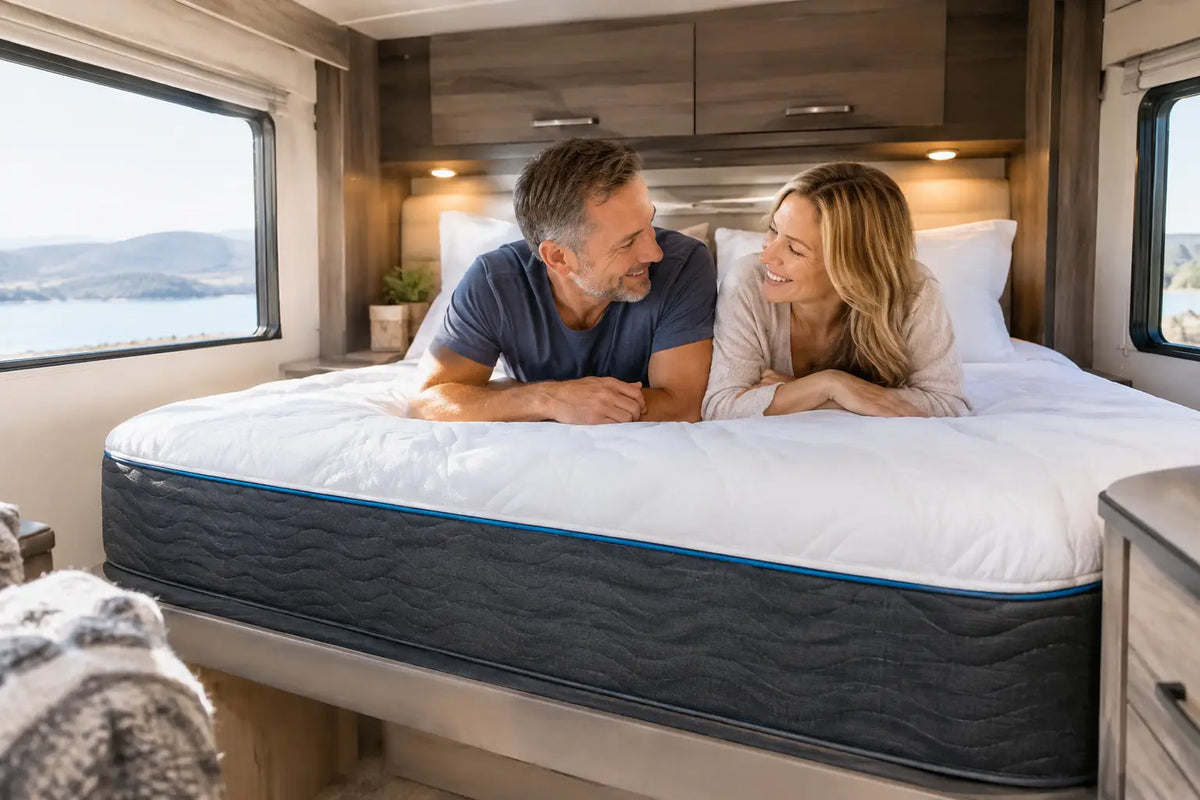
Partner disturbance deserves attention too. When one person changes positions and the other feels every movement, the mattress is not doing enough to isolate motion. This matters in an RV, where a smaller sleep surface puts couples closer together and every inch of comfort counts.
A replacement is usually worth considering when your mattress has permanent impressions, sagging edges, a stale odor that will not go away, or fabric damage. But you do not need to wait for total failure. If your mattress is the reason you sleep better at home than in your RV, it is already time to make a change.
Measure Your RV Bed Before You Shop
An RV Queen is not always the same as a residential Queen. An RV King may be narrower, shorter, or shaped around a slide, wall, or cabinet. Labels can help, but measuring the actual platform is the only reliable way to avoid an expensive fit problem.
Measure the width and length at the sleeping surface, then measure the available height above the platform. A thicker mattress can improve comfort, but it should not interfere with windows, overhead cabinets, a Murphy bed mechanism, or a slide-out. If your bed has rounded corners, a notch, or a cut corner, record those details as well.
Do not assume the old mattress is the correct size just because it technically fits. Stock mattresses may leave gaps, bow at the edges, or have been squeezed into a space that was designed for a different dimension. Measure the platform, not just the mattress you are replacing.
Common RV sizes include RV King, RV Queen, RV Full/3/4, and RV Twin or bunk sizes. These names are useful starting points, but dimensions vary between manufacturers and floorplans. A mattress built specifically for RV sizing removes much of the guesswork and helps the bed sit cleanly on its base.
Choose Support Based on How You Sleep
The best RV mattress is not one-size-fits-all. Your body weight, sleep position, and comfort preferences should guide the construction you choose.
Side sleepers usually need more pressure relief at the shoulders and hips. A comfort layer that cushions those contact points can prevent the aching or numbness that makes people shift positions all night. Memory foam can be effective here, particularly when paired with cooling materials that reduce the heat buildup associated with traditional dense foams.
Back sleepers typically need a flatter, more stable feel through the lumbar area. Too much softness can allow the hips to sink, which may strain the lower back by morning. Zoned pocketed coils are especially useful because they can provide firmer support where the body carries more weight while allowing more contouring at the shoulders.
Stomach sleepers often need the most level surface of the three. A mattress that is overly plush can cause the midsection to sink and put the spine out of alignment. Firm, responsive foam or a supportive coil system is usually a better fit.
Couples should prioritize motion isolation and edge support. Individually wrapped coils respond more independently than a single connected coil unit, helping reduce the movement you feel when your partner gets up early. Stronger edges also make the usable sleep surface feel larger, which is valuable in a compact RV bedroom.
Cooling Is More Than a Nice Extra
RV bedrooms can retain heat, particularly during summer travel, when parked without shade, or when sleeping above a warm storage bay. A mattress that traps body heat works against your ventilation and air conditioning efforts.
Look beyond a cooling cover alone. Cooling performance is stronger when the entire mattress is designed to move heat away from the sleeper. Conductive cooling materials can draw heat from the body, gel memory foam can help reduce hot spots, and breathable coil systems allow more airflow than solid blocks of foam.
There is a trade-off. All-foam mattresses can offer excellent motion isolation and deep pressure relief, but some sleepers prefer the airflow and easier movement that coils provide. Hybrid and coil-on-coil designs can balance contouring comfort with a more supported, breathable feel. The right choice depends on whether your biggest complaint is pressure, overheating, partner movement, or lack of back support.
Do Not Buy a Residential Mattress by Default
A standard residential mattress may look like an easy solution, but it can create problems in an RV. It may be the wrong size, too tall for the space, difficult to maneuver through a narrow entry, or too heavy for a lifting platform. Residential construction can be excellent, but dimensions and practical access still matter.
A purpose-built RV mattress is designed around the compromises that should not be compromises: proper fit, serious support, cooling comfort, and manageable delivery. It should feel like a premium bed, not like a thin camping pad made to survive a warranty period.
That is why mattress construction deserves more attention than a generic firmness label. Quality foams should resist early breakdown. Pocketed coils should provide targeted support and reduce motion transfer. A stronger coil unit, including North American steel where applicable, helps maintain stability over years of use. These details affect how the mattress feels now and whether it still supports you after many miles on the road.
Plan for Delivery, Setup, and the Trial Period
Before ordering, think through how the mattress will enter your RV. Measure tight corners, doorways, and stair openings if access is limited. A mattress shipped compressed in a box is often far easier to handle than a fully expanded traditional mattress, especially in a campground or storage lot.
Once it is in place, give it time to fully expand and let your body adjust. A new mattress can feel different from the worn foam you have been sleeping on, even when it is objectively more supportive. A meaningful sleep trial gives you time to assess pressure relief, temperature, and alignment over several nights rather than making a decision after one unfamiliar evening.
Polar RV Mattress offers RV-specific sizing, premium cooling and support options, free shipping, and a 365-night satisfaction guarantee for owners who want a confident upgrade rather than another short-lived factory replacement.
Your RV should not come with an automatic sleep compromise. Measure carefully, choose the support your body actually needs, and give cooling the weight it deserves. The next time you park somewhere worth remembering, a better mattress helps make sure you wake up ready to enjoy it.

Share:
How to Choose a Ready to Ship Camper Mattress
72" x 74" RV King Mattress: What to Know