

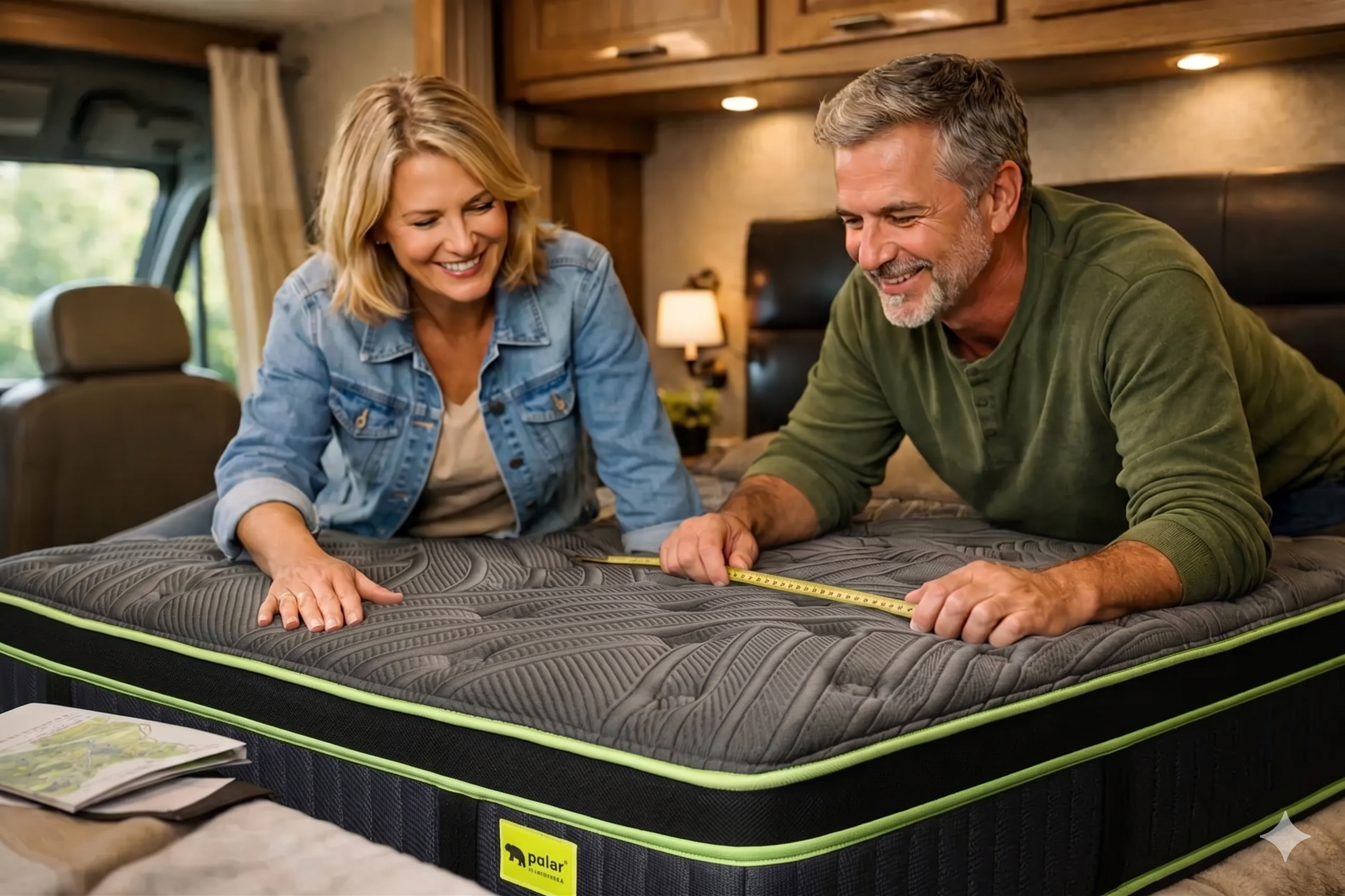
You feel it on the first bad night. Your hips hit a hard spot, your shoulder goes numb, and the mattress that looked fine on the lot suddenly feels like a folded gym mat. For many RV owners, the fix is not just buying a better bed. It is finding a custom size rv mattress that actually fits the space, supports your body, and holds up on the road.
That fit matters more in an RV than it does at home. RV bed platforms are often shorter, narrower, rounded at the corners, or boxed into slide-outs and cabinetry. A standard residential mattress can leave gaps, block storage access, or simply not make it through the door. If you want better sleep without guesswork, custom sizing is often the smartest path.
Why a custom size RV mattress makes sense
Stock RV mattresses are built to meet a price point, not a sleep standard. They are usually thin, basic in construction, and made with limited concern for cooling, pressure relief, or long-term support. They also tend to follow RV dimensions loosely, which is why so many owners end up sleeping on a mattress that technically fits but never feels right.
A custom size RV mattress solves two problems at once. First, it matches the real dimensions of your sleeping area. Second, it gives you the chance to upgrade the actual build of the mattress, which is where sleep quality changes fast. Better foam, stronger coils, and real cooling materials make a noticeable difference when you are spending weeks or months on the road.
This is especially true for full-time RVers, couples, and retirees who are not willing to trade recovery and comfort for mobility. If your current mattress sleeps hot, transfers movement, or leaves you stiff in the morning, sizing alone will not fix that. Construction matters just as much.
Start with the RV, not the mattress
The most common mistake is shopping by label alone. Terms like RV Queen or RV Short King are useful, but they are not precise enough when your bedroom has tight clearances or an unusual platform.
Measure the width and length of the sleeping surface first. Then measure the available height under cabinets, the walkway clearance around the bed, and any areas where rounded corners or cut-offs are necessary. If the mattress sits on a lift-up platform, check how much weight the hinges can realistically handle. If it slides into a wall cavity or sits inside a frame, measure those constraints too.
A custom order makes sense when even a one-inch mistake will create a daily annoyance. That could mean the bed rubs against cabinetry, prevents under-bed storage from opening, or bunches awkwardly into a corner. In an RV, small sizing errors feel big fast.
The dimensions that matter most
Length and width are obvious, but shape matters too. Some RV layouts call for radius corners, angled cuts, or bunks with wall-side trim limitations. Thickness also deserves attention. A thicker mattress can improve pressure relief and support, but only if it still lets you sit up in bed, clear overhead storage, and move around comfortably.
There is always a trade-off here. More mattress is not automatically better if it makes the room harder to use.
What to look for beyond size
Once you know the dimensions, the next question is performance. This is where many RV buyers under-shop. They focus so much on fit that they end up replacing one compromise with another.
Cooling should be near the top of the list. RVs can retain heat, and stock foam beds often trap it. Materials like conductive cooling covers, breathable comfort layers, and coil systems that move air through the mattress tend to sleep noticeably cooler than dense, low-grade foam.
Support is just as important, especially if you wake up with lower back tension or hip pressure. Zoned pocketed coils, higher-density transition foams, and stronger support cores usually outperform basic slab foam because they keep your body from sinking unevenly. For couples, motion isolation matters too. A mattress can feel supportive without turning every movement into a wake-up call.
Durability is the final piece. RV mattresses deal with regular climate swings, frequent use, and compressed living spaces. Cheap foams break down quickly under those conditions. A better-built mattress costs more upfront, but it usually saves money and frustration over time.
Foam, hybrid, or coil-on-coil?
There is no single best answer for every sleeper, but there are clear strengths in each category.
All-foam models can work well for lighter sleepers or shoppers who want a simpler, lower-profile option. They can reduce motion transfer effectively, but lower-end versions often sleep hot and lose support faster.
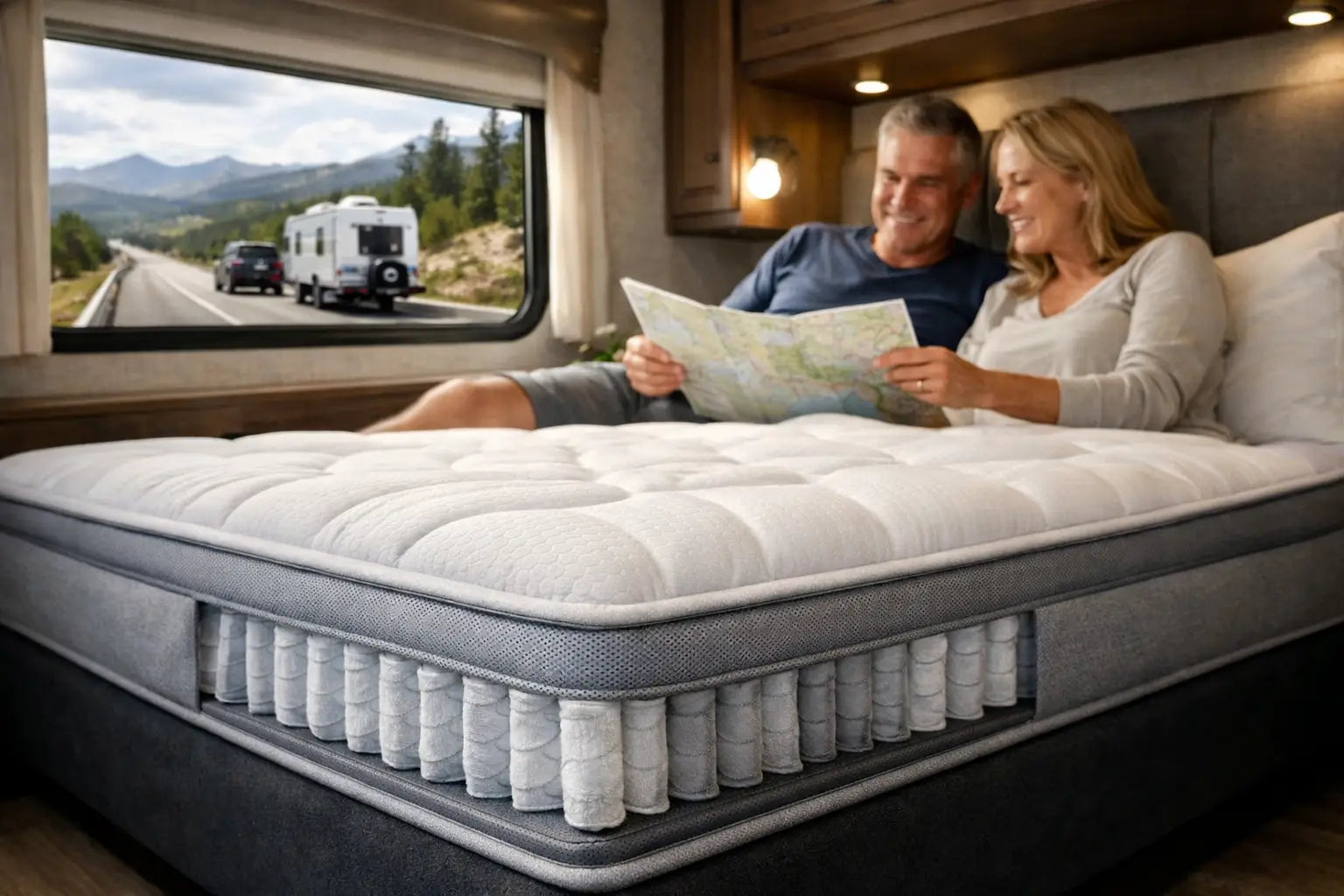
Hybrid mattresses are often the sweet spot for RV owners who want a serious upgrade. A good hybrid combines pressure-relieving foam with pocketed coils for better airflow, edge support, and body support. For many couples, this is the most balanced choice.
Coil-on-coil systems push support even further. They are built for sleepers who want a more substantial, residential feel with stronger reinforcement and improved response. That can be a major advantage if you are replacing a factory mattress that collapses under your hips or leaves the edges unstable.
It depends on your priorities. If cooling, support, and long-term performance matter most, a premium hybrid or coil-based build usually outperforms a basic foam mattress in an RV setting.
Choosing the right feel for your body
Firmness gets oversimplified. A mattress is not good because it is firm, and it is not luxurious because it is soft. The right feel depends on your sleep position, body weight, and pressure points.
Side sleepers usually need more contouring around the shoulders and hips. Back sleepers tend to do best with a balanced feel that keeps the spine aligned without feeling hard. Stomach sleepers often need a firmer surface to prevent the midsection from dropping too far.
Body type matters as well. Heavier sleepers generally need stronger support systems and thicker comfort layers that will not compress too quickly. Lighter sleepers may find very firm beds uncomfortable because they do not sink enough to get pressure relief.
If you share the bed, balance matters more than perfection for one person. This is why hybrids with better motion control and zoned support tend to be strong choices for RV couples.
When custom sizing is worth paying for
Not every RV owner needs a fully custom mattress. If your platform cleanly matches a common RV size and you can confirm the dimensions, a standard RV-specific option may be enough.
Custom sizing is worth the extra cost when your bed platform is truly non-standard, when clearance is tight, or when your current setup has shape constraints that standard sizes cannot solve. It also makes sense when you are already investing in a premium sleep upgrade and do not want a near-fit that creates daily frustration.
That is the real value. A custom size rv mattress is not about novelty. It is about removing compromise from a space where compromise is already common.
Questions to ask before you order
Before you buy, confirm how the mattress will be delivered, whether it is built specifically for RV use, and what trial or satisfaction policy is in place. Custom products can have different return terms, so clarity matters.
Ask about the internal construction, not just the cover and marketing language. What kind of support core is used? Is the cooling feature a real material benefit or just surface fabric? How thick is the mattress, and is that thickness practical for your floorplan?
This is also where expert guidance helps. Brands that specialize in RV sleep tend to understand the sizing challenges better than general mattress retailers. They are more likely to steer you toward the right shape, profile, and construction instead of pushing a residential model that almost fits.
The best custom size RV mattress is the one that fits your nights
A mattress upgrade changes more than comfort. It changes how you recover after long drives, how well you sleep in summer heat, and whether you wake up ready to enjoy the trip you paid for. A better fit prevents daily aggravation. Better materials prevent the familiar cycle of tossing, turning, and waking up sore.
Polar RV Mattress has built its reputation around that exact gap in the market - premium RV-specific sleep, real sizing expertise, faster delivery, and the kind of support RV owners need when standard options fall short.
If your current mattress is too short, too hot, too thin, or just not built for the way you travel, do not treat sizing as a minor detail. In an RV, the right dimensions and the right construction work together. Get both right, and your bedroom stops feeling like the compromise section of the coach.


Share:
RV Bunk Mattress Replacement Done Right
How Thick Should an RV Mattress Be?