

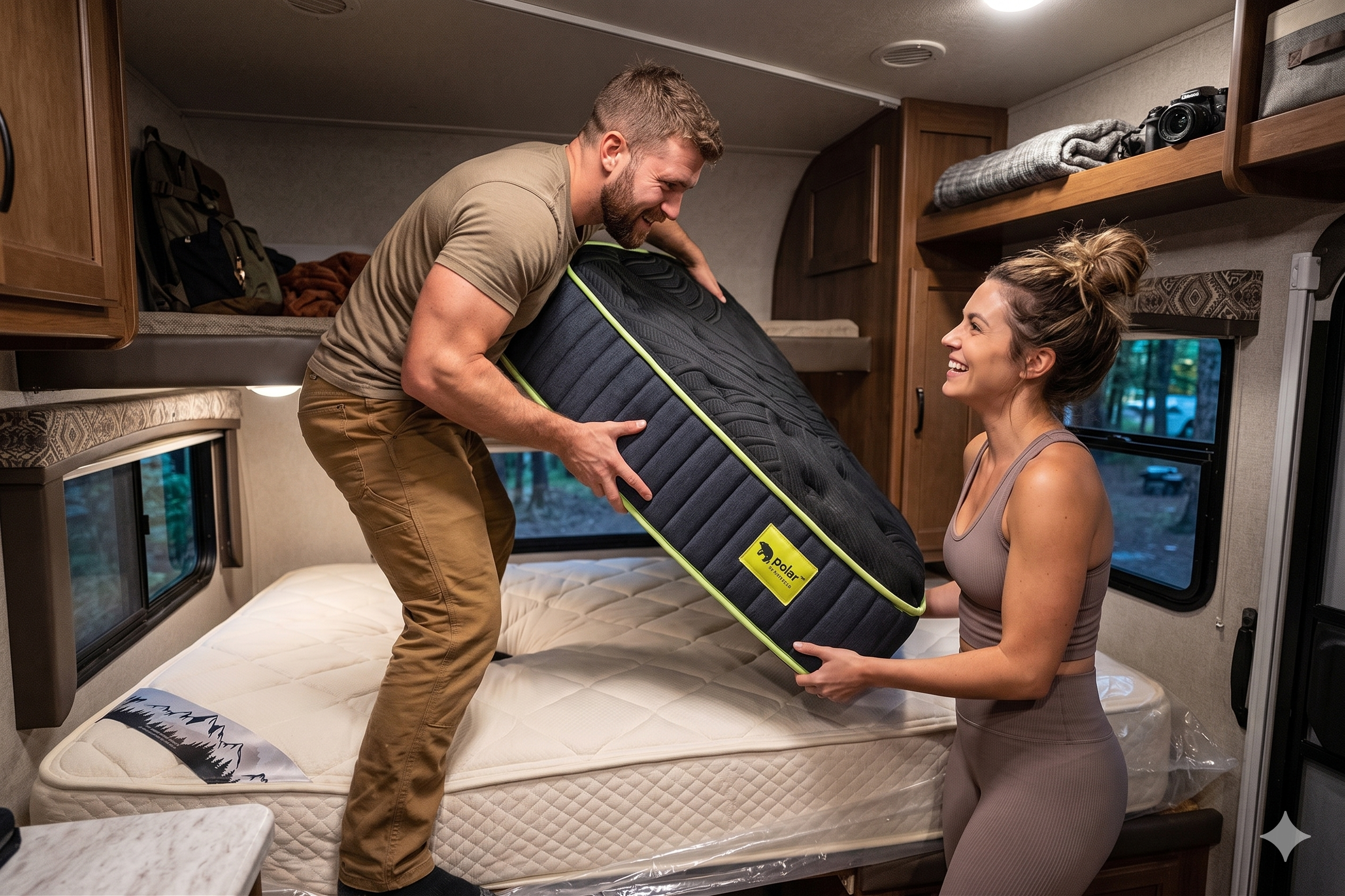
That top bunk usually tells the truth first. A kid wakes up sweaty. A guest complains about the plywood feel underneath. Or you pull back the sheet and realize the factory mattress has already started sagging at the corners. RV bunk mattress replacement is one of the fastest ways to make a camper feel more livable, but it only works if you solve the real problems - bad fit, weak support, trapped heat, and low-grade foam.
A bunk mattress in an RV has a harder job than people expect. It has to fit a tighter footprint, work with weight limits, and stay comfortable on a sleep surface that often has less structural support than a residential bed. Buying the first foam slab labeled “RV bunk” is usually what creates the second problem.
Why RV bunk mattress replacement matters more than most owners expect
Stock bunk mattresses are built to hit a price point, not a sleep standard. They are often thin, overly firm in the wrong places, and quick to compress. That might be tolerable for an occasional weekend, but it becomes a real issue for families taking longer trips, full-time RVers, or anyone trying to give guests and kids a bed that does not feel temporary.
The biggest complaint is not just softness or firmness. It is support quality. A mattress can feel plush for a few nights and still do a poor job of keeping the body aligned. On a bunk, that tends to show up as shoulder pressure, sore hips, lower back discomfort, and restless sleep. Add heat retention from basic memory foam, and the bunk becomes the bed everyone tries to avoid.
A proper replacement changes that quickly. Better materials hold their shape longer, distribute pressure more evenly, and reduce the hot, sticky feel common in closed RV sleeping spaces. For many owners, the goal is simple: make the bunk feel like a real bed, not an afterthought.
Start with fit before comfort
The most common RV bunk mattress replacement mistake is assuming “twin” means it will fit. In RVs, it often will not. Bunk dimensions can vary by length, width, and corner shape. Some have rounded edges, cut corners, curved walls, or narrow clearances that leave almost no room for error.
Measure the existing sleep platform, not just the old mattress. Mattresses can shrink, bow, or deform over time, so copying the old dimensions without checking the frame can lead to a sloppy fit. Measure width and length at multiple points if the space is tight. If the bunk has a wall curve or corner cutout, note that too.
Height matters as much as footprint. A thicker mattress is not automatically better if it creates safety issues on an upper bunk. Guard rail clearance, headroom, and ladder access all matter. In many RV bunks, the best replacement is a mattress that delivers better support with smarter materials rather than just adding inches.
This is where specialized RV sizing makes a real difference. A mattress made for residential sizing can leave gaps, bunch against the wall, or require awkward trimming. A mattress built specifically for RV bunk dimensions removes the guesswork.
What to look for in an RV bunk mattress replacement
Support should lead the decision. On a bunk bed, a mattress needs enough structure to keep the sleeper from bottoming out, especially if the platform is a thin deck or slat system with minimal flex. High-quality foam can work well, but density and layering matter. Lower-grade foam tends to feel acceptable for a short time and then breaks down fast.
Cooling deserves more attention than many buyers give it. RVs hold heat differently than houses, and bunk areas often get less airflow. If the mattress uses basic memory foam without any real cooling strategy, sleepers can end up overheating night after night. Gel infusions, conductive cooling materials, and more breathable internal construction can make a noticeable difference, especially in warmer climates or summer travel.
Pressure relief matters most for side sleepers and lighter sleepers, including many children and teens who use bunks regularly. If the mattress surface is too stiff, shoulders and hips take the hit. If it is too soft without enough support underneath, alignment suffers. The best bunk mattresses balance contouring with stability.
Durability is the long game. RV mattresses get folded, climbed on, sat on, and exposed to changing temperatures. Cheap foam loses resilience quickly under those conditions. A stronger build costs more up front, but it usually saves money and frustration because you are not shopping again after one season.
Foam vs hybrid for bunk beds
For many RV bunk setups, foam is the practical choice. It is lighter, easier to maneuver into tight spaces, and often better suited to upper bunks where weight matters. A well-built foam mattress can deliver excellent comfort and support if the materials are strong enough and the design is meant for RV use rather than dorm-room pricing.
Hybrid construction can be a better fit in some lower bunk applications, especially when the sleeper is an adult or the mattress needs more pushback and airflow. Coils add responsiveness and often improve temperature regulation, but they also add weight and may not be ideal for every bunk frame or upper bunk capacity.
So which is better? It depends on who is sleeping there and how the bunk is built. For kids, occasional guests, or upper bunks with tighter weight limits, premium foam is often the smart choice. For daily adult use, a bunk-compatible hybrid may provide a more residential feel if the RV layout allows for it.
The signs your current bunk mattress is not worth keeping
Sometimes owners try to fix a bad bunk mattress with a topper. That can help if the mattress is basically sound but just a little firm. It will not fix a mattress that is already collapsing, trapping heat, or failing to support the body.
If the sleeper can feel the platform underneath, the mattress is too thin or too broken down. If there are visible body impressions, compressed corners, or permanent folds, replacement is the better move. The same goes for mattresses that smell musty, hold moisture, or never seem to recover their shape after travel.
Poor sleep is also a sign. If the person using the bunk wakes up sore, tosses around all night, or avoids that bed altogether, the mattress is no longer doing its job.
How thick should an RV bunk replacement mattress be?
There is no one perfect thickness, and that is exactly why generic advice fails here. In an RV bunk, thickness has to match the available clearance and the support quality of the materials.
A thinner mattress made with stronger foam can outperform a thicker low-density mattress by a wide margin. If the bunk has limited guard rail height or low ceiling clearance, forcing a tall mattress into the space can create more problems than comfort. On the other hand, if the mattress is too thin for the sleeper’s body type and the bunk platform underneath is unforgiving, comfort will never be consistent.
Most owners do best by choosing the maximum height that still preserves safe rail clearance and practical access. Then the focus should shift to construction quality, not just profile.
Don’t ignore who actually sleeps there
An RV bunk used by a 50-pound child has different needs than one used by a 190-pound adult. That sounds obvious, but it is where many replacement decisions go wrong. Buyers choose based on size alone and ignore body weight, sleep position, and frequency of use.
If the bunk is for younger kids on occasional trips, the mattress can prioritize pressure relief, breathable comfort, and easy handling. If that bunk doubles as an adult guest bed or a nightly sleeping space for a teen, support becomes much more important. A mattress that feels fine for one body type may feel punishing or unstable for another.
This is why specialized RV sleep brands tend to outperform big-box alternatives. They are solving for actual RV conditions - unique sizes, limited ventilation, different platform types, and sleepers who want a real upgrade, not the cheapest placeholder.
A better replacement should solve more than one problem
The best RV bunk mattress replacement does not just fit the space. It improves how the whole RV feels at night. Better cooling means fewer wakeups. Better support means less stiffness in the morning. Better motion control matters if the bunk is close to another sleeping area and movement carries through the coach.
If you are replacing more than one mattress in the RV, consistency also matters. The bunk should not feel like the budget corner of the camper while the main bed gets all the attention. Families notice that difference immediately.
Brands that focus only on RV mattresses, including companies like Polar RV Mattress, tend to offer more useful choices because they understand the sizing issues and sleep trade-offs unique to these spaces. That matters when you want a bunk mattress that fits right the first time and performs like a meaningful upgrade, not just a replacement.
A good bunk mattress should disappear once the lights go out. No pressure points, no heat trap, no sagging edge reminding you it was built to save a manufacturer a few dollars. If your bunk still feels like a compromise, that is usually your answer.

Share:
Short Queen RV Mattress Buying Guide
How to Buy a Custom Size RV Mattress