

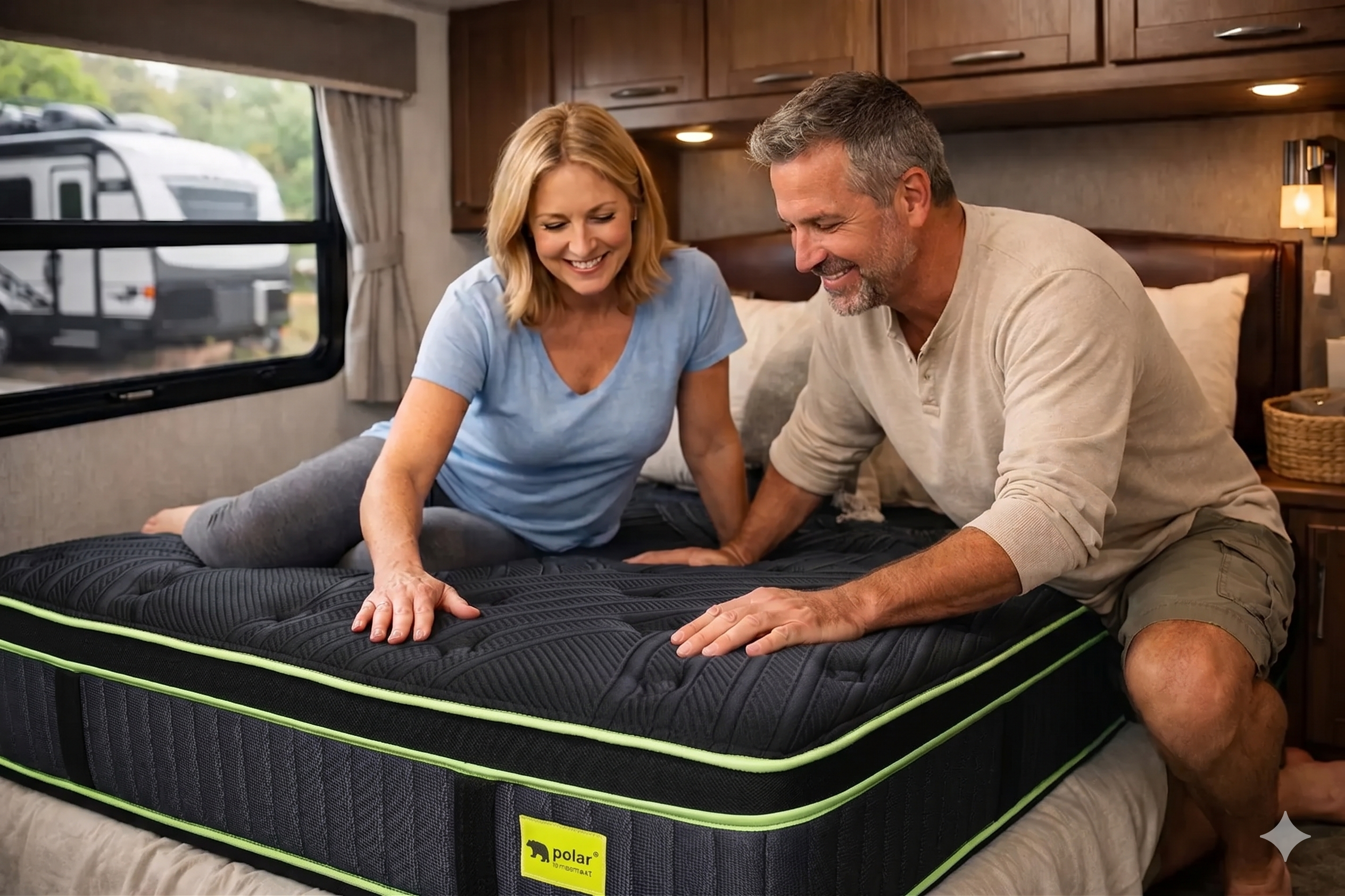
A short queen RV mattress can make or break your nights on the road. If you are waking up hot, stiff, or fighting for space, the problem usually is not RV travel itself. It is the thin, underbuilt factory mattress that came with the coach.
Most RV owners do not need a cheaper replacement. They need a mattress built for RV dimensions that still feels like a serious sleep upgrade. That means getting the size right first, then choosing materials that solve real problems like pressure points, motion transfer, sagging, and trapped heat.
What is a short queen RV mattress?
A short queen RV mattress is typically 60 inches wide by 75 inches long. It gives you the same width as a standard queen, but it is 5 inches shorter to fit RV bedrooms where every inch matters. That shorter length is common in travel trailers, fifth wheels, and many motorhomes.
This is where buyers often get tripped up. A standard queen measures 60 by 80, and those extra 5 inches can create fit issues fast. You may run into problems with bed platforms, nightstand clearance, slide-outs, hinged storage bases, or the ability to walk around the bed at all.
Even when a standard queen can be forced into place, that does not mean it belongs there. Tight clearances can affect how the mattress sits, how bedding fits, and whether the room functions the way it should.
Why stock RV mattresses disappoint so many owners
Most factory-installed RV mattresses are built to hit a cost target, not a comfort target. They are often thin, low-density, and poor at managing heat or supporting the body over time. A few nights may feel tolerable. A few months usually tells the truth.
The biggest complaints are consistent. Sleepers feel pressure at the shoulders and hips. Back support fades in the middle of the night. Couples feel every movement. And because many stock beds trap heat, people wake up sweaty even when the cabin temperature is reasonable.
That matters more in an RV than it does at home. Travel days are tiring. Campsite setup takes work. If your mattress is costing you recovery, it is affecting the whole trip.
How to choose the right short queen RV mattress
The right mattress depends on how you sleep, how often you travel, and what your current bed is doing wrong. There is no single best build for every RV owner, but there are clear signs of what to prioritize.
Start with exact measurements
Do not assume your current bed is a true short queen just because the listing says so. Measure the sleeping platform width and length, then check height clearance too. In RVs, mattress thickness can matter almost as much as footprint.
If the mattress sits under cabinets, near a slide, or on a lift-up storage base, a taller profile may change how the room works. A thicker mattress can improve comfort, but only if the bed area still opens, closes, and clears as intended.
Match the feel to your sleep position
Side sleepers usually need more pressure relief so the shoulders and hips can sink enough without causing numbness or soreness. Back sleepers typically do best with balanced support that keeps the midsection from dipping. Stomach sleepers often need a firmer feel to avoid lower back strain.
Couples are a little different. If one person sleeps hot and the other is sensitive to movement, the mattress needs to do two jobs at once. That is where better foam design or pocketed coil systems tend to outperform cheap all-foam RV beds.
Think beyond softness
Many buyers confuse soft with comfortable. In practice, too-soft mattresses often feel good for ten minutes and disappointing by morning. What most RV sleepers actually need is pressure relief on top with stable support underneath.
That support is what keeps your spine aligned and prevents the sagging, hammock-like feeling common in low-quality RV mattresses. If you have back pain now, support should be one of the first things you evaluate.
Best materials for a short queen RV mattress
Construction changes everything. Two mattresses can look similar online and perform completely differently after a month of use.
Memory foam
Memory foam can do a strong job with contouring and motion isolation. It is often a good fit for couples and side sleepers because it cushions pressure points well. The drawback is that lower-end memory foam can hold heat and feel slow to respond when you change positions.
That is why foam quality matters. Gel infusions, open-cell designs, and conductive cooling features can make a noticeable difference. Without them, a foam mattress may solve pressure but create a temperature problem.
Pocketed coils
Pocketed coils are one of the best upgrades for RV sleepers who want more support and easier movement. A well-built coil system helps distribute weight, improve airflow, and reduce the stuck feeling that some foam mattresses create.
Zoned coils are especially useful because they provide stronger support in heavier areas like the hips while allowing better relief around the shoulders. For many RV owners, this gets closer to the feel of a premium residential mattress.
Hybrid construction
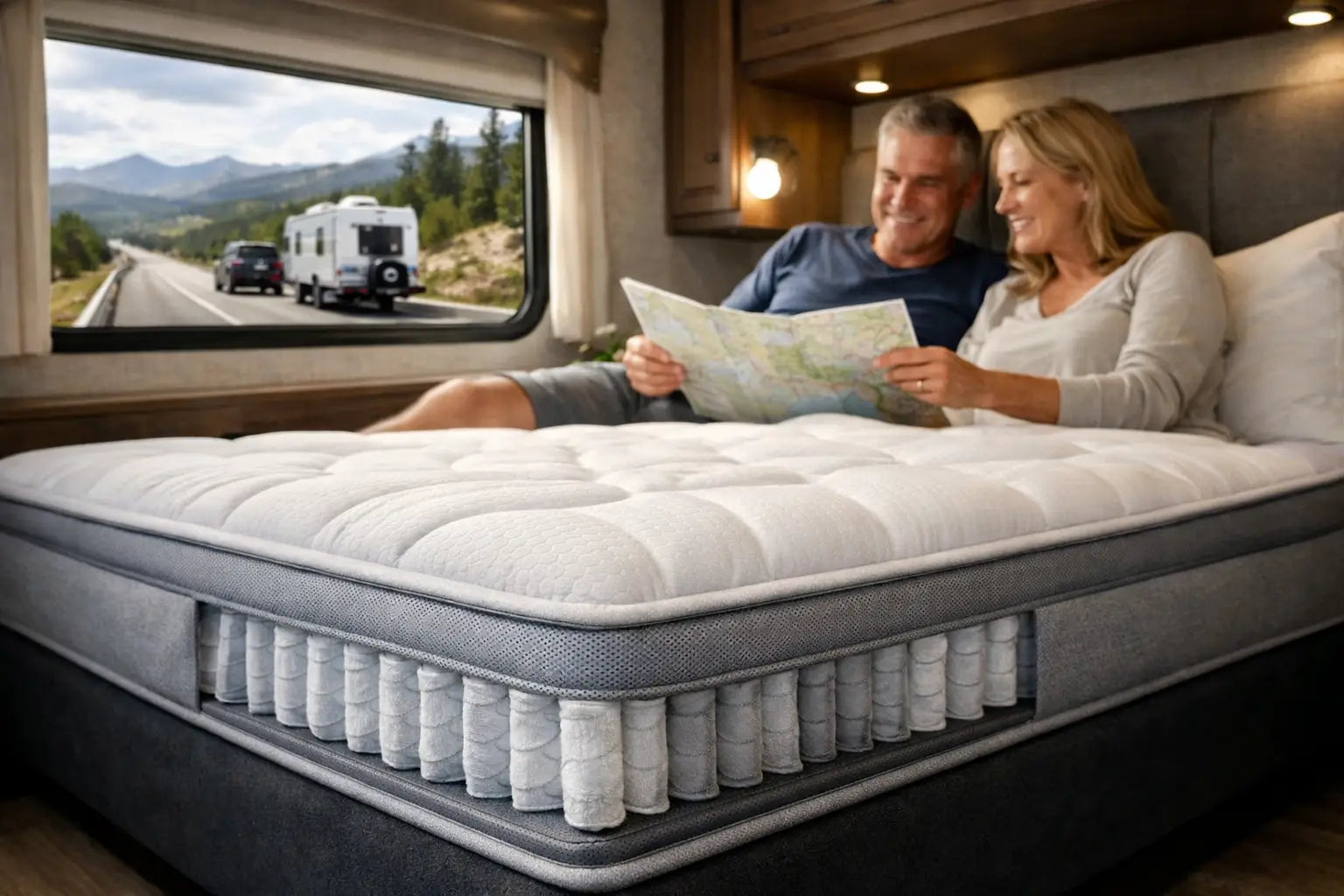
A hybrid combines foam comfort layers with a coil support core. For many short queen RV mattress shoppers, this is the sweet spot. You get pressure relief, stronger edge support, better airflow, and less motion transfer than you would expect from a basic innerspring.
It does cost more than entry-level foam, but the difference is usually easy to feel. If you travel often or live in your RV full time, paying for better construction tends to make sense.
Cooling matters more in an RV
RV bedrooms can heat up quickly, especially in summer travel or when airflow is limited. That makes cooling performance a real buying factor, not a marketing extra.
Look for breathable covers, coil systems that allow airflow, and comfort layers designed to move heat away from the body instead of holding it. Conductive cooling fabrics and gel memory foam can help, but the full mattress design matters more than any single feature.
If you already sleep hot at home, do not downplay this. A heat-trapping RV mattress will usually feel worse in a smaller sleeping space.
Common mistakes when buying a short queen RV mattress
The most common mistake is buying by price alone. A bargain mattress can look appealing until it starts sagging, sleeping hot, or failing to support two adults consistently. Replacing a bad replacement is more expensive than getting it right once.
The second mistake is treating RV sizing like residential sizing. Short queen sounds close enough to standard queen, but in an RV, close enough often creates frustrating fit problems.
The third mistake is ignoring your base. Some RV platforms are solid, some are slatted, and some lift for storage. The mattress has to work with that foundation. A heavy mattress on a weak or awkward base can create problems you did not plan for.
Who should upgrade now?
If you only use your RV a couple weekends a year, you may tolerate a mediocre mattress longer than a full-time RVer. But frequency is not the only factor. If you are already waking up sore, sleeping hot, or avoiding trips because the bed is miserable, the upgrade is overdue.
This is especially true for retirees, couples logging long road trips, and anyone managing back or joint discomfort. Better sleep is not a luxury add-on in those cases. It is part of making the RV enjoyable again.
A specialized RV mattress brand like Polar RV Mattress can also remove a lot of buying friction because the sizing, construction, and sleep priorities are built around RV use from the start, not adapted from standard home bedding after the fact.
What a good short queen RV mattress should deliver
A strong short queen RV mattress should fit correctly, sleep cooler than the factory bed, isolate motion well enough for couples, and provide enough support that you do not dread the second half of the night. It should also hold up to regular use instead of flattening out after one season.
That does not mean every sleeper needs the same firmness or build. It means the mattress should solve your actual sleep problems, not just fill the bed platform.
When you choose one, think like an RV owner, not just a mattress shopper. Space is tighter. Heat builds faster. Poor support feels worse after a travel day. The right mattress accounts for all of that.
If your current bed is costing you sleep, energy, and comfort, a better short queen RV mattress is not a small upgrade. It is one of the few changes that can improve every mile you travel.


Share:
RV Queen Mattress Dimensions Explained
RV Bunk Mattress Replacement Done Right