

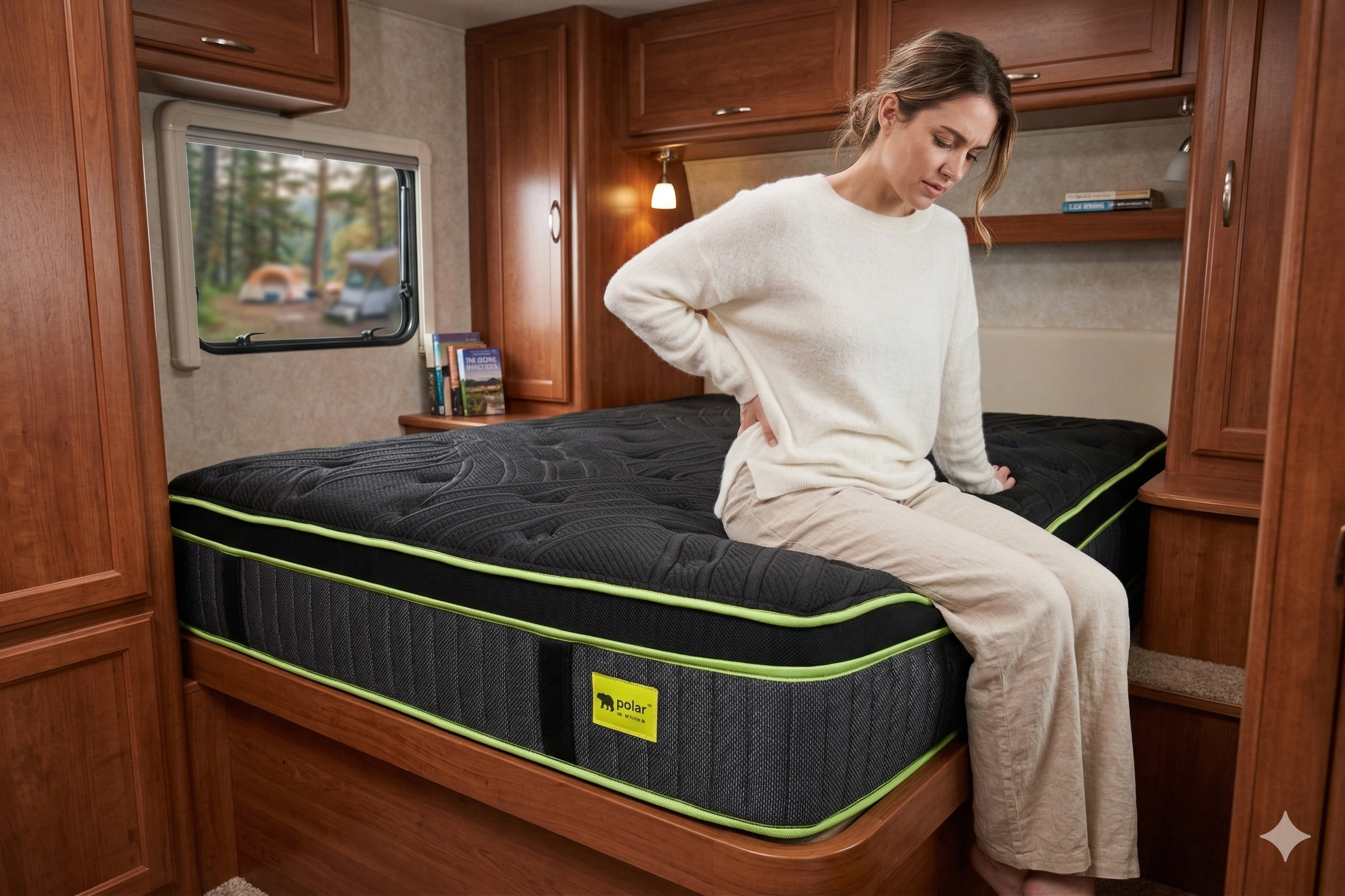
Waking up in your RV with a stiff lower back is usually not a camping problem. It is a mattress problem. If you are searching for the best RV mattress for back pain, the goal is not just something softer or thicker than the factory bed. The goal is better spinal support, better pressure relief, and a mattress built for RV sizing instead of a close-enough residential compromise.
That distinction matters more than most shoppers expect. Back pain at home is frustrating. Back pain in an RV is worse because space is tighter, sleep positions are less forgiving, and many stock RV mattresses are thin, heat-trapping, and underbuilt. A mattress can look acceptable on day one and still fail where your body needs help most - at the shoulders, hips, and lumbar region.
What makes the best RV mattress for back pain?
The short answer is support first, comfort second, and fit always. A mattress that relieves back pain has to keep your spine in a more neutral position through the night. If your hips sink too far, your lower back can bow. If the surface is too firm with no pressure relief, your shoulders and hips can take the force, which creates tossing, turning, and muscle tension by morning.
For most RV owners, the best balance comes from a hybrid design or a well-built foam mattress with serious support underneath. Cheap all-foam models often feel comfortable for a few minutes, then compress too deeply and hold heat. Basic innersprings tend to feel hard, uneven, and noisy. Better construction matters because back pain is usually made worse by inconsistency. You want support that stays level across the mattress and comfort layers that cushion pressure points without swallowing you.
Zoned support is especially useful. A mattress with firmer reinforcement through the center third can help keep the hips and lower back from dipping out of alignment. That is one reason premium RV hybrids tend to outperform the stock mattress by a wide margin. They are built to do more than fill a platform. They are built to support actual sleep.
Why stock RV mattresses cause back pain
Most factory-installed RV mattresses are designed to meet a price target, not a sleep standard. They are often thinner than residential mattresses, use lower-density foams, and provide minimal edge support or targeted reinforcement. That can be manageable for a weekend or two. It becomes a real problem on longer trips or full-time use.
The most common issue is compression. Once lower-quality materials start to break down, your body settles into the same soft spots every night. That means less support under the lower back and more stress on the joints. Add in poor airflow, and you also get heat buildup, which makes sleep lighter and less restorative.
Couples feel this even more. If one partner changes position, weak support systems transfer that movement across the bed. Interrupted sleep and back pain tend to show up together.
The features that actually help back pain
A thicker mattress is not automatically a better mattress. Construction is what counts. For back pain, focus on how the layers work together.
A supportive coil system gives the mattress structure and pushback. Pocketed coils are especially effective because they respond more independently than older connected springs. That helps with both motion isolation and contouring. If the coil system is zoned, even better.
Above that, pressure-relieving comfort layers matter. Gel memory foam or high-quality specialty foams can cushion the shoulders and hips so your body is not fighting the mattress all night. The key is moderation. Too little comfort feels harsh. Too much soft foam can let your spine drift out of line.
Cooling should also be taken seriously. A hot sleeper with back pain is more likely to toss, wake up, and spend less time in deeper sleep. Conductive cooling materials, breathable covers, and coil-based airflow help keep the surface more comfortable through the night.
Then there is edge support, which many RV shoppers overlook. In a smaller sleeping space, you often use more of the mattress surface. Stronger perimeter support makes it easier to get in and out of bed and prevents that roll-off feeling near the edge.
Foam or hybrid for back pain in an RV?
It depends on your body type, sleep position, and how sensitive you are to heat. But for many RV owners, a hybrid is the safer choice.
Foam mattresses can work well if they use high-quality materials and have a supportive core. They are often quieter, lighter, and good at reducing motion transfer. But lower-end foam tends to sleep hotter and soften faster, especially in heavier-use areas.
Hybrids usually offer a stronger mix of pressure relief and support. The coil system helps keep the mattress lifted and aligned, while the foam layers reduce pressure points. For back sleepers, combination sleepers, and couples, that blend is hard to beat. For side sleepers with back pain, a medium or medium-firm hybrid often lands in the sweet spot.
If you already know you dislike the sinking feel of memory foam, do not talk yourself into it just because it sounds soft and therapeutic. The best RV mattress for back pain should feel supportive first and comfortable second.
Best RV mattress firmness for back pain
Most people with back pain do best in the medium to medium-firm range. That is broad, but it is broad for a reason. Firmness is personal.
Back sleepers usually need enough firmness to keep the pelvis from dipping too far. Side sleepers need more surface cushioning to avoid pressure at the hips and shoulders. Stomach sleepers generally need a firmer feel to keep the lower back from arching, although this position tends to be less forgiving overall.
Body weight matters too. Lighter sleepers often experience mattresses as firmer than heavier sleepers do. Heavier sleepers usually need stronger support systems and more durable materials to avoid sagging and premature wear.
This is where premium RV mattresses separate themselves from low-cost replacements. Better builds are more stable across different body types and less likely to feel good for one week and disappointing after one season.
Fit matters more in an RV than it does at home
An excellent mattress with the wrong dimensions is still the wrong mattress. RVs often use non-standard sizes such as short queen, RV king, RV bunk, or 3/4 full. Forcing a residential mattress into an RV frame can affect support, airflow, and usability.
A poor fit can also create practical headaches. Tight corners, platform overhang, blocked storage access, and awkward bed-making all add friction to daily use. If you are already dealing with back pain, the last thing you need is a mattress that makes getting settled harder.
This is why RV-specific sizing is not a minor detail. It is part of the product performance. A mattress built for RV dimensions gives you the full support surface you paid for, without guesswork.
How to shop for the best RV mattress for back pain
Start with your pain pattern, not marketing claims. If your lower back hurts most, look for stronger center support and medium-firm stability. If you wake up sore at the shoulders and hips, you may need better pressure relief on top of that support. If both are happening, a well-built hybrid is usually the best place to start.
Next, think about sleep temperature. Many RV bedrooms trap heat, especially in warmer climates and summer travel. Cooling features are not just a luxury upgrade. They directly affect sleep quality, which affects how your body recovers overnight.
Then factor in your sleep setup. Are you a couple? Do you share a smaller RV queen? Do you get up often at night? Motion isolation, edge support, and ease of movement should all be part of the decision.
Finally, look for risk reduction. A mattress can sound perfect on paper and still feel wrong in your RV. Fast shipping, expert sizing help, and a generous sleep trial lower the risk of making the wrong call. That matters when you are investing in a serious upgrade instead of another temporary fix.
A specialized RV brand like Polar RV Mattress has an advantage here because the construction, sizing, and support systems are designed around mobile sleep, not adapted from a generic home product line.
When it is time to replace your RV mattress
If you are waking up sore more often than rested, your mattress is giving you the answer. Visible sagging is an obvious sign, but plenty of RV mattresses fail before they look bad. Loss of support, heat retention, and pressure buildup all show up in your body before they show up in the fabric.
If you sleep better in hotels, at home, or even on a different guest bed than you do in your RV, pay attention to that. The problem may not be travel. It may be the mattress under you every night.
The right RV mattress will not solve every cause of back pain. But it can remove one of the most common ones. And when your mattress fits correctly, supports the lumbar area, relieves pressure, and stays cooler through the night, you give your body a better chance to recover instead of brace.
If you spend real time on the road, better sleep is not an extra. It is part of how you travel well. Choose a mattress that treats your back like it matters.


Share:
Unboxing the Polar RV Mattress: What to expect. Getting your RV King or RV Queen Mattress into your RV.
Cooling RV Mattress: What Actually Works