

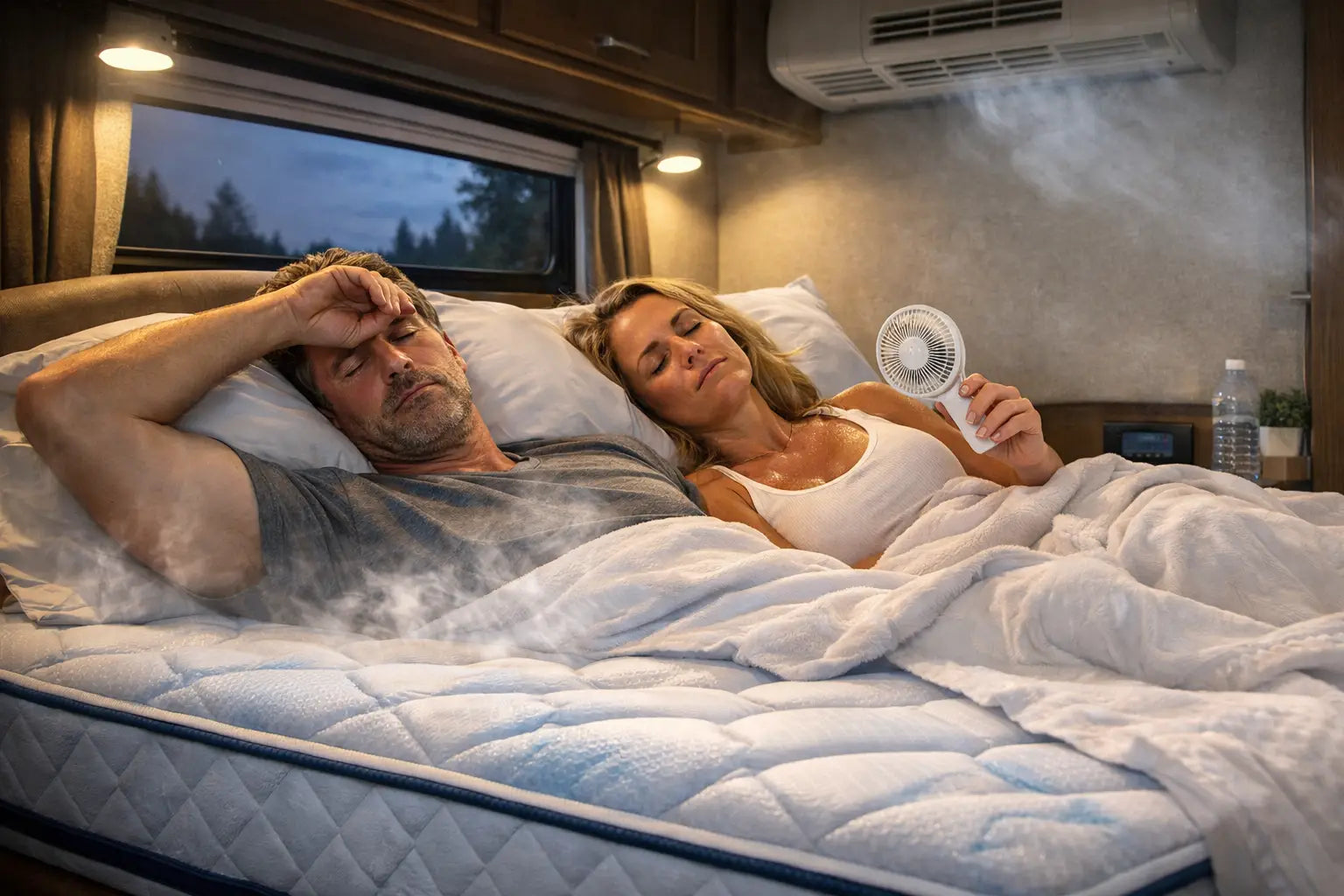
A hot RV bedroom can turn a great travel day into a miserable night. If you are searching for how to stop overheating in RV bed, the answer is rarely just “run the air conditioner colder.” Heat often builds beneath you, gets trapped in the mattress, and lingers around the bed because RV sleeping areas have limited airflow and tightly packed walls.
The good news is that you can make a major difference without rebuilding your rig. Start by identifying where the heat is coming from, then address the layers closest to your body: your mattress, bedding, airflow, and bedroom setup. The right combination delivers cooler, more restorative sleep whether you are parked in a humid campground, boondocking in the desert, or traveling through a summer heat wave.
Why RV Beds Feel So Much Hotter
Most RV bedrooms are designed around space efficiency, not sleep climate. The bed may sit against an exterior wall, over a storage compartment, or in a corner with only one small window. Heat from the day can remain in the roof, walls, and under-bed platform long after the sun goes down.
Then there is the mattress itself. Many factory RV mattresses use basic polyurethane foam and little else. They are thin, poorly supported, and prone to holding body heat. When foam has limited airflow, your body heat has nowhere to go. Add a waterproof mattress protector, polyester sheets, and a heavy comforter, and the bed can feel like a sealed heat pocket.
A cooling plan works best when you treat the bed as a complete system. Lowering the cabin temperature helps, but it will not fully solve a mattress that is trapping heat directly under your back, shoulders, and hips.
Start With the Mattress, Not Just the Thermostat
If your RV mattress feels warm within an hour of lying down, it is probably the biggest part of the problem. A mattress should support your body without surrounding it in heat-retaining foam.
Choose materials that allow heat to move
Cooling mattresses are not all built the same. Gel foam can provide some relief, but gel alone does not guarantee a cooler night. Look for a design that combines cooling foam with airflow through the support system. Pocketed coils are especially effective because the open space around the coils allows air to circulate more freely than a solid foam core.
Conductive cooling fabrics can also make a noticeable difference. These materials pull heat away from the skin at the surface, where you feel warmth first. They are most useful when paired with breathable internal layers rather than used as a thin cooling cover over dense, heat-trapping foam.
For RV owners who want a serious replacement, a premium RV-specific mattress with cooling technology, pressure relief, and a coil-based support system is a stronger long-term move than stacking more toppers onto a worn factory bed. Polar RV Mattress designs its models around RV sizes and sleep conditions, including cooling materials and support systems that go well beyond the standard mattress installed by most manufacturers.
Be careful with mattress toppers
A topper can help if your current mattress is too firm but otherwise breathable. However, a thick memory foam topper often makes an already hot mattress worse. It adds another dense layer that absorbs body heat and reduces the airflow around you.
If you need a short-term fix, choose a thin, ventilated topper with a breathable cover. Do not assume thicker means more comfortable. In a warm RV bedroom, extra foam may feel plush at first and stifling by midnight.
Use Bedding That Releases Heat
Your sheets and blanket sit between you and every cooling upgrade below them. A cool mattress cannot do much if it is covered with heat-trapping bedding.
Cotton percale, linen, Tencel, and bamboo-derived viscose are common choices for hot sleepers because they feel breathable and manage moisture better than many synthetic fabrics. Percale cotton has a crisp, airy feel. Linen is highly breathable but can feel more textured. Tencel and bamboo-derived fabrics tend to feel smooth and cool against the skin, which many sleepers prefer in humid weather.
Avoid microfiber sheets if overheating is a regular issue. They are affordable and soft, but polyester-based microfiber can hold heat and moisture close to the body. Also reconsider the comforter. A lightweight quilt, cotton blanket, or temperature-regulating blanket gives you more control than one thick all-season comforter.
A waterproof protector is worth having in an RV, especially for families and pet owners, but choose carefully. Vinyl-like protectors can block airflow and make the mattress sleep warmer. Look for a breathable, fitted protector that is designed to allow vapor to pass through while still protecting the mattress.
Improve Airflow Around and Under the Bed
In many RVs, the bed platform is a hidden heat trap. Mattresses often sit on solid plywood with storage underneath. That surface blocks air from moving beneath the mattress, allowing heat and humidity to collect where your body needs ventilation most.
Give the underside room to breathe
A low-profile bed ventilation layer or moisture barrier can create an air gap between the mattress and the platform. This helps reduce trapped warmth and also limits condensation, a real concern in humid or cool overnight conditions. If you use one, make sure it does not raise the mattress so much that it interferes with slide clearance, cabinets, or your ability to make the bed.
Check for stored items pressing tightly against the underside of the bed platform. Overfilled storage areas can reduce whatever airflow is available and may transfer heat upward. You do not need an empty compartment, but leaving some open space can help.
Move air across your body, not only through the cabin
A small, quiet fan pointed across the bed is often more effective than aiming one toward a wall. Air moving over your skin helps sweat evaporate, which is your body’s natural cooling system. A clip-on fan near the headboard or a compact fan placed at the foot of the bed can be enough for many nights.
If shore power is available, use the RV air conditioner before bedtime to cool the mattress, walls, and bedding, not just the air. Start it early. Once the entire bedroom has absorbed heat all day, turning on the AC when you are ready to sleep can leave you waiting for relief.
When camping without hookups, prioritize low-draw fans and window ventilation when conditions are safe. Open windows on opposite sides of the RV to create cross-breeze, then use roof vents strategically. A vent fan pulling hot air out near the ceiling can make the sleeping area feel substantially less stagnant.
Block the Heat Before It Reaches the Bedroom
The most effective cooling upgrade is sometimes outside the bedroom. If afternoon sun hits the side or roof above your bed, the RV shell can continue radiating heat into the room for hours.
Close blackout shades before the sun reaches that side of the rig. Reflective window inserts and insulated shades are particularly useful for large windows, skylights, and windshield areas that feed heat into the cabin. Exterior awnings help too, because stopping sunlight before it hits the glass is more effective than trying to manage heat after it enters.
At a campsite, think about bed placement when choosing your orientation. If possible, park so the bedroom side receives less direct late-afternoon sun. It will not always be an option, but it is a simple advantage when you have room to position the RV.
Make Small Changes That Add Up
Hot sleeping is often a collection of small factors. A hot shower immediately before bed, a large late meal, alcohol, heavy sleepwear, or charging electronics near the pillow can all make the bed feel warmer. You do not need to eliminate every comfort, but recognize that your RV sleep environment has less margin for error than a spacious house bedroom.
Try this order of operations before spending money on major upgrades:
- Replace heat-trapping sheets and heavy bedding with breathable layers.
- Add a fan that moves air directly across the bed.
- Pre-cool the bedroom and block afternoon sun from windows.
- Improve ventilation beneath the mattress and reduce heat buildup around the platform.
- Replace a dense, worn, or factory-installed mattress that continues to sleep hot.
When a New RV Mattress Is the Right Fix
A mattress replacement is not necessary for every warm night. But if you consistently wake sweaty, toss and turn, or move to the edge of the bed searching for a cooler spot, your mattress may be working against you. This is especially common with aging foam, thin stock beds, and mattresses that have compressed over time.
The right RV mattress should fit your platform correctly, support your preferred sleeping position, isolate motion if you share the bed, and use materials that do not hold heat all night. RV sizing matters here. An RV Queen, RV King, or short RV mattress may differ from its residential counterpart, and forcing the wrong size into a tight bedroom can restrict airflow and create access problems.
Cooler sleep does not have to mean sacrificing pressure relief or support. The strongest designs balance all three, so you are not choosing between a mattress that feels comfortable at bedtime and one that still feels comfortable at 3 a.m.
Tonight, begin with the easiest win: strip off the heat-trapping layers, get air moving across the bed, and pay attention to whether the warmth is coming from the room or the mattress beneath you. That answer will point you toward the upgrade that makes every mile feel better the next morning.


Share:
Fifth Wheel Mattress Guide for Better RV Sleep
Zoned Coil RV Mattress for Better Road Support