

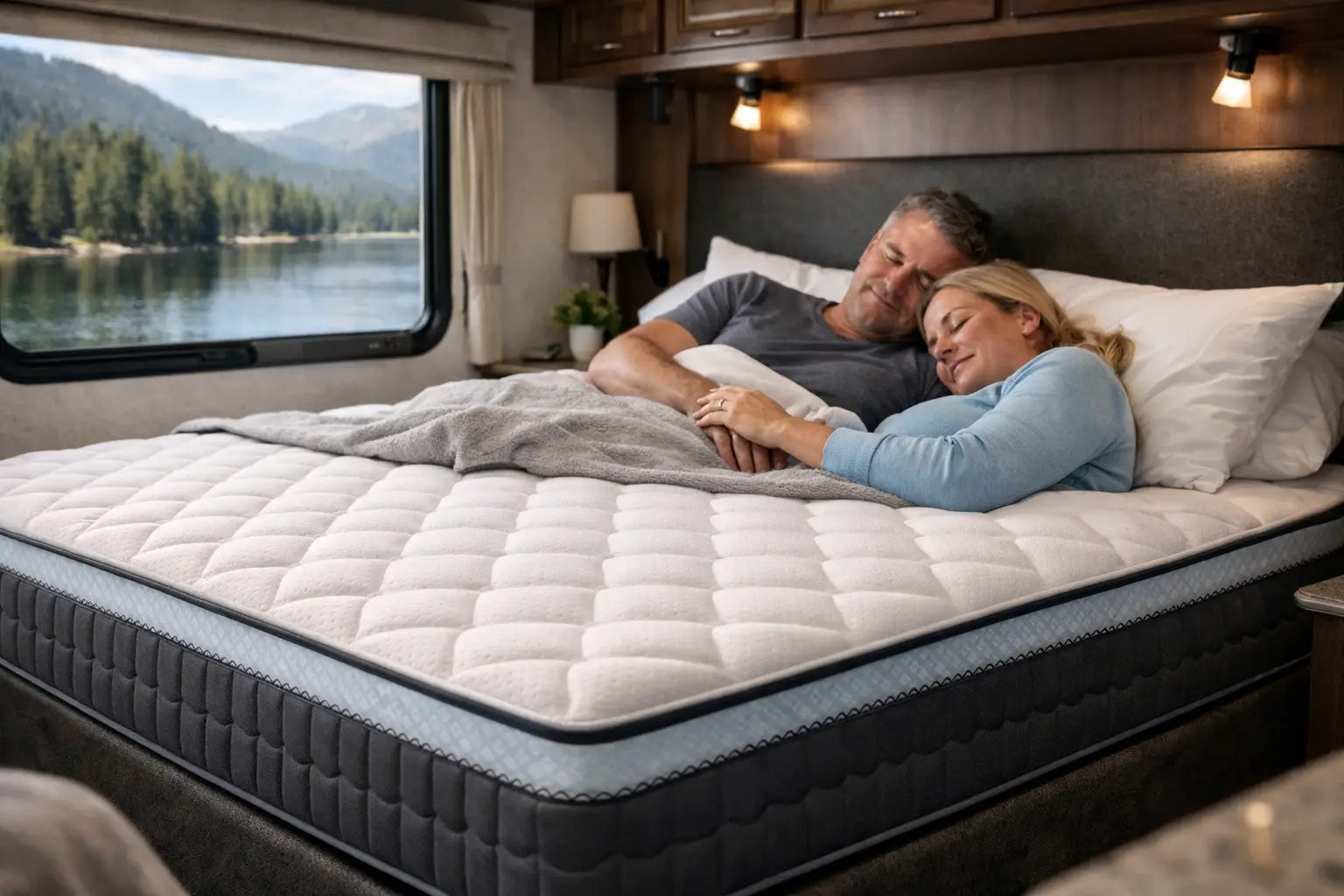
That factory mattress may fit your fifth wheel, but it was rarely built to help you recover after a full day of driving, setting up camp, hiking, or simply living on the road. This fifth wheel mattress guide cuts through the guesswork so you can replace a thin, heat-trapping bed with one that fits correctly and performs like a serious sleep surface.
A better mattress is not a luxury reserved for home. For full-time RVers, retired travelers, road-tripping couples, and families, it is part of making the rig feel livable. The right choice relieves pressure at the shoulders and hips, supports the lower back, limits partner movement, and stays cooler through the night - without creating clearance problems in the bedroom slide or cabover area.
Start With Fifth Wheel Mattress Measurements
Do not order based on the label stitched onto the old mattress. Terms such as RV Queen and RV King are useful, but RV manufacturers do not always follow one universal dimension. A mattress called a queen may be shorter, narrower, rounded at the corners, or built for a platform with unusual cutouts.
Remove bedding and measure the existing mattress or the bare platform in three places: length, width, and the maximum thickness your bedroom can accommodate. Measure from the inside edges of the frame, not just from wall to wall. If the mattress sits between cabinets or against a dresser, a few inches can determine whether the bed installs easily or becomes an expensive return.
Also check the shape. Many fifth wheels use standard rectangular mattresses, but some have clipped corners, rounded corners, or a tight entry path that makes a rigid replacement difficult to maneuver. Take a photo of the platform, note any obstacles, and measure the narrowest point between the entry door and bedroom. These details matter as much as the mattress size itself.
Common RV Mattress Sizes, With a Caveat
An RV Queen is often 60 by 75 inches, while a residential queen is commonly 60 by 80 inches. RV Kings vary more widely and may measure 72 by 80 inches or another manufacturer-specific size. RV Full/3/4 and bunk mattresses can be just as inconsistent.
The practical rule is simple: buy by measured dimensions, not by name. If your fifth wheel truly has room for a residential-size mattress, that may broaden your options. But most RV owners get the best fit from a mattress designed specifically for RV dimensions.
Choose Thickness for Your Fifth Wheel, Not a House
Thicker is not automatically better. A 14-inch residential mattress can feel impressive in a showroom, then make the bedroom feel cramped, interfere with a slide, block a window, or prevent a hinged storage platform from opening. Fifth wheel bedrooms reward smart construction more than excess height.
For many rigs, an 8- to 12-inch mattress is the sweet spot. That range can provide meaningful cushioning and support while preserving usable space. The exact choice depends on your body type, sleep position, platform design, and available clearance.
Before choosing thickness, raise the bed platform if it lifts for storage. Check whether gas struts still have enough strength to support a heavier mattress. If your bed is in a slide-out, run the slide with the current mattress in place and watch where the mattress comes closest to walls, trim, or cabinetry. A properly fitted mattress should improve sleep, not add a new setup chore at every stop.
Match Comfort to How You Actually Sleep
The best fifth wheel mattress is not the softest one. It is the one that holds your spine in a neutral position while cushioning the areas that carry the most pressure.
Side sleepers usually need more pressure relief around the shoulder and hip. A medium or medium-plush feel with responsive foam comfort layers can reduce the numbness and soreness that often come from a thin stock mattress. Back sleepers typically benefit from a medium feel with stronger lumbar support, while stomach sleepers usually need a firmer surface to keep the hips from dropping too far.
Couples should pay close attention to motion isolation. In a fifth wheel bedroom, the bed is often close to cabinets, walls, and storage compartments, so every movement can feel amplified. Quality pocketed coils move independently, helping reduce the transfer of motion when one person gets up early, shifts position, or returns from a late walk with the dog.
Body weight also changes the equation. Lightweight sleepers may find very firm mattresses unyielding, while larger sleepers often need a stronger coil system and more durable comfort layers to avoid premature sagging. A mattress should feel supportive from night one, not require months of hoping it will break in.
Cooling Matters More in a Fifth Wheel
RV bedrooms can hold heat. Sun hits the roof and sidewalls, limited airflow can trap warmth, and the air conditioner may not distribute cool air evenly to the front bedroom. Add a heat-retaining foam mattress, and a warm night becomes a restless one.
Look for cooling features that address heat at the surface and through the mattress. Conductive cooling covers can help pull warmth away from the body. Gel-infused memory foam can offer pressure relief without the dense, stagnant feel associated with older foam designs. Pocketed coils improve airflow through the mattress, which is especially valuable for travelers who spend summers in humid campgrounds or dry desert heat.
Cooling is not just a fabric claim. Mattress construction matters. An all-foam mattress may work well for some people, particularly where low weight is a priority, but a hybrid with coils generally provides more airflow and stronger edge support. If you sleep hot and want the familiar stability of a residential-quality bed, a coil-based design is usually the stronger choice.
Know the Trade-Off Between Weight and Support
Every fifth wheel has cargo limits, and a premium mattress weighs more than a basic foam pad. It is reasonable to consider weight, especially if you travel with full tanks, heavy tools, outdoor gear, or a large family.
Still, do not reduce the decision to pounds alone. The difference between a lightweight mattress and a better-built hybrid is often worth it for people dealing with back pain, poor sleep, or a mattress that bottoms out when they sit near the edge. Consider the mattress weight as part of your overall cargo plan, then choose construction that supports your body for the long haul.
Edge support is especially useful in fifth wheel bedrooms. It makes getting dressed, putting on shoes, and sitting at the side of the bed more comfortable. It also gives couples more usable sleep surface on a compact RV Queen, rather than forcing both sleepers toward the center.
Avoid the Most Common Replacement Mistakes
The first mistake is assuming every RV mattress is low quality. Some are adequate for occasional weekends, but many factory models are selected to meet a price point, not deliver durable comfort. If you wake with lower-back stiffness, sore hips, or sweat through the night, adding another topper may only hide the real problem for a while.
The second mistake is buying a residential mattress without checking fit and clearance. A standard queen can be five inches longer than an RV Queen. That can turn a straightforward upgrade into a mattress pressed against a wall, a blocked walkway, or a slide-out that will not close cleanly.
The third is choosing based solely on firmness labels. “Medium firm” is not standardized across brands. Construction, coil strength, foam density, and comfort-layer depth all affect how a mattress feels. Read the specifications, think about your sleep position, and choose a company that provides clear guidance rather than vague promises.
Finally, do not overlook the trial period and shipping process. A mattress is personal, and comfort cannot be fully judged by a product photo. Polar RV Mattress offers RV-specific sizing, premium cooling and support options, and a 365-night satisfaction guarantee because a serious mattress upgrade should come with room to make the right decision in your own rig.
A Practical Buying Checklist
Before placing your order, confirm these five details:
- Exact platform length and width, including any corner cuts or curves.
- Maximum mattress height allowed by slides, cabinets, windows, and bed lifts.
- Your usual sleep position and whether you need added pressure relief or firmer support.
- Whether partner motion, overheating, or edge support is a primary concern.
- The route from the fifth wheel entry to the bedroom, including tight turns and narrow doors.
A fifth wheel should not ask you to compromise every night just because it takes you somewhere worth waking up to. Measure carefully, prioritize support and cooling, and choose a mattress built to make tomorrow's drive feel easier than today's.
Share:
Guide to RV Mattress Firmness
How to Stop Overheating in Your RV Bed Tonight