

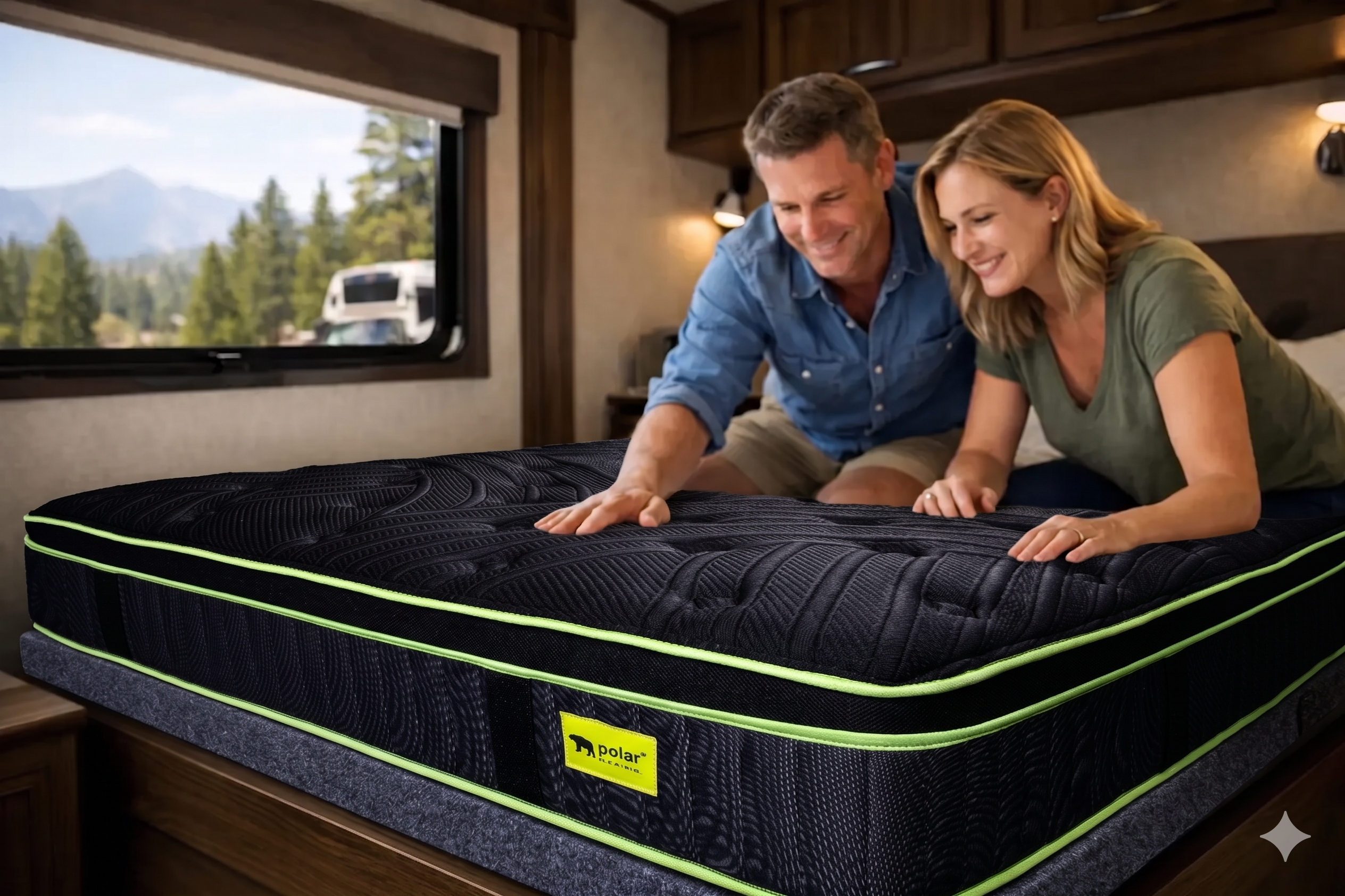
If your current RV mattress feels like a thin slab of foam over plywood, the question comes up fast: can you use regular mattress in RV and get better sleep without overcomplicating the swap? The short answer is yes, sometimes. The better answer is that fit, height, weight, and ventilation decide whether that shortcut works or becomes an expensive hassle.
A residential mattress can absolutely improve comfort compared to the factory mattress that came with many campers, travel trailers, and motorhomes. But RV beds are not built like bedroom setups in a house. RV platforms often use non-standard dimensions, tighter clearances, lighter lift mechanisms, and corner shapes that a standard mattress simply does not account for. That is why some owners install a regular mattress and love it, while others end up fighting the bed every time they open storage or walk around it.
Can you use regular mattress in RV without problems?
You can, but only if your RV bed space matches a standard mattress closely enough and your RV can handle the added bulk. This is where many people get tripped up. They assume queen means queen. In RVs, that is often not true.
A standard residential queen is typically 60 by 80 inches. An RV queen is often 60 by 75. RV king and RV full sizes also vary from residential standards, and bunk areas can be even more specific. If your bed platform is shorter than a regular mattress by even five inches, the mattress may block a hallway, press into cabinetry, or bend awkwardly against a wall.
Beyond length and width, thickness matters more in an RV than it does in a house. A 14-inch residential mattress might feel luxurious, but in a trailer with low overhead cabinets, it can make getting in and out of bed awkward. It can also reduce headroom when sitting up, especially in nose-cap bedrooms and slide-out spaces.
The real issues with using a regular mattress in an RV
Comfort is only one part of the buying decision. In an RV, the physical fit of the mattress affects daily use.
The first issue is dimensions. RV manufacturers routinely use short queens, narrow kings, three-quarter beds, and odd bunk sizes to save floor space. Some even round corners or cut angles so the mattress clears a wall or doorway. A regular mattress will not adapt to that shape.
The second issue is weight. Residential mattresses, especially hybrid and coil models, can be significantly heavier than RV mattresses. That extra weight may not matter on a fixed platform, but it matters a lot if your bed lifts for under-bed storage. Gas struts that worked with the original mattress may no longer hold the platform open. In some cases, owners need stronger hardware just to use the storage they already have.
The third issue is airflow. RVs deal with condensation more than most bedrooms in a house. A mattress placed on a solid platform without enough ventilation can trap moisture underneath, especially in colder weather or humid climates. A heavier residential mattress with dense foam can make that worse if the base and sleeping environment are not set up for airflow.
Then there is access. A mattress that is too tall or too wide can make it harder to open drawers, close slide-outs, or walk around the bed. In a home, a mattress that crowds the room is annoying. In an RV, it can interfere with function.
When a regular mattress works well in an RV
There are situations where a regular mattress is a practical upgrade. If your RV has a true residential-size platform, plenty of clearance around the bed, and no unusual corner cuts, a standard mattress may fit just fine. This is more common in some large fifth wheels, destination trailers, and motorhomes designed with residential-style bedrooms.
It can also work if you are replacing a mattress in a guest-friendly RV setup that sees occasional use and you already have a mattress available. If the dimensions line up and the bed platform is sturdy enough, using a regular mattress can be a simple solution.
Another case is stationary or mostly stationary RV use. If your RV stays parked for long periods, mattress weight and movement are less of a concern than they are for full-timers or frequent travelers. You still need to consider ventilation and fit, but the demands are different than in a rig that is constantly on the road.
When an RV-specific mattress is the better move
If your RV has a short queen, RV king, RV full, bunk size, or a custom platform, an RV-specific mattress is usually the smarter choice. The same goes for any setup with tight corners, bed lifts, low cabinets, or slide mechanisms nearby.
This is where a purpose-built RV mattress earns its value. It is designed around the actual realities of RV sleeping - not just comfort, but fit, access, and weight balance. That means you are not forcing a house mattress into a mobile space that was never designed for it.
For serious RV owners, that difference shows up quickly. Better support helps with back pain after long driving days. Cooling materials matter when the bedroom holds heat. Strong edge support matters when two people share a tighter sleep space. Motion isolation matters when one partner gets up earlier. A well-built RV mattress can deliver residential-level comfort without creating clearance and sizing problems.
That is the gap specialty brands are built to solve. Polar RV Mattress, for example, focuses specifically on RV sizes and sleep performance rather than asking customers to guess whether a standard mattress might work.
How to tell if your RV can take a regular mattress
Before you buy anything, measure more than just the platform. Start with width and length, then measure surrounding clearance. Check the distance to overhead cabinets, nearby walls, and any doors or drawers that open near the bed. If your current mattress has angled corners, note that too.
Next, measure height tolerance. Think about how high the mattress can be before it interferes with sitting up, walking space, or a slide. If your RV bed lifts, consider whether you can still access storage comfortably with a heavier mattress on top.
It is also worth checking the mattress foundation. Some RV platforms are solid decks, while others use slats or lightweight supports. A heavier regular mattress may require more structure underneath. If you are shopping for an all-foam residential mattress, confirm whether the base provides the support that mattress type needs.
Finally, think about the way you travel. Weekend campers may tolerate a compromise that full-time RVers will regret quickly. If you sleep in your RV for weeks or months at a time, the right fit is not a luxury. It is part of making the space livable.
Regular mattress vs RV mattress
A regular mattress can be a value play if it already fits, but it is often a blunt solution to a very specific problem. An RV mattress is a more precise tool.
The biggest advantage of a regular mattress is availability. Standard sizes are easy to find, and shoppers may be familiar with the feel of residential models. But availability does not equal compatibility.
The biggest advantage of an RV mattress is that it is built for non-standard spaces and mobile use. That includes the size itself, but also practical details like manageable weight, better clearance, and construction choices that help with temperature control and support in a compact room.
That difference matters most for RV owners who are upgrading because the stock mattress failed them. If your current mattress sleeps hot, causes pressure points, sags early, or transfers every movement, replacing it with any random residential model is not always enough. You want the right comfort system and the right dimensions at the same time.
The mistake to avoid
The most common mistake is buying based on mattress label instead of actual measurements. Queen, full, king, and twin do not mean the same thing across RVs and residential setups. The second mistake is focusing only on whether the mattress can physically fit on the platform while ignoring whether you can still live around it.
A mattress that touches both walls may technically fit, but if it blocks storage access, crowds your legs when getting out of bed, or traps heat every night, it is not the right fit.
So, can you use regular mattress in RV?
Yes, you can use a regular mattress in some RVs. But whether you should depends on the exact size of your sleep space, the mattress height, the added weight, and how your RV functions day to day.
If your RV has a true residential platform and enough clearance, a regular mattress may work well. If your bed size is shorter, narrower, angled, or built around storage and tight walkways, an RV-specific mattress is usually the stronger long-term choice.
The best RV sleep setups do not come from forcing a standard mattress into a non-standard space. They come from matching comfort, support, cooling, and fit to the way you actually travel. Get that part right, and your bedroom stops feeling like a compromise.

Share:
RV Queen Mattress Buying Guide
RV Mattress vs Regular Mattress