

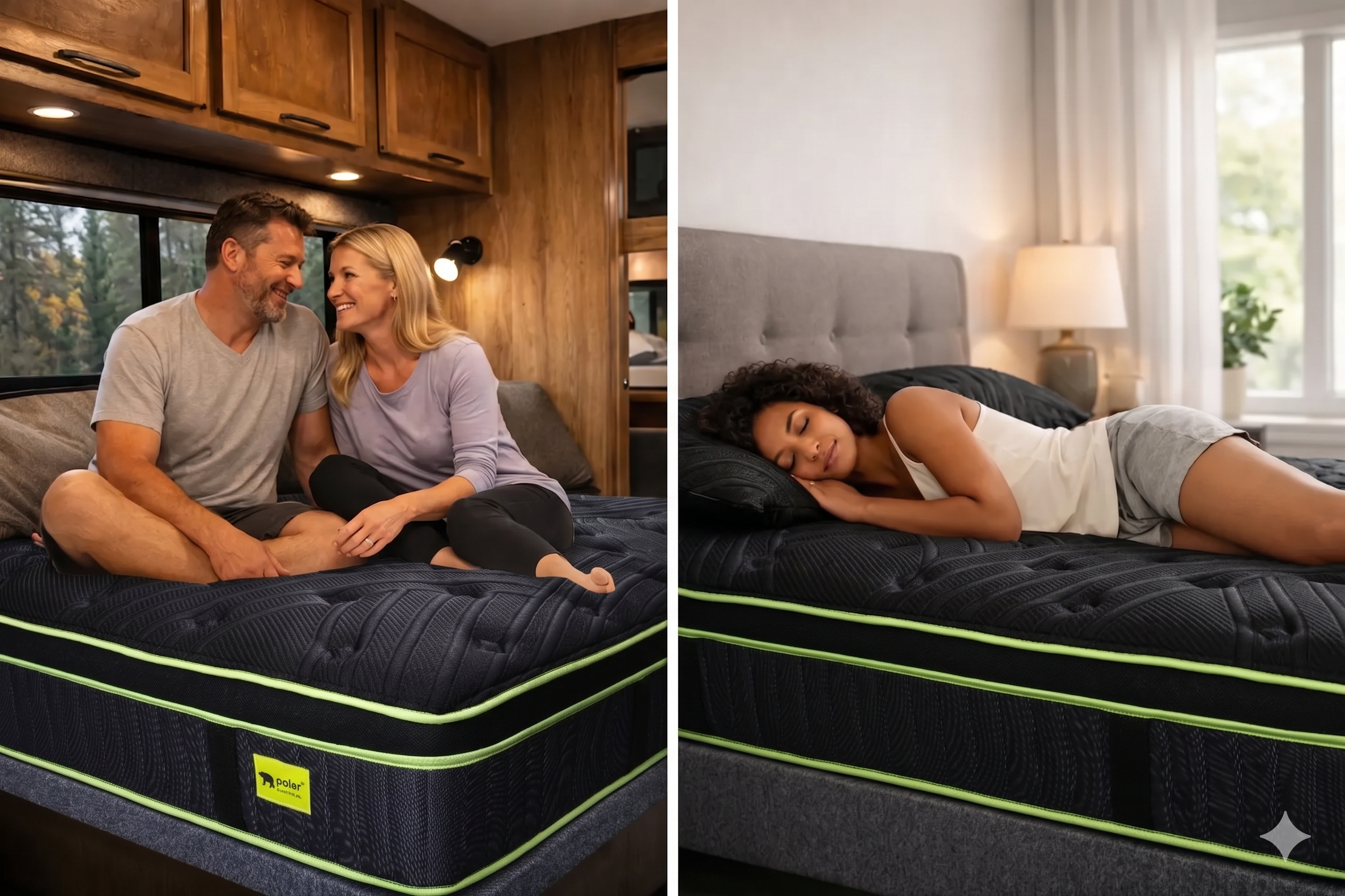
You feel the difference on the first night. A regular mattress might look close enough on paper, but in an RV, close enough often means poor fit, trapped heat, edge sagging, and another trip spent waking up sore. That is why the rv mattress vs regular mattress question matters more than most shoppers expect.
If you want better sleep on the road, the real issue is not whether one mattress is somehow universally better. It is whether the mattress is built for the way an RV actually works. Size constraints, weight limits, platform shapes, airflow, and nightly motion all change what performs well in a camper, fifth wheel, or motorhome.

RV mattress vs regular mattress: the biggest difference
The biggest difference is purpose. A regular mattress is designed for a stationary bedroom with standard dimensions and fewer installation constraints. An RV mattress is designed for mobile living, non-standard spaces, and sleep surfaces that often need more precision in both fit and construction.
That starts with size. Residential mattresses usually come in standard Twin, Full, Queen, and King dimensions. RVs often do not. Many use RV Queen, RV King, RV Full or three-quarter, short queen, bunk sizes, or custom cut corners. Even when the name sounds familiar, the dimensions may be different enough to create overhang, awkward gaps, or problems opening storage compartments under the bed.
Construction matters too. A standard mattress may work fine in a house but feel wrong in an RV because the environment is different. RV owners deal with thinner foundations, tighter bedroom layouts, more motion transfer, and more temperature swings. A mattress that performs well at home can feel too bulky, too heavy, too hot, or too soft once it is installed in a camper.
Why regular mattresses often disappoint in RVs
The most common mistake is buying by length and width alone. If the footprint seems close, shoppers assume it will work. But RV spaces are less forgiving than residential bedrooms. A mattress that is two inches too wide can block access, pinch against cabinetry, or make fitted bedding hard to use. A mattress that is too tall can interfere with overhead clearance or make it harder to sit up in bed.
There is also the issue of support. Many regular mattresses are built with the expectation of a stable base and generous bedroom space around them. RV bed platforms can be more rigid in some spots and less supportive in others, especially with slatted surfaces, hinged storage lids, or corner layouts. A mattress that is not designed with that setup in mind may wear unevenly or create pressure points faster than expected.
Heat is another reason regular mattresses can miss the mark. RVs hold heat differently than larger homes, especially in summer travel or warm-weather camping. Dense all-foam residential models can sleep hotter in a compact RV sleeping area, where airflow is limited and body heat builds up faster overnight.
Where an RV mattress earns its keep
A true RV mattress is not just a smaller mattress. At its best, it is a sleep system built around RV realities.
First, it fits correctly. That sounds basic, but it is one of the biggest upgrades you can make. A proper RV fit means the mattress sits cleanly on the platform, works with storage access, and does not force compromises in surrounding space.
Second, it addresses comfort problems common in factory mattresses. Many stock RV beds are thin, flat, and underbuilt. They tend to create shoulder and hip pressure, poor lumbar support, and partner disturbance. Upgrading to a better RV mattress usually means more substantial support, better pressure relief, and a more stable feel across the bed.
Third, premium RV mattresses are often built with temperature control in mind. Cooling covers, gel-infused foams, breathable coil layers, and conductive cooling materials can make a real difference when you are sleeping in a smaller enclosed space. For RV owners who run hot, this is not a luxury feature. It is a quality-of-sleep feature.
RV mattress vs regular mattress for support and comfort
This is where the comparison gets more personal. Support needs depend on body type, sleep position, and whether you are sleeping solo or with a partner. But there are still some clear patterns.
A good regular mattress can absolutely feel comfortable. If you have the exact space, enough clearance, and a construction that matches your RV setup, it may work. That is the honest answer.
Still, many RV owners are not replacing a mattress in a perfect room. They are trying to sleep well on the road after long drives, hikes, setup days, and uneven travel schedules. In that context, support quality becomes even more important. Zoned coils, stronger edge support, motion isolation, and pressure-relieving comfort layers are not just premium add-ons. They are features that help you recover and sleep consistently from one stop to the next.
That is why specialty RV mattresses often outperform generic alternatives. They are built to bring residential-level comfort into a non-residential setting. Brands focused on RV sleep, including Polar RV Mattress, engineer around cooling, support, fit, and movement rather than hoping a standard bed happens to work.
Size and shape are not minor details
For many buyers, this is the deciding factor in the rv mattress vs regular mattress comparison. If your RV uses a short queen, an RV king, a three-quarter full, a bunk, or a custom shape, your options narrow quickly.
Trying to force a standard residential mattress into an RV usually creates one of two problems. Either the mattress does not fit the platform correctly, or the room has to work around the mattress. Neither is a good trade-off in a compact living space.
This matters even more in corner beds and walk-around layouts. In those setups, every inch affects how easy it is to get in and out of bed, make the bed, and move through the room. A mattress with the right dimensions can make the entire bedroom feel more functional.
Weight, height, and installation matter more in an RV
A regular mattress can be much heavier than expected, especially if it uses dense foams or a thick hybrid build. In a house, that is usually just an inconvenience during delivery. In an RV, it can affect handling, bed-lift storage access, and the practicality of getting the mattress through tight doors and hallways.
Height matters too. A taller mattress is not automatically better. More profile can mean a more premium feel, but it can also reduce overhead space or make fitted sheets harder to manage in a tight corner. The right RV mattress balances enough material for comfort with dimensions that still work inside the coach.
Durability on the road
Travel adds stress. Mattresses in RVs are exposed to vibration, temperature shifts, seasonal storage, and more frequent compression changes than many residential beds. A low-quality regular mattress may break down faster in that environment, especially if the edge support is weak or the foam quality is inconsistent.
That is where better materials show their value. Stronger coil systems, denser comfort foams, and durable covers tend to hold up better over time. If you travel often or live in your RV full-time, durability should carry more weight in your decision than sticker price alone.
So which one should you buy?
If your RV happens to fit a standard residential size exactly, your base platform is compatible, the mattress height works in the room, and the construction suits RV conditions, a regular mattress can be a workable option. For occasional campers with simple layouts, that may be enough.
But if you care about proper fit, cooler sleep, stronger support, less partner disturbance, and long-term comfort, an RV-specific mattress is usually the better investment. That is especially true if you are replacing a stock mattress, sleeping in a non-standard size, or traveling often enough that poor sleep follows you from trip to trip.
The right mattress should not feel like a compromise just because it is going in an RV. It should fit the space correctly, support your body well, and help you wake up ready for the next day instead of counting down to when you get home. Buy for the way you actually travel, and your bed will stop being the weak point in your RV.


Share:
Can You Use Regular Mattress in RV?
Guide to RV Mattress Firmness