

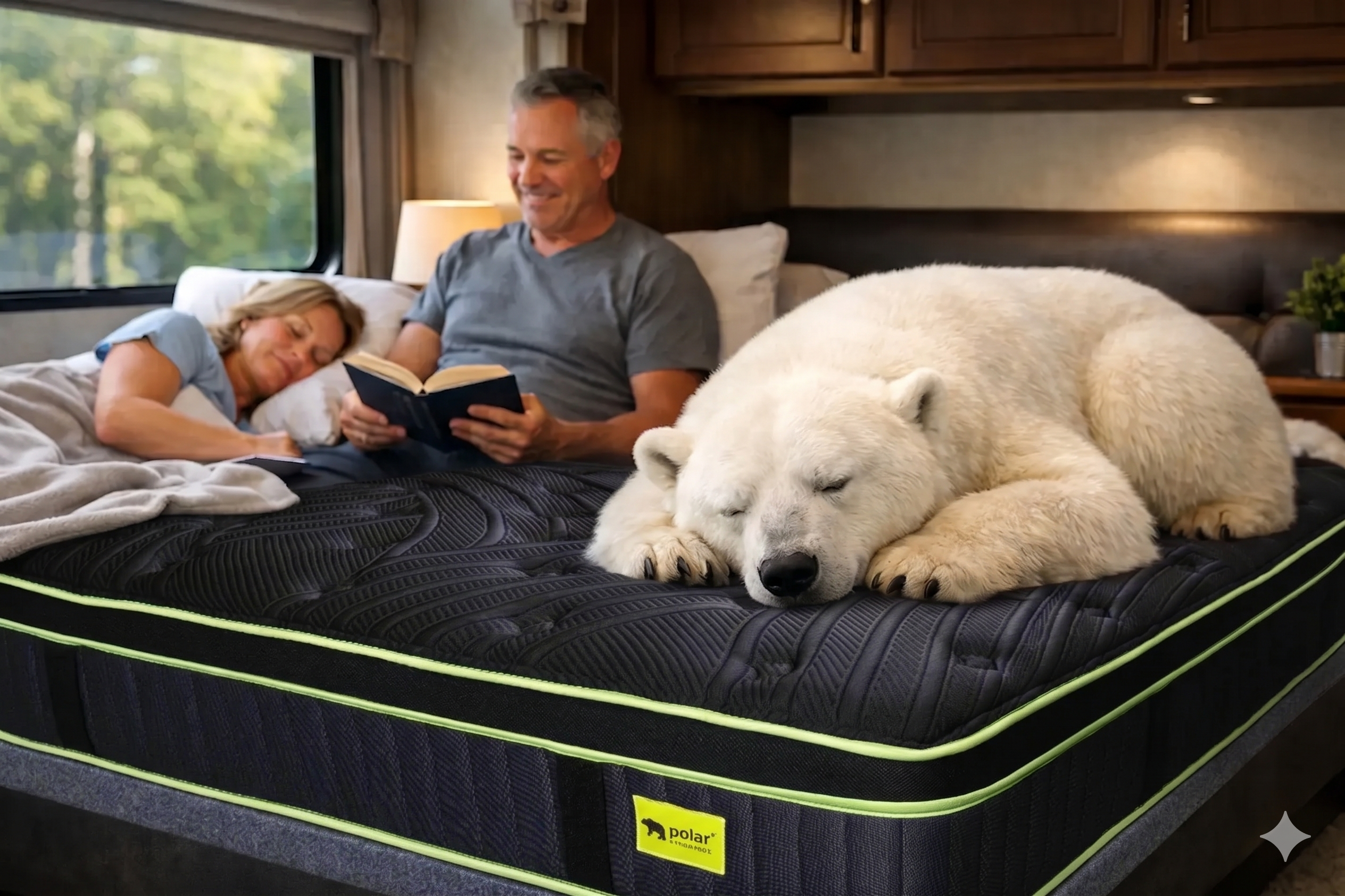
Anyone who has shared an RV bed knows the problem immediately. One person rolls over, gets up early, or shifts after a long day of driving, and the whole mattress seems to announce it. That is exactly why rv mattress motion isolation matters. In a smaller sleep space, with tighter layouts and more noticeable movement, the wrong mattress can turn one partner’s restless night into two.
For couples, full-time RVers, and anyone replacing a basic factory mattress, motion control is not a luxury feature. It is one of the biggest differences between a bed that feels livable for a weekend and one that still feels good after months on the road.
What rv mattress motion isolation actually means
Motion isolation is a mattress’s ability to keep movement from traveling across the sleep surface. If one side compresses, the other side should stay relatively calm. On a good RV mattress, that means fewer wakeups when your partner changes positions, climbs in late, or heads out early to make coffee at sunrise.
In a residential bedroom, poor motion control is annoying. In an RV, it is often worse. The sleep surface is usually more compact, bed platforms can be lighter, and many RV mattresses start out thin and underbuilt. That combination makes transfer easier to feel.
A mattress with strong motion isolation absorbs energy instead of sending it across the bed. The result is a sleep surface that feels more stable, less bouncy, and more controlled.
Why motion transfer feels worse in an RV
RV owners often notice partner disturbance faster than they did at home, and there are a few practical reasons.
First, RV mattresses are frequently shorter, narrower, or built to non-standard dimensions. Less surface area means you are naturally sleeping closer together. Second, many stock RV mattresses use lower-density foams or simple open coil systems that do little to separate one sleeper’s movement from the other’s. Third, an RV bed foundation may not be as substantial as a residential frame, so extra vibration can be more obvious.
If you are sleeping in an RV queen, RV full, or bunk setup, there is simply less room for movement to disappear. That makes mattress construction even more important.
The best materials for rv mattress motion isolation
Not every premium mattress handles motion the same way. Some feel supportive but still transfer too much movement. Others isolate well but fall short on cooling or edge support. The best choice depends on how you sleep, how much movement bothers you, and whether you want more bounce or a more absorbed feel.
Memory foam usually isolates motion best
If your top priority is reducing partner disturbance, memory foam is usually the strongest performer. It compresses where pressure is applied and absorbs movement instead of rebounding quickly. That slower response helps keep motion from rippling across the mattress.
This is one reason many sleepers notice an immediate improvement when moving on from a cheap innerspring RV mattress to a quality foam or hybrid design with substantial comfort layers. The trade-off is feel. Some people love the quieter, more body-conforming surface. Others want more lift and easier mobility.
Pocketed coils perform better than connected coils
Not all coil mattresses are motion-friendly. Traditional connected coil systems tend to move as a unit, so one person’s movement can be felt across the bed. Pocketed coils are different. Each coil is wrapped individually, which allows them to respond more independently.
That independence matters in an RV. A well-built hybrid with zoned pocketed coils and quality foam layers can give you better support and airflow than all-foam while still controlling motion far better than basic coil designs.
Hybrid construction often gives the best balance
For many RV owners, a hybrid mattress is the sweet spot. You get foam layers to absorb movement and pocketed coils to support the body and improve airflow. That mix can be especially effective for couples who want less motion transfer without giving up responsiveness.
The key is construction quality. A thin hybrid with cheap foams may still feel unstable. A better-built hybrid with denser comfort materials, proper coil zoning, and stronger support systems usually performs much better over time.
What affects motion isolation besides materials
Mattress shopping gets easier when you know motion control is not just about one layer. Several design choices work together.
Thickness matters because a thicker comfort system has more room to absorb movement before it reaches the other side. Foam density matters because low-quality foams can break down faster and lose their ability to cushion motion consistently. Coil count and coil design matter because individually wrapped, well-supported coils limit transfer more effectively than simpler spring systems.
Firmness also plays a role. Very firm mattresses can sometimes transfer more movement because there is less contouring to absorb it. Very soft mattresses may reduce transfer well, but they can create alignment issues if support is lacking. For most RV sleepers, a balanced medium to medium-firm feel tends to work best, especially when paired with quality foam and pocketed coils.
When motion isolation should be a top buying priority
Some shoppers care about cooling first. Others need pressure relief or stronger lumbar support. But there are situations where motion isolation deserves to move near the top of the list.
If one partner is a light sleeper, motion isolation matters. If schedules do not match and one person gets in or out of bed much earlier, it matters. If one sleeper changes positions often, deals with joint pain, or wakes up frequently through the night, it matters even more.
It is also a major factor for full-time RVers. One or two restless nights on a short trip may be manageable. Over months of travel, constant sleep interruption wears on energy, patience, and recovery.
The trade-off: great motion isolation vs other performance features
There is no perfect mattress for every sleeper, and this is where honest comparison matters.
A mattress that isolates motion extremely well may have a slower, more cushioned feel that some people describe as less lively. That can be a positive if you want stability, but a downside if you prefer a traditional springy bed.
Likewise, an ultra-plush foam feel may reduce transfer but sleep warmer if the cooling materials are not strong enough. That is why premium RV mattresses that combine conductive cooling, gel memory foam, and supportive coil systems tend to stand out. They aim to solve more than one problem at once instead of forcing you to trade cooling for motion control or support for comfort.
How to tell if your current RV mattress is the problem
A lot of RV owners blame the space, the travel schedule, or the bed platform when the mattress is the real issue.
If you feel your partner every time they turn over, if the bed ripples when someone sits down, or if you wake up when the other person exits the mattress, your current bed is likely doing a poor job of isolating motion. Excessive bounce, sagging, and thin comfort layers are common warning signs.
Another clue is edge collapse. When the perimeter is weak, movement near the edge can shift the whole surface more noticeably. In smaller RV beds where people use the full width of the mattress, that instability becomes hard to ignore.
What to look for in a replacement RV mattress
Start with correct RV sizing. Even the best mattress will disappoint if it does not fit the platform properly. RVs often use non-standard dimensions, and guesswork leads to overhang, gaps, or installation frustration.
Then focus on construction. Look for substantial comfort layers, quality memory foam or gel memory foam, and individually wrapped coils if you want a hybrid. Zoned support is a real advantage for couples because it helps maintain spinal alignment while the comfort layers handle pressure and movement.
This is also where a specialized RV brand has an edge. A mattress designed specifically for RV dimensions and sleep conditions is more likely to deliver residential-level comfort without compromising fit. Polar RV Mattress, for example, builds around core buyer priorities like cooling, support, and motion control rather than treating the RV category like an afterthought.
Don’t judge motion isolation in isolation
Motion control matters, but it should support better sleep overall, not come at the expense of everything else. A mattress that isolates movement well but traps heat, sags early, or leaves your back unsupported is still the wrong mattress.
The best RV mattress is the one that fits your floorplan, supports your body type, stays comfortable through temperature swings, and lets one sleeper move without disturbing the other. For most couples, that means looking closely at premium foam or hybrid designs built for RV use, not settling for the thin stock mattress that came with the rig.
When your bed stops reacting to every shift, the whole RV feels more livable. And after a long day on the road, that kind of quiet matters more than most people realize.

Share:
How Thick Should an RV Mattress Be?
Pocket Coil RV Mattress: Is It Worth It?