

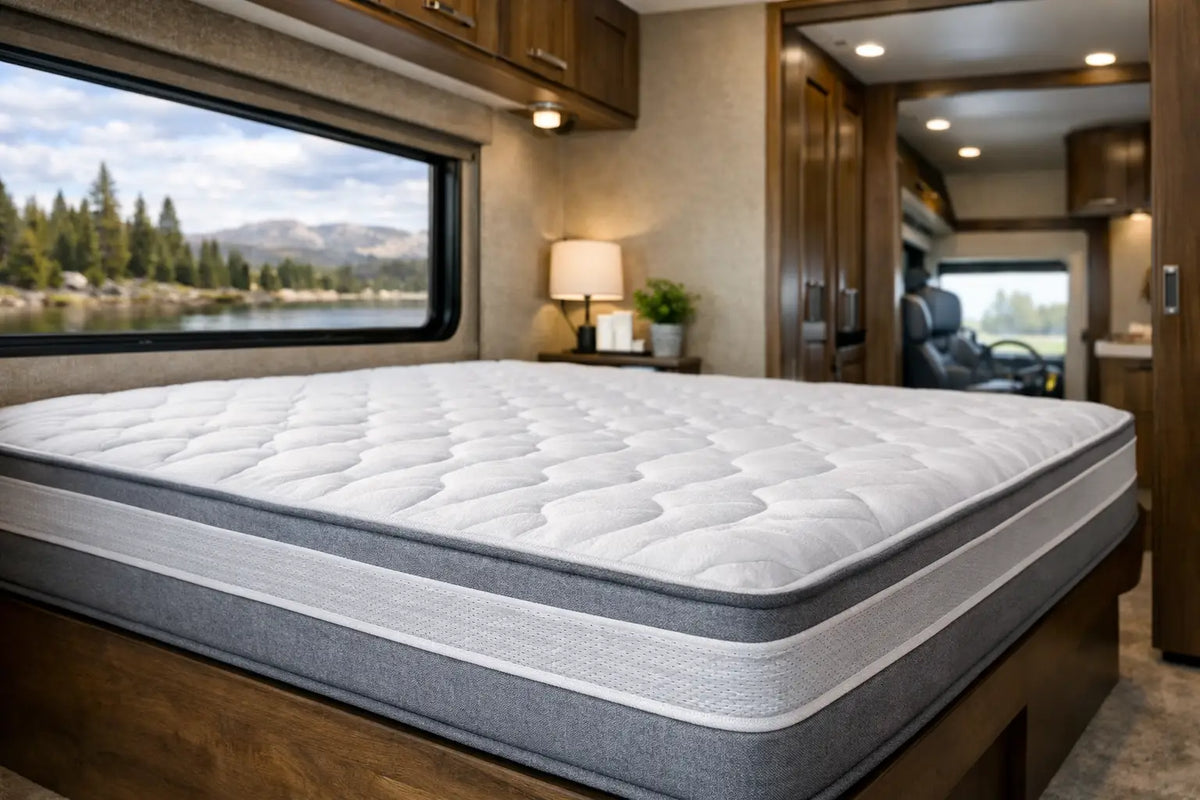
A 72" x 74" RV king mattress is not a size you should guess at. When your bed platform is four to six inches shorter than a common RV king, the wrong mattress can block a slide, bunch against a wall, interfere with under-bed storage, or leave an uncomfortable gap. More importantly, the right mattress can replace the thin, heat-trapping factory bed that has been cutting your trips short.
For couples who travel often or live in their RV full-time, a properly fitted 72-inch by 74-inch mattress delivers the sleeping surface you need without forcing a residential mattress into a space it was never designed to fit. The goal is simple: confirm the footprint, account for RV-specific clearance, then choose comfort and support that hold up mile after mile.
Is a 72" x 74" RV King Mattress a Standard Size?
Not exactly. RV mattress sizes are less standardized than residential mattress sizes, even when manufacturers use familiar names such as RV king or short king. A typical RV king is often 72 inches wide by 80 inches long. A 72" x 74" RV king mattress is shorter, and it may be used in a compact bedroom, slide-out, older coach, custom conversion, or floor plan where every inch has been planned around cabinetry and walkways.
That six-inch difference matters. A conventional 72" x 80" RV king will not become a workable fit by compressing it at the foot of the bed. Foam can bow, coil systems can be stressed, and the extra material can prevent your slide from moving correctly. Buying by the label alone is how RV owners end up paying for a mattress they cannot use.
The width is generous enough for most couples, while the 74-inch length is the main compromise. For many sleepers, especially those under about 6 feet tall, it works well. Taller sleepers should consider how they sleep. If you curl slightly on your side or sleep diagonally, 74 inches may feel perfectly comfortable. If you sleep flat on your back with your feet extended, a longer custom option may be worth prioritizing if your RV layout allows it.
Measure the Bed Platform, Not the Old Mattress
Your current mattress may be undersized, misshapen, or compressed along the edges. It is not a reliable measuring tool. Remove the mattress and measure the actual platform from inside edge to inside edge at the widest and longest usable points.
Measure the width in three places: at the head, center, and foot. Do the same for length. RV walls and bed frames are not always perfectly square, particularly in older units or slide-out bedrooms. Use the smallest measurement as your limit. A mattress should fit securely without being forced into a tight space.
Also measure around the platform. Check for nightstands, wardrobe doors, vents, trim, grab handles, and slide mechanisms. If the mattress sits in a recessed frame, measure the depth of that recess. This prevents a common problem: ordering the correct width and length, then discovering the corners catch on the frame or the mattress sits too high for surrounding furniture.
Before ordering, confirm these practical details:
- Whether the bed is in a slide and needs clear space to retract
- The amount of room above the mattress for cabinets, windows, and reading lights
- Whether the platform lifts for storage and how much weight the hinges can handle
- The shape of every corner, especially if the foot has a radius or angled cut
Choose Height for Your RV, Not Just Your Bedroom
A thicker mattress can feel more luxurious, but height is not automatically better inside an RV. The platform may already be high, the ceiling may slope above the bed, or overhead cabinets may sit close to the sleeping surface. A mattress that is too tall can make it difficult to sit up, change sheets, or access storage.
For many RV bedrooms, an 8- to 10-inch profile provides a strong balance of pressure relief, support, and clearance. A 12-inch profile can be an excellent choice when the room has adequate space and the bed base is not unusually tall. The best decision depends on the construction inside the mattress, not thickness alone.
A quality 10-inch hybrid with a supportive coil system and comfort foam can outperform a thicker all-foam mattress that lacks edge support or lets your hips sink too deeply. Likewise, a thinner mattress built with durable materials can be a major upgrade over the low-density foam commonly installed at the factory.
Support Matters More on the Road
An RV mattress faces different demands than a mattress in a stationary home. It experiences vibration, shifting temperatures, frequent movement, and sometimes long periods of storage. Cheap foam can soften quickly, hold heat, and develop body impressions that leave your lower back unsupported.
For most RV couples, a hybrid design is a smart place to start. Zoned pocketed coils provide targeted support under heavier areas of the body, while comfort layers cushion shoulders and hips. Individually wrapped coils also reduce motion transfer, so one person can get up early without turning the entire bed into a wake-up call.
Sleep position should guide the comfort level. Side sleepers usually need more pressure relief around the shoulder and hip. Back sleepers generally benefit from balanced, medium-firm support that keeps the lumbar area from sagging. Stomach sleepers often need a firmer surface to keep their midsection from dropping too far. Couples with different preferences should look for a responsive hybrid feel that cushions pressure without creating the deep, slow sink associated with softer traditional memory foam.
Edge support deserves special attention in a 72-inch-wide RV king. RV bedrooms can feel tight, and you may spend more time sitting on the side of the bed while dressing or making room to walk around it. Strong perimeter support keeps the usable sleep surface stable and makes the mattress feel larger in everyday use.
Cooling Is a Real RV Sleep Upgrade
RV bedrooms can get warm fast. Even with air conditioning, the back of the coach, a sun-facing wall, or a limited electrical hookup can make nighttime temperature control difficult. A heat-retaining mattress turns that challenge into a restless night.
Look beyond vague claims of “cooling foam.” Better temperature management comes from a combination of breathable construction, airflow through the support core, and comfort materials designed to move heat away from the body. Pocketed coils naturally allow more airflow than a solid foam block. Conductive cooling technology and gel-infused foams can further reduce the warm, trapped feeling that many sleepers experience on basic memory foam.
Cooling should not come at the cost of support. A mattress can feel cool initially and still fail if it bottoms out under the hips or loses its shape after a season of travel. The best RV mattress combines temperature control with stable, long-term support.
Do Not Forget Bedding and Installation
A 72" x 74" mattress may require specialty sheets. Standard king sheets are likely too large, while standard RV king sheets are commonly made for longer 72" x 80" mattresses. Deep-pocket fitted sheets can sometimes be tucked securely, but excess fabric may shift during the night. If a tailored fit matters to you, confirm bedding availability before the mattress arrives.
Installation also deserves a plan. Measure the RV entry door, hallway turns, and bedroom opening, not only the bed platform. A mattress that ships compressed and rolled is usually much easier to maneuver through a coach than a traditional flat mattress. Once positioned, give it time to expand fully before judging its feel.
If your platform lifts, test it carefully after installation. A premium mattress may weigh more than the stock unit because it contains better foam, stronger coils, and more substantial materials. That added weight is often part of the upgrade, but gas struts or hinges may need attention if the storage bed no longer lifts easily.
A Better Fit Makes Every Stop Better
The right 72" x 74" RV king mattress should not feel like a compromise made for a small space. It should fit your platform precisely, keep both sleepers supported, reduce overheating, and make the RV bedroom a place you look forward to using after a long drive. Polar RV Mattress is built around that standard: serious sleep performance in sizes that actually belong in an RV.
Take the extra ten minutes to measure before you buy. That small step protects your investment and puts you much closer to waking up rested, whether you are parked for one night or staying put for an entire season.
Share:
When to Replace RV Mattress and What to Buy
Do RV Mattresses Need Special Sheets? Find Out