

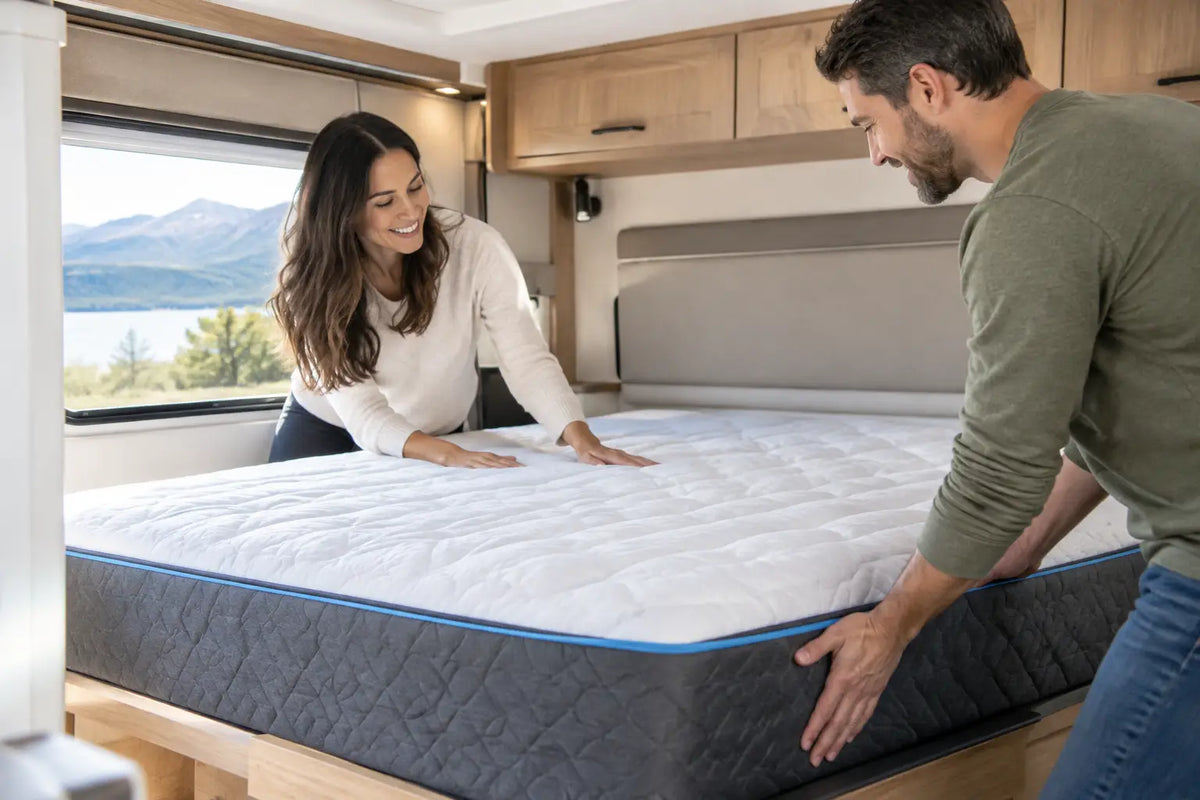
A damp patch under the bed can turn an otherwise great RV trip into a costly cleanup. When warm, humid cabin air meets a cold plywood bed platform, moisture can collect where you cannot see it: beneath the mattress. Left alone, that moisture can cause musty odors, mildew, mold, damaged plywood, and a mattress that never feels truly fresh.
To prevent condensation under RV mattress surfaces, you need to manage the air gap, the humidity inside the coach, and the cold surface below the bed. A premium mattress improves sleep comfort, but no mattress can perform at its best when moisture is trapped beneath it. The good news is that this is a solvable RV problem, even for full-time travelers and cold-weather campers.
Why Condensation Forms Under an RV Mattress
Your body releases heat and moisture while you sleep. In a home, that moisture has more room to disperse through a larger, better-insulated structure. In an RV, the bed often sits on a solid plywood platform, sometimes over an exterior storage compartment, wheel well, or unheated area. That platform can become significantly colder than the air inside the bedroom.
When humid interior air reaches that cold surface, it cools and releases moisture. The mattress blocks airflow, so the moisture has nowhere to go. This is why condensation is especially common after cold nights, when two people sleep in a closed-up coach, or when cooking, showering, and drying wet gear add more moisture to the cabin.
Do not assume every wet spot is condensation. A roof leak, window leak, plumbing issue, or damp storage compartment can create a similar problem. If the moisture is concentrated in one area, appears after rain, or affects nearby walls and cabinetry, inspect for leaks before changing your sleep setup.
Start With Humidity Control Inside the RV
The fastest way to reduce condensation is to reduce the amount of water vapor in the air. In cool weather, aim to keep indoor relative humidity around 35% to 50%. The right number depends on the outdoor temperature. When it is very cold outside, lower humidity is usually safer because interior surfaces cool faster.
A small digital hygrometer takes the guesswork out of the process. If your readings regularly sit above 55% during cold-weather camping, the air inside the RV is carrying enough moisture to create problems under the bed, around windows, and inside closets.
Run a properly sized dehumidifier when you have shore power, especially overnight. For boondocking or limited-power travel, moisture-absorbing products can help in small enclosed spaces, but they are not a replacement for active ventilation. They collect only a limited amount of water and need frequent attention.
Ventilation matters just as much. Use the bathroom fan during showers and for several minutes afterward. Run the range hood while cooking. Crack a roof vent or window slightly when conditions allow, ideally on opposite sides of the RV to create gentle air exchange. It may feel counterintuitive to bring cold air in during winter, but exchanging humid air is often the difference between a dry bed platform and a wet one.
Create Airflow Under the Mattress
A solid platform directly under a mattress is the most common setup behind under-bed condensation. The fix is simple in principle: create a consistent channel for air to move beneath the mattress.
Use a Purpose-Built Ventilation Layer
A three-dimensional mattress underlay, often made from a springy mesh material, is one of the most effective solutions. It holds the mattress slightly above the platform and creates open pathways for air to circulate. This allows moisture to evaporate instead of pooling against the plywood.
Choose an underlay that covers as much of the bed platform as possible. Trim it carefully around hinges, access panels, and lift mechanisms so it does not interfere with how the platform operates. A partial layer may help, but uncovered sections can still collect moisture.
This approach is usually the best fit for RV owners who need to preserve a solid storage platform beneath the bed. It adds very little height, works with most mattress types, and does not require rebuilding the base.
Consider Slats, With the Right Support
Replacing a solid deck with spaced wooden slats can improve ventilation, but it is not automatically the best option. Slats must be properly supported, evenly spaced, and strong enough for the mattress and sleepers. Wide gaps can allow foam to sag over time, particularly with heavier all-foam mattresses.
If you use slats, follow the mattress manufacturer's support requirements. For many foam and hybrid mattresses, closely spaced slats with a center support are the safer choice. The goal is not maximum open space. It is reliable support with enough airflow to keep the underside dry.
Air Out the Bed Regularly
During damp weather or extended stays, lift the mattress or prop it on its side for a short period each week. Open the bedroom windows or roof vent while you do it. This is a practical habit, not a permanent substitute for ventilation, but it lets you spot moisture before it becomes a mold problem.
If you see dampness, dry the platform and mattress immediately with towels and moving air. Do not remake the bed over a wet surface. That only traps the problem for another night.
Improve the Cold Surface Below the Bed
Airflow solves part of the equation. Reducing the temperature difference between the mattress area and the platform tackles the other part.
If the bed sits over an unheated pass-through storage compartment, inspect the compartment door seals and any obvious gaps around plumbing or wiring. Cold drafts beneath the bed can make condensation much more likely. Insulating the underside of the platform or improving the separation between the sleeping area and storage compartment can help, provided you do not block needed access, pinch wiring, or create a fire risk near electrical components.
Reflective foil insulation alone is not a cure when it is pressed tightly between surfaces. Its performance depends on an adjacent air space. Rigid foam insulation may be more useful in some platform designs, but installation needs to be clean, secure, and appropriate for the RV's construction. If you are not comfortable modifying the bed base, use a ventilation underlay first. It is simpler, reversible, and highly effective for many RVs.
Choose Bedding That Does Not Hold Extra Moisture
A waterproof mattress protector is useful for spills, kids, pets, and everyday mattress protection. It does not prevent condensation underneath the mattress. In fact, a non-breathable protector can make the sleep surface feel warmer and may hold more moisture near the top of the bed.
Look for a breathable protector and sheets that manage moisture well. Cotton, Tencel-style fabrics, and other breathable materials can feel more comfortable than heavy synthetic bedding in a warm RV bedroom. Avoid piling on blankets before bed if you are already waking up overheated. Excess warmth can increase sweating, which adds moisture to the enclosed sleeping space.
The mattress itself also matters. A cooling, supportive RV mattress can help reduce heat buildup and improve overnight comfort, especially compared with the thin, heat-trapping factory mattress found in many rigs. But even the best RV mattress for cooling, comfort, and support needs a dry, ventilated foundation below it.
Check Your Setup After the First Cold Night
Do not wait for a musty smell to inspect under the bed. After a cold or rainy night, pull back the bedding and lift one mattress corner. Feel the underside of the mattress and the platform. Check the center, edges, and corners, since moisture does not always appear evenly.
Watch for a cool, clammy surface, dark spots on plywood, discoloration on fabric, or a sour odor. If the platform is painted or laminated, condensation may bead on top rather than soaking in. Bare plywood can absorb moisture quickly, which makes early checks even more valuable.
A simple seasonal routine is usually enough: inspect more frequently during winter travel, after long stretches of rain, and when the RV has been occupied with windows closed. In dry summer conditions, you may find the issue disappears. That does not mean the ventilation layer was unnecessary. It means the system is ready when temperature and humidity swing again.
When Condensation Is a Bigger Warning Sign
Recurring moisture despite a ventilation layer and reasonable indoor humidity deserves a closer look. Check for wet insulation, leaks around exterior walls, water beneath the bed platform, and a storage compartment that stays damp. A dehumidifier that fills unusually fast can also point to an air leak or hidden water intrusion.
Treat visible mold seriously. Small surface areas may be cleaned according to the material manufacturer's guidance, but deeply stained plywood, saturated insulation, or a mattress with mold growth may need professional assessment or replacement. Your bed should support recovery, not expose you to a problem that gets worse every time you close the door.
A dry mattress platform is one of those quiet upgrades that pays you back every night. Give air a path beneath the bed, keep cabin humidity under control, and inspect the space before moisture has time to settle in. Your RV mattress, your sleep, and the structure beneath you will all last longer for it.


Share:
Guide to Conductive Cooling Mattresses for RVs
RV Mattress Setup for Better Sleep on the Road