


A good RV mattress setup starts long before you unbox a new bed. It starts with the space you actually have, the sleep problems you want to solve, and the realities of a moving home. Factory RV mattresses are often thin, heat-trapping, and built to meet a price point. Replacing one can transform your nights, but only if the new mattress fits the platform, clears nearby cabinetry, and has the support beneath it to perform as designed.
For weekend campers, a better setup means waking up ready for the trail or drive home. For full-time RVers, it is a daily quality-of-life decision. The goal is not simply to put a residential mattress in an RV. It is to build a sleep system that delivers cooling, pressure relief, stable support, and a practical fit for life on the road.
Start Your RV Mattress Setup With Accurate Measurements
Do not order based on the name printed in an RV brochure. “Queen” and “king” can mean different things in an RV than they do in a house. An RV Queen, for example, is commonly 60 by 75 inches, while a standard residential queen is usually 60 by 80 inches. That extra five inches can block a walk-around path, hit a wardrobe, or prevent the mattress from sitting flat on its platform.
Measure the usable sleeping surface from inside edge to inside edge, not just the old mattress. Then measure the available height above the platform. In a slide-out, a thick mattress can interfere with trim, windows, or the slide mechanism when it retracts. In a cabover bunk, added height can reduce headroom enough to make reading or getting dressed frustrating.
Before choosing a mattress, confirm these four details:
- Platform length and width at the narrowest point
- Available mattress height, including clearance for cabinets and slide-outs
- Corner shape, wheel-well cutouts, or angled walls near the bed
- Access path from the RV entrance to the bedroom
Choose the Right Height and Construction
Mattress thickness is a trade-off. More height can provide deeper comfort layers and stronger pressure relief, especially for side sleepers and people dealing with shoulder, hip, or lower-back discomfort. But the tallest option is not automatically the best choice for every RV.
A low-profile bunk or a trailer bedroom with overhead cabinets may need a thinner mattress to preserve clearance. A spacious fifth wheel or Class A bedroom usually gives you more flexibility to choose a deeper, residential-style feel. Measure first, then decide how much thickness the space can truly accommodate.
Construction matters just as much as height. All-foam mattresses can be an excellent choice when reducing motion transfer is the priority. They can also be easier to lift for cleaning or accessing under-bed storage. The downside is that lower-quality foam often holds heat and can feel less supportive over time, especially for larger sleepers.
Hybrid designs combine comfort foams with pocketed coils. For many RV owners, this is the stronger all-around choice because coils improve airflow, reinforce the edges, and provide more responsive support when you move or get in and out of bed. Zoned pocketed coils can add firmer support where the body carries more weight while allowing more give at pressure points.
For shoppers who want the most substantial support system, coil-on-coil construction brings a more premium, residential feel to RV sleep. It is particularly worthwhile for full-time RVers, couples, and anyone tired of the sagging sensation common with basic RV bedding. The right answer depends on your body, your rig, and how often you sleep there. It should never depend on what was easiest for the RV manufacturer to install.
Build Cooling Into the Bed, Not Just the Bedding
An RV can heat up quickly after a long day in the sun. Even with air conditioning, upper bunks, enclosed bedrooms, and areas around slide-outs can retain warmth overnight. A mattress that traps heat makes the problem worse.
Start with materials designed to manage temperature. Gel memory foam can help moderate the feel of the surface, while conductive cooling layers move heat away more efficiently than conventional foam alone. Pocketed coils also create internal airflow that dense all-foam constructions cannot match.
Bedding plays a supporting role. Use breathable sheets, preferably with a percale weave or other crisp, airy construction, and avoid overly heavy protectors with thick vinyl-like barriers. A waterproof protector is smart in an RV, particularly for families and pets, but it should be thin, breathable, and fitted to the mattress. If you add a topper, remember that it can change both heat retention and overall height. A topper may soften a bed, but it cannot fix a mattress with weak support underneath.
Inspect the Foundation Before Installation
A premium mattress cannot compensate for a failing bed base. Remove the old mattress and inspect the platform before bringing the new one in. Look for cracked plywood, bent metal supports, loose screws, sagging slats, or uneven areas that could create pressure on one section of the mattress.
A solid, ventilated platform is ideal. If your RV has a plywood deck, inspect it for moisture damage and make sure air can circulate beneath the mattress. Trapped humidity can lead to condensation, odors, and mildew, particularly in cool or humid climates. Slats can improve airflow, but they must be close enough together and strong enough to prevent the mattress from dipping between them.
If the platform lifts for storage access, test the hinges and gas struts with the added mattress weight in mind. Heavier hybrid and coil mattresses can change how easily the lift system operates. That does not rule out a more supportive mattress, but it may mean the struts need an upgrade.
Install Your RV Mattress Setup the Smart Way
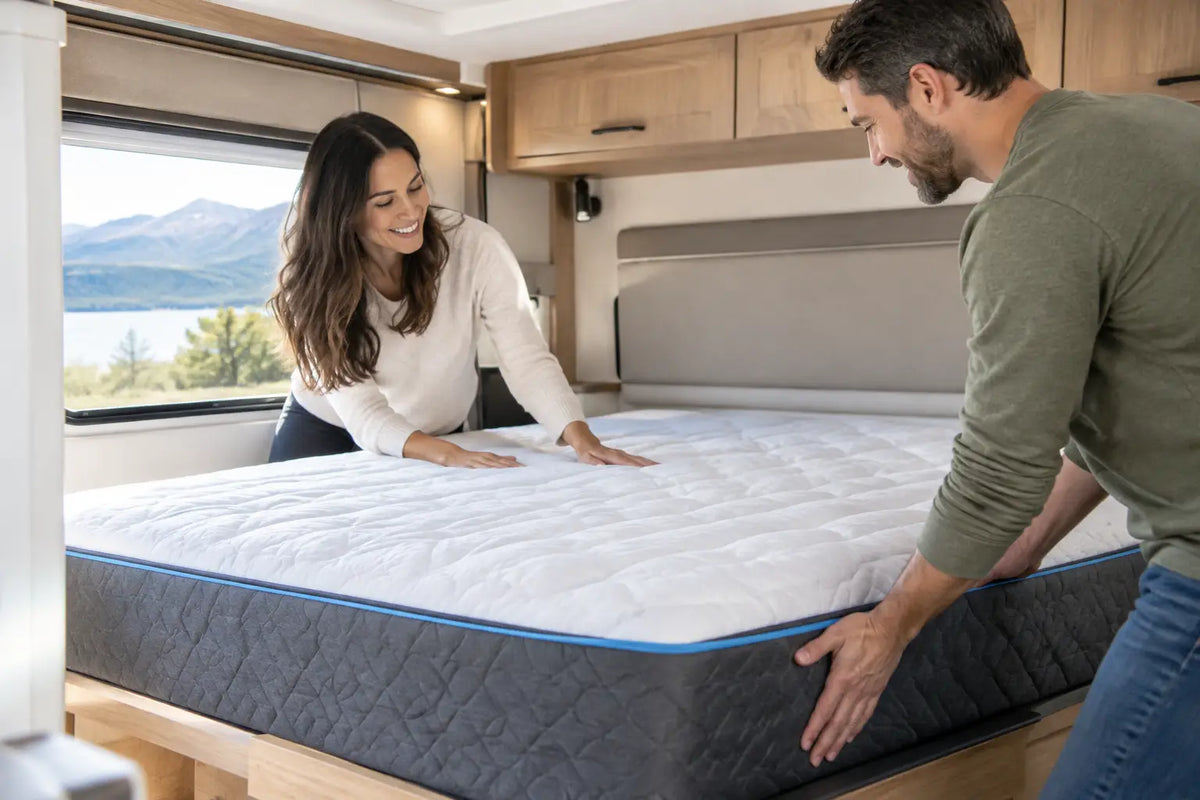
Clear the bedroom before installation. Remove decorative pillows, loose items from under-bed storage, and anything that can snag the mattress as you maneuver it into place. If the mattress arrives compressed, bring the box into the RV before opening it whenever possible. Once it expands, it becomes much harder to move in tight quarters.
Place it on the foundation with the label or designated head end in the correct position. Unroll it carefully, keeping sharp tools away from the fabric. Give the mattress room to expand, and follow the product instructions for its expected recovery time. Most boxed mattresses become usable quickly, though full expansion can take longer depending on temperature and construction.
Once expanded, check the perimeter. The mattress should lie flat without curling against a wall or hanging over the platform. A small gap is usually better than forcing an oversized mattress into a tight frame. Forcing it can distort the foam, reduce edge stability, and make changing sheets unnecessarily difficult.
This is also the moment to test bedroom function. Close drawers, open cabinets, make the bed, and if applicable, retract the slide according to your RV manufacturer’s instructions. A proper fit is not just about dimensions on paper. It is about being able to use the room normally.
Match Comfort to How You Sleep
A mattress is a personal purchase, even when it is shared. Side sleepers usually need more cushioning at the shoulders and hips, while back sleepers tend to benefit from balanced lumbar support and a flatter, more stable surface. Stomach sleepers often do better with a firmer feel that helps prevent the hips from sinking too far.
Couples should pay close attention to motion isolation and edge support. In an RV, the bed may be the only place to sit, dress, read, or work when the weather turns. Strong edges make the usable sleep surface feel larger and prevent the unstable roll-off sensation found in many thin factory mattresses.
If one partner sleeps hot and the other wants a plusher feel, avoid solving the problem with a stack of bargain toppers. Choose a mattress with purpose-built cooling and a supportive comfort system first. Polar RV Mattress designs its RV-specific models around that balance, with fit options and construction choices that address the real limitations of RV bedrooms rather than asking owners to settle for a generic replacement.
Protect the Investment Without Smothering It
A quality RV mattress should be protected from spills, dust, pet hair, and the moisture swings that come with travel. Use a breathable protector, wash sheets regularly, and air out the bed when conditions allow. If you store the RV for extended periods, avoid sealing moisture into the bedroom. Leave appropriate ventilation, remove damp textiles, and check the mattress when you return.
Rotate the mattress if its design allows it. Most modern mattresses should not be flipped, because their comfort layers are built for one-sided use, but rotating head to foot can help distribute wear. Follow the manufacturer’s care instructions rather than relying on old advice meant for double-sided innerspring beds.
Your RV is built for changing scenery. Your sleep should not have to change with every mile. Measure carefully, support the mattress properly, and choose materials that stay cool and comfortable after the campground gets quiet. A well-planned bed gives every trip a better place to end.
Share:
How to Prevent Condensation Under RV Mattress
A Travel Trailer Mattress Upgrade Example That Works