

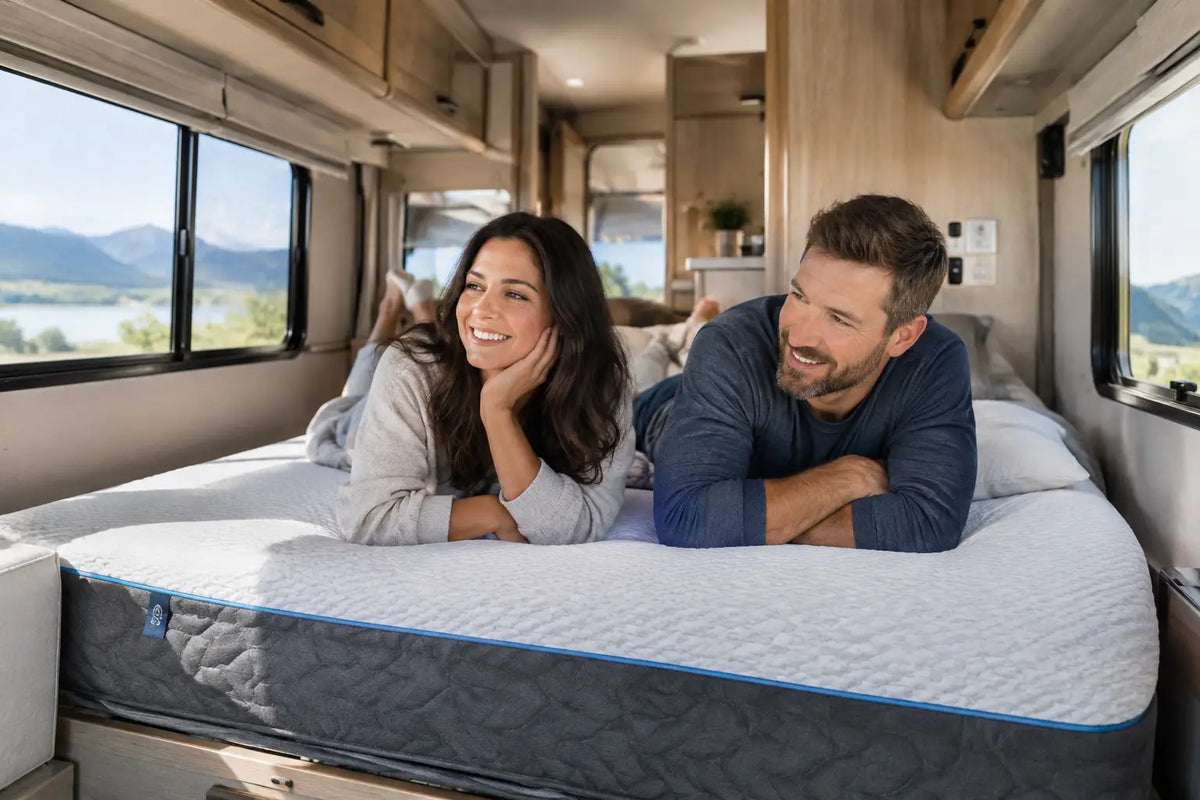
A hot RV bedroom can ruin a great travel day. You may have the AC running, window shades drawn, and still wake up sweaty because the mattress beneath you is holding onto body heat. This guide to conductive cooling mattresses explains what actually helps, what does not, and how to choose a cooler sleep surface without sacrificing the support your back needs on the road.
Conductive cooling is especially relevant in an RV because your sleeping space is compact, airflow is limited, and stock mattresses are often built with dense, heat-retaining foams. The right mattress will not replace your air conditioner, but it can stop your bed from becoming the warmest part of the room.
What Is a Conductive Cooling Mattress?
A conductive cooling mattress uses materials designed to pull heat away from the body at the surface where you sleep. Heat naturally moves from a warmer area to a cooler one. When your skin contacts a highly conductive material, that material absorbs and disperses some of your body heat instead of allowing it to collect around your shoulders, hips, and back.
This creates the immediate cool-to-the-touch sensation many sleepers notice when they first lie down. In a quality cooling mattress, the goal is not a temporary chilly feel that disappears after five minutes. It is a sleep system that manages heat over the course of the night through the cover, comfort layers, and breathable support core.
Conductive cooling is different from active cooling. Active systems use electricity, water, fans, or temperature controls to change the bed's temperature. Conductive mattresses are passive. They require no plugs, pumps, hoses, or extra equipment, which makes them a practical choice for RV owners who want a simpler, more dependable sleep upgrade.
Why RV Mattresses Trap More Heat
Factory RV mattresses are usually chosen for cost, weight, and basic fit, not long-term sleep performance. Many rely on thin layers of conventional foam over a basic support core. That construction can compress quickly, create pressure points, and retain the heat your body releases all night.
The RV environment adds another challenge. A bedroom slide, rear bedroom, or bunk area may have less air circulation than a room at home. Summer sun warms the roof and walls. Two people sleeping close together add more body heat. If the mattress cannot release that heat, the surface can feel uncomfortable even when the cabin temperature is reasonable.
A cooling mattress works best as part of the bigger setup. Ventilation, reflective shades, breathable sheets, and appropriate AC use still matter. But replacing a heat-trapping mattress removes a major source of discomfort that fans and thermostats cannot fully solve.
How Conductive Cooling Materials Work
Not all cooling claims mean the same thing. Look beyond broad terms like “cooling foam” and consider how the mattress is built.
Cooling Covers Create the First Line of Defense
The cover is the material closest to your body, so it has a major effect on first-contact temperature. Conductive yarns, mineral-infused fabrics, and other heat-dispersing textiles can move warmth away from the surface quickly. A cover should also be breathable and moisture-managing, because humid fabric can make a warm sleeper feel even hotter.
The trade-off is that a cool-touch cover alone cannot compensate for a dense, unventilated mattress underneath. It is a valuable feature, but it should be paired with comfort layers and a support system that do not trap heat.
Foam Needs to Balance Pressure Relief and Airflow
Memory foam can be excellent for pressure relief and motion isolation, two features RV couples often value. Traditional memory foam, however, has a reputation for sleeping warm because it contours closely around the body and can restrict airflow.
Gel memory foam and more open-cell foam formulations can improve the experience by helping distribute heat and allowing more air movement. Still, gel is not a guarantee of a cool mattress. Some gel foams offer modest temperature benefits; others are primarily used to tune feel. The full construction matters more than a single ingredient on the spec sheet.
Coils Give Heat a Place to Go
Pocketed coils create open space inside a mattress, allowing air to move more freely than it can through an all-foam block. They also provide stronger, more responsive support and better edge stability, which matters when you are getting dressed in a tight RV bedroom or sleeping near the side of the bed.
For many warm sleepers, a hybrid mattress combining conductive cooling materials, pressure-relieving foam, and individually wrapped coils is a stronger choice than a basic foam mattress. The coil system supports airflow while the upper layers handle comfort and surface-temperature management.
Conductive Cooling Mattresses vs. Other Cooling Options
Conductive cooling has a clear role, but it is not the only way to sleep cooler. Phase-change materials can absorb excess heat when your body temperature rises, then release it as conditions change. They can be useful for temperature swings, although their effect depends on the amount and quality of material used.
Ventilated foam and pocketed coils improve airflow, but airflow by itself does not always create an immediate cool-to-the-touch feel. Gel foams can help with heat distribution, yet they are most effective when combined with a breathable design. Active cooling pads can offer stronger temperature control, but they add equipment, power demands, maintenance, and another item to manage in a limited RV space.
For most RV owners, the best approach is layered rather than one-dimensional: a conductive cover for quick heat transfer, breathable comfort materials, and coils or another ventilated support system beneath. That combination addresses the heat you feel at the surface and the heat that builds inside the mattress over time.
How to Choose the Right Cooling Mattress for Your RV
Start with exact measurements, not the label on your old mattress. RV Queen, RV King, RV Full/3/4, and bunk sizes frequently differ from residential standards. Measure the platform length, width, and available height, including slide clearance, cabinets, and any tight hallway turns required for installation.
Next, choose firmness based on your body and sleep position. Side sleepers often need more pressure relief at the shoulders and hips, while back and stomach sleepers generally need more stable support to keep the spine from dipping. Couples with different needs should prioritize a mattress that combines contouring comfort with stronger support, rather than choosing an overly soft bed simply because it feels plush in a showroom.
Consider mattress height carefully. A taller mattress can add comfort layers and substantial support, but an RV bed with overhead cabinets or a slide mechanism may limit how much height you can add. The best RV mattress is not just comfortable in theory. It fits your coach correctly and functions properly every day.
Finally, look for sleep performance beyond cooling. Zoned support can provide firmer reinforcement through the lumbar region. Pocketed coils can reduce partner disturbance. Strong edges make the usable sleep surface feel larger. A long in-home trial and clear warranty coverage reduce the risk of upgrading, particularly when you are ordering a specialty RV size.
Make Your Cooling Mattress Work Harder
Your bedding can either support or undermine a cooling mattress. Use breathable sheets such as cotton percale, linen, or a quality moisture-wicking fabric. Avoid heavy, non-breathable mattress protectors that seal off the cooling cover. If you need a protector for pets, kids, or campground life, choose one designed to be breathable and compatible with cooling mattresses.
Keep blankets flexible by season. A lightweight quilt or layered blanket setup is often more practical than one heavy comforter in an RV, where nighttime temperatures can change quickly. If the mattress sits on a solid plywood platform, periodically check for moisture and make sure the area under the bed has as much ventilation as your RV design allows.
A serious RV mattress upgrade should make your nights more predictable: less tossing, fewer overheated wake-ups, and better support when you get moving the next morning. Polar RV Mattress focuses on that complete equation, pairing RV-specific fit with cooling, comfort, and support built for real travel conditions.
The best cooling choice is the one that matches your climate, sleep position, RV dimensions, and comfort preferences. Choose conductive cooling as part of a well-built mattress, then give it breathable bedding and reasonable airflow. Your next campsite may still be warm, but your bed does not have to hold that heat against you all night.
Share:
Travel Trailer Sleep Upgrade Checklist: 9 Essentials
How to Prevent Condensation Under RV Mattress