

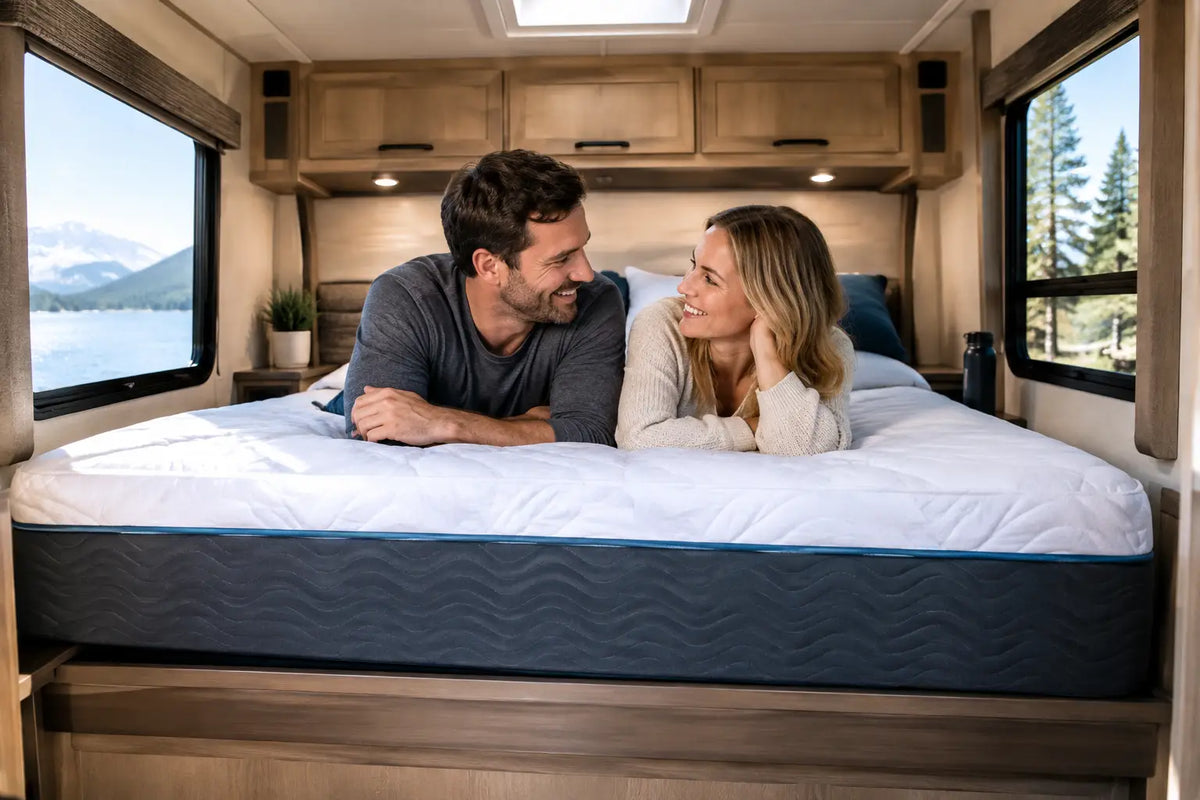
A rough night in a travel trailer rarely comes down to the campground. More often, it starts with a thin factory mattress, a bed platform that traps heat, or a replacement mattress that almost fits but steals valuable clearance. This travel trailer sleep upgrade checklist helps you fix the real causes of poor RV sleep before buying another pillow or piling on more blankets.
A serious sleep upgrade is not about making your trailer feel like a hotel room. It is about building a bed that fits the rig, supports your body, stays comfortable through changing temperatures, and holds up to life on the move.
Travel Trailer Sleep Upgrade Checklist
1. Measure the sleeping space, not the old mattress
RV bed names are useful starting points, but they are not reliable measurements. An RV Queen, RV King, or RV Full/3/4 can vary from one manufacturer and floorplan to another. Corners may be rounded, the mattress may sit against a wall, and cabinetry can reduce usable length or width.
Measure the platform at its widest and longest points, then measure any tight clearance around it. Record the maximum mattress height your space can handle, especially if the bed lifts for storage, sits beneath overhead cabinets, or must clear a slide-out. A mattress that is too tall can make a practical sleeping area awkward to use every day.
If your current mattress has a curved corner or a nonstandard shape, measure that detail too. A close fit is not a correct fit. Custom sizing is worth considering when the alternative is forcing a standard residential mattress into an RV space it was never designed for.
2. Identify what is actually ruining your sleep
Do not assume every uncomfortable bed needs the same solution. If you wake with pressure at your shoulders and hips, you likely need better cushioning and pressure relief. If your lower back feels strained, the problem may be weak support, a sagging foundation, or a mattress that lets your hips sink too far.
Overheating is a separate issue. Many stock RV mattresses use dense, inexpensive foam that absorbs heat and holds it close to the body. A cooling upgrade should address the mattress surface and internal airflow, not just rely on breathable sheets.
Partner disturbance deserves its own diagnosis. When one person gets up early or changes positions, a low-quality innerspring can transfer motion across the bed. Pocketed coils and well-designed comfort foams generally isolate movement far better than basic connected-coil mattresses.
3. Check the bed platform before replacing the mattress
A premium mattress cannot fully compensate for a poor foundation. Inspect the plywood, slats, hinged storage lid, and supporting frame for cracks, flex, loose fasteners, or areas that dip under weight. A soft spot in the platform can make a new mattress feel unsupportive long before the mattress itself is the issue.
Ventilation matters here as well. A solid platform can limit airflow beneath the mattress, particularly in humid weather or when the trailer is stored. Moisture needs a path to escape. Depending on your setup, that may mean adding ventilation holes, using a breathable underlay, or periodically lifting the mattress to let the area dry.
Also check whether the platform can safely handle a heavier upgrade. A quality hybrid mattress often weighs more than a thin factory foam model, and storage-lift struts may need adjustment. That added weight can be a worthwhile trade-off for real support, but it should be planned for.
4. Choose mattress construction based on your priorities
Mattress materials are not interchangeable. All-foam designs can offer excellent contouring and often work well where weight is a major concern. However, lower-grade foam can sleep hot and lose its shape quickly. Better foam construction should include pressure-relieving materials and a cooling cover or conductive cooling layer rather than a vague cooling label.
Hybrid mattresses pair comfort foam with individually wrapped pocketed coils. For many travel trailer owners, this is the strongest all-around option because the coils improve support, airflow, edge stability, and motion isolation. Zoned coils can provide firmer support through the lumbar area while allowing more give at the shoulders and hips.
Coil-on-coil designs are built for people who want a more substantial, residential-style feel and stronger long-term support. They are not the lightest choice, so they make the most sense when bed comfort is a top priority and the platform can accommodate the weight.
The best RV mattress for cooling, comfort, and support is the one that matches how you sleep. Side sleepers usually need more pressure relief. Back and stomach sleepers often need a flatter, more supportive surface. Couples with different needs should prioritize motion isolation, a balanced medium feel, and stronger edge support.
5. Select the right height for your trailer
A thicker mattress can feel more luxurious, but height is not automatically quality. In a travel trailer, mattress depth changes how easily you can sit up, make the bed, reach a window, or access overhead storage. It can also interfere with a Murphy bed, slide mechanism, or mattress retention straps.
Start with the height of your current mattress and decide what is realistically comfortable. If your existing model is very thin, moving up several inches may dramatically improve pressure relief and support. If the bed already sits high, prioritize better construction within a moderate profile instead of selecting the tallest option available.
6. Upgrade bedding for temperature control, not appearance alone
Bedding should help your new mattress perform. Breathable sheets, a lightweight quilt, and layers you can remove easily are generally more effective for RV travel than one heavy comforter. Temperatures can swing sharply from evening to morning, even when hookups and climate control are available.
For hot sleepers, choose moisture-managing bedding and avoid thick polyester layers that trap heat. For cold-weather campers, add a separate insulating blanket instead of relying on an overly warm mattress protector. The goal is adjustable comfort, not a bed that only works in one season.
A fitted sheet with deep enough pockets is another small but meaningful detail. If the mattress has rounded corners or an RV-specific size, standard sheets may slip off at night. Properly fitted bedding makes a travel trailer bed feel more settled and less like a compromise.
7. Add pillows that match your new sleep surface
Pillows are often overlooked when the mattress changes. A firmer, more supportive mattress may alter your shoulder position and expose a pillow that is too high or too flat. Side sleepers usually need enough loft to keep the head level with the spine, while back sleepers often do better with a lower, supportive profile.
Bring your usual pillow into the trailer for a few nights before buying replacements. If neck stiffness follows you from home to the road, the pillow may be the problem. If it only happens in the trailer, look first at mattress support and bed-platform condition.
8. Plan for delivery, setup, and old-mattress removal
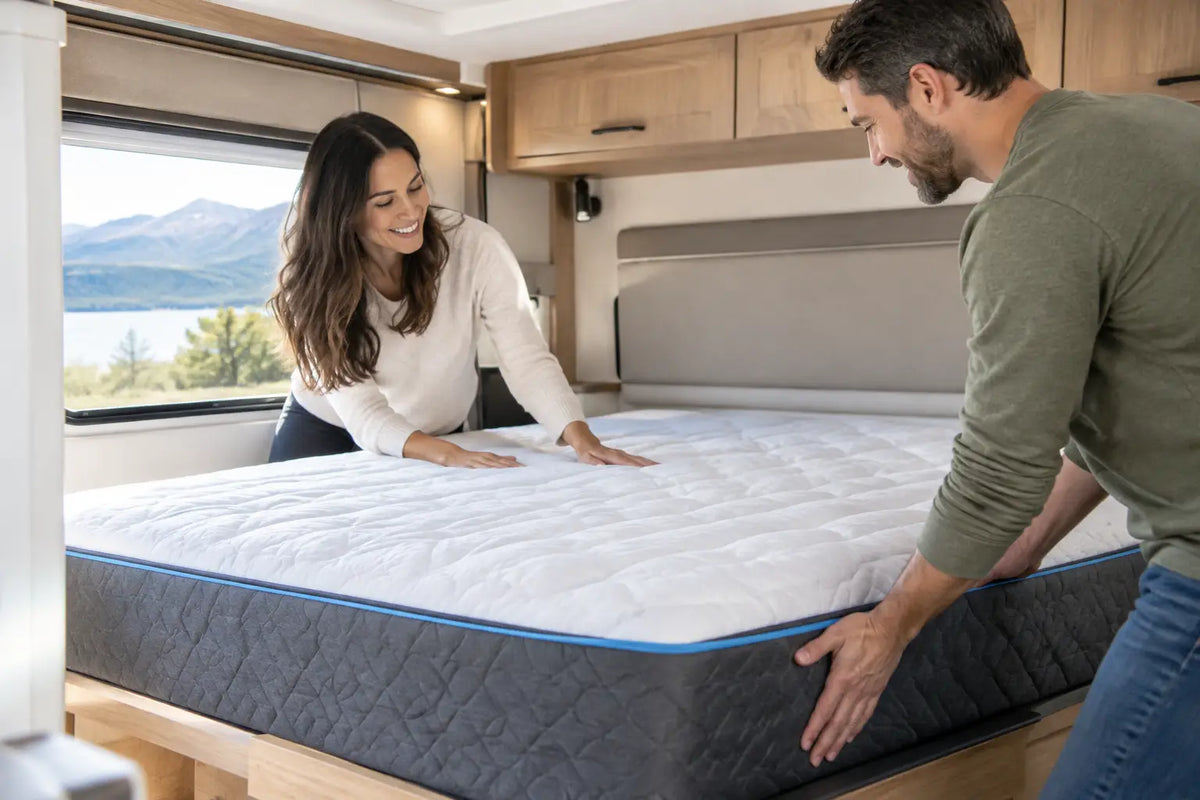
A mattress in a box makes delivery simpler, but your route from the door to the trailer still matters. Measure narrow hallways, entry doors, and tight turns. Decide whether you will carry the boxed mattress into the trailer before opening it or expand it outside and bring it in afterward. In many travel trailers, opening it inside is easier, provided you have room to work safely.
Give the mattress adequate time to expand and air out before your next trip. Keep bedding off it during the initial expansion period if the manufacturer recommends it. Arrange old-mattress disposal ahead of time as well. Leaving a bulky factory mattress in the garage is not a sleep upgrade.
9. Give the new setup a real trial period
The first night is useful, but it is not the final verdict. Your body may need time to adjust after sleeping on a worn-out mattress, especially if you move to a more supportive construction. Test the bed during a normal trip, in both warm and cool conditions if possible, and pay attention to temperature, pressure points, back comfort, and partner movement.
This is where a meaningful home trial changes the decision. Polar RV Mattress offers RV-specific sizing and a 365-night satisfaction guarantee because a mattress should prove itself over real nights on the road, not a five-minute showroom test.
Make the Upgrade Work for Every Trip
Before you call the project finished, make the bed and lie down as you normally would. Can you sit up without hitting a cabinet? Can you reach the storage you use? Does the mattress stay clear of walls, slide seals, and bed mechanisms? Practical fit is part of comfort.
A travel trailer is built around compromises, but restorative sleep does not need to be one of them. Measure carefully, choose construction for the problem you want to solve, and give your bed the same attention you give your route. The next good morning at camp will make the effort feel very well spent.


Share:
Do RV Mattresses Need Special Sheets? Find Out
Guide to Conductive Cooling Mattresses for RVs