

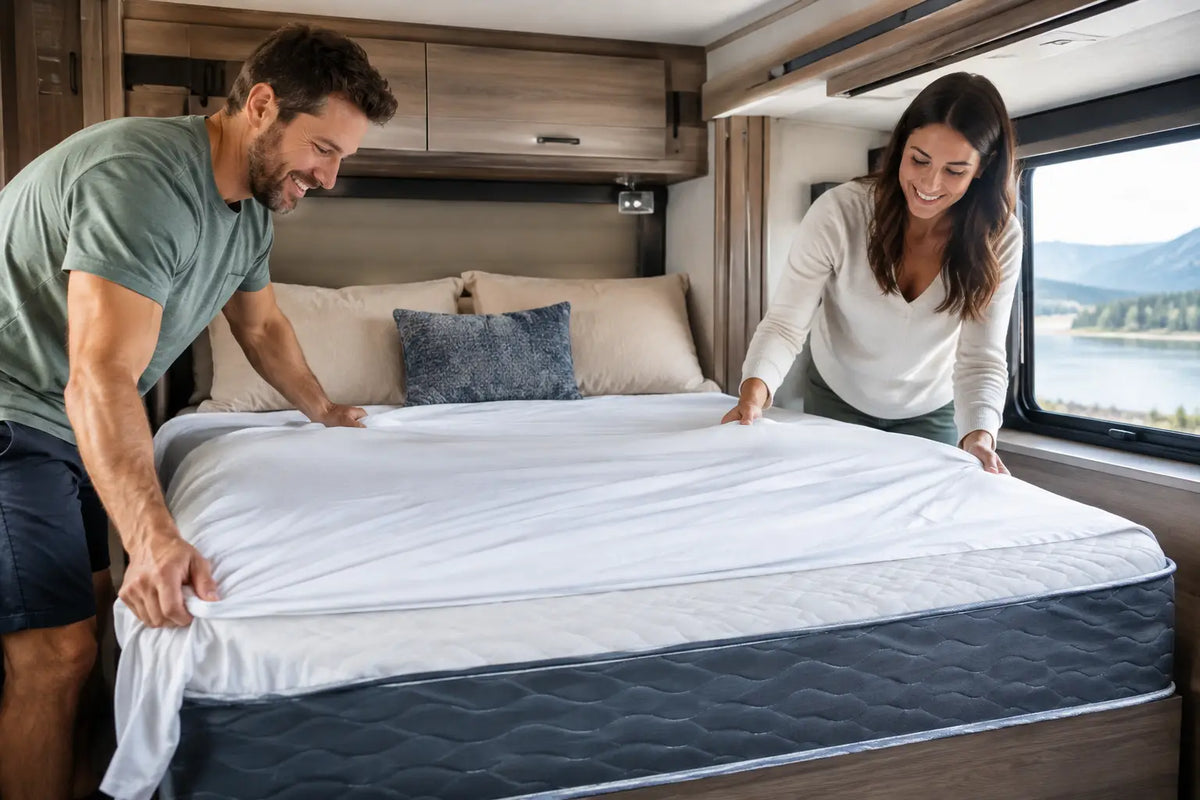
A great RV mattress can change how you feel after a long driving day. But once you have upgraded the thin factory mattress, a practical question comes next: do RV mattresses need special sheets? Not always. The right answer depends on your mattress’s exact dimensions, its thickness, and the shape of the bed platform inside your RV.
Many RV owners can use standard residential sheets. Others need RV-specific bedding, deep-pocket fitted sheets, or a simple adjustment to keep corners from popping loose. The goal is not to buy products labeled “RV” for the sake of it. The goal is a secure, comfortable fit that stays put while you sleep and while your RV is in motion.
Do RV Mattresses Need Special Sheets?
RV mattresses need special sheets when their size or shape does not match a standard household mattress. That is common in campers, fifth wheels, motorhomes, and travel trailers, especially with RV King, short queen, three-quarter, and bunk bed sizes.
A standard sheet can work well when the mattress has familiar dimensions. For example, many RV Queens measure 60 by 75 inches. A standard Queen mattress is usually 60 by 80 inches, so standard Queen sheets may fit, but the extra five inches of length can bunch at the foot. Some owners do not mind that. Others prefer a fitted RV Queen sheet for a cleaner look and a more secure fit.
The same principle applies to RV Kings. There is no universal RV King measurement. One model may be closer to a standard King width but shorter in length, while another may be narrower or have a different corner configuration. Never assume a package marked “King” will fit your RV King mattress.
Why RV Bed Sizes Create Bedding Problems
RV manufacturers work around slide-outs, wheel wells, storage compartments, curved walls, and narrow walkways. That creates bed platforms that are often shorter, narrower, or shaped differently than residential beds. Even when the mattress name sounds familiar, the dimensions may not be.
A mattress can also have clipped corners or rounded corners to clear cabinetry or allow room to walk around the bed. Standard fitted sheets are made for four square corners. On an angled RV mattress, they may slide off one corner every night, no matter how tightly you tuck them.
Thickness matters just as much as width and length. Many stock RV mattresses are relatively thin. A premium replacement mattress with better cooling foam, stronger support, or pocketed coils may be thicker. That is a comfort upgrade, but it can make shallow-pocket fitted sheets too tight. If a sheet barely reaches the underside of the mattress, it is likely to release as you move during the night.
Measure Before You Buy Sheets
Measuring takes a few minutes and prevents the most common bedding mistake: ordering by mattress label alone. Remove existing bedding and measure the mattress itself, not the plywood platform beneath it.
Start with the widest point, then measure the longest point. Measure the height from the bottom edge to the top surface as well. If the mattress has cut corners, note which corners are affected and measure the length of each angled edge. A quick phone photo with the measurements written down can help when comparing bedding options later.
Do not overlook tight clearances. In some RV bedrooms, the mattress sits against walls on three sides or under cabinets. A thick comforter and oversized flat sheet can be harder to manage than fitted sheets, even if they technically fit the mattress. Bedding that is easy to make is bedding you will appreciate on every stop.
Common RV mattress and sheet scenarios
An RV Twin or bunk mattress is often narrower or shorter than a standard Twin. Standard Twin sheets can work if there is modest extra fabric, but RV-specific sheets usually deliver a neater fit in tight bunk spaces.
An RV Full or three-quarter mattress is where specialty bedding often makes the biggest difference. A three-quarter bed is typically wider than a Twin but narrower than a standard Full, so neither standard size gives a perfect fitted-sheet fit.
A short RV Queen can use standard Queen bedding in a pinch. Choose a fitted sheet with strong elastic and enough pocket depth, then tuck the excess fabric at the foot. If you make the bed every day or dislike loose fabric, sheets made for a 60-by-75-inch RV Queen are worth it.
An RV King requires careful measurement. Because dimensions vary across RV manufacturers, custom sheets or bedding made for your specific measurements may be the most reliable option.
When Standard Sheets Are the Smart Choice
Specialty RV sheets are convenient, but they are not mandatory for every traveler. Standard sheets are a sensible choice when the mattress closely matches a residential size, has square corners, and is not unusually thick.
They are also easier to replace while traveling. If you need a backup set in a hurry, standard Queen, Full, Twin, and King sheets are widely available. For occasional weekend campers, that convenience may matter more than a tailored fit.
Look for fitted sheets with full-perimeter elastic rather than elastic only at the corners. Deep-pocket sheets are helpful for thicker RV mattresses, though excessively deep pockets can leave loose material around a thin mattress. If your sheets are loose but otherwise comfortable, sheet straps or suspenders underneath the mattress can hold the corners in place without requiring a whole new sheet set.
Flat sheets offer even more flexibility. They can be tucked to fit almost any shape, including mattresses with a cut corner. The trade-off is that they take more effort to make neatly and may loosen overnight if you are an active sleeper.
When RV-Specific Sheets Are Worth It
RV-specific sheets earn their place when the fit problem keeps returning. If corners come off, excess fabric gathers under you, or the mattress has a nonstandard shape, fitted bedding built for RV dimensions removes a daily frustration.
They are especially useful for full-time RVers and longer trips. A proper fit keeps the sleep surface smooth, which matters more than it sounds. Wrinkled sheets can trap heat, create uncomfortable pressure points, and make an otherwise supportive mattress feel less comfortable.
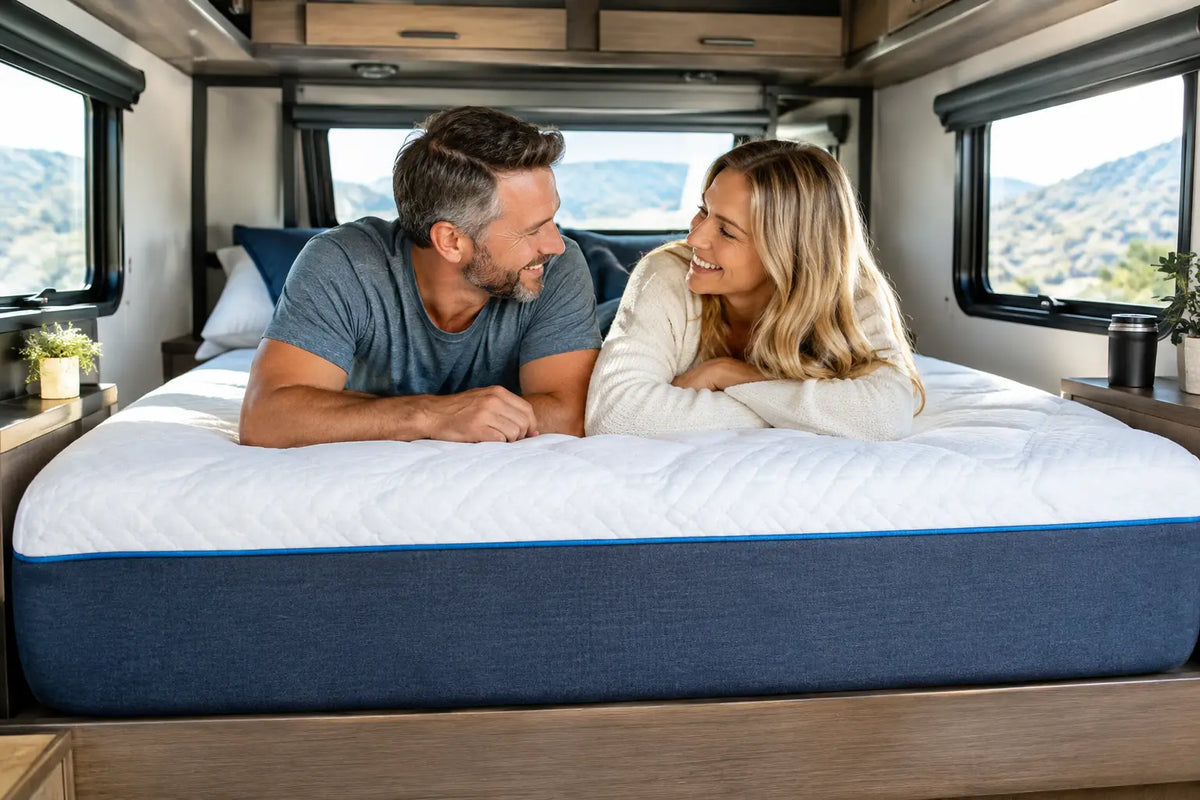
The same is true for couples. When one partner shifts during the night, loose bedding can pull across the bed and disturb the other sleeper. A fitted sheet that stays anchored complements a mattress designed for motion isolation and pressure relief.
If you have invested in a higher-profile RV mattress, choose sheets according to mattress depth, not just length and width. Check the fitted sheet’s stated pocket range and allow enough room for the elastic to sit beneath the bottom edge. A mattress protector adds height, so include it in your calculation.
Choose Bedding That Supports Cooler RV Sleep
Sheet fit is only half the comfort equation. Material can make a noticeable difference in an RV, where temperatures may fluctuate and airflow can be limited.
Cotton percale feels crisp and breathable, making it a strong option for warm sleepers. Tencel or lyocell sheets are smooth, moisture-managing, and often appealing for travelers who sleep hot. Linen breathes exceptionally well, though it has a more textured feel and wrinkles easily. Microfiber is affordable and soft, but some sleepers find it retains more warmth than natural or semi-synthetic alternatives.
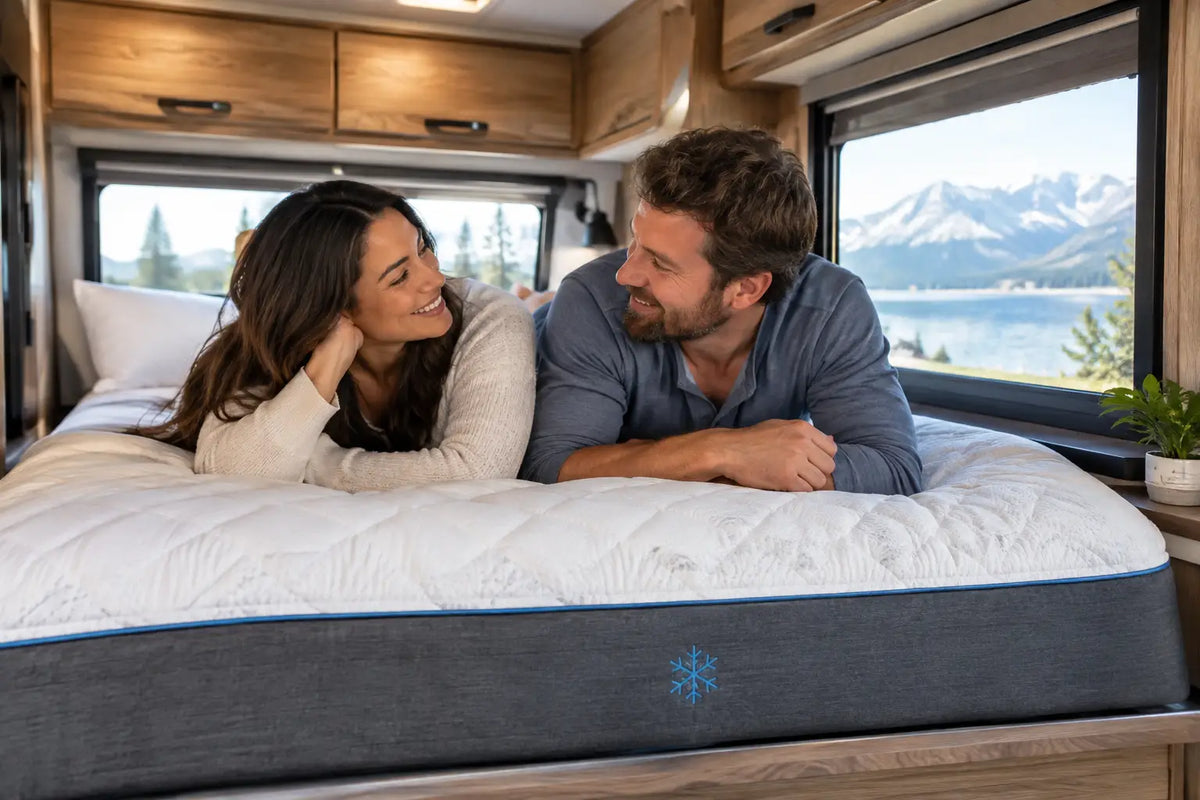
For a cooling-focused RV mattress, breathable sheets help the surface do its job. Heavy, heat-trapping bedding can work against cooling foams and conductive comfort layers. You do not need the most expensive sheet set available, but choosing a breathable fabric and a secure fit protects the comfort upgrade you paid for.
A Better Fit Starts With the Mattress
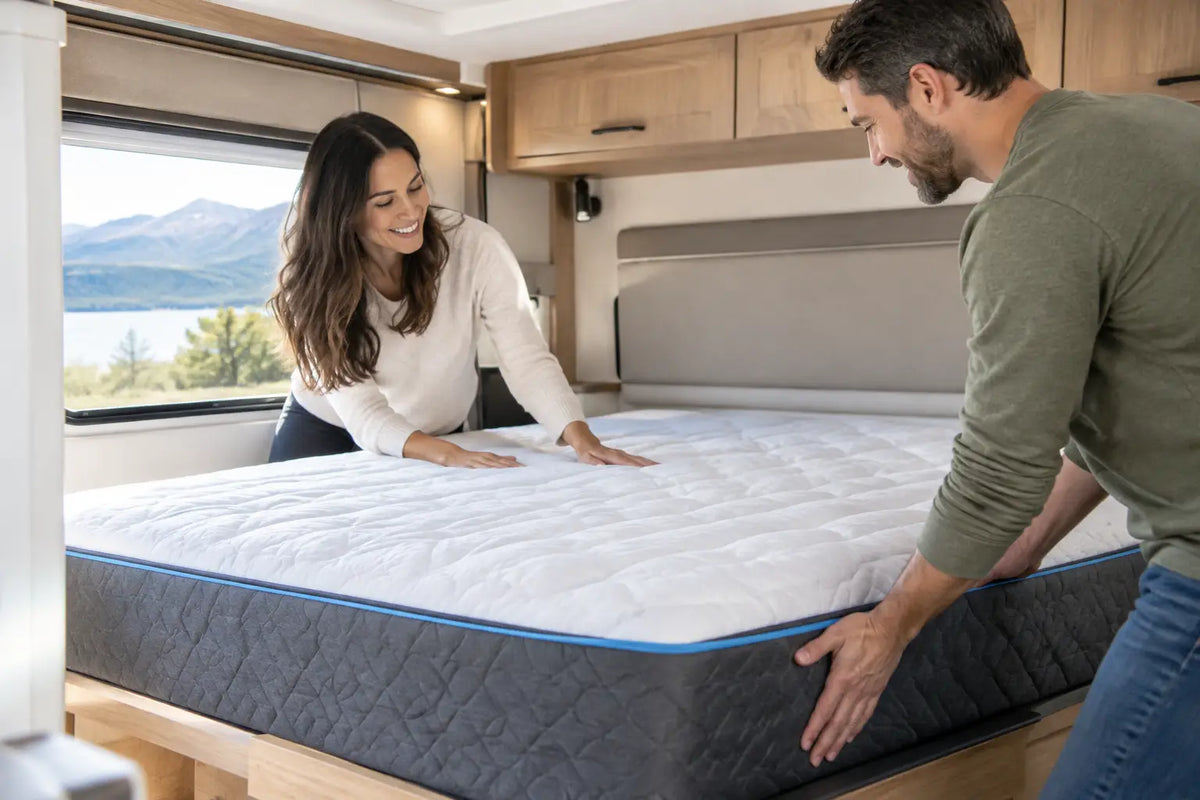
The easiest time to solve bedding fit is before ordering a new mattress. Confirm the exact interior dimensions of your RV bed platform, account for any corner cuts, and consider how much mattress height your space can accommodate. A properly sized replacement mattress reduces the need for makeshift bedding solutions.
Polar RV Mattress is built around RV-specific sizing, from compact bunk beds to larger RV King layouts, so owners can upgrade comfort without forcing a residential mattress into a space it was never designed to fit. Once the mattress fits correctly, finding sheets becomes much more straightforward.
Keep two sheet sets on board if space allows. One stays on the bed while the other is ready for laundry day, unexpected spills, or a longer stretch between campgrounds. Most of all, buy bedding based on measurements and real sleep preferences, not the label on the package. A smooth, breathable sheet that stays put is a small detail that makes every night on the road feel more like home.
Share:
72" x 74" RV King Mattress: What to Know
Travel Trailer Sleep Upgrade Checklist: 9 Essentials