


A thin factory RV mattress can make the coil hybrid vs memory foam decision feel more urgent than it would at home. When you wake up hot, sore, or rolling toward the center of the bed after a long driving day, the material inside your mattress matters. The right choice is not simply the softest option. It is the one that keeps your body supported, your sleep temperature comfortable, and your RV bed usable night after night.
For many RV owners, a quality coil hybrid is the stronger all-around upgrade. But memory foam can be an excellent fit for sleepers who prioritize deep pressure relief and maximum partner-motion control. Your preferred sleep position, body type, climate, and RV layout should lead the decision.
Coil Hybrid vs Memory Foam: The Core Difference
A memory foam mattress relies primarily on foam layers for comfort and support. The foam responds slowly to body heat and weight, allowing it to contour closely around shoulders, hips, and lower back. This creates the familiar cradling feel many people associate with memory foam.
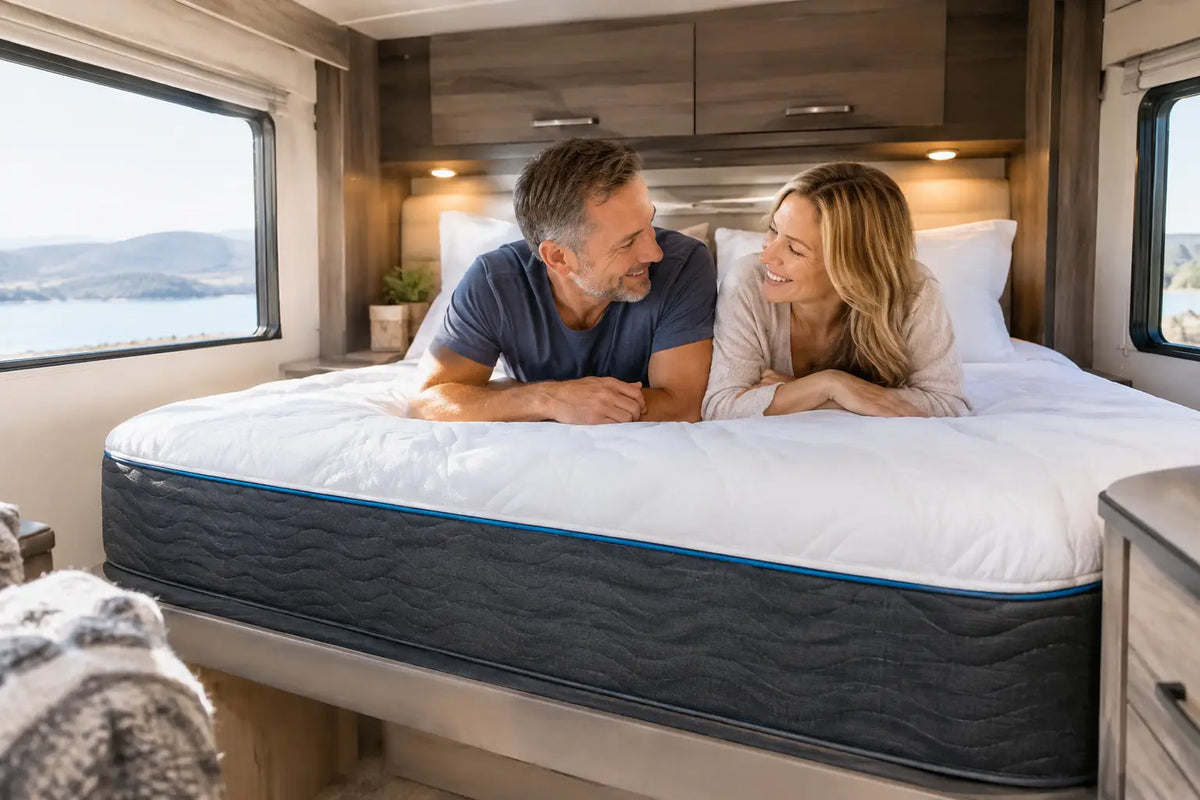
A coil hybrid mattress combines comfort foam with a pocketed coil support system. You still get contouring at the surface, but the coils add a more responsive, lifted feel underneath. Individually wrapped coils can move independently, supporting the body in zones while limiting the widespread motion transfer found in old-fashioned connected spring mattresses.
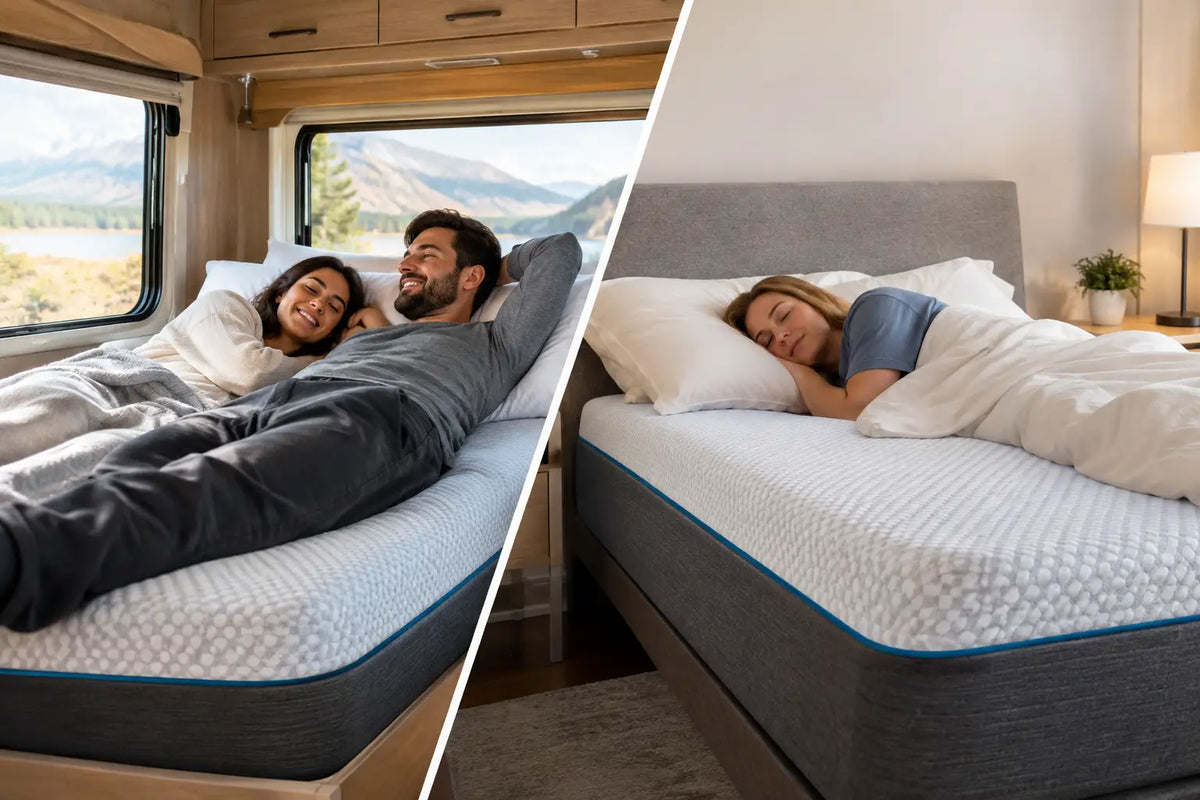
The practical difference is simple. Memory foam tends to let you sink in. A coil hybrid tends to hold you up while cushioning the areas that need relief. Neither design is automatically better, but they solve different sleep problems.
Cooling: Why Hybrids Usually Have the Edge
Heat is one of the biggest complaints RV owners have about standard mattresses, especially in warm-weather destinations or rigs with limited overnight climate control. Traditional memory foam can retain heat because its dense structure restricts airflow. Better memory foam mattresses address this with gel infusions, open-cell designs, and cooling covers, but foam still has less internal ventilation than a coil system.
A hybrid has open space around and between its coils, allowing air to circulate through the mattress more freely. That airflow matters when the bed sits on a solid RV platform, where ventilation underneath can be limited. Add a conductive cooling cover and cooling comfort foam, and a hybrid can create a noticeably less heat-trapping sleep surface.
If you sleep hot, share a bed with a warm sleeper, or travel through the Southwest and other hot regions, favor a cooling-focused hybrid. If you love memory foam's close contour but worry about temperature, choose a model built specifically with cooling materials rather than assuming any foam mattress will sleep cool.
Support and Back Comfort on the Road
RV travel is demanding on the body. Driving, setting up camp, hiking, and spending long days on the move can expose weak support quickly. A mattress that feels plush for ten minutes may not keep your spine aligned through the night.
This is where coil hybrids often stand out. Pocketed coils provide a stable foundation that resists excessive sink, particularly around the hips and midsection. Zoned coil systems go further by giving more targeted reinforcement where adults tend to carry more weight, while allowing gentler cushioning at the shoulders and legs. That balance can be especially useful for back sleepers, combination sleepers, and people who wake with lower-back stiffness.
Memory foam can also provide excellent support when it uses high-quality, durable foam beneath its comfort layers. The risk is choosing a low-density all-foam mattress that softens too quickly or allows the hips to dip below the shoulders. In an RV, where the mattress may be used intensely during long trips or full-time living, durable support materials are worth prioritizing.
Side sleepers often appreciate memory foam because it relieves pressure at the shoulder and hip without leaving a gap at the waist. A well-designed hybrid can offer the same pressure relief, but it needs enough comfort foam above the coils. If you are a side sleeper with shoulder pain, do not buy a hybrid based on coils alone. Look for a model that clearly balances responsive support with a substantial pressure-relieving top layer.
Motion Isolation: Can You Feel Your Partner Move?
Couples should pay close attention to motion isolation, particularly in tighter RV sleeping spaces. Memory foam is the traditional leader here. Because foam absorbs movement rather than transferring it across the bed, it can reduce the sensation of a partner getting up early, changing position, or returning after a late campfire.
Modern pocketed-coil hybrids perform far better than traditional innerspring mattresses. Each coil is wrapped separately, so movement is more contained instead of rippling across the entire surface. Still, an all-foam mattress will usually absorb the most motion.
The deciding factor is how sensitive you are to movement. If one partner is a very light sleeper and the other tosses, turns, or keeps a different schedule, memory foam may be the better match. If motion control matters but you also want stronger edge support, easier movement, and cooler sleep, a premium hybrid is often the more balanced solution.
Ease of Movement and Edge Support
Memory foam's contouring can feel luxurious, but some sleepers feel stuck in it. This is most common with softer foams, deeper comfort layers, and heavier body types. Combination sleepers who switch from side to back to stomach may prefer the quicker response of a hybrid. The coil system pushes back more immediately, making it easier to change positions without fighting the mattress.
Edge support deserves attention in an RV, too. Narrow walkways, raised bed platforms, and compact bedrooms mean you may sit on the bed edge more often while dressing or getting ready. Coil hybrids typically provide a more secure perimeter and a less compressed feel when sitting near the edge. They can also make a shared RV Queen or RV King feel more usable because each sleeper has greater access to the full surface.
Memory foam can have good edge support when it is engineered with dense perimeter foam, but it is not a feature to assume. Check the mattress construction rather than judging by appearance alone.
Which Mattress Fits Your Sleep Style?
Choose memory foam if you want a deeper body-hugging feel, sleep primarily on your side, and place motion isolation above all else. It is often a strong choice for sleepers with sensitive shoulders or hips, provided the foam is supportive enough to maintain alignment. It can also work well in cooler climates, where heat retention is less of a concern.
Choose a coil hybrid if you sleep hot, need dependable back support, move frequently at night, or want a more responsive residential-style feel. Hybrids are particularly compelling for couples with different needs: one person gets contouring comfort from foam while the other benefits from the stable, breathable coil foundation.
Stomach sleepers should be especially cautious with overly soft memory foam. Too much sink through the pelvis can strain the lower back. A firmer hybrid or a supportive medium-firm foam design is usually the safer direction. Heavier sleepers may also find that a hybrid's coil system maintains comfort and support longer than a softer all-foam construction.
RV-Specific Details That Matter More Than Material
Do not choose based on coil hybrid vs memory foam alone. A mattress can have excellent materials and still be the wrong RV mattress if it does not fit the platform correctly. RV Queen, RV King, RV Full/3/4, and bunk sizes often differ from standard residential dimensions. Measure the length and width of your bed base, then account for wall clearance, slide-out space, rounded corners, and the route through your RV door.
Height matters as well. A taller mattress may improve comfort, but it can interfere with cabinets, windows, bedding, or a slide mechanism. Conversely, a very thin mattress may fit neatly but lack the comfort layers and support core needed for restorative sleep. The goal is not the tallest profile. It is a construction substantial enough to perform without compromising the function of your rig.
Also consider how the mattress will be used. A weekend camper may prioritize easy setup and a moderate profile. A full-time RVer should put durability, cooling, and long-term support at the top of the list. The more nights you spend on the road, the less sense it makes to accept the compromises of a basic replacement mattress.
The Better Choice Is the One You Feel Tomorrow Morning
A quality mattress should not force you to choose between pressure relief and support, or between cooling and motion control. The construction should match the way you sleep and the realities of your RV. Polar RV Mattress focuses on RV-specific fit and premium support systems because a mattress that fits the space but fails your body is not an upgrade.
Before you decide, picture the mornings that matter: waking without a hot back, stiff hips, or a partner's movements pulling you out of sleep. Choose the design that makes those mornings more likely, then measure your RV bed carefully enough to make sure that comfort arrives ready to fit.

Share:
Short Queen Hybrid Review: What RVers Should Know
When Should Your RV Mattress Be Replaced?