

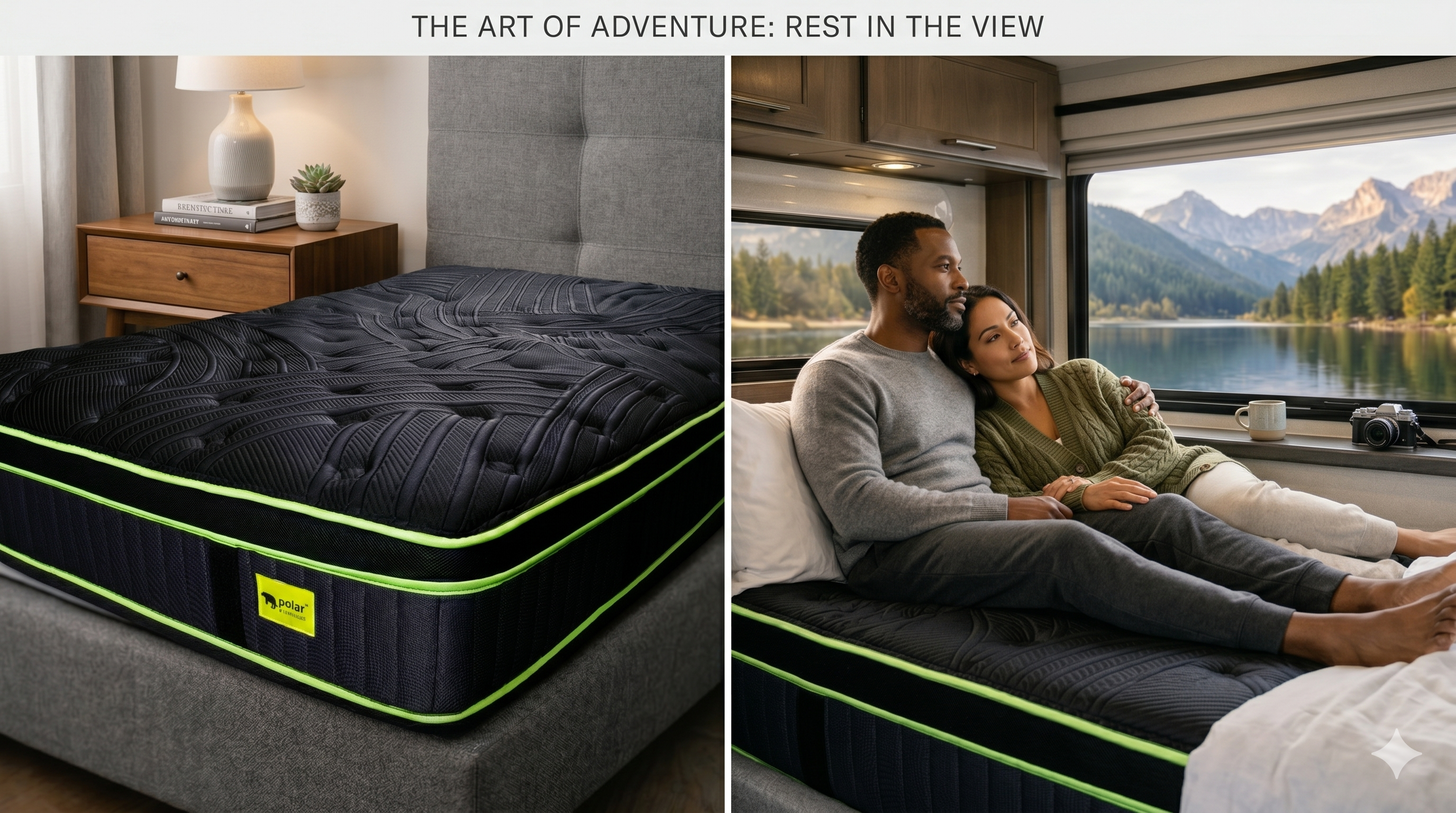
If you are shopping for an olympic queen mattress, you are probably already dealing with a familiar problem - a standard queen feels too narrow, but moving up to a king is not realistic for your space. That tension shows up in homes, guest rooms, and especially RVs, where every inch matters and a bad fit can turn a sleep upgrade into a return headache.
An Olympic queen is one of those sizes people hear about only after a standard mattress stops working. It gives you more width than a regular queen without taking the full leap to a king. For couples who want more elbow room, or sleepers who are tired of feeling crowded, that extra width can make a real difference. But it is not a universal solution, and in RVs it often gets confused with RV queen sizing, which is a different category entirely.
What is an olympic queen mattress?
An olympic queen mattress typically measures 66 inches wide by 80 inches long. That makes it 6 inches wider than a standard queen, while keeping the same length. On paper, 6 inches may not sound dramatic. In practice, it can be the difference between sleeping shoulder-to-shoulder and actually having personal space.
That said, the main appeal of an Olympic queen is also the main complication. It is a specialty size. Bedding can be harder to find, frames are less common, and not every mattress brand offers it. If you are furnishing a house, that may be manageable. If you are outfitting an RV, where dimensions are already tight and platform sizes are often non-standard, you need to measure carefully before assuming an Olympic queen is the right answer.
Olympic queen mattress vs standard queen
The simplest comparison is width. A standard queen is 60 by 80. An Olympic queen is 66 by 80. Length stays the same, width increases.
For solo sleepers, that difference may not justify the added hassle of a specialty size. For couples, it often does. If one person sprawls, if both sleepers shift positions all night, or if you simply want less partner disturbance, a wider mattress can improve sleep quality fast.
Still, size alone does not fix a bad mattress. If the bed sleeps hot, lacks support, or transfers motion every time your partner turns over, six extra inches will not solve the deeper issue. That is why serious mattress shoppers should think beyond dimensions and look at construction too - cooling materials, support systems, pressure relief, and edge stability all matter.
Why RV owners often get confused by Olympic queen sizing
This is where the conversation gets more specific. Many RV owners search for an olympic queen mattress when what they really need is an RV queen, a short queen, or a custom-size replacement. The confusion makes sense because RV mattress shopping rarely follows standard residential rules.
An RV queen is commonly 60 by 75, though dimensions can vary by manufacturer and floor plan. Some campers and motorhomes use cut corners, rounded edges, or custom platforms that are close to standard sizes without matching them exactly. So if your current bed feels cramped, it is easy to think a wider queen is the solution. Sometimes it is. Often, the platform itself will not accept it.
That is why measuring matters more than label shopping. Before you buy any replacement mattress, measure the platform width and length, check for nightstands or slide-outs that limit clearance, and confirm whether fitted sheets and lift mechanisms need to work with that size. In an RV, even a small mismatch can affect walk-around space, under-bed storage access, and how easily the room functions day to day.
When an olympic queen mattress makes sense
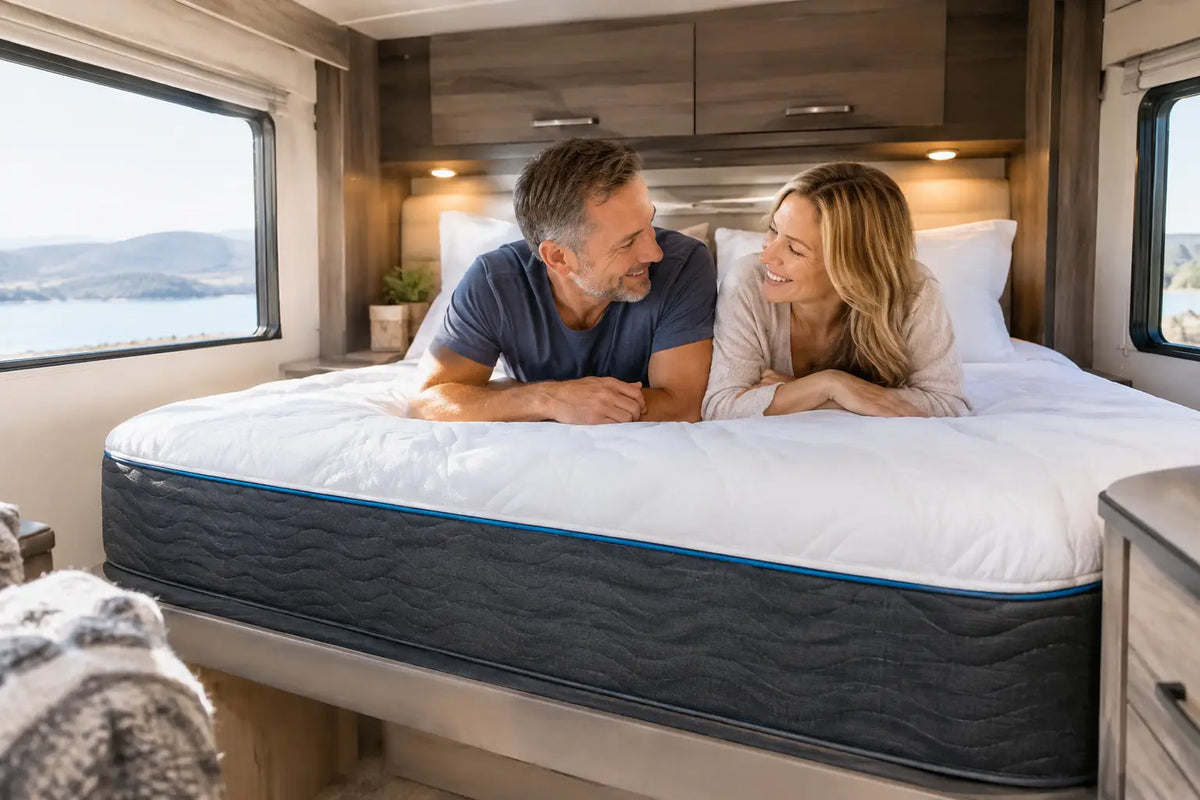
An Olympic queen is a smart choice when you have the width to spare but not enough room for a king. It works well for couples who want a less cramped sleep surface and for bedrooms where preserving floor space still matters.
In some larger RVs, fifth wheels, and destination trailers, an Olympic queen may be possible if the bed platform was designed with enough clearance. But this is very much an it-depends situation. You need more than raw platform dimensions. You need enough surrounding space for movement, bedding, and the practical realities of living in a compact environment.
If your current mattress is 60 by 75, jumping to 66 by 80 is a major footprint change. That added width and length could interfere with cabinets, doors, or slide operation. If your rig already feels tight around the bed, a proper RV-specific upgrade may deliver better results than forcing a residential specialty size into the room.
The bigger issue: comfort, cooling, and support
A lot of mattress searches start with size but end with comfort. That is especially true in RVs, where factory mattresses are often thin, flat, and built to hit a cost target rather than provide real sleep support.
If you wake up with pressure points, lower back pain, or heat buildup, the problem is rarely just dimensions. It is usually poor materials, weak support, and minimal airflow. A better mattress should do three things well: relieve pressure, keep your spine supported, and sleep cooler through the night.
For side sleepers, pressure relief matters because hips and shoulders take the brunt of contact. For back and stomach sleepers, stronger support matters because midsection sink can throw off alignment. For couples, motion isolation becomes critical, especially in smaller sleep spaces where movement is more noticeable.
That is why premium RV mattresses are built differently from stock replacements. Better foam quality, zoned support, and advanced coil systems can make a dramatic difference in how rested you feel after a night on the road. If your goal is a genuine upgrade, not just a new rectangle of foam, focus on sleep performance first and size second.
How to tell if you need RV sizing instead
If your mattress is going into a camper, travel trailer, fifth wheel, toy hauler, or motorhome, assume nothing until you measure. A standard or Olympic queen might fit, but many RVs use sizes that are shorter, narrower, or customized around the room layout.
Look at the full sleep area, not just the platform. Check whether the mattress sits wall-to-wall, whether the corners need to be cut, and whether opening storage underneath requires a lighter or more flexible build. Also think about height. In an RV bedroom, a thicker mattress can improve comfort, but it can also reduce overhead clearance or affect slide spacing.
This is where specialized RV mattress brands earn their keep. They understand that fit is not a side detail. It is part of the product. A mattress that performs well but does not fit correctly is still the wrong mattress.
Bedding and accessories for an olympic queen mattress
Another trade-off with an Olympic queen is bedding availability. Sheets, protectors, and mattress pads are not as common as standard queen options. You can find them, but choices may be more limited and sizing may run inconsistently depending on the brand.
That matters more than people expect. If your fitted sheet pulls loose every night or your protector bunches because it was designed for a standard queen, the bed will never feel as polished as it should. Specialty sizes require a little more planning, and that is worth factoring into your decision.
For RV owners, this issue gets even more practical. If you travel frequently, you want bedding that fits right, washes easily, and stays in place. Convenience matters when your bedroom is also part of a mobile living space.
Should you buy an olympic queen mattress?
If your room can truly handle 66 by 80 and you want more width than a standard queen offers, yes, an Olympic queen can be a strong middle-ground option. It gives couples more usable sleep space without the full sprawl of a king.
But if you are shopping for an RV, treat the Olympic queen as a possibility, not an assumption. Measure first. Think about room function, not just mattress dimensions. And do not let the search for more width distract you from what actually changes sleep quality: better support, cooling, pressure relief, and motion control.
For many RV owners, the best upgrade is not forcing a residential specialty size into the space. It is choosing a mattress built specifically for RV life, with the right dimensions and the kind of construction that actually outperforms stock bedding. That is where a brand like Polar RV Mattress stands apart - not by selling guesswork, but by delivering fit-specific comfort that works on the road.
The right mattress should make your space feel better every night, not just look better on paper. If an Olympic queen fits, great. If it does not, a true RV-specific replacement may be the smarter move and the one your back notices first.
Share:
66 x 80 RV Olympic Queen Mattress Guide
Best RV Mattress for Couples: What to Buy