

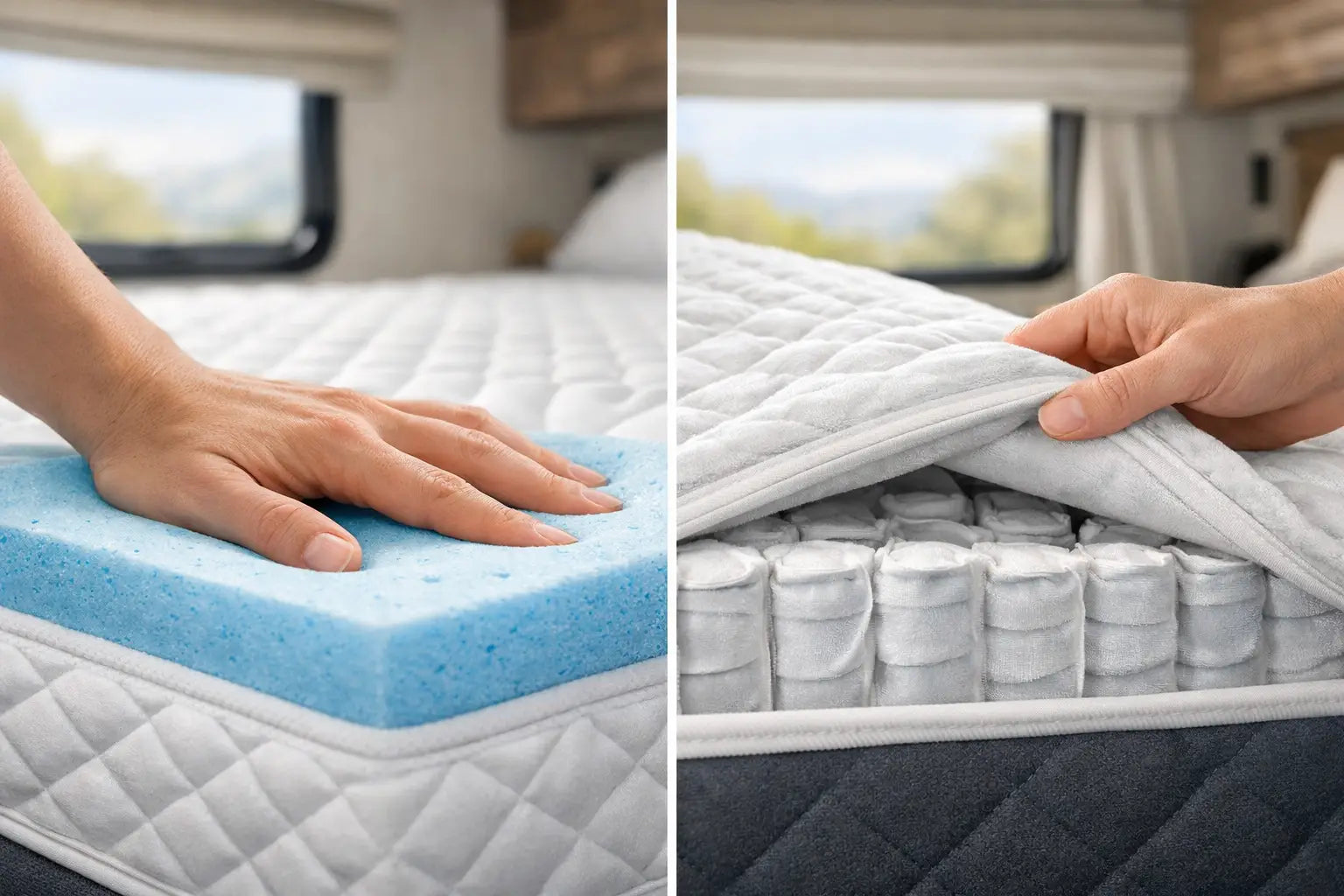
That 2 a.m. wake-up from a hot, sagging RV mattress usually sends shoppers in one of two directions: foam or coils. If you are comparing gel foam vs pocket coils, the real question is not which one sounds more premium. It is which one will keep you comfortable, supported, and cool in a space where every inch and every night of sleep matter.
In an RV, mattress choice has bigger consequences than it does at home. You are dealing with tighter spaces, non-standard sizes, changing climates, and often a weaker foundation than a residential bed frame. A mattress that feels acceptable in a showroom can feel completely different after a week on the road. That is why the gel foam vs pocket coils debate deserves a practical answer, not a generic one.
Gel foam vs pocket coils: the core difference
Gel foam mattresses use layers of foam, usually including memory foam infused with gel or cooling materials, to contour around the body and reduce pressure points. Pocket coil mattresses use individually wrapped coils that compress independently, often paired with comfort layers on top. That independent coil movement matters because it changes how the bed responds to your weight, your sleep position, and your partner.
Gel foam tends to feel more cushioning and body-hugging. Pocket coils tend to feel more lifted and responsive. Neither is automatically better. The right fit depends on how you sleep, how hot you run, and whether your current RV mattress is failing you on comfort, support, or both.
Cooling matters more in an RV than most shoppers expect
Heat retention is one of the biggest complaints with stock RV mattresses, and it is also one of the biggest reasons buyers start looking for an upgrade. RVs can heat up fast, especially in summer, and your mattress can either help regulate temperature or make the problem worse.
Gel foam is built to improve on traditional memory foam by pulling some heat away from the body. In a quality mattress, gel infusions and conductive cooling materials can make a noticeable difference compared to cheap foam. But foam still tends to hold more heat than a coil system, especially if the construction relies heavily on dense comfort layers.
Pocket coils have a natural advantage here. Air can move more freely through a coil support core than through a solid block of foam. That extra airflow often leads to a cooler sleep surface, particularly for hot sleepers or couples who generate more body heat. If your RV tends to sleep warm and cooling is your top priority, pocket coils usually have the edge.
That said, not all gel foam mattresses sleep hot, and not all pocket coil mattresses sleep cool. The cover, comfort layers, and overall design matter. A premium gel foam model can outperform a poorly built hybrid. Construction quality decides a lot.
Support and back comfort are where the gap gets clearer
If you wake up with lower back tightness, hip pain, or shoulder pressure, support should move to the top of your checklist. This is where many stock RV mattresses fall apart. They are often thin, underbuilt, and not designed for long-term comfort.
Gel foam can do an excellent job of relieving pressure. Side sleepers often like the way it cushions the shoulders and hips. It can also reduce that hard, push-back feeling you get from firmer basic mattresses. For lightweight sleepers or anyone who prefers a deeper cradle, gel foam can feel immediately more comfortable.
Pocket coils usually deliver stronger structural support, especially for combination sleepers, back sleepers, and heavier body types. Because the coils respond individually, they can provide more targeted reinforcement across the mattress. In better designs, zoned pocket coils add extra support where your body needs it most, especially through the lumbar area. That can make a significant difference if you are trying to fix back discomfort rather than simply soften the surface.
For RV owners who want a mattress that feels closer to a premium residential bed, pocket coils often provide the more balanced experience. You get pressure relief from the comfort layers, but with more pushback and alignment underneath.
Motion isolation: foam wins, but coils can still perform well
If you share your RV bed, motion isolation matters. A mattress that transfers every movement can make a small sleeping space feel even smaller.
Gel foam is typically the stronger performer here. Foam absorbs motion well, so when one person turns, gets up early, or shifts during the night, the other person feels less of it. For couples, that can be a major benefit.
Pocket coils are not as isolating as all-foam beds, but they are much better than old connected innersprings. Because the coils move independently, motion transfer is reduced substantially compared to traditional spring mattresses. In a well-built hybrid with quality foam layers on top, motion isolation can still be very good.
If partner disturbance is your number one issue, gel foam may be the safer pick. If you want stronger support and better cooling without giving up too much motion control, pocket coils are often the better compromise.
Durability depends on build quality, not just material type
RV mattresses deal with real wear. Weekend trips, full-time use, temperature swings, and repeated compression all put stress on the materials. That is why durability should not be treated as a side note.
Cheap gel foam mattresses can develop body impressions faster than many buyers expect. Lower-density foams break down sooner, especially under heavier sleepers or frequent use. A high-quality foam mattress can last well, but foam quality matters a lot.
Pocket coil mattresses, especially those built with stronger steel systems and reinforced support layers, often hold their structure better over time. They tend to resist the deep sagging feel that makes old foam mattresses uncomfortable. That makes them a strong choice for RV owners who travel often or want a longer-term upgrade.
Still, a badly made hybrid is not automatically durable just because it has coils. The difference is in the details: coil count, steel quality, edge support, foam density, and overall construction.
RV fit changes the buying decision
This is where many mattress comparisons miss the mark. In an RV, comfort is only half the job. The mattress also has to fit correctly.
RV beds often use short queens, RV kings, three-quarter sizes, bunk sizes, and other non-standard dimensions. A mattress that works well in a house is useless if it does not fit the platform, blocks storage access, or sits too high for the space. Thickness matters too. In some RVs, a very thick mattress can interfere with slide-outs, overhead clearance, or bed lifts.
Both gel foam and pocket coil mattresses can be built for RV sizing, but foam is easier to compress and maneuver through narrow RV entry points. That can be a practical advantage. Pocket coil models can be heavier, which may matter if you need to lift the mattress for storage or install it in a tight setup.
This is one reason specialized RV mattress brands matter. A premium mattress is only an upgrade if it matches the way your RV is built.
Which sleeper should choose gel foam?
Gel foam is usually the better fit if you want deep pressure relief, strong motion isolation, and a quieter, more contouring sleep surface. It often works especially well for side sleepers, lighter-weight sleepers, and couples sensitive to movement. If your biggest complaint is pressure points rather than lack of support, gel foam deserves a serious look.
It can also be a smart choice in bunks, tighter spaces, or setups where weight and maneuverability are bigger concerns. Just be selective. In RV sleep, low-grade foam is rarely worth the savings.
Which sleeper should choose pocket coils?
Pocket coils are often the better fit if you sleep hot, need stronger support, change positions during the night, or want a mattress that feels more stable and lifted. They tend to perform well for back sleepers, stomach sleepers, combination sleepers, and heavier body types. Couples often like them too because they offer a more balanced mix of support, airflow, and motion control.
For many RV owners, pocket coils feel like the more complete upgrade from a factory mattress. You get better airflow, stronger alignment, and a support system that is built to do more than just get by.
The best answer is often a hybrid, not a pure foam-or-coil debate
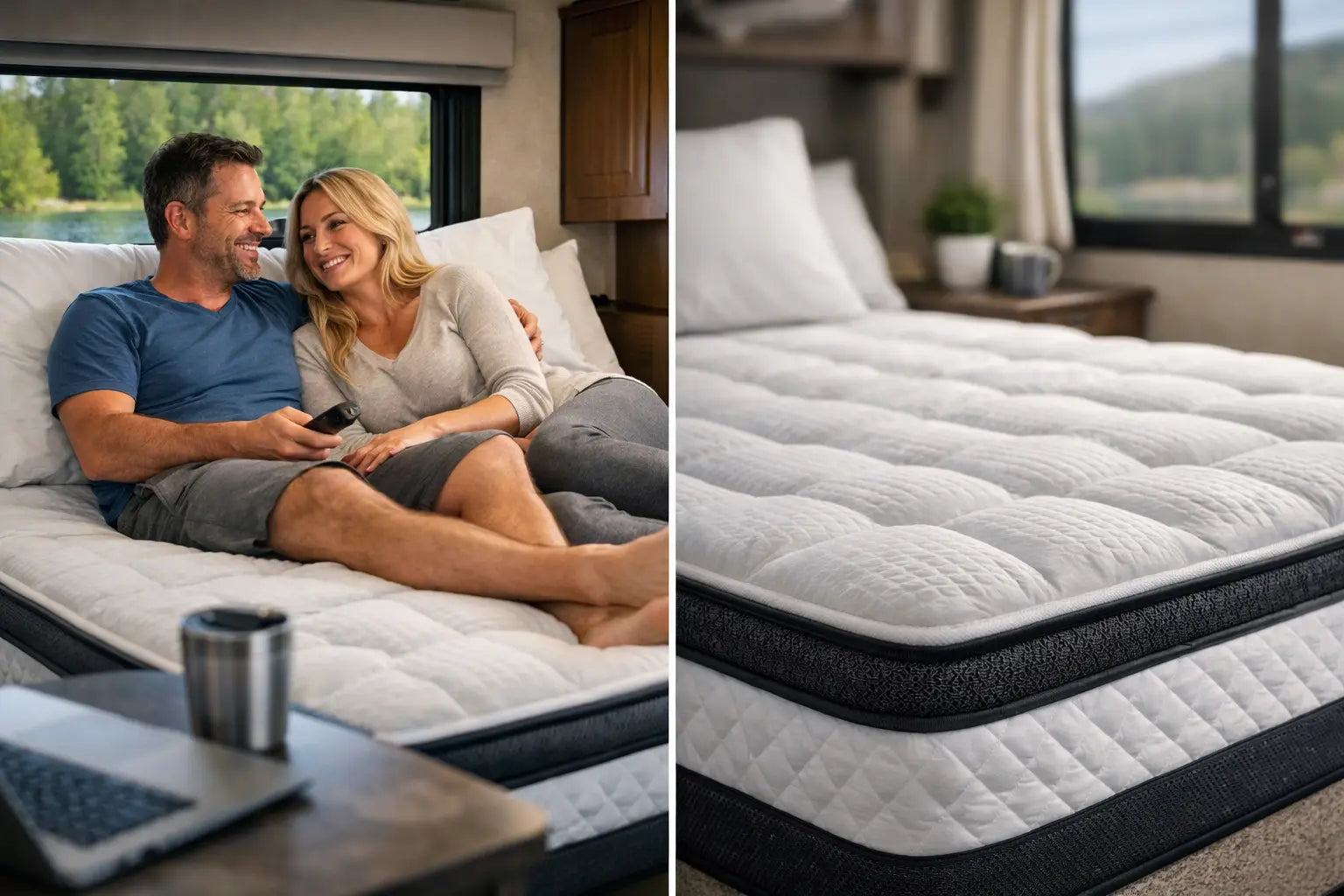
If you are stuck between the two, that usually means you want benefits from both sides. That is exactly why hybrid construction has become such a strong option in premium RV mattresses. A quality hybrid combines gel memory foam or other comfort foams with individually wrapped coils underneath. That gives you pressure relief on top and stronger support below, without forcing a hard trade-off.
For many RV sleepers, that is the sweet spot. It addresses the most common complaints at once: sleeping hot, waking up sore, and feeling every movement from the other side of the bed. Polar RV Mattress has leaned into that approach because RV owners are not asking for just one improvement. They want cooling, comfort, support, and the right fit in one mattress.
When you are comparing gel foam vs pocket coils, do not shop by material alone. Shop by the sleep problem you are trying to solve. If you need a softer, more contouring feel, gel foam may be the right move. If you need cooler sleep and stronger support, pocket coils usually make more sense. And if you want the most complete RV sleep upgrade, a well-built hybrid is often where the decision gets easier.
The right mattress should make your RV feel less like a compromise and more like the place you actually want to end the day.
Share:
Are RV Mattresses Worth Upgrading?