

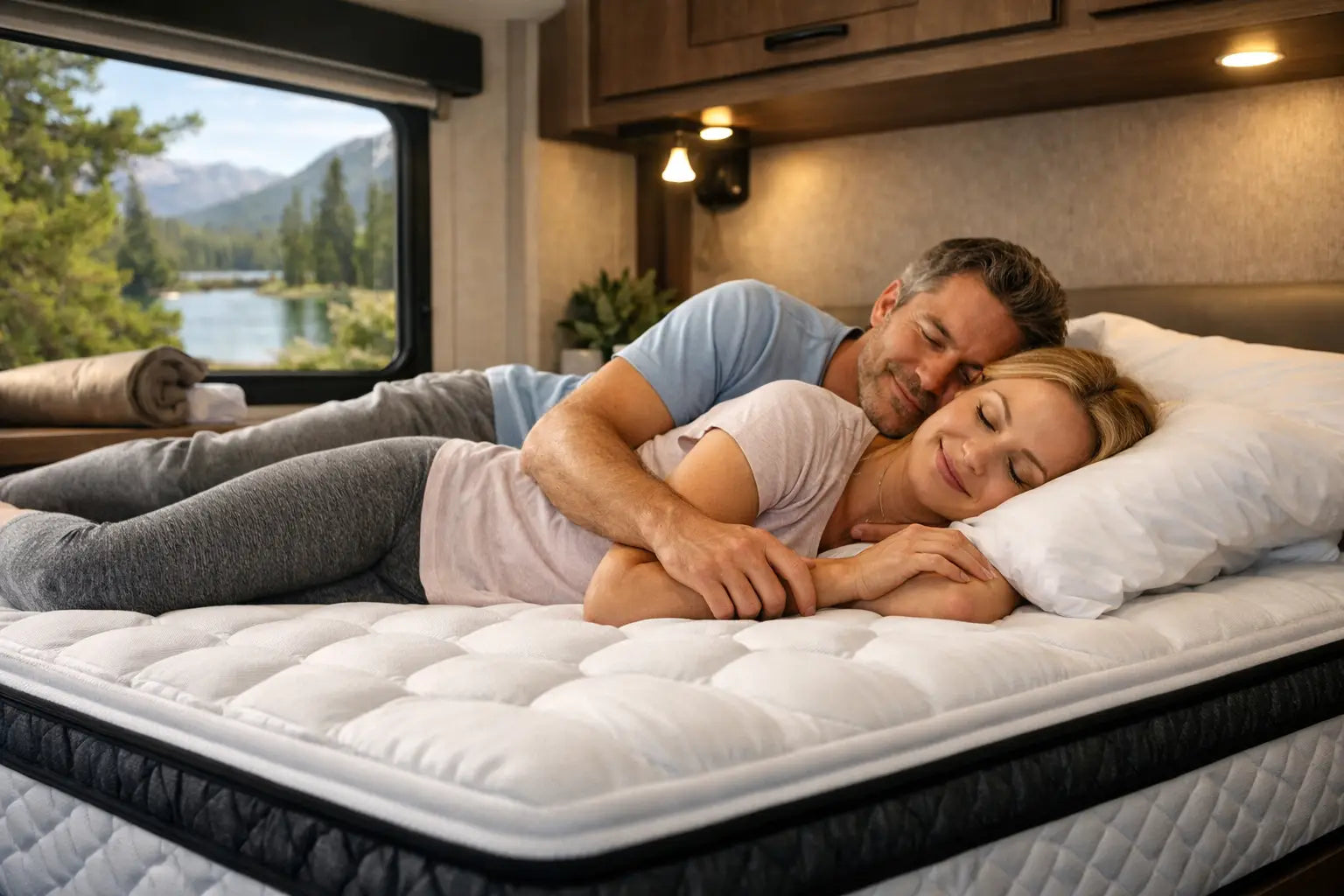
A bad RV mattress usually announces itself around 2:00 a.m. Your hip goes numb, your shoulder starts aching, and suddenly that weekend trip or full-time route feels a lot less relaxing. If you are shopping for a pressure relief RV mattress, you are probably trying to solve a real sleep problem, not just replace old foam.
That distinction matters. Pressure relief is not the same as softness, and it is definitely not the same as buying the cheapest mattress that fits your floor plan. The right RV mattress should reduce pressure points, support your spine, limit motion transfer, and fit your RV correctly. Anything less is just another short-term fix.
What pressure relief really means in an RV mattress
Pressure relief is about how the mattress responds to the heavier parts of your body, especially the shoulders, hips, and lower back. On a mattress with poor pressure relief, those areas take too much load. That creates numbness, soreness, tossing and turning, and the kind of light sleep that leaves you tired even after a full night in bed.
In an RV, those problems often get worse. Factory mattresses are commonly thin, basic, and built to hit a cost target rather than a comfort standard. They may feel acceptable for a night or two, but over time they compress, trap heat, and stop cushioning the body where it matters most.
A true pressure-relieving mattress should let your shoulders and hips settle in enough to reduce sharp contact points without allowing your midsection to collapse out of alignment. That balance is where quality construction earns its keep.
Why a pressure relief RV mattress feels different from stock beds
Most stock RV mattresses fail in predictable ways. They are often too firm at the surface, too weak underneath, or both. That means you do not get enough contouring on top, and you do not get enough support below. The result is pressure at the joints and strain through the back.
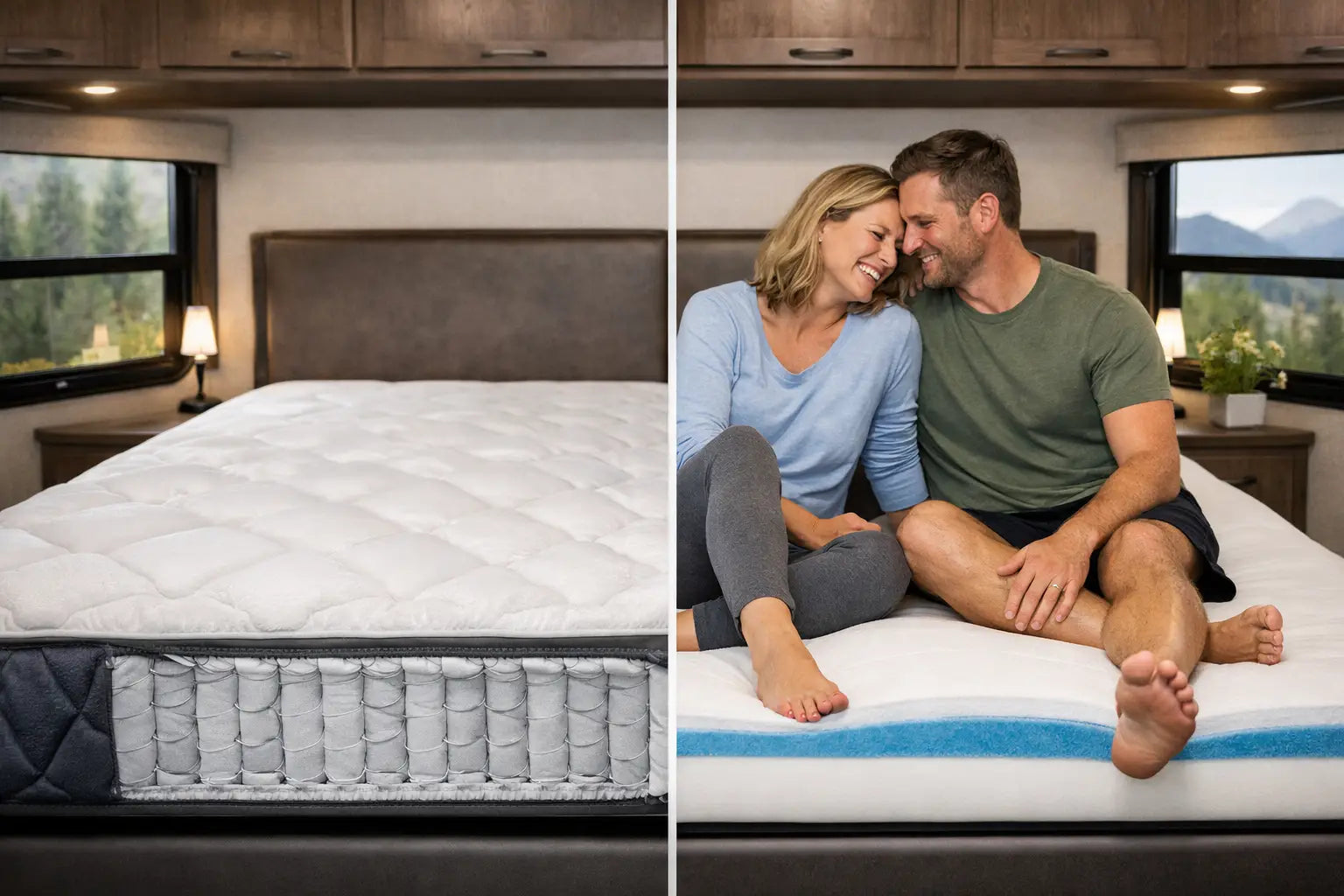
A better RV mattress uses comfort layers that adapt to the body rather than pushing back in one flat plane. Gel memory foam, responsive specialty foams, and well-designed hybrid builds tend to perform better here because they spread body weight more evenly. When paired with pocketed coils or stronger support systems, they also prevent that stuck, sagging feeling that some all-foam mattresses create.
This is where trade-offs matter. Very soft foam can relieve pressure at first, but if it lacks support, it can lead to lower back pain. Very firm beds can hold the spine up, but they often create shoulder and hip pressure, especially for side sleepers. The goal is not soft. The goal is controlled contouring with real support.
The materials that matter most
Not every pressure-relieving mattress is built the same, and material choice has a direct impact on how the bed feels after one night, one month, and one year.
Memory foam is popular because it conforms closely to the body and does a strong job of reducing pressure points. For many RV owners, that can be a major upgrade over thin stock foam. The downside is that lower-grade memory foam can trap heat and feel slow to respond when you change positions.
Gel memory foam improves on that by adding cooling benefits and a slightly more balanced feel. It still contours well, but it tends to sleep less hot than basic foam. For travelers who already deal with warm RV interiors, that can be a meaningful difference.
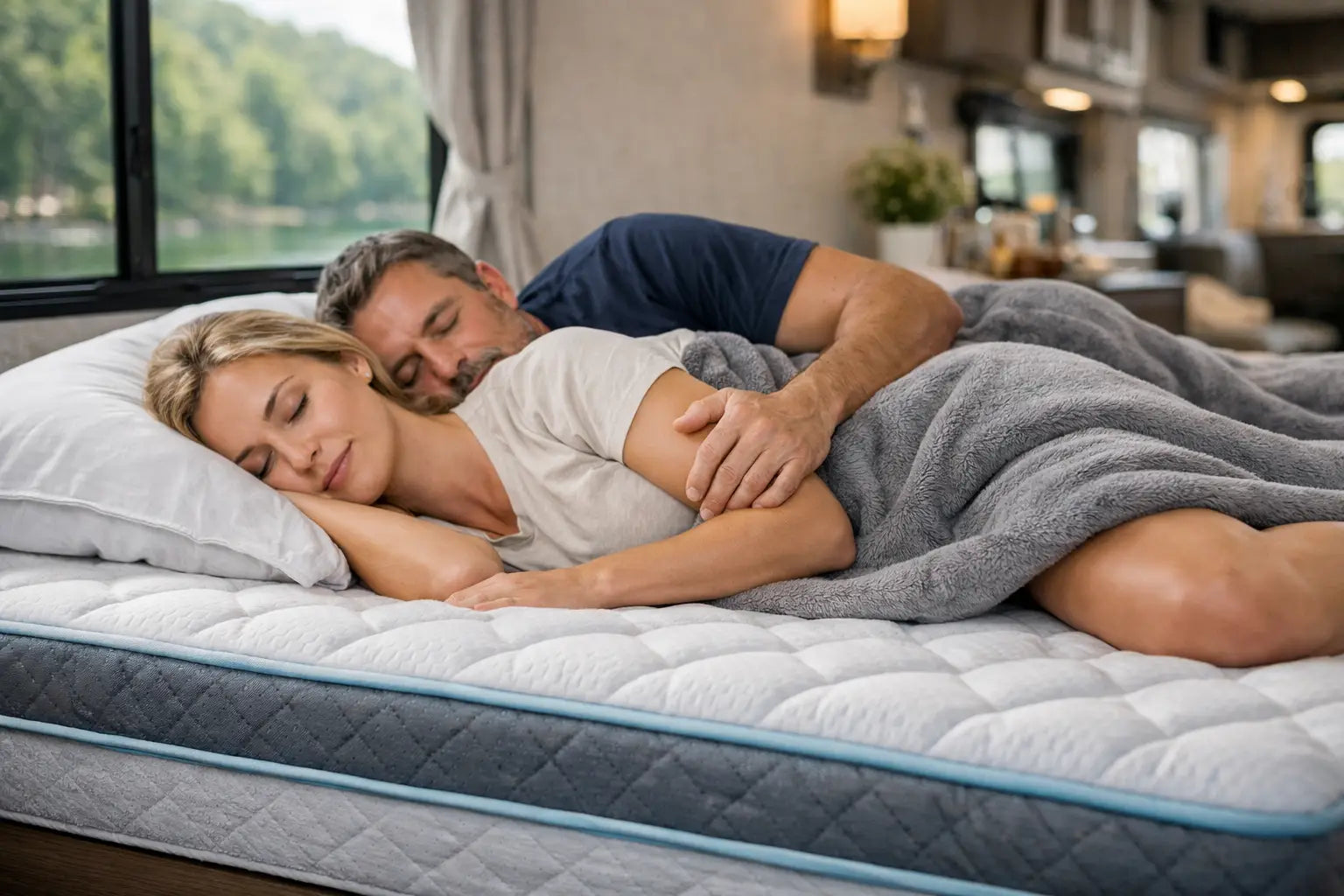
Hybrid construction is often the strongest all-around option for pressure relief and support. A hybrid combines foam comfort layers with individually wrapped coils underneath. That gives you contouring at the surface and stronger pushback below, which helps with spinal alignment, edge support, and motion isolation. For couples sharing an RV bed, that combination usually performs better than a simple foam slab.
More advanced systems, including zoned support or coil-on-coil builds, can improve things further. Zoned designs place firmer support where the body needs reinforcement and more give where pressure relief matters most. That is a smart approach for RV owners who want residential-level comfort without compromising support.
How to choose the right feel for your sleep style
The best pressure relief RV mattress depends partly on how you sleep. Side sleepers usually need the most pressure relief because the shoulders and hips carry so much of the body’s weight. If that is you, a mattress with enough contouring at the top is critical.
Back sleepers usually do best with a balanced medium to medium-firm feel. They still need pressure relief, but they also need the pelvis and lower back properly supported. Too much softness can throw the spine out of position.
Stomach sleepers are the most sensitive to sagging. They generally need a firmer support profile so the midsection does not sink too deeply. If you sleep on your stomach and want pressure relief, focus on responsive comfort layers over strong support rather than deep, plush foam.
Combination sleepers need a mattress that adapts without making movement difficult. In that case, a responsive hybrid is often the safer choice. It relieves pressure without making you feel trapped when you roll from your side to your back.
RV sizing changes the buying decision
This is where many shoppers get burned. A mattress can have excellent reviews and still be the wrong choice if it does not fit your RV properly. RV mattresses often come in short queen, RV king, three-quarter full, bunk, and other non-standard dimensions. Residential sizing is not a reliable shortcut.
If your mattress is too large, installation becomes a headache. If it is too small, you lose usable sleep surface and can create awkward gaps. A pressure-relieving mattress only helps if it actually fits the space it is supposed to serve.
That is why RV-specific sizing matters so much. A brand that specializes in RV mattresses understands the fit issues, platform constraints, and weight considerations that general mattress sellers often overlook. For buyers who want less guesswork, that expertise is part of the value.
Cooling and motion isolation are not extras
Pressure relief is the main goal, but two related features often make the difference between decent sleep and great sleep.
First is cooling. Foam that contours well can also hold heat, especially in warmer climates or smaller RV interiors. If you tend to sleep hot, look for conductive cooling materials, breathable covers, gel-infused foam, or hybrid airflow from coil systems. Pressure relief works better when you are not waking up sweaty.
Second is motion isolation. In an RV, shared sleep space is tighter, and movement can feel more noticeable. If one partner shifts, gets up early, or comes in late, poor motion control can wake the other person repeatedly. Pocketed coils and quality foam layers help absorb that movement instead of spreading it across the bed.
What to avoid when shopping
There are a few common mistakes that lead to disappointment. One is assuming thicker automatically means better. Thickness can help, but only if the internal build is strong. A thick mattress made from low-density foam can still bottom out or wear out quickly.
Another mistake is choosing based on firmness labels alone. One brand’s medium is another brand’s medium-firm. Construction matters more than the label on the product page.
It is also worth being cautious with ultra-cheap replacements. They may solve the fit problem for now, but they rarely solve the pressure problem for long. If you are waking up sore on your current mattress, you need better engineering, not just a fresh piece of foam.
What a premium RV mattress should deliver
A serious RV mattress upgrade should feel noticeably better in three ways right away. You should feel less pressure at the shoulders and hips, stronger support through the center of the body, and fewer sleep disruptions from heat or movement. Over time, it should also hold that performance instead of flattening out after one season.
That is why specialized RV brands stand apart. Polar RV Mattress, for example, focuses on RV-specific comfort systems, cooling performance, support design, and exact-fit sizing rather than trying to force residential products into mobile spaces. For shoppers who want a real upgrade, that specialization matters.
If your current mattress leaves you sore, overheated, or wide awake every time your partner moves, the problem is probably not your trip schedule. It is your bed. The right mattress changes how you recover, how long you can comfortably travel, and how good the road actually feels when morning comes.
Share:
Best RV Mattress for Side Sleepers