

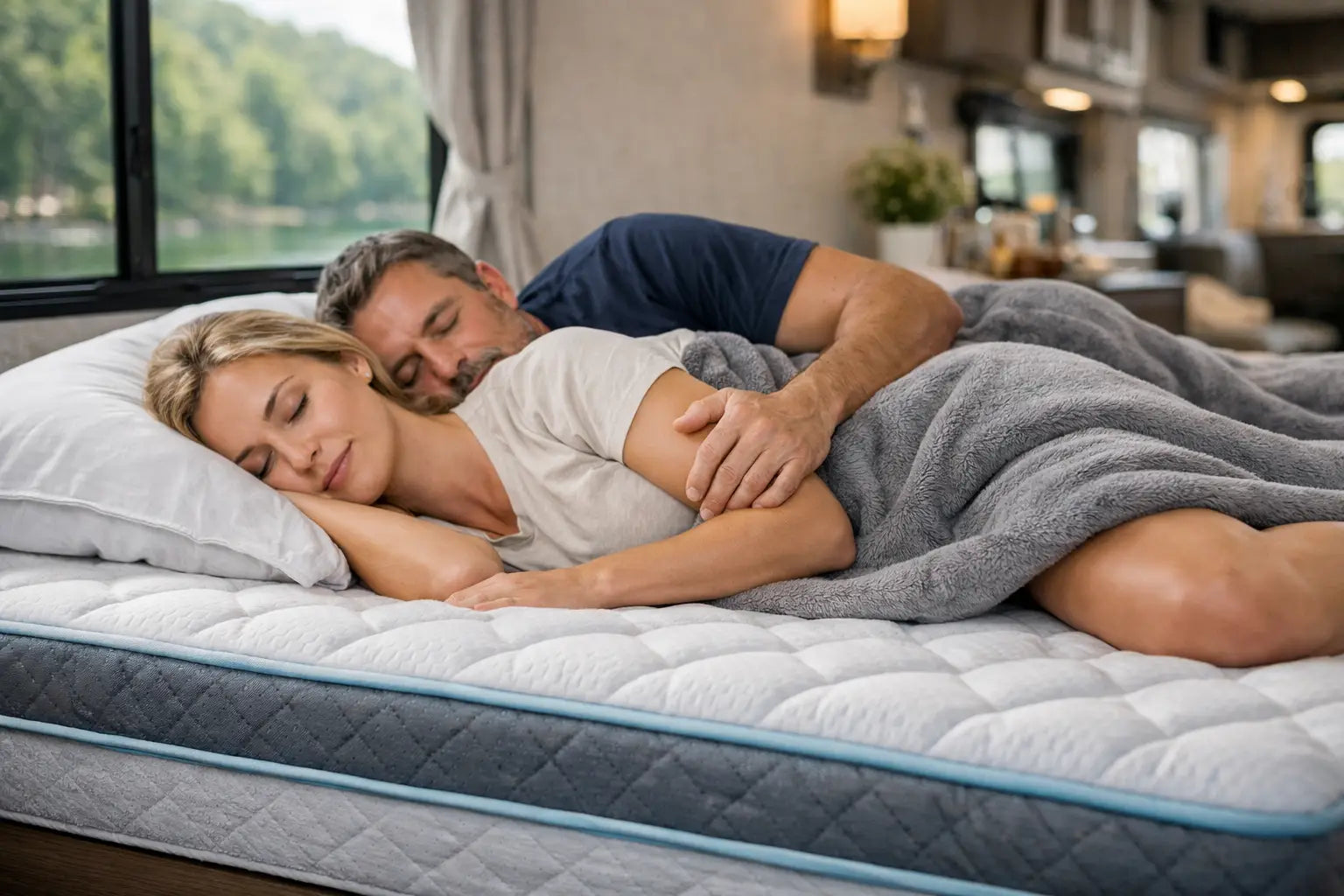
If your shoulder falls asleep before you do, your mattress is the problem. A quality rv mattress for side sleepers has one job: relieve pressure at the shoulders and hips without letting your spine sink out of alignment. That sounds simple, but in an RV, where stock mattresses are often thin, stiff, and built to hit a price point, it is exactly where sleep starts to break down.
Side sleepers need more from an RV mattress than basic cushioning. They need deeper pressure relief, better contouring, and enough core support to keep the lower back from collapsing overnight. Add in the realities of RV life - tighter spaces, non-standard mattress sizes, warmer sleeping conditions, and motion from a partner - and the right choice becomes much more specific than just buying a mattress that feels soft in a showroom.
What side sleepers actually need from an RV mattress
The biggest issue for side sleepers is pressure concentration. When you sleep on your side, most of your body weight presses into a narrower surface area, especially around the shoulders and hips. On a mattress that is too firm, those areas take the hit. On a mattress that is too soft, they sink too far and pull the spine out of a neutral position.
That is why the best rv mattress for side sleepers usually lands in the medium to medium-soft range, depending on body weight. Lighter sleepers often need a little more surface plushness to get enough contouring. Heavier sleepers usually need stronger support underneath that comfort layer so they do not bottom out or develop lower back pain after a few nights.
This is also where mattress construction matters more than a simple firmness label. A side sleeper does not just need softness. They need a comfort system that compresses gradually, paired with a support core that keeps the body level. Good pressure relief without support feels great for an hour and bad by morning.
Why stock RV mattresses fall short
Most factory-installed RV mattresses are built for cost, not sleep performance. They are commonly thinner than residential mattresses, use basic foam that compresses quickly, and trap heat in a small sleeping area. For side sleepers, that combination creates a familiar pattern: sore shoulders, aching hips, and frequent tossing from one side to the other.
Thin foam is especially unforgiving in an RV. Once the top layer compresses, you start feeling the harder support base below it. That is when pressure points show up fast. Many RV owners assume their sleep problem comes from travel, age, or a bad pillow, when the actual issue is a mattress that never had enough comfort depth to begin with.
The shape and size issue matters too. RVs often use short queens, RV kings, three-quarter sizes, and bunk dimensions that do not match standard residential mattresses. A mattress that almost fits is not a real solution. If it bows, leaves gaps, or has to be forced into place, comfort and support both suffer.
The best materials for an RV mattress for side sleepers
Memory foam is a strong choice for side sleepers because it contours closely around the shoulders and hips. It can reduce pressure well and limit partner disturbance, which matters in smaller RV sleeping spaces. The trade-off is that low-grade memory foam often sleeps hot and may feel slow to respond when you change positions.
Gel memory foam or advanced cooling foams improve that formula. They keep the pressure relief benefits while helping with heat buildup, which is a major complaint in RV bedrooms. If you sleep warm, this is not a minor feature. It directly affects whether you stay asleep.
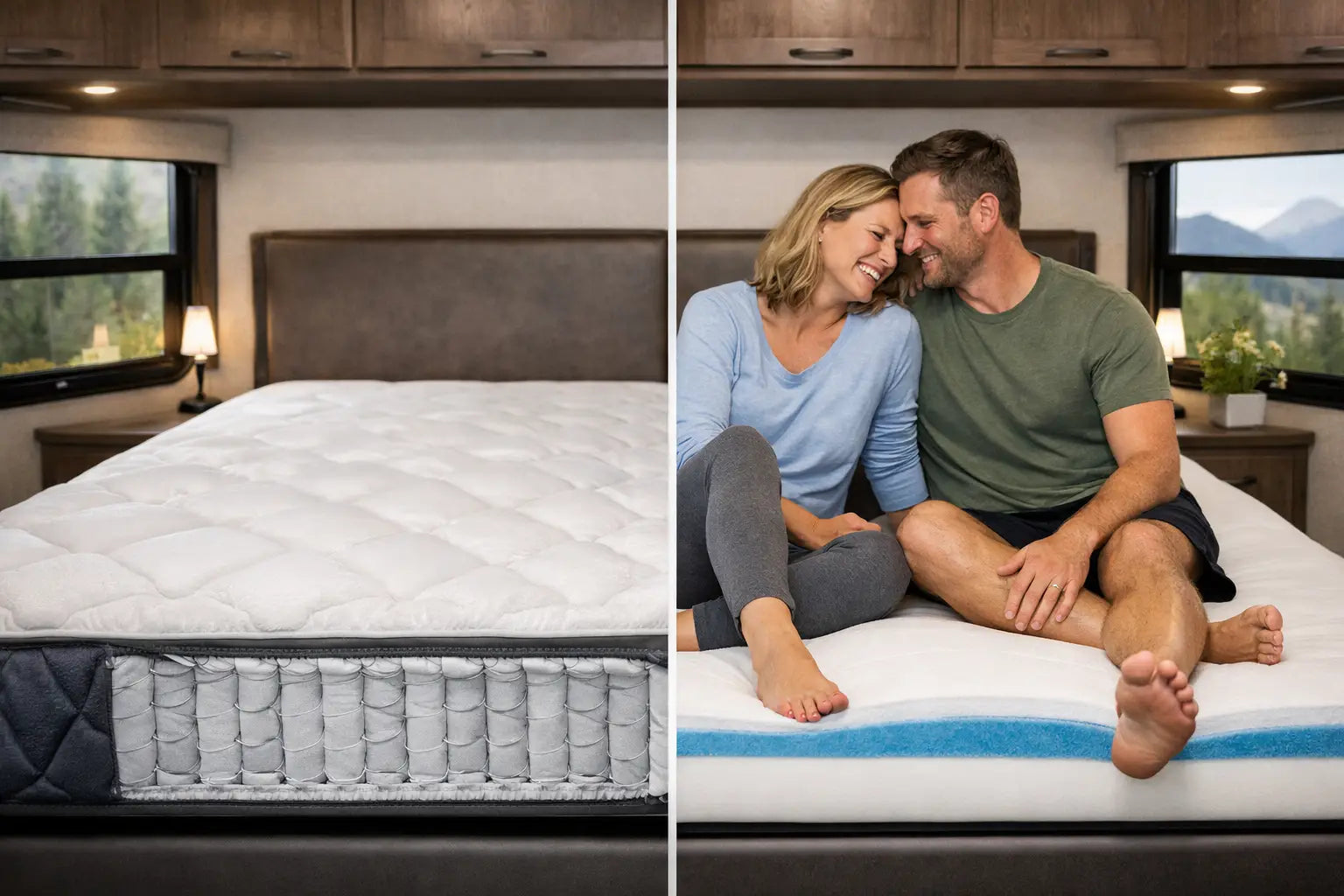
Hybrid construction is often the most balanced option. A hybrid combines foam comfort layers with a coil support system underneath. For side sleepers, that can mean better contouring at the top and stronger alignment through the middle of the mattress. It also usually improves airflow and edge support compared with all-foam designs.
A zoned coil system deserves special attention. Side sleepers often need a softer feel under the shoulders and firmer support under the hips and lumbar area. Zoned support helps the mattress respond differently across the body instead of feeling uniform from top to bottom. That is a meaningful upgrade if you are trying to reduce pressure without sacrificing support.
Firmness is important, but body type changes the answer
There is no single firmness that works for every side sleeper. Body weight changes how deeply you compress the mattress, so the same bed can feel completely different from one person to another.
If you are under roughly 130 pounds, a firmer mattress may not compress enough to cushion your pressure points. A medium-soft to medium feel is often the safer range. If you are between 130 and 230 pounds, medium is usually the sweet spot because it balances contouring and support. Over 230 pounds, side sleepers often need a hybrid with a stronger support core and a comfort layer thick enough to prevent shoulder and hip pressure.
Couples have another variable to manage. If one partner sleeps on their side and the other sleeps on their back or stomach, the goal is not perfection for one person. It is balanced performance for both. In that case, a medium hybrid with strong motion isolation is often the smartest compromise.
Cooling matters more in an RV than most people expect
Heat retention is one of the fastest ways to ruin a good mattress choice. RV sleeping spaces are compact, insulation varies by rig, and airflow is not always ideal. Side sleepers already have more body contact with the mattress surface, which can trap additional warmth through the night.
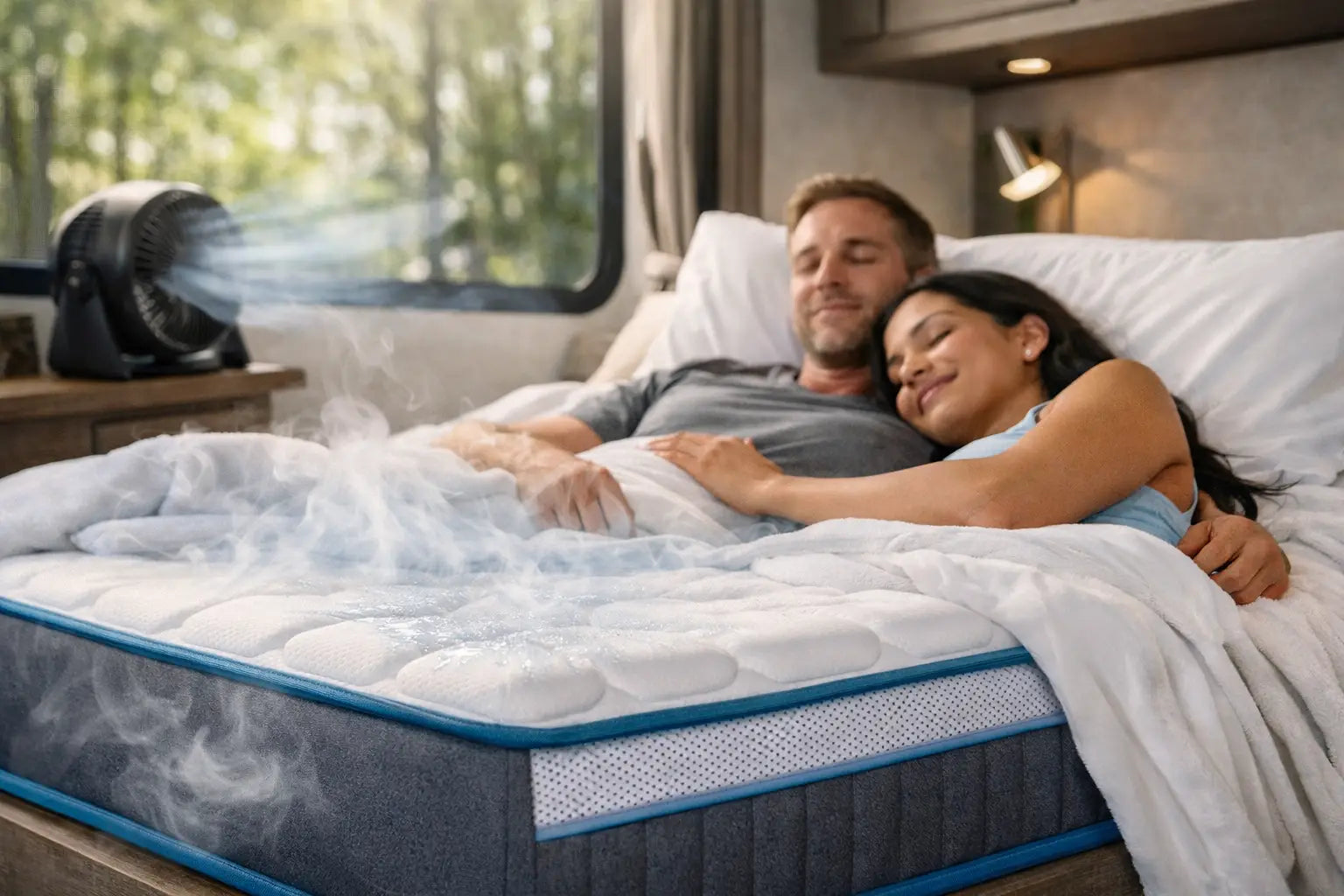
That is why cooling features are worth paying for. Conductive cooling fabric, breathable coil systems, open-cell foam, and gel-infused memory foam all help reduce heat buildup. None of these features turn a mattress cold, but they can make the difference between sleeping through the night and waking up hot at 2 a.m.
If you have ever liked the pressure relief of memory foam but hated the temperature, a cooling hybrid is usually the better fit. You get contouring at the top, airflow through the coil layer, and less of that sink-in warmth that cheaper foam mattresses tend to create.
Fit is not a side issue - it is part of sleep quality
An RV mattress should match your floorplan, platform, and sleeping setup exactly. That means the correct RV size, but also the right profile height and flexibility for your specific space. A mattress that is too tall can interfere with overhead cabinets or make it harder to climb into bed. One that is too short on comfort layers may fit the space but fail where it matters most.
Custom sizing can be a real advantage if your RV has an uncommon layout. It removes the compromise of trying to make a residential mattress work in a non-residential space. For side sleepers, proper fit is not just about installation. It keeps the sleeping surface even and fully supported, which protects pressure relief and alignment.
What to look for before you buy
Start with pressure relief and support, not brand hype. For side sleepers, at least a few inches of true comfort material over a durable support core is a strong baseline. If the mattress description focuses only on softness, that is not enough. You want to know what is underneath and whether it will hold your body level through the night.
Then look at cooling, motion isolation, and edge support. Cooling helps you stay asleep. Motion isolation matters if your partner shifts or gets up early. Edge support is easy to overlook in an RV, but it helps the mattress feel more stable and usable across the full surface, especially in tight sleeping quarters.
A sleep trial matters too. Mattresses can feel different after several nights than they do in the first five minutes. A long trial period lowers the risk, especially when you are buying for a non-standard RV size and cannot just test options locally. Brands that specialize in RV sleep usually understand that better than general mattress companies do.
The right RV mattress should feel like an upgrade, not an adjustment
A good rv mattress for side sleepers should solve a problem on night one. Less pressure in the shoulders. Better cushioning at the hips. Fewer wake-ups from heat or partner movement. Better support when you spend weeks or months on the road instead of just a weekend.
That is why specialized RV construction matters. A mattress designed for RV sizes, cooling performance, and real support systems is a different category from the thin stock bed you are replacing. Polar RV Mattress builds for exactly that upgrade - comfort, cooling, support, and proper RV fit without the guesswork.
If you sleep on your side, do not settle for a mattress that is merely better than the factory one. Choose one that is built to let your shoulders relax, your hips sink just enough, and your back stay supported all night. Better mornings start there.
Share:
Innerspring vs Foam RV Mattress