

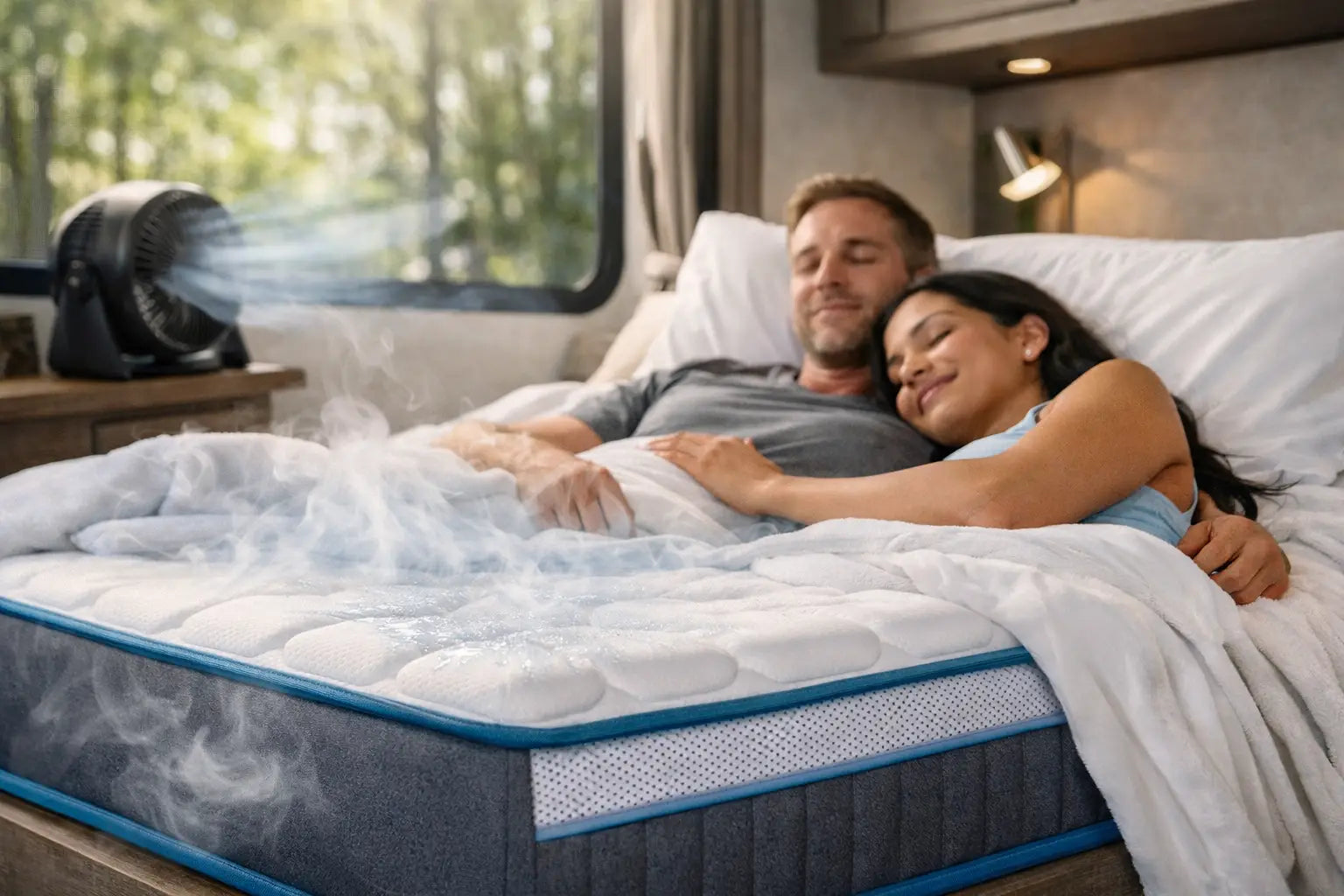
If your bed still feels warm long after the AC kicks on, the problem usually is not just the weather. It is the mattress. For RV owners searching for how to cool rv mattress setups that trap heat, the real fix starts with understanding where that heat is coming from and which changes actually make a difference in a compact sleep space.
An RV bedroom holds heat differently than a house. You have tighter quarters, less airflow around the bed, more radiant heat from walls and windows, and often a factory mattress built to hit a price point instead of a comfort standard. That combination turns a warm night into restless sleep fast. The good news is that cooling an RV mattress is usually very doable, but the right solution depends on whether your issue is bedding, ventilation, bed platform design, or the mattress itself.
How to cool RV mattress problems at the source
A lot of RV sleepers start by lowering the thermostat or adding another fan. That can help, but if your mattress materials hold onto body heat, room temperature only solves part of the issue. Memory foam with poor airflow, dense low-quality foams, and waterproof layers that do not breathe well are common culprits.
The first thing to check is what is directly under and over your body. If you are sleeping on a thick synthetic mattress pad, polyester sheets, and a foam mattress that already runs hot, those layers are working against you. Heat builds between your body and the bed, and in an RV there is less room for it to dissipate.
A cooler sleep setup usually comes from reducing heat retention in layers, improving air movement around the bed, and choosing mattress materials that release heat instead of storing it.
Start with the bedding before replacing the mattress
If your mattress is basically comfortable but sleeps hot, change the bedding first. This is the fastest and least expensive test. Cotton, bamboo blends, and linen-style breathable fabrics generally sleep cooler than slick synthetic sets. The same goes for blankets and protectors. If a mattress protector feels plasticky or stiff, it may be blocking airflow more than you realize.
Keep your bedding light and breathable. In many RVs, people overdress the bed because temperatures drop later at night, but heavy layers trap heat at the beginning of the night when most overheating happens. It is often better to use one breathable blanket and keep an extra layer nearby instead of building a thick bed that holds warmth.
Improve airflow under the mattress
This is one of the most overlooked fixes in RV sleep. Many RV mattresses sit on solid plywood platforms or enclosed bed boxes with limited ventilation. That design restricts air circulation under the mattress, which can make the sleeping surface feel warmer and can also increase moisture buildup.
If your bed platform is solid, under-mattress ventilation can help. Some RV owners add a breathable underlay or a slatted support system designed to create air space beneath the mattress. Even a modest gap improves circulation. This matters even more if your bed lifts for storage, because enclosed compartments tend to trap heat.
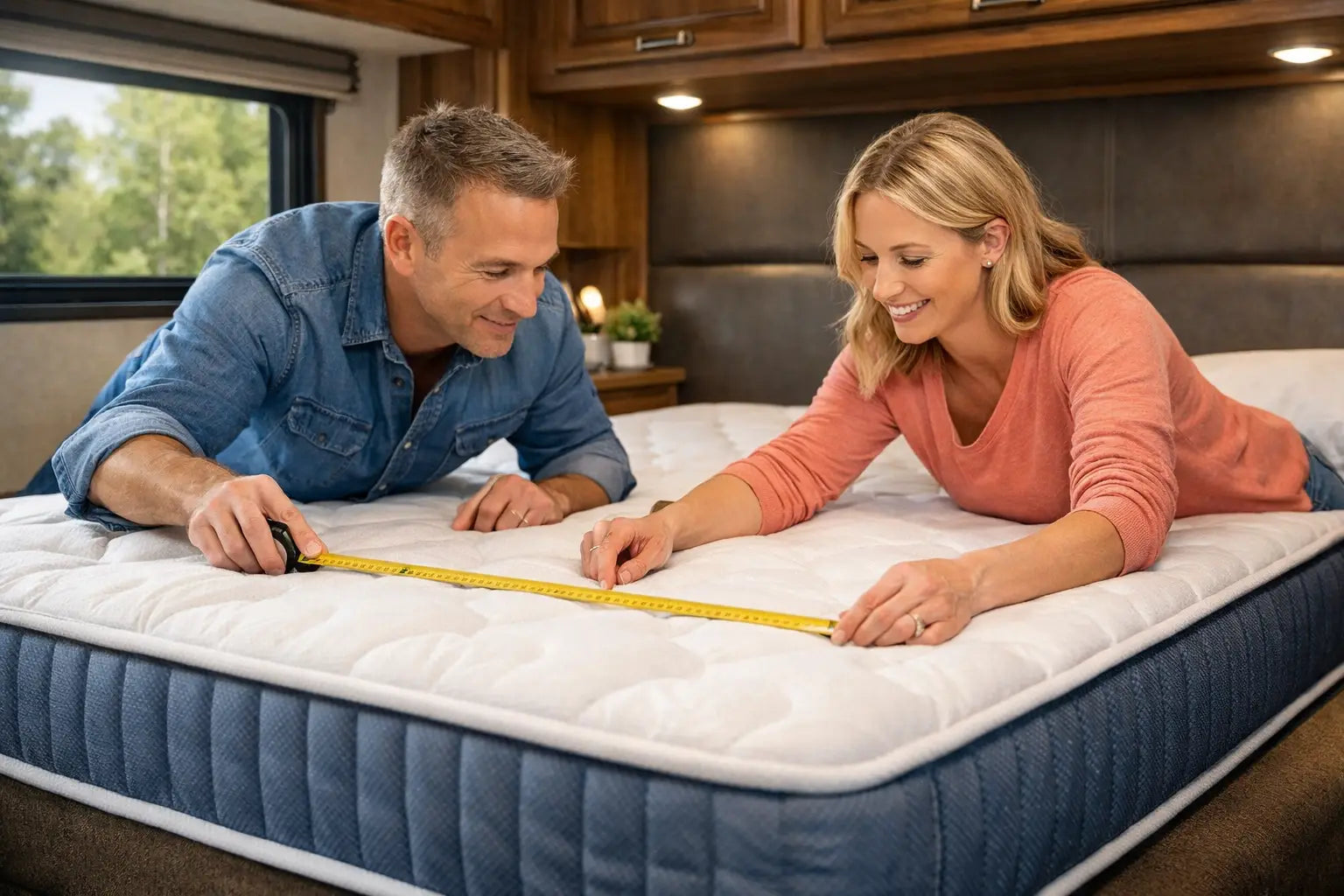
There is a trade-off here. Any added underlay or slat system has to work with your bed height and RV clearances. In some rigs, adding too much thickness affects fitted sheets, bed access, or storage operation. Measure first.
The best ways to cool an RV mattress at night
Once the bedding and airflow basics are handled, it becomes easier to judge whether the mattress itself is the issue. If you lie down and the bed starts comfortable but gets noticeably warmer within 20 to 30 minutes, that is often a material problem, not just a room problem.
Use a cooling topper carefully
A topper can help, but not all toppers are actually cooling. Many cheap foam toppers add softness while making heat retention worse. Look for options that focus on airflow or conductive cooling rather than just plush foam. Gel-infused foam can help a little, but gel alone is not a cure if the topper is still dense and poorly ventilated.
A topper works best when your mattress is supportive enough and only needs help with temperature regulation or surface comfort. If the mattress is sagging, too firm, too thin, or generally low quality, a topper becomes a temporary patch. In that case, you may spend money without solving the real issue.
Add fans where they change the bed climate
A ceiling AC cools the cabin, but small fans often do more for sleep comfort because they move heat away from your body. In an RV bedroom, fan placement matters. Aim for cross-ventilation if possible instead of just blasting air at your face. A fan near the foot of the bed or side of the sleeping area can improve circulation over the mattress surface and around the walls where heat tends to collect.
If your RV has a slide with the bed inside it, pay attention to how air moves there. Slide rooms often create dead zones where cool air does not circulate well. A compact fan can make a bigger difference than lowering the thermostat several degrees.
Block heat before bedtime
Cooling the mattress is easier when the room does not spend all afternoon absorbing heat. Use shades, reflective window covers, and vent insulation where needed during the hottest part of the day. If direct sun hits the bedroom side of the RV, the mattress and wall surfaces can warm up for hours before you ever get into bed.
This is especially true in summer camping or for full-time RVers parked in open sites. The mattress can feel hot not because it is generating heat, but because it has been storing ambient heat from the coach.
When the mattress itself is the problem
There is a point where accessories stop being the smart fix. If your RV mattress is a thin factory original, made with basic foam, or lacks real support, cooling hacks only go so far. Many stock RV mattresses are built to be lightweight and inexpensive, not to deliver strong pressure relief, airflow, or temperature control.
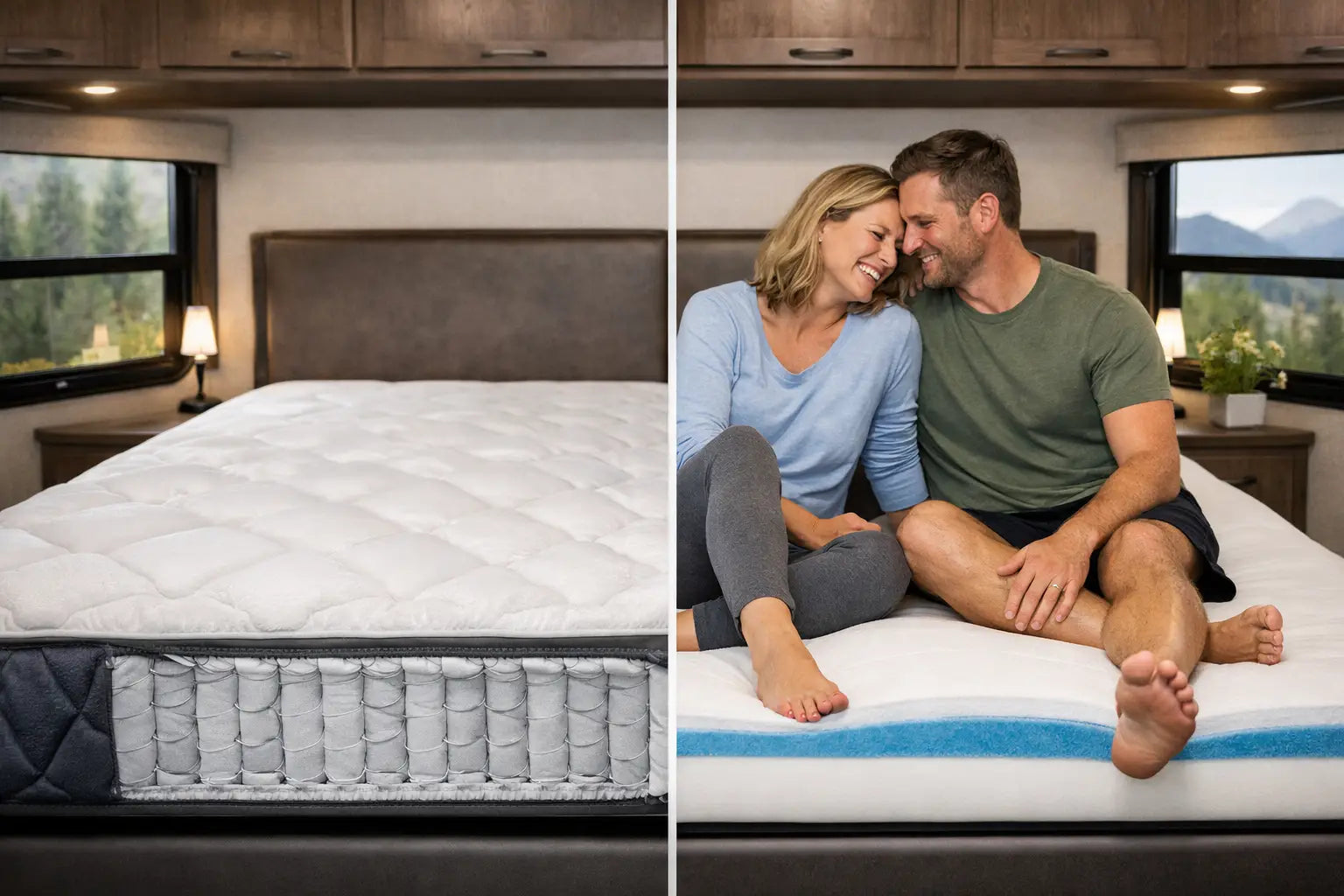
A better RV mattress should do more than feel soft at first touch. For cooler sleep, construction matters. Hybrid designs with coils can move more air than all-foam builds. Gel memory foam can help with pressure relief, but it performs better when paired with breathable support layers rather than stacked in thick heat-trapping slabs. Conductive cooling covers and more advanced cooling materials can also outperform standard quilted tops.
Support matters here too. People often associate overheating with temperature alone, but poor support can make you sleep hotter because you sink too deeply into the bed. The more your body is enveloped, the less airflow you get around your pressure points. A mattress with stronger support and better surface balance often sleeps cooler because you stay more on the mattress instead of in it.
This is where a purpose-built RV mattress has a real advantage over generic residential options or bargain replacements. RV sizing is not always standard, and forcing the wrong size mattress into a platform can reduce ventilation around the edges or create fit problems. A mattress built specifically for RV dimensions makes the whole sleep setup work better.
Polar RV Mattress focuses on that exact upgrade path, with RV-specific sizes and cooling-oriented constructions designed for travelers who want residential comfort without the usual RV compromises.
How to choose the right cooling fix for your RV
The best answer depends on what kind of heat you are feeling.
If you are mostly warm on the surface of the bed, start with sheets, protectors, and blankets. If the whole sleeping area feels stuffy, focus on airflow and heat blocking in the room. If the bed warms up under you night after night no matter what else you try, the mattress materials are likely the problem.
Body type and sleep style matter too. Side sleepers who sink more into foam often notice heat buildup sooner than back sleepers on firmer beds. Couples may experience more retained heat simply because two bodies are warming the same surface in a smaller RV bedroom. Full-time RVers also tend to notice mattress flaws faster than weekend campers because the wear and nightly use are more consistent.
Budget matters, but so does how long you plan to keep the RV. If you are dealing with a short-term issue, better bedding and ventilation may be enough. If you travel often or live in your RV for extended stretches, replacing a heat-trapping mattress is usually the better value. Better sleep compounds over time.
What not to do if your RV mattress sleeps hot
Do not assume a colder thermostat is the only solution. That can increase power use without fixing the heat stored in the bed itself. Do not stack multiple foam toppers hoping to create a luxury feel. In many cases, that just adds more insulating material. And do not ignore mattress protectors. A non-breathable protector can cancel out the benefits of cooler sheets or a better mattress.
Also, be careful with product claims. Not every mattress labeled cooling actually performs that way in a warm RV. Terms like gel, breathable, and temperature regulating are used loosely across the category. Look for actual construction advantages like airflow through coils, conductive cooling materials, and support systems that prevent deep sink.
The right RV bed should help you fall asleep cooler and stay comfortable through the night, not force you to engineer a workaround for basic heat retention. If your current setup fights you every summer trip, that is useful information. Sleep quality is not a small luxury in an RV. It affects recovery, driving, energy, and whether the trip feels relaxing at all.
A cooler night usually starts with one honest question: do you need a better trick, or do you need a better mattress?
Share:
RV Mattress Size Guide for a Better Fit
Innerspring vs Foam RV Mattress