

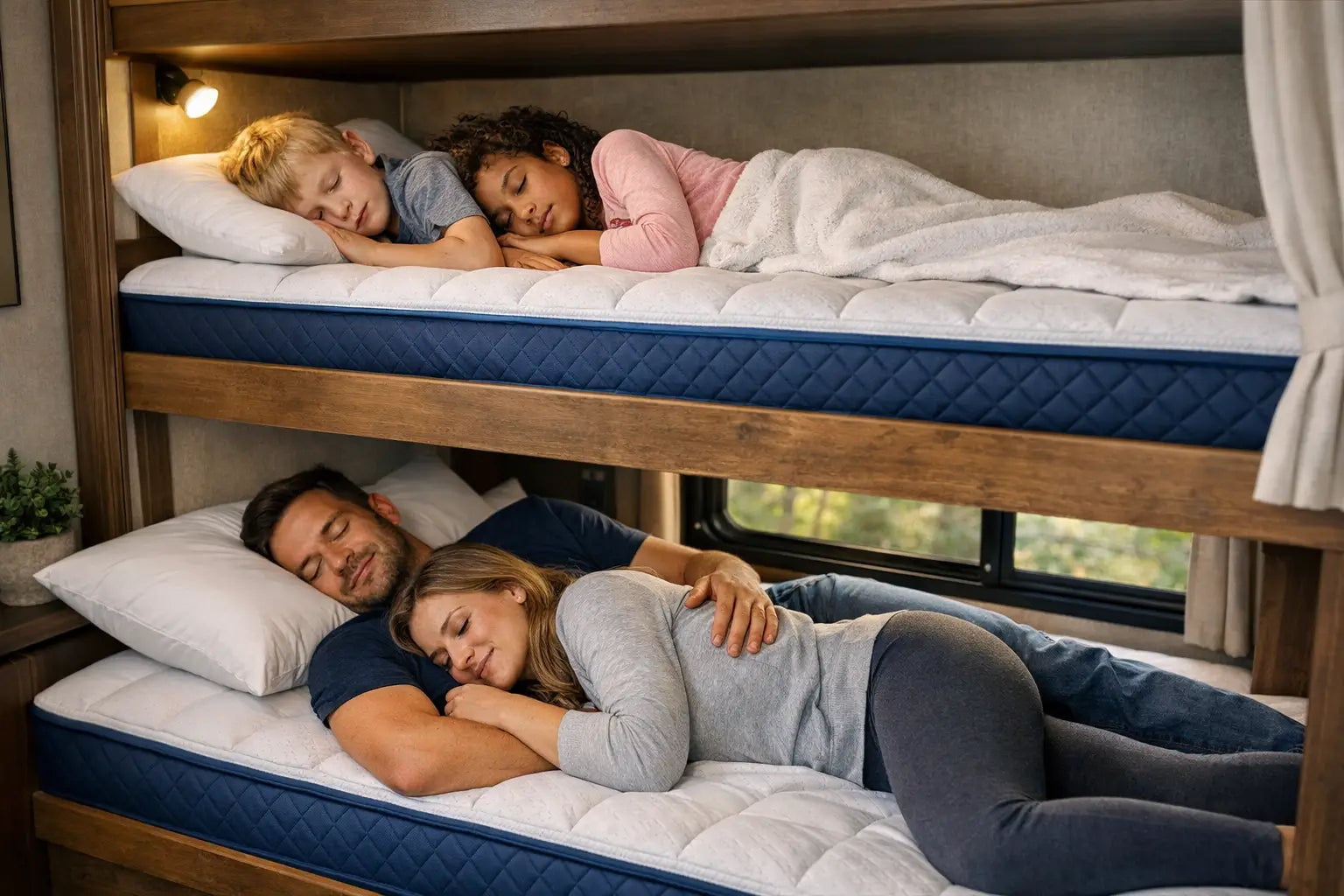
If your RV bunk feels more like a padded shelf than a bed, the mattress is usually the problem. The best rv bunk mattress options are built to solve the same issues stock bunks create - poor support, trapped heat, awkward sizing, and a surface that leaves kids, guests, or adults waking up stiff.
What makes the best RV bunk mattress options different?
A true RV bunk mattress is not just a smaller version of a standard mattress. Bunks often have tighter height limits, unusual width and length requirements, curved corners, or lightweight platform systems that are less forgiving than a residential bed frame. That changes what works.
The best choices balance four things at once: fit, support, temperature control, and weight. Miss one, and the mattress may still disappoint. A bunk mattress that feels plush in a showroom can become a bad purchase if it sits too tall for a guard rail, traps heat in a tight sleeping nook, or hangs over the platform by an inch on each side.
That is why RV owners usually get better results when they shop by sleep performance and RV fit together, not by price alone. Factory mattresses are thin because they are built to meet a cost target. Replacement bunk mattresses should be built to improve sleep.
Start with fit before comfort
The biggest mistake in this category is buying a standard twin and hoping it works. Sometimes it does. Often it does not.
RV bunk sizes vary more than many shoppers expect. You may be dealing with an RV bunk, RV twin, short twin, narrow twin, three-quarter width, or a custom footprint with a cut corner. Even when the listed size sounds familiar, the actual dimensions can be different enough to matter.
Measure the sleeping platform carefully, including length, width, and maximum mattress height. If the bunk has a safety rail, ceiling clearance, or a fold-up mechanism, write those down too. A mattress that is too thick can make it harder for a child to climb in safely or for an adult to sit up without hitting the underside of the top bunk.
For many RV bunks, the best height range is moderate rather than tall. You want enough profile for real pressure relief and support, but not so much that the bunk becomes cramped. This is one of those areas where bigger is not better.
Foam, hybrid, or coil: which bunk mattress type works best?
Memory foam mattresses
Memory foam is a common option for bunks because it can be lighter, quieter, and easier to fit in RV-specific sizes. It also does a strong job reducing pressure points, which matters if the sleeper is dealing with hip, shoulder, or back discomfort.
The trade-off is heat and support feel. Lower-grade foam tends to sleep warmer and break down faster, especially in thinner constructions. If you are choosing foam for an RV bunk, look for higher-quality comfort layers and cooling features such as gel-infused or conductive materials. Foam can be an excellent bunk option, but cheap foam usually feels cheap night after night.
Hybrid mattresses
Hybrid bunk mattresses combine foam comfort layers with coil support. For many RV owners, this is the strongest all-around category because it delivers more lift, better airflow, and more durable support than most all-foam budget models.
A good hybrid is especially useful when the bunk is used by adults, teenagers, or bigger sleepers who need more than soft cushioning. The catch is height and weight. Some hybrids are too tall or too heavy for a bunk setup, so this category works best when the mattress is specifically designed for RV use.
Traditional innerspring mattresses
Basic innerspring models can feel firmer and more breathable than entry-level foam, but many lack the pressure relief and motion control that make a bunk genuinely comfortable. They are often better than a thin factory mattress, but not always the best value if long-term comfort is the goal.
For occasional guest use, they can be serviceable. For regular sleeping, they tend to be outperformed by better foam and hybrid builds.
The comfort factors that matter most in a bunk
Support is not optional
A bunk mattress has less room to hide bad construction. If the support core is weak, the sleeper will feel it quickly. That can show up as lower back pain, shoulder pressure, or the sensation of bottoming out through the mattress.
For kids, that may mean restless sleep. For adults, it usually means soreness the next morning. Stronger support systems, denser foams, and well-built coil units make a measurable difference here.
Cooling matters more in bunk beds
Bunk areas trap heat. There is less open airflow around the mattress, and the sleeper may be close to a wall, window, or upper surface. That is why cooling should be high on the checklist, not treated like a luxury feature.
If someone in your RV sleeps hot, avoid dense low-end foam without breathable or conductive materials. Mattresses with improved airflow and heat-dissipating comfort layers tend to perform better in compact bunk spaces.
Motion isolation can still matter
Even on a bunk, motion transfer is not irrelevant. Kids shift. Pets jump up. The whole RV moves. A mattress with decent motion control helps the sleeper stay settled rather than reacting to every movement nearby.
This is one reason foam and quality hybrids often feel more refined than old-school spring-only designs.
Best RV bunk mattress options by sleeper type
The best choice depends on who actually uses the bunk. A family with young kids should not shop the same way as a couple converting bunks into adult guest beds.
For children, comfort and safety usually lead. A medium or medium-firm feel works well for most kids because it provides enough cushioning without letting them sink too deeply. Keep the height practical, especially if the bunk rail is shallow.
For teens, support becomes more important. Growth spurts, longer sleep hours, and more body weight can expose weak mattresses fast. A better-grade foam or RV hybrid usually holds up better than entry-level replacements.
For adults, the right bunk mattress needs real support. If the bunk is used regularly, a premium foam or lower-profile hybrid is usually the strongest move. Adult sleepers generally need more pressure relief and stronger support than a standard camper bunk mattress can provide.
For mixed-use bunks, aim for versatility. A medium-firm feel with balanced cushioning tends to satisfy the widest range of sleepers. This is often the safest option for families who rotate guests or use bunks on different trips.
When custom sizing is the smarter choice
Not every RV bunk follows a clean standard size. If your current mattress leaves gaps, catches on cabinetry, or requires force to fit, custom sizing is often worth it.
A properly sized bunk mattress looks better, performs better, and avoids the wear that comes from folding or compressing a mattress into a space it was never built for. In RVs, precision matters. A mattress that fits correctly is easier to make, safer to sleep on, and more comfortable across the full surface.
This is also where specialized RV brands have a real advantage. They understand dimensions like RV twin and bunk variations, and they are better equipped to match a mattress to mobile living constraints instead of forcing a residential solution into an RV frame.
What to avoid when shopping
The first thing to avoid is the cheapest foam mattress you can find online. Many look good in photos and sound comfortable in product copy, but they often lack the density, cooling, and support needed for repeated RV use.
You should also be cautious with very tall mattresses. Extra height may sound more luxurious, but in a bunk it can reduce clearance and create a cramped sleeping position. If the sleeper cannot roll over comfortably or sit up without brushing the ceiling, the mattress is too tall for the space.
Finally, do not ignore the foundation beneath the mattress. A weak or uneven bunk platform can affect comfort and durability. Even the right mattress performs best on a stable, properly supported base.
How to choose with confidence
When comparing the best RV bunk mattress options, focus on the problems you are trying to solve. If the bunk sleeps hot, prioritize cooling. If it is for an adult, prioritize support. If dimensions are unusual, prioritize fit before anything else.
A strong RV bunk mattress should feel like a serious upgrade, not just a replacement. That means better materials, better support, and sizing that respects the way RVs are actually built. Brands that specialize in RV sleep tend to get these details right, and that matters more than broad claims made for standard mattresses.
One reason RV owners step up to specialty products from companies like Polar RV Mattress is simple: RV sleep is not a side category. It has its own sizing, its own comfort challenges, and its own performance standards. A mattress built specifically for bunks in mobile spaces has a better chance of solving the real issue.
The right bunk mattress can turn an overlooked sleeping space into a bed people actually want to use. When the fit is right and the support is there, every trip starts feeling a little more like rest and a lot less like recovery.
Share:
Best Pressure Relief RV Mattress Guide