


If your current camper mattress leaves you hot, stiff, and wide awake every time your partner rolls over, an rv hybrid mattress review is worth more than a quick star rating. In RVs, the wrong mattress does not just feel mediocre - it can turn every trip into a recovery mission. The right hybrid can give you residential-level comfort in a size that actually fits your rig.
That is why hybrid mattresses get so much attention from RV owners. They promise the pressure relief of foam with the support and airflow of coils. On paper, that sounds like the best of both worlds. In practice, the details matter a lot more than the label.
RV hybrid mattress review: why hybrids stand out
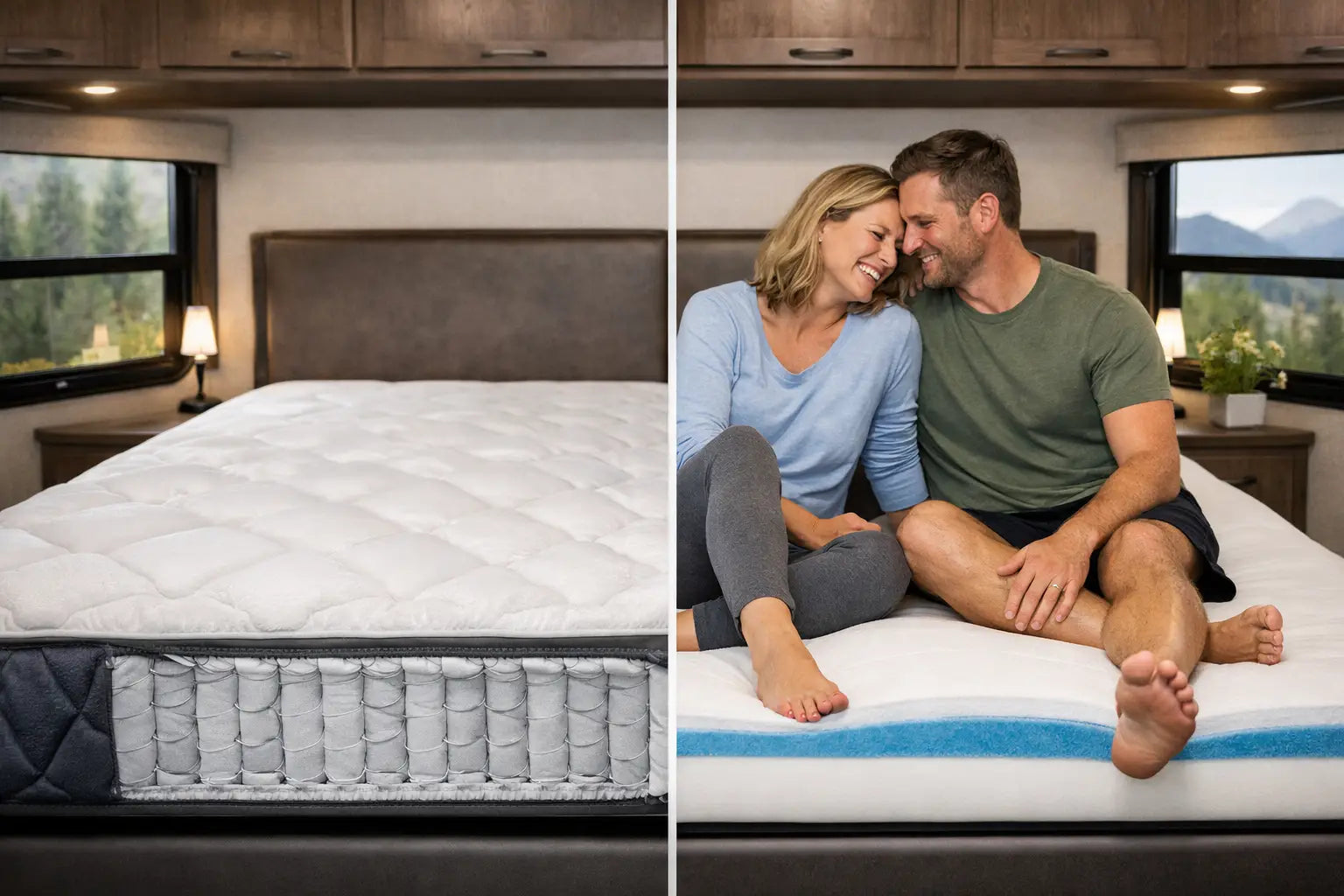
A hybrid mattress combines foam comfort layers with an innerspring support core, usually pocketed coils. For RV use, that mix makes sense because most stock mattresses fail in the same predictable ways. They sleep hot, flatten quickly, and do very little to support hips, shoulders, or the lower back.
A well-built hybrid solves several of those issues at once. Coils create better airflow than all-foam construction, which helps if your RV gets warm at night or you already sleep hot. Pocketed coils also respond more independently than old-style connected springs, so movement on one side of the bed is less likely to jolt the other sleeper awake. Add quality memory foam or responsive comfort foam on top, and you get better pressure relief without the stuck feeling many people dislike.
That said, not every hybrid belongs in an RV. Some are too tall, too heavy, or simply not offered in true RV sizes. A mattress can be excellent in a house and still be a poor fit in a motorhome, fifth wheel, or travel trailer.
What to look for in an RV hybrid mattress
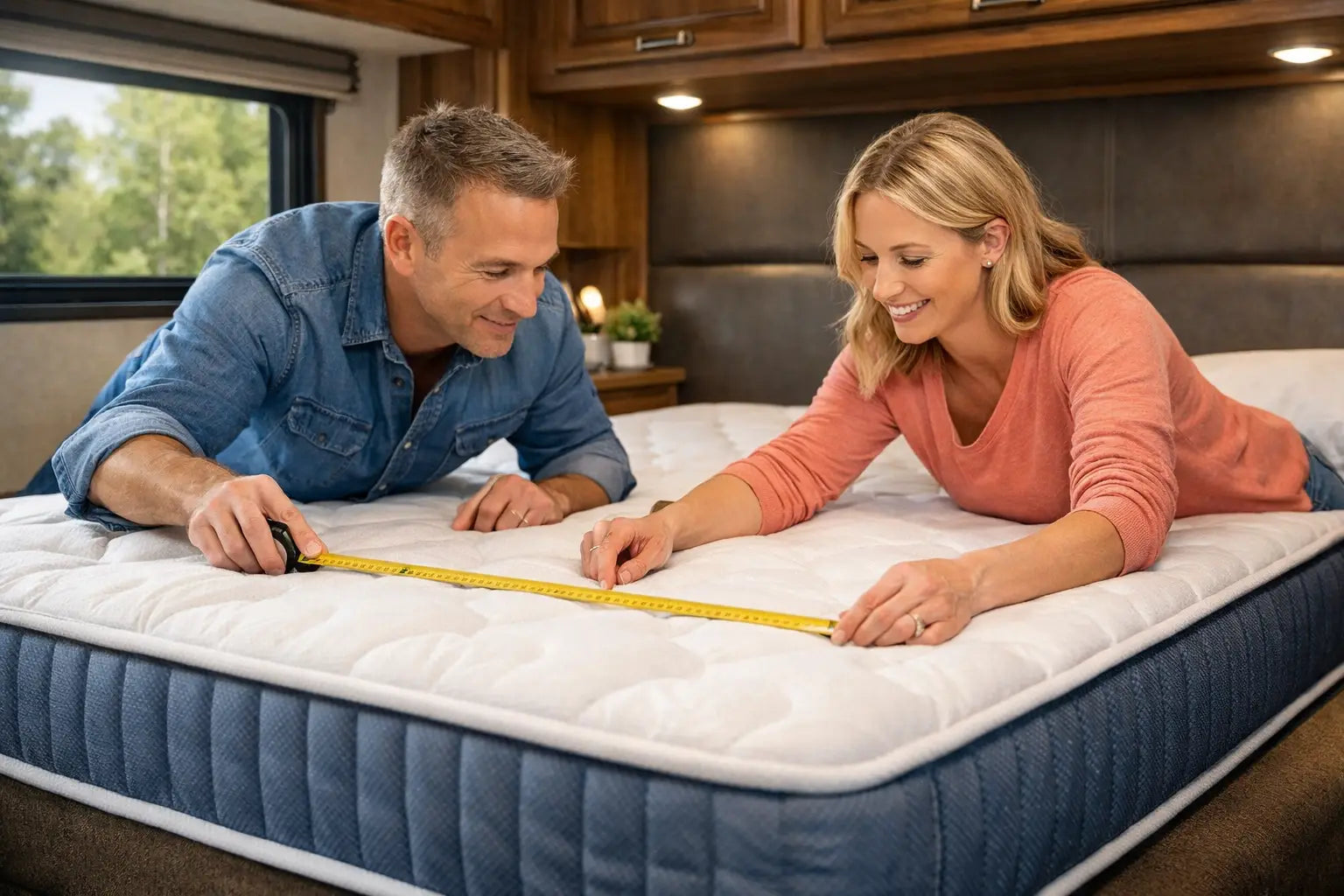
The first issue is fit. This sounds basic, but it is where a lot of buyers go wrong. RV Queen, RV King, short queen, three-quarter, and bunk sizes are not interchangeable with standard residential sizes. Even a small mismatch can create overhang, gaps, hard-to-make corners, or problems with platform access and slide clearance.
The second issue is support. If you are replacing a factory mattress, you are probably not doing it for fun. You are doing it because your back hurts, your shoulders go numb, or you wake up feeling like you slept on plywood. A strong hybrid should have a support system that keeps your spine level instead of letting the heaviest parts of the body sink too far. Zoned coils can help here, especially for side sleepers and couples with different body types.
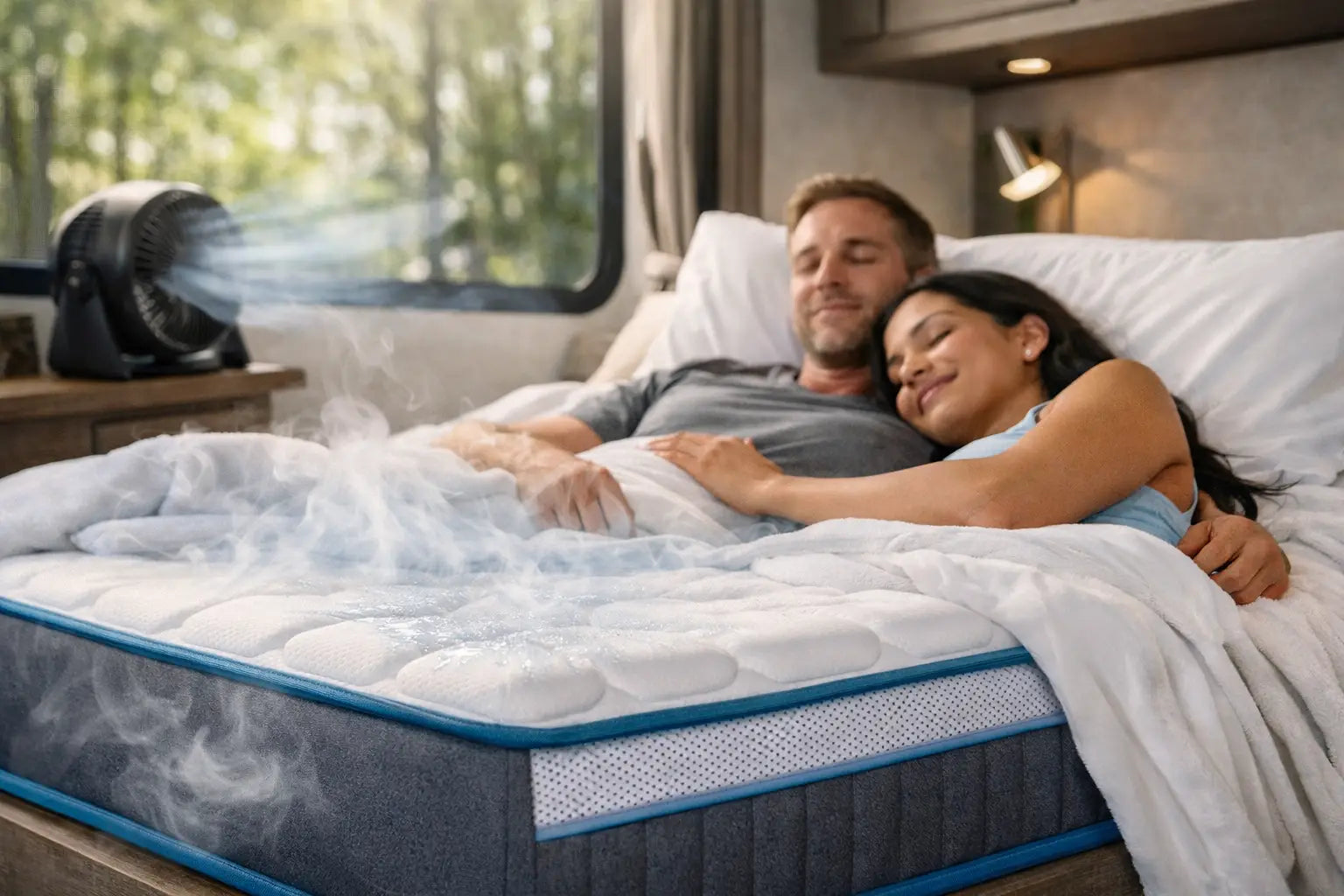
Cooling is another major factor. RV bedrooms can trap heat, and many stock foam mattresses make that worse. Good hybrids usually perform better because coils allow more airflow. Better models also add cooling-focused materials such as gel-infused foams, breathable covers, or conductive cooling fabrics that move heat away from the body instead of holding it.
Then there is motion isolation. Couples often assume coils mean bounce and bounce means sleep disruption. That can be true with low-end spring systems. It is much less true with individually pocketed coils paired with proper foam layers. If one person gets up early, changes position often, or has a different sleep schedule, motion control should not be treated as a bonus feature.
Height and weight also matter more in an RV than in a house. A thick, heavy mattress may sound luxurious, but it can interfere with storage access under the bed or become difficult to maneuver through tight RV interiors. There is always a trade-off between a more substantial build and practical handling.
The biggest mistakes in any rv hybrid mattress review
A lot of mattress reviews miss the RV-specific reality. They focus on comfort in a climate-controlled bedroom and ignore the things that matter once the mattress is installed in a moving, space-limited setup.
One common mistake is overvaluing softness. A mattress that feels plush for five minutes can still be a poor support choice over eight hours, especially if you have back pain. In RV sleep, support usually matters first, then pressure relief, then feel preference.
Another mistake is ignoring edge support. In smaller RV sleeping spaces, people use more of the mattress surface. Weak edges can make the bed feel smaller than it already is and create that rolling-off sensation when you sit or sleep near the side.
Reviews also tend to gloss over durability. This is a problem because a cheap hybrid can look impressive in product photos while using lower-density foams or thin coil systems that break down fast. If a mattress starts sagging after one season, it was never a good value.
Finally, many reviews fail to mention whether the brand actually understands RV sizing. That matters because specialty fit is not a side note in this category. It is the category.
How a good hybrid should feel in an RV
A quality RV hybrid should feel stable first. When you lie down, you should notice cushioning at the shoulders and hips, but the mattress should not let your midsection collapse. The surface can be medium, medium-firm, or plush-firm depending on the design, but underneath that comfort there should be real pushback and structure.
For side sleepers, a hybrid should reduce pressure points without forcing your spine out of line. For back sleepers, the lower back should feel supported instead of hollow. For stomach sleepers, the goal is even more straightforward - keep the hips from sinking too deep.
Couples should also notice less partner disturbance than they get from low-quality spring mattresses or thin stock RV beds. If the mattress shifts as a single unit every time one person moves, the coil system is not doing enough.
Hybrid vs memory foam for RV use
Memory foam still has a place in RVs. It can be a good option for people who want a lighter mattress, prefer a more contouring feel, or are trying to keep profile height lower. But for many RV owners, especially those dealing with heat or needing stronger support, hybrids have the edge.
The biggest advantage of memory foam is motion isolation. The biggest weakness is heat retention and, in some designs, a slower response that can feel restrictive. Hybrids usually offer a more balanced sleep surface. You get contouring without giving up airflow and structural support.
It depends on how you sleep. If you are a solo sleeper in a cooler climate and love deep body-hugging comfort, foam can work well. If you travel through warm weather, share the bed, or want a more lifted and supportive feel, a hybrid is often the better call.
Who should buy an RV hybrid mattress
If you are replacing a worn-out OEM mattress, a hybrid is one of the safest upgrade paths. It makes the most sense for RV owners who want better cooling, stronger support, and less motion transfer without moving into an overly stiff sleep surface.
It is also a strong fit for full-time RVers and long-trip travelers. The more nights you spend in your rig, the less acceptable a mediocre mattress becomes. Weekend campers can tolerate a bad bed longer than full-timers, but even then, poor sleep catches up quickly.
Heavier sleepers often do better on hybrids than basic foam models because coils generally provide more long-term support. Couples do well on them too, especially when the build includes pocketed coils and comfort layers designed to absorb movement.
What separates a premium RV hybrid from a cheap one
The difference usually comes down to materials and specialization. Premium hybrids use better foams, stronger coil systems, and cooling components that do more than sound good in a product description. They are also built with real RV sizing in mind, not treated as trimmed-down versions of standard residential beds.
Look for features that have a direct effect on sleep quality: zoned support, high-quality pocketed coils, dependable edge support, cooling covers or conductive materials, and pressure-relieving foam layers that are substantial enough to matter. Strong trial periods, fast shipping, and expert sizing support also reduce the risk of making an expensive mistake.
This is where a specialist brand can make a real difference. Companies that build specifically for RV owners tend to understand the practical problems better than general mattress brands that happen to offer one short size. Polar RV Mattress is one example of that specialized approach, with RV-focused sizing and construction aimed at cooling, support, and motion control rather than a generic one-size-fits-most solution.
Final take on choosing the right hybrid
The best rv hybrid mattress review is not the one that says a mattress feels luxurious. It is the one that tells you whether the mattress will keep you cooler, support your back, fit your RV correctly, and still perform after real use on the road. If you shop with those standards in mind, you are far more likely to end up with a mattress that makes your RV feel like a place you actually want to sleep.
Share:
Best Mattress for Hot Sleepers in an RV
RV Mattress Size Guide for a Better Fit