

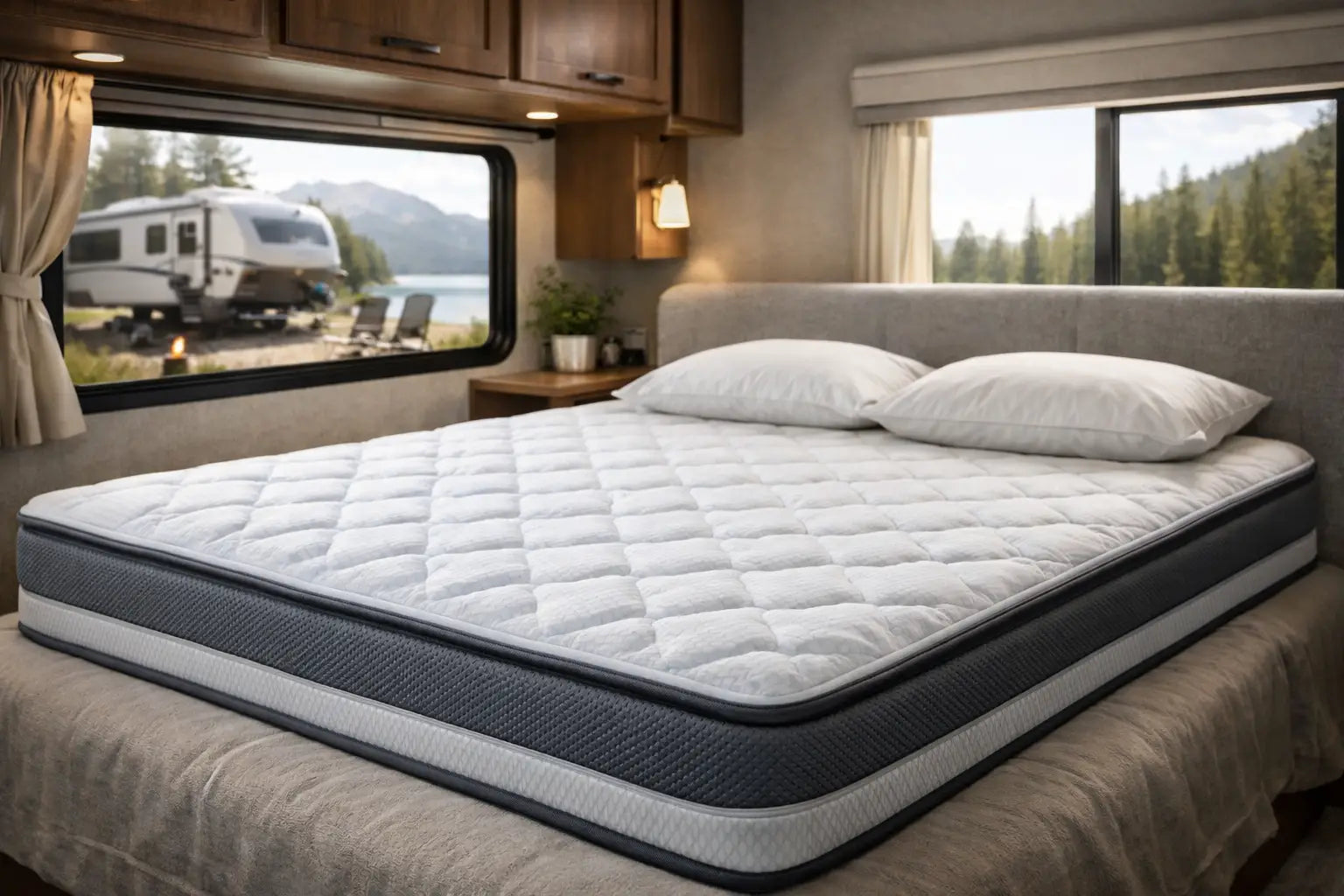
The first bad sign is usually not the mattress itself. It is the way you feel after a week on the road - stiff lower back, sore shoulders, restless sleep, and that familiar heat buildup that makes a small RV bedroom feel even smaller. If you are searching for the best mattress for full time RV living, you are not really shopping for a simple replacement. You are solving an every-night problem.
Full-time RV sleep is different from weekend camping. Your mattress is not just part of the setup. It is part of your daily recovery, your energy, and your ability to enjoy life on the road without waking up uncomfortable. That changes what matters.
What makes the best mattress for full time RV use different
A full-time RV mattress has to do more than fit the platform. It needs to perform like a serious residential mattress while handling the realities of mobile living. That means better temperature control in tight sleeping quarters, stronger support for nightly use, and construction that does not flatten out after a season.
This is where many RV owners get disappointed. Factory mattresses are usually built to hit a price target, not a sleep standard. They tend to be thin, basic, and prone to trapping heat. For occasional trips, some people tolerate that. For full-time RVing, it becomes a constant source of fatigue.
The best option is usually a mattress designed specifically for RV dimensions and built with premium materials that can deliver real pressure relief and support. The fit matters, but the internal build matters even more.
Start with support, not softness
Many shoppers begin by asking whether they want plush or firm. That is understandable, but support should come first. A mattress can feel soft on top and still support your spine well. It can also feel firm and still create pressure points if the comfort layers are too shallow.
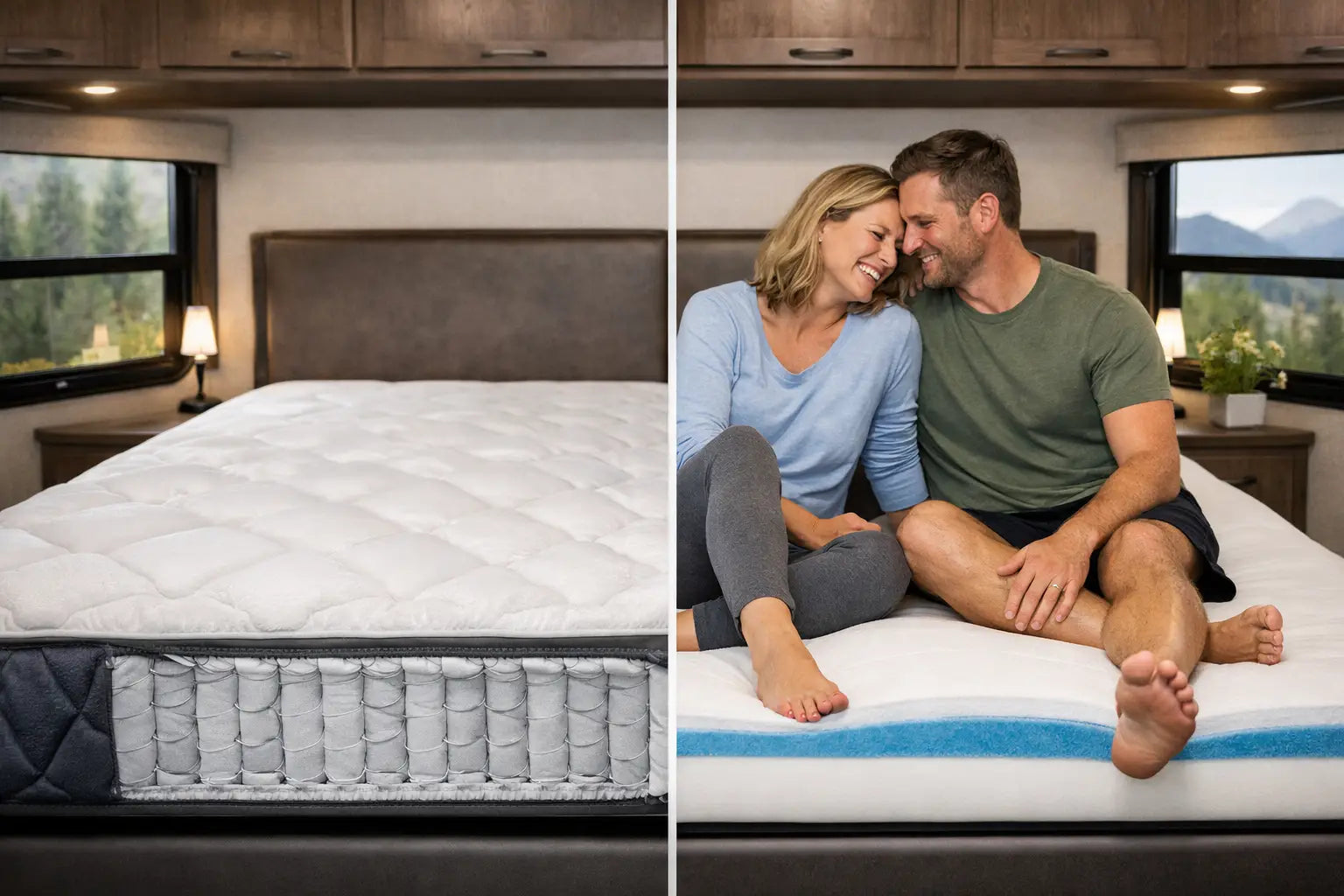
For full-time use, support has to stay consistent through the night and over time. That generally makes hybrid construction a strong choice, especially if it uses zoned pocketed coils. A zoned support system gives extra reinforcement where the body carries more weight, usually through the hips and lower back, while allowing more contouring around the shoulders.
That matters for couples, side sleepers, and anyone already dealing with back pain. If your current RV mattress leaves you feeling compressed in the middle or unsupported at the waist, the issue is usually not just firmness. It is weak structure.
Why all-foam is not always the winner
Foam mattresses can work well in some RVs, especially when lower profile height or lighter weight is a priority. They can also reduce motion transfer effectively. But for full-time RV living, not every foam build holds up equally well.
Lower-density foams can soften too quickly, sleep hot, and make it harder to move or change positions. If you prefer foam, look for higher-quality memory foam with cooling features and enough base support to prevent sagging. If you want a more balanced feel with better airflow, a hybrid often gives you a stronger long-term result.
Cooling is not a luxury in an RV
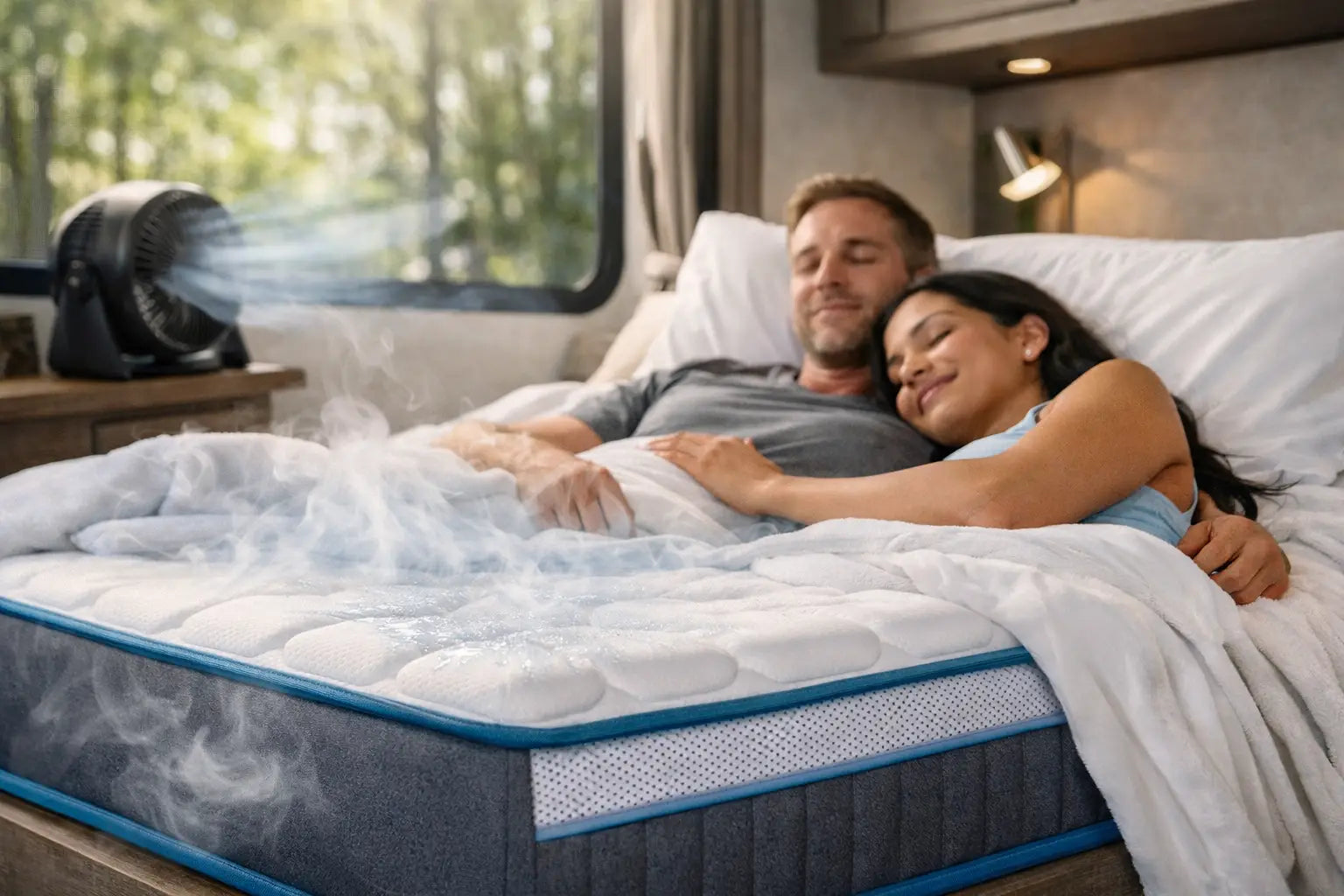
In a house, a warm mattress can be annoying. In an RV, it can ruin your sleep. Smaller sleeping spaces hold heat, airflow is limited, and climate control is not always consistent through the night. That is why cooling should be high on the list when choosing the best mattress for full time RV life.
The phrase “cooling mattress” gets used loosely, so it helps to know what actually improves temperature regulation. Conductive cooling materials, breathable covers, gel-infused memory foam, and coil systems that allow airflow all do more than a basic foam slab with a quilted top.
The trade-off is that some ultra-plush foam designs feel cozy at first but hold more heat over a full night. If you already sleep warm, or your travel schedule includes southern summers and shoulder-season humidity, prioritize airflow and heat dissipation over an overly cushioned surface feel.
RV sizing is where many mattress purchases go wrong
This is one of the biggest reasons RV owners end up returning mattresses or forcing a bad fit. RV sizes are not the same as standard residential sizes, even when the name sounds familiar. An RV Queen is typically shorter than a residential queen. RV King, RV Full or three-quarter, and bunk sizes vary widely by floorplan and manufacturer.
A mattress that is close enough on paper can create real problems in practice. It may block storage access, overhang the platform, leave a gap at the wall, or make fitted bedding harder to manage. For full-time RVers, that daily frustration adds up quickly.
Measure before you compare
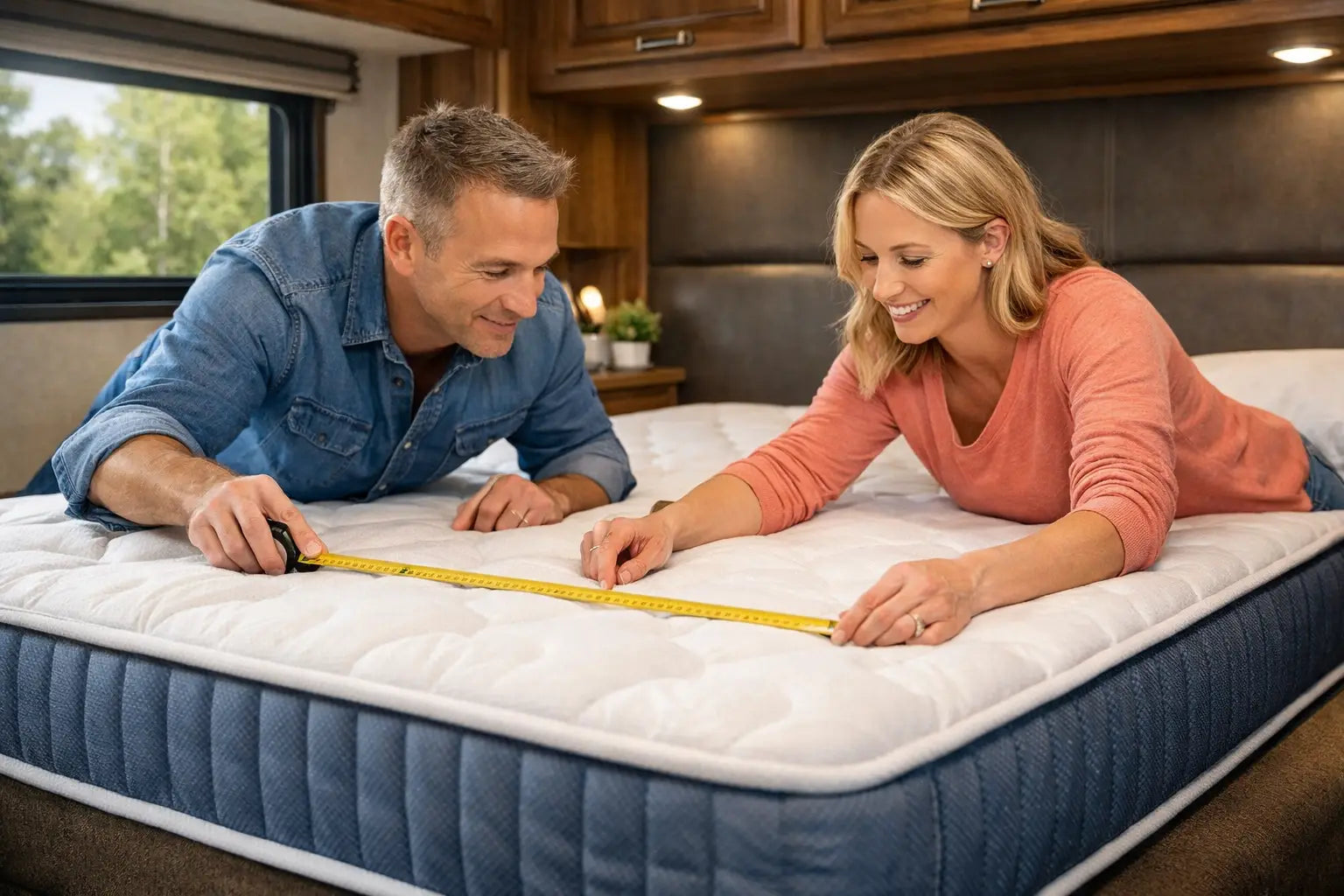
Always measure the sleeping platform itself, not just the old mattress label. Width, length, corner shape, and available height all matter. Some RVs also have slideout or cabinetry limitations that affect what profile works best.
If your rig has an odd size, this is where buying from a specialty RV mattress brand makes a meaningful difference. A company that works in RV-specific dimensions every day can remove guesswork and offer options that actually fit the space the way they should.
Motion isolation matters more than most couples expect
Full-time RV living puts two people in a smaller environment, and sleep disturbances feel bigger in close quarters. If one partner changes position, gets up early, or comes in late after driving, the mattress has to absorb movement without bouncing it across the bed.
This is another area where better hybrids stand out. Pocketed coils move more independently than old-fashioned interconnected springs, and when paired with quality comfort foams, they can significantly reduce partner disturbance. Memory foam can also perform well here, although it may not offer the same ease of movement or cooling depending on the design.
If one of you is a light sleeper, do not treat motion isolation as a bonus feature. It is part of what makes a mattress livable over months and years.
Durability decides value
The cheapest RV mattress is rarely the least expensive choice over time. Full-time RVers put residential-level wear on a mattress, often in tougher environmental conditions. Heat swings, humidity, repeated movement in transit, and compressed spaces can all expose weak materials faster.
A mattress that loses support after a year is not a bargain. It is a reset button on your sleep quality and your budget.
Look for stronger coil systems, better foam density, and a construction approach built for sustained use rather than occasional trips. A longer sleep trial and clear warranty also matter, not because they replace quality, but because they show the company is willing to stand behind it.
That is one reason specialized RV brands have an advantage here. They are not just resizing a house mattress and hoping it works in a camper. They are building for the category.
What type of mattress is usually best for full-time RVers?
For most full-time RV owners, the best mattress is a premium hybrid in the correct RV size. That combination tends to give the broadest balance of cooling, pressure relief, support, and durability.
If you are a side sleeper, look for enough contouring to cushion shoulders and hips without collapsing under the midsection. If you are a back sleeper, focus on lumbar support and a level surface. If you switch positions often, responsiveness matters more than a deep memory foam hug.
Heavier sleepers usually do better with stronger coil support and denser comfort materials. Lighter sleepers may prefer a slightly softer comfort feel, but still need stable support underneath. There is no single feel that works for everyone, which is why mattress construction matters more than labels like firm or medium.
When a premium RV mattress is worth it
Not every RV owner needs a top-tier sleep setup. If you camp a few weekends a year, a basic replacement may be enough. But full-time RVing is different. You are not trying to get by for a short trip. You are building a comfortable life in a smaller space.
That is exactly when a premium RV mattress earns its place. Better cooling helps you sleep through warm nights. Better support reduces the wear on your back and joints. Better motion isolation helps couples sleep on different schedules. Better sizing means less hassle every day.
A brand like Polar RV Mattress fits naturally into this conversation because the focus is narrow and practical - RV-specific sizing, premium materials, fast shipping, and a long trial period that gives buyers room to test the mattress in real travel conditions instead of making a rushed guess.
How to choose without overthinking it
If you want a clear path, narrow the decision to four factors: exact RV size, your preferred sleep position, whether you sleep hot, and how much support you need through the hips and lower back. That framework eliminates most bad options quickly.
From there, choose the best build quality your budget allows. For full-time RV use, it is smarter to buy one mattress that actually solves the problem than to keep cycling through cheaper replacements that never do.
Good sleep on the road is not a luxury upgrade. It is part of making full-time RV life sustainable, comfortable, and worth it night after night.
Share:
How to Measure RV Bed the Right Way
How to Replace Camper Mattress Right