

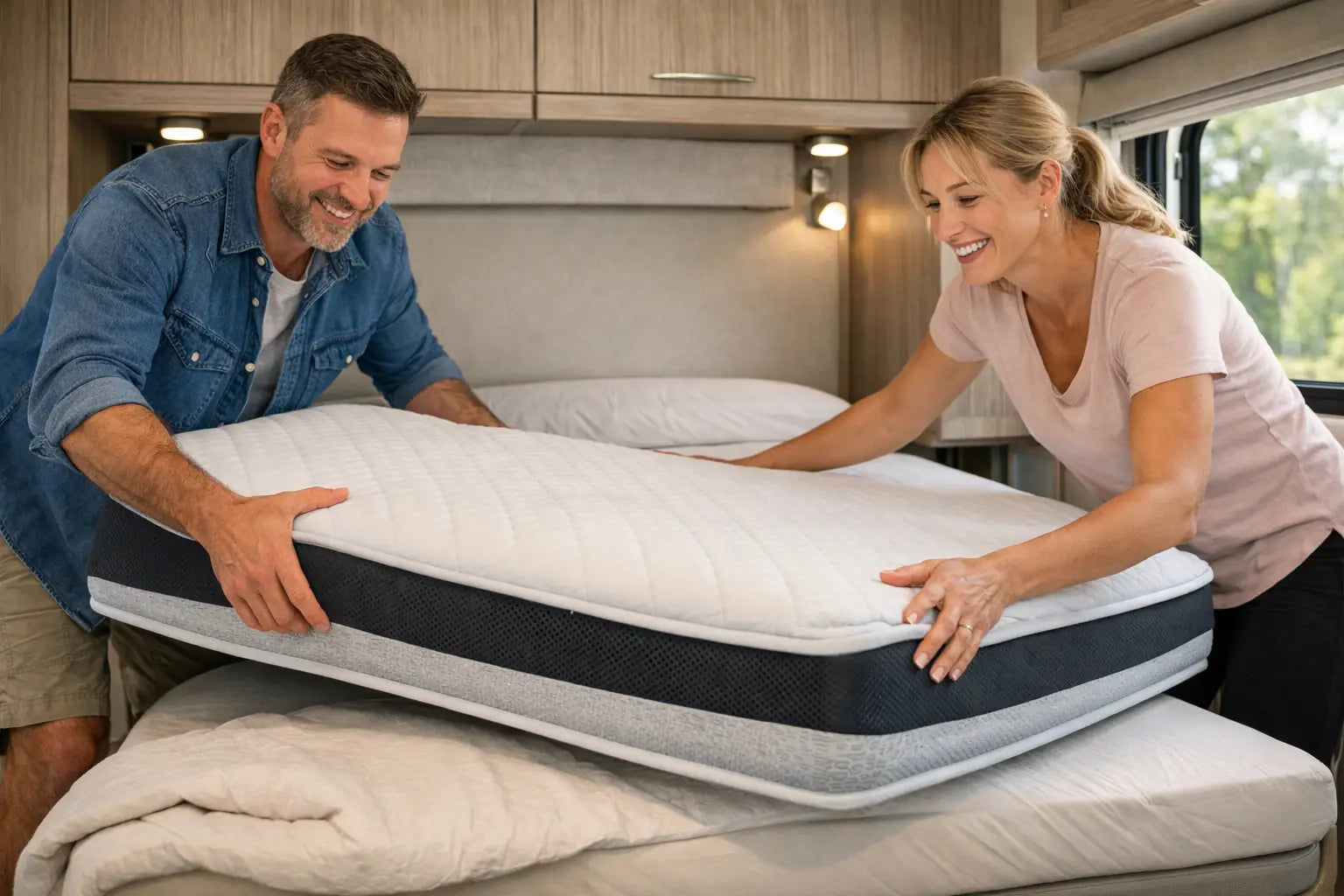
A bad camper mattress usually announces itself around 2 a.m. You feel the plywood underneath, your shoulder goes numb, and every time your partner turns over, you wake up. If you're searching for how to replace camper mattress options without wasting money on the wrong size or the wrong feel, the process is simpler than it looks - as long as you measure carefully and choose for RV realities, not just bedroom comfort.
Replacing a camper mattress is not just about buying something softer. It is about getting the fit right for a tight space, protecting storage access, keeping weight in check, and upgrading the kind of support most factory mattresses simply do not deliver. A strong replacement should improve cooling, reduce pressure points, and hold up to real travel use.
How to replace camper mattress without sizing mistakes
The biggest reason RV owners end up frustrated is simple: camper mattresses are often not standard residential sizes. An RV Queen, short queen, three-quarter full, bunk size, or a corner-cut mattress can look close enough to a regular mattress until delivery day proves otherwise.
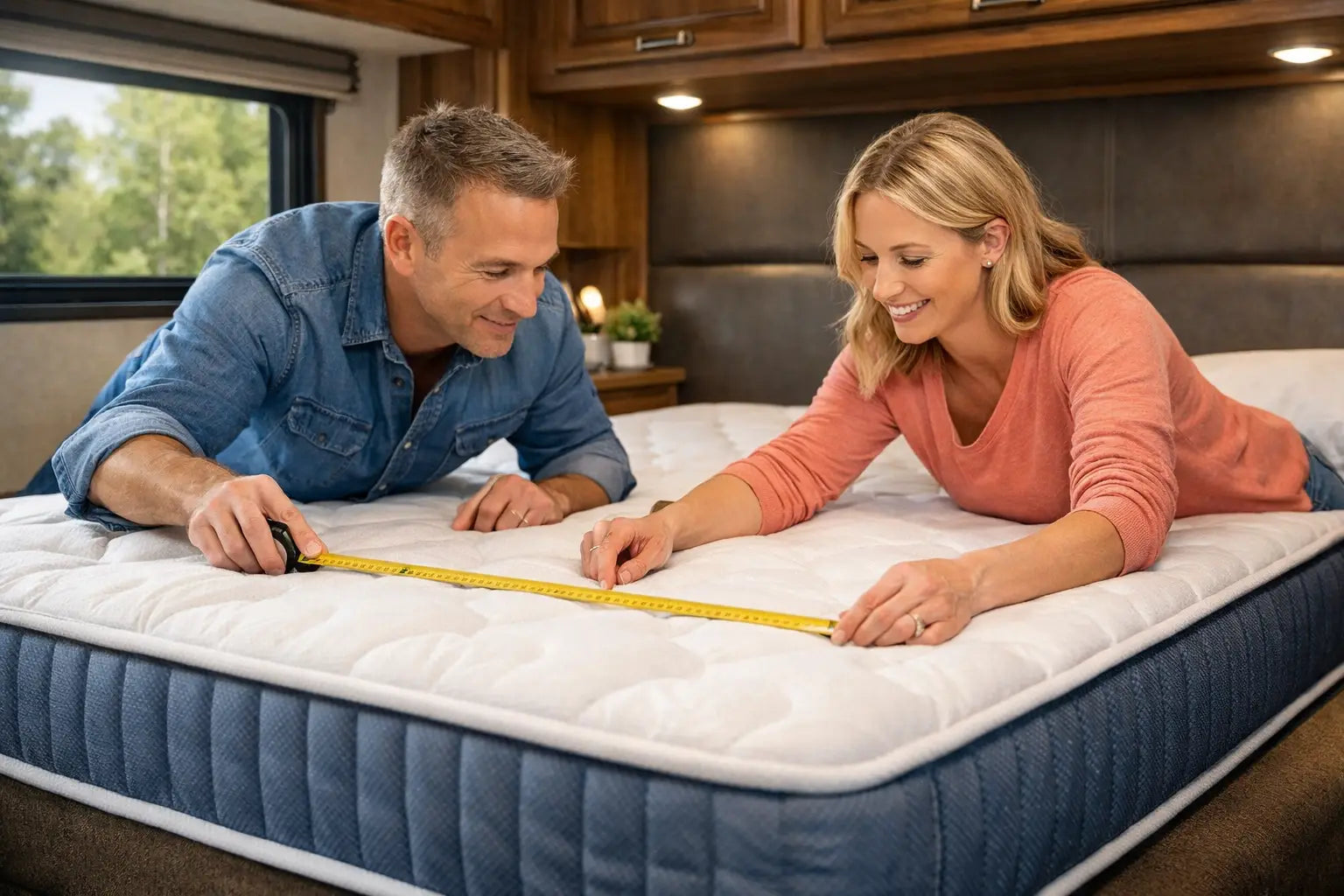
Start by removing all bedding and measuring the existing mattress itself, not just the platform. Take width, length, and height in inches. Then measure the bed base and the surrounding clearance, including walls, cabinetry, and overhead compartments. If your bed sits in a slide-out or has tight corners, those details matter. A mattress that technically fits the platform can still be a problem if it rubs a cabinet door or blocks access.
If your RV mattress has rounded corners, cut corners, or a nose shape for a camper van or trailer, measure those features separately. This is where many generic mattress sellers fall short. RV owners do not need a "close enough" fit. They need the right dimensions the first time.
Measure for sleep position and bed access too
Height matters more in a camper than it does at home. A taller mattress can feel more luxurious, but it may also make it harder to sit up in bed, reduce headroom, or interfere with under-bed storage. If your platform lifts for gear storage, a heavier or thicker mattress may change how practical that setup is day to day.
This is the trade-off: more substantial mattresses usually deliver better support and pressure relief, but RV spaces punish oversizing. The best replacement balances comfort with the way you actually use the bed area.
Remove the old mattress and inspect the foundation
Once you know your measurements, pull out the old mattress and inspect what is underneath. This part gets overlooked, but it can affect how your new mattress performs.
Check the platform for moisture stains, soft spots, mold, warped slats, or sharp fasteners. Many camper mattresses fail early not only because they are thin, but because the base underneath traps condensation or offers weak support. If the foundation is solid, flat, and dry, your new mattress has a much better chance of performing like it should.
If you have slats, measure the spacing. Wide gaps can reduce support for some foam designs. If you have a solid platform, think about airflow. Campers are more prone to moisture buildup than residential bedrooms, especially in humid climates or during shoulder-season camping. In some setups, adding a ventilation layer under the mattress is a smart move.
Choose the right mattress type for a camper
This is where most buyers either solve the problem for years or end up replacing the replacement. The right mattress depends on your comfort needs, weight considerations, and how often you use the RV.
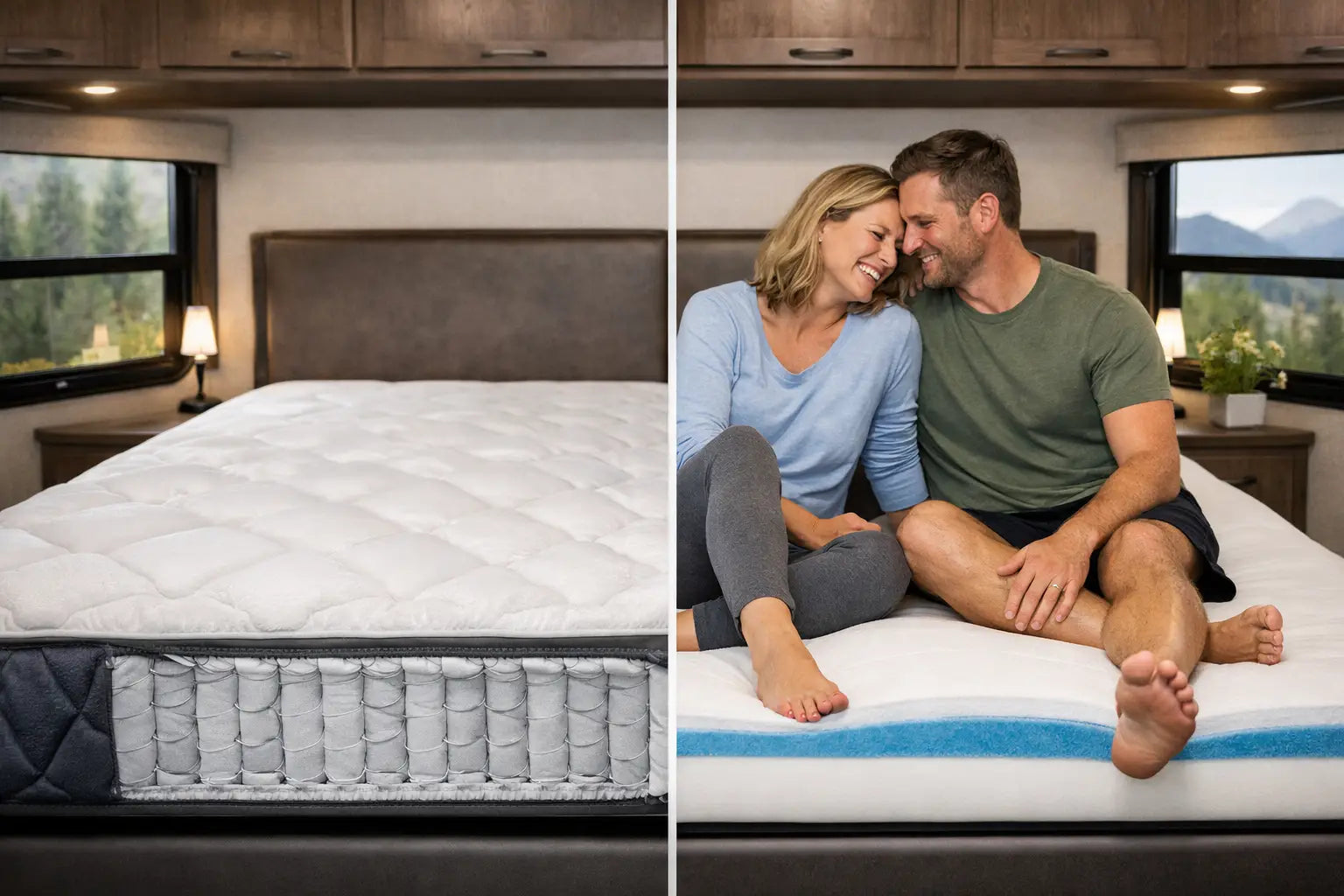
Foam mattresses are popular because they are easier to move through narrow RV doors and can work well on many bases. They can offer good pressure relief, especially for side sleepers, but not all foam is equal. Low-density foam tends to sleep hot, compress quickly, and develop body impressions faster than many RV owners expect.
Hybrid mattresses are often the stronger upgrade if you want more support, better airflow, and less sink. A quality hybrid with coils and premium comfort layers can feel much closer to a residential mattress while still being built for RV sizing. For couples, hybrids also tend to do a better job with motion isolation and edge support than cheap all-foam options.
If you sleep hot, construction matters. Cooling materials, breathable comfort layers, and coil systems generally outperform the heat-trapping feel of bargain stock mattresses. If back pain or hip pressure is your main complaint, zoned support and a more stable core usually matter more than extra plushness.
It depends on how you camp
Weekend campers can tolerate a little more compromise than full-time RVers. If the bed gets used a few nights a month, a mid-range replacement may be enough. If you live in your RV, travel for months at a time, or already know you wake up with pain on inferior mattresses, it makes sense to buy for long-term support and durability.
This is also where specialty RV brands stand apart. A company focused on RV sleep products understands short queens, bunks, odd dimensions, and the performance demands of mobile living in a way general mattress brands often do not.
How to replace camper mattress in 5 practical steps
Once you have your measurements and know the type of mattress you want, the swap itself is straightforward.
First, confirm every dimension before ordering. Recheck length, width, height, corner shape, and entry path into the RV. Getting the mattress into the space matters almost as much as the final fit.
Second, choose the firmness based on how you sleep. Side sleepers usually need more pressure relief at the shoulders and hips. Back sleepers usually benefit from a more balanced feel. Stomach sleepers often need firmer support to avoid lower back strain. Couples should also consider motion isolation and edge support, not just firmness labels.
Third, prepare the bed platform. Clean it thoroughly, repair any damage, and make sure the base is dry before the new mattress goes in. If moisture has been a recurring issue, add airflow support underneath.
Fourth, install the mattress and let it fully expand if it arrives compressed. Follow the maker's setup instructions and give the materials time to settle. Then check clearances again. Open storage compartments, sit up in bed, and make sure walkways and doors still function the way they should.
Fifth, sleep on it long enough to evaluate it properly. A serious mattress upgrade should reduce pressure points, improve spinal support, and help you sleep cooler and more consistently. One night is not enough to judge a mattress. Give your body time to adjust.
Common mistakes when replacing a camper mattress
The most common mistake is ordering a residential mattress because the listed size looks close. Close is not good enough in an RV. Another frequent error is choosing based only on thickness. A thicker mattress is not automatically more comfortable if the support layers are weak.
Some RV owners also underestimate weight. In most cases, a premium mattress is worth the extra substance, but if your platform lifts or your setup has strict cargo considerations, you should still account for it. And do not ignore temperature performance. If your current mattress sleeps hot, replacing it with another dense foam bed can leave you with the same complaint in a nicer cover.
A final mistake is focusing only on immediate comfort in the showroom or online description. What matters is overnight support, pressure relief, motion control, and durability over time.
When custom sizing makes sense
If your camper has a non-standard sleeping area, custom sizing can save you from trying to force a poor fit. This is especially true for older RVs, custom builds, bunks, truck campers, and bed platforms with cut corners.
Custom is also worth considering if you want to maximize every inch of sleep surface without interfering with cabinetry or pathways. A proper fit simply feels better in a small space. It looks cleaner, functions better, and avoids the frustration of gaps or overhang.
For buyers who want a premium upgrade, this is where a specialized brand can make the process much easier. Polar RV Mattress, for example, focuses on RV-specific sizing and performance features that directly address common factory-mattress complaints like overheating, weak support, and poor durability.
What a real upgrade should feel like
The right replacement mattress should not feel like a minor improvement. It should feel like your camper finally has a real bed. You should notice better support through the lower back, less pressure at the hips and shoulders, less heat buildup through the night, and less disruption when your partner moves.
That matters more than people think. Better sleep changes the entire RV experience. You wake up ready to drive, hike, fish, work remotely, or simply enjoy the trip instead of managing stiffness and fatigue.
If your current mattress is thin, sagging, noisy, or trapping heat, replacing it is one of the highest-impact upgrades you can make inside a camper. Measure carefully, buy for RV fit instead of guesswork, and choose the kind of support you would actually want to sleep on night after night. Your campsite can be rustic. Your bed does not have to be.

Share:
Best Mattress for Full Time RV Living
Camper Mattress Buying Guide That Gets It Right