

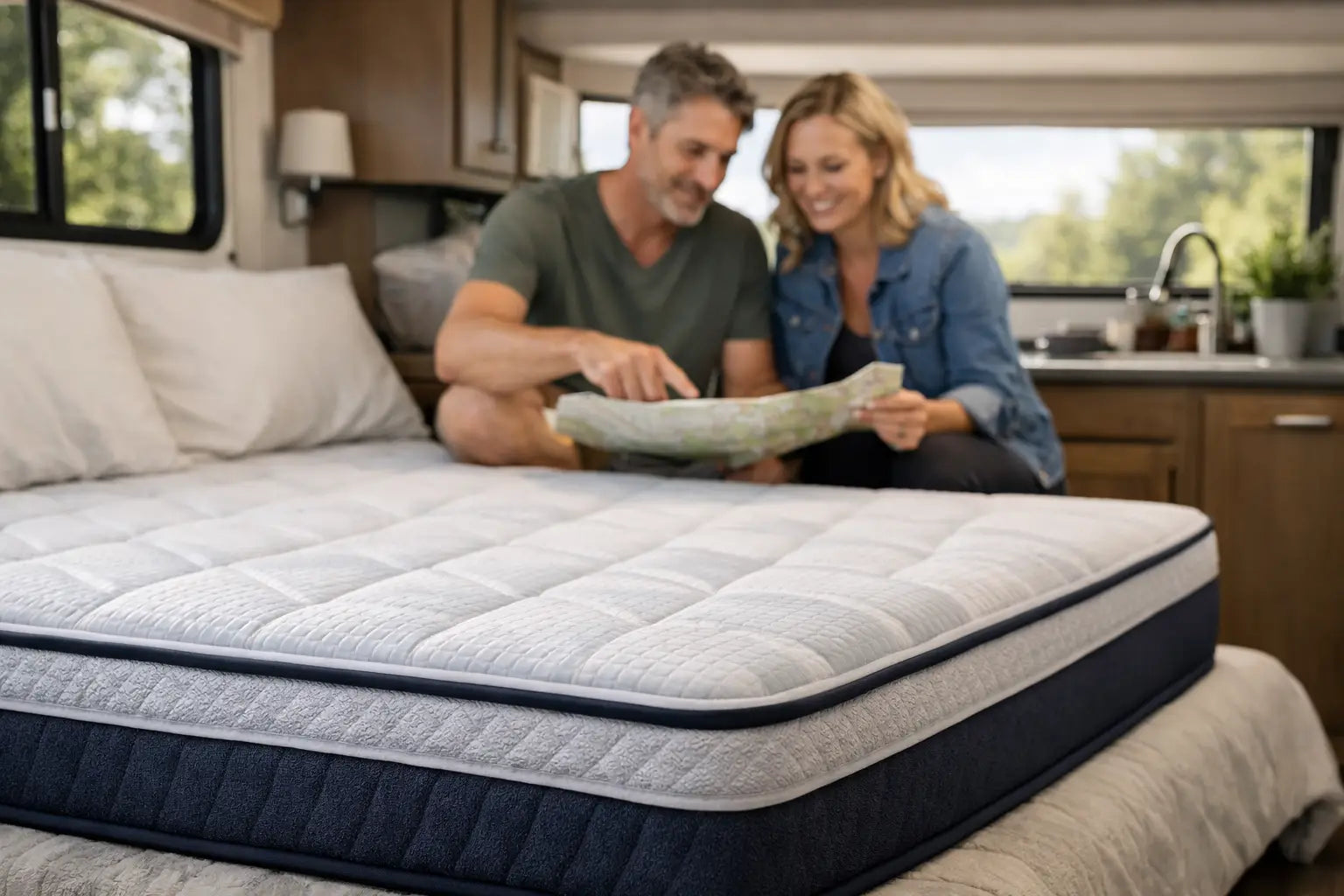
A bad camper mattress usually announces itself around 2:13 a.m. Your shoulder is numb, your lower back is talking back, and the mattress somehow feels both too hard and too soft at the same time. If that sounds familiar, this camper mattress buying guide is for you - not for browsing, but for choosing a mattress that actually improves how you sleep on the road.
Most RV owners already know the factory mattress is the weak link. It is often thin, short on support, and quick to hold heat. The bigger issue is that replacing it is not as simple as buying a standard mattress online. Camper beds use non-standard sizes, different platform setups, and tighter clearances. The right choice comes down to fit, support, cooling, and construction working together.
What a camper mattress buying guide should help you avoid
The most common mistake is shopping by thickness alone. A thicker mattress can feel more substantial, but thickness does not automatically mean better support or pressure relief. A poorly built 10-inch mattress can still sag, trap heat, and transfer movement every time your partner rolls over.
The second mistake is assuming a residential size will fit. In RVs, being off by even an inch matters. Corners, walls, nightstands, and slide-out clearances leave very little room for error. An RV Queen is not always the same as a standard Queen, and the same problem shows up with RV King, RV Full or 3/4, and bunk sizes.
The third mistake is overlooking sleep position and body type. Side sleepers usually need more pressure relief around the shoulders and hips. Back sleepers often need a more balanced feel with stronger lumbar support. Stomach sleepers generally do better on a firmer, more supportive surface that keeps the midsection from sinking too far. If two people share the bed, motion isolation becomes just as important as firmness.
Start with RV mattress sizing, not comfort claims
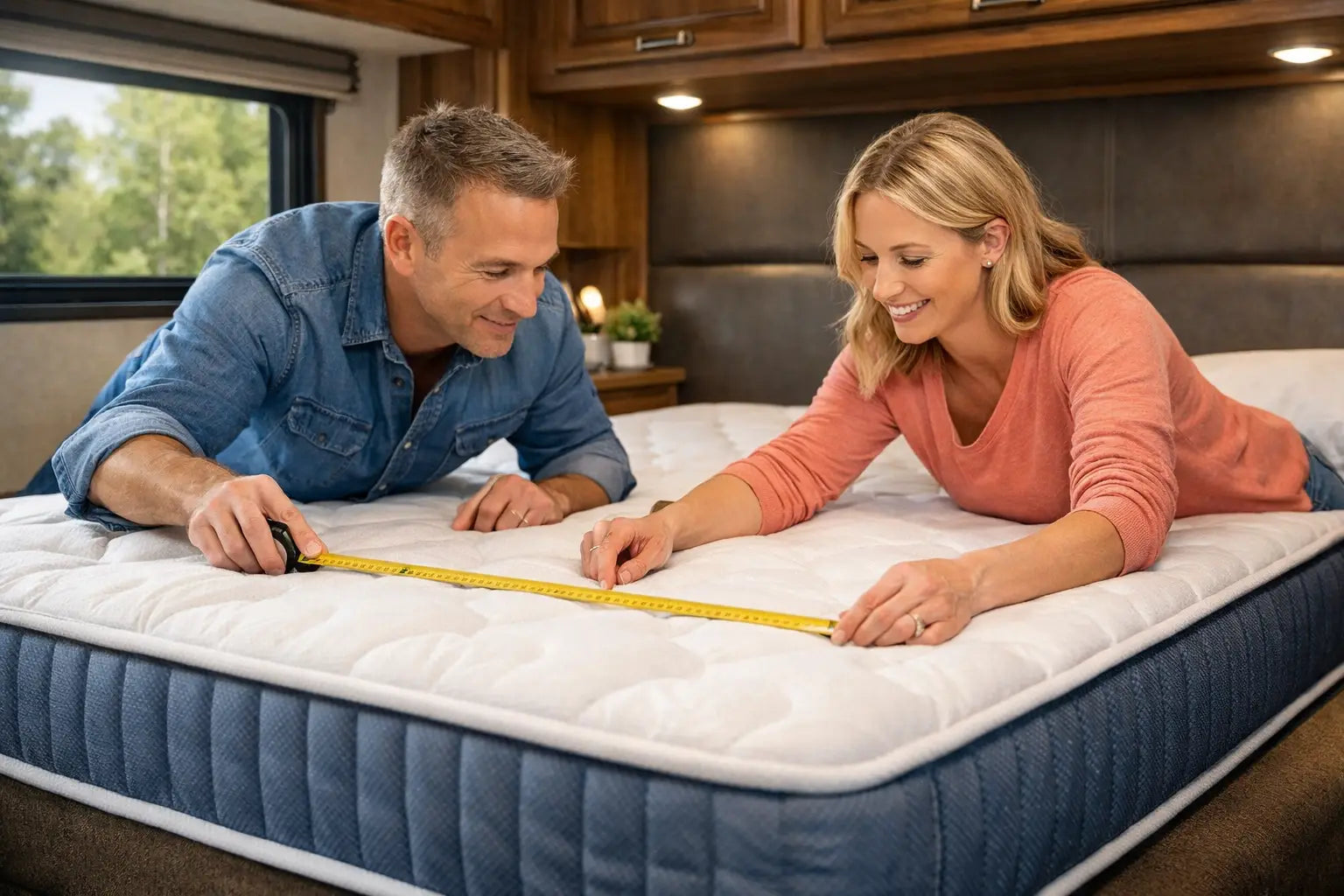
Before you compare foam, coils, or cooling features, measure the mattress space carefully. Measure width and length, then check height limits around cabinets, windows, and bed lifts. If your bed platform has rounded corners or an unusual cut, note that too.
This is where many shoppers lose time and money. Standard mattress labels do not solve RV fit problems. A mattress can sound perfect in every other way and still be unusable if it blocks storage access or rubs against surrounding cabinetry. Specialized RV sizing matters because proper fit is part of comfort. A mattress that bunches, hangs over, or leaves large gaps never feels finished.
Custom sizing can also be worth considering if your RV has a hard-to-match footprint. For owners who plan to keep their rig for years, getting the fit right once is usually better than trying to force a close-enough option into place.
How to choose the right support level
Support is what keeps your spine in a healthy position through the night. Comfort is what determines whether your shoulders, hips, and joints can relax while that happens. Good camper mattresses need both.
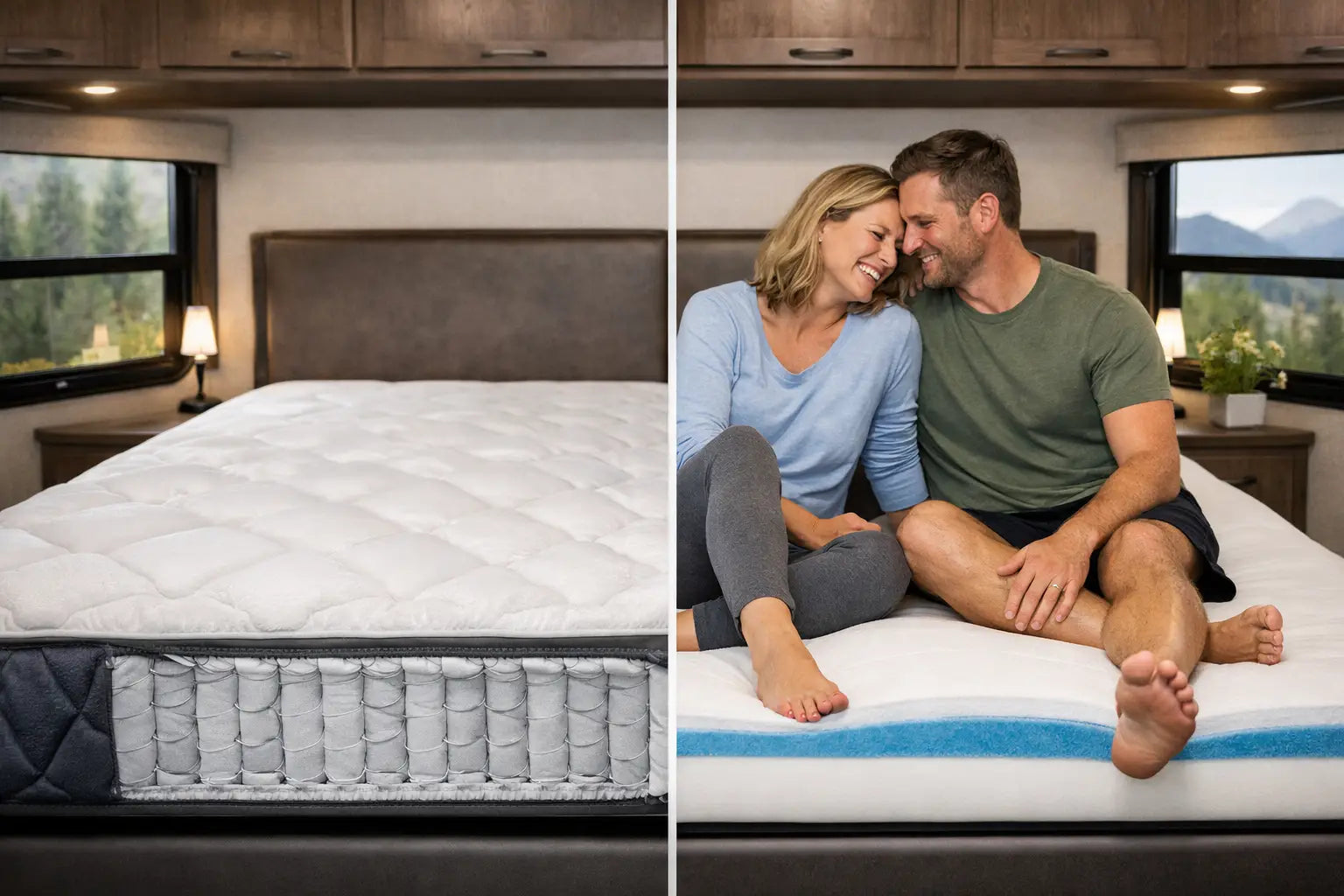
All-foam beds can work well for some RV owners, especially if they want a lighter profile and a smoother, more contouring feel. The trade-off is that lower-grade foam often sleeps hot and can lose support faster. If you go with foam, density and cooling design matter more than marketing language.
Hybrid construction is often the stronger upgrade from a stock RV mattress because it combines pressure relief from comfort foams with better pushback from coils. Pocketed coils can improve airflow, edge stability, and motion isolation while helping the mattress feel more supportive over time. Zoned coil systems can be especially useful if back pain is one of the reasons you are replacing your mattress in the first place.
For couples, a medium to medium-firm hybrid is often the safest middle ground. It tends to offer enough cushioning for side sleepers without letting heavier areas sink too deeply. That said, there is no universal best firmness. A 130-pound side sleeper and a 230-pound back sleeper will not experience the same mattress the same way.
Cooling matters more in a camper than many buyers expect
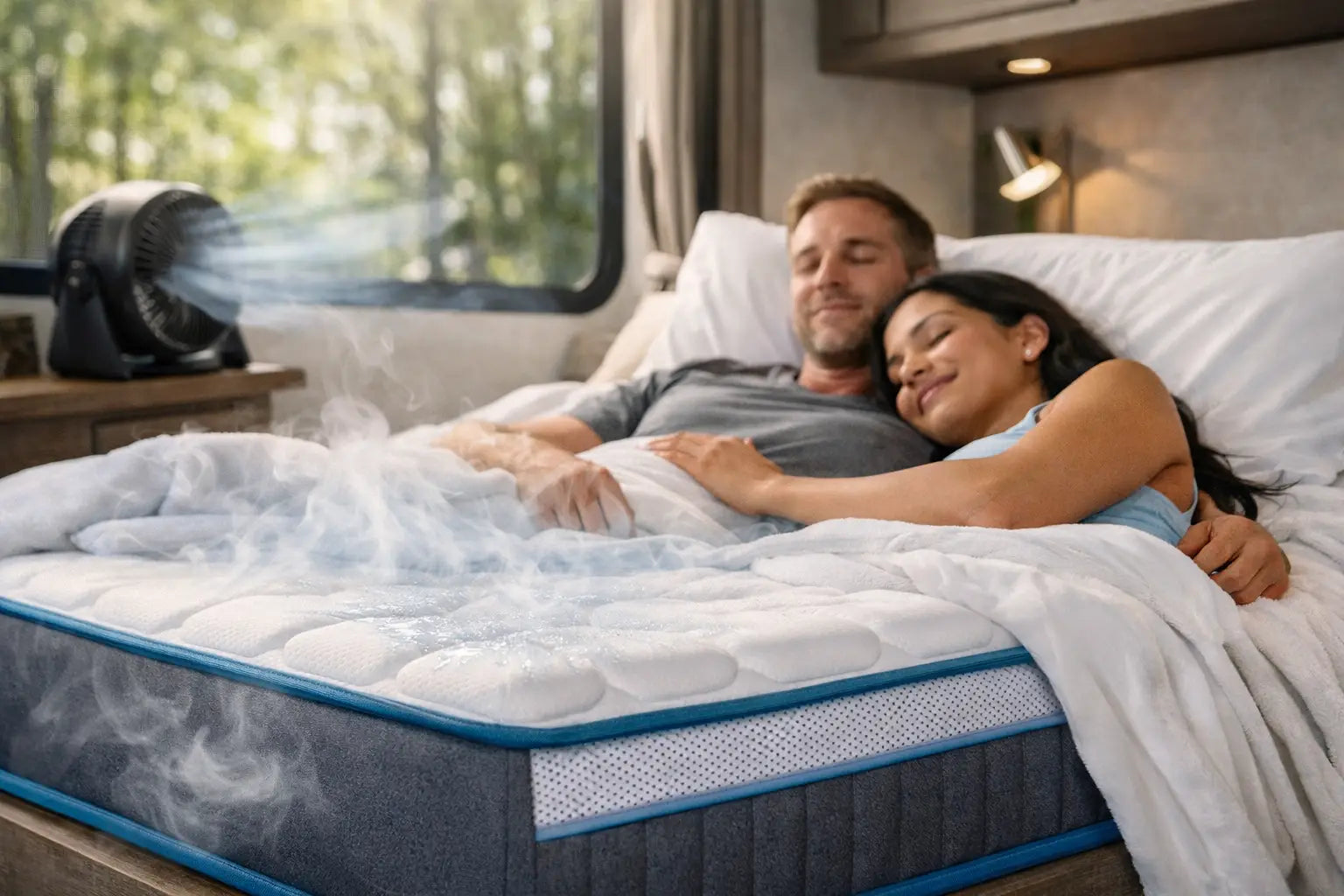
Heat buildup is one of the biggest complaints with RV sleep. Campers deal with changing climates, smaller interior spaces, and less consistent airflow than a typical bedroom. If your mattress traps heat, you feel it quickly.
This is why cooling should not be treated like a bonus feature. Look for materials and design choices that actively help move heat away from the body. Gel memory foam can help, but not all cooling foams perform the same. Conductive cooling materials, breathable covers, and coil-based airflow usually outperform basic foam builds that rely on ventilation claims alone.
If you sleep hot, avoid choosing a mattress based only on softness. Plush surfaces can feel inviting in the showroom sense, but deeper sink can reduce airflow around the body. A well-balanced hybrid with advanced cooling often performs better over a full night than an ultra-soft foam mattress.
Construction quality decides whether the upgrade lasts
A camper mattress works harder than many people realize. It may be used seasonally, full-time, or during long road trips where recovery sleep really matters. It also has to handle vibration, changing temperatures, and compact living conditions. That is why the internal build matters.
Look for durable foams, strong edge support, and coil systems built to maintain shape under repeated use. Cheap mattresses tend to feel fine for a short trial period, then show their weaknesses fast. Soft spots, sagging, and compressed edges are common signs that the comfort layers or support core were built to hit a price point rather than deliver long-term sleep performance.
This is one reason many RV owners move away from generic bed-in-a-box options and toward brands that build specifically for RV use. Specialized construction, size accuracy, and stronger support systems make a real difference when the goal is not just replacement, but a meaningful sleep upgrade.
A practical way to compare your options
When you narrow your choices, compare them in the order that actually affects satisfaction. First, confirm the size. Second, match the firmness and support design to how you sleep. Third, evaluate cooling features. Fourth, look at build quality and materials. Only after that should you compare price.
That order matters because the cheapest mattress is never the best value if it fits poorly, sleeps hot, or stops supporting you after one season. Better sleep in an RV is not about chasing luxury language. It is about solving the specific problems that make camper mattresses uncomfortable in the first place.
Pay close attention to trial periods, warranties, shipping speed, and access to real customer support. These details reduce purchase risk, especially when you are buying a mattress for a non-standard space. A generous sleep trial is not just a nice extra. It gives you time to find out how the mattress performs after several nights, not just after the first impression.
Camper mattress buying guide for different RV sleepers
If you are a side sleeper dealing with pressure points, prioritize contouring comfort layers over sheer firmness. If you wake up with lower back pain, focus on stronger support, especially through the center third of the mattress. If you travel as a couple, choose a design with better motion isolation so one person getting up early does not wake the other.
For bunk areas or lighter-use guest spaces, profile height and maneuverability may matter more. For a primary RV bed, sleep performance should lead the decision. Full-time RVers usually benefit most from a premium hybrid or advanced foam design because nightly use exposes shortcuts in mattress construction very quickly.
If cooling is your top concern, be skeptical of vague promises. Look for specifics in the materials. If durability is the priority, pay attention to support systems and warranty coverage. If your RV size is unusual, work with a company that treats sizing as a specialty rather than an afterthought. That is where brands focused only on RV sleep products, including Polar RV Mattress, tend to separate themselves.
The right camper mattress should feel like a real upgrade from night one, but the bigger payoff shows up over time. You sleep deeper, wake up looser, and stop building travel days around a mattress that leaves you sore. When you are serious about comfort on the road, the best choice is usually the one built for the way RVs are actually used - not the one that was easiest to ship.
Share:
How to Replace Camper Mattress Right
What Size Mattress Fits Camper Beds?