

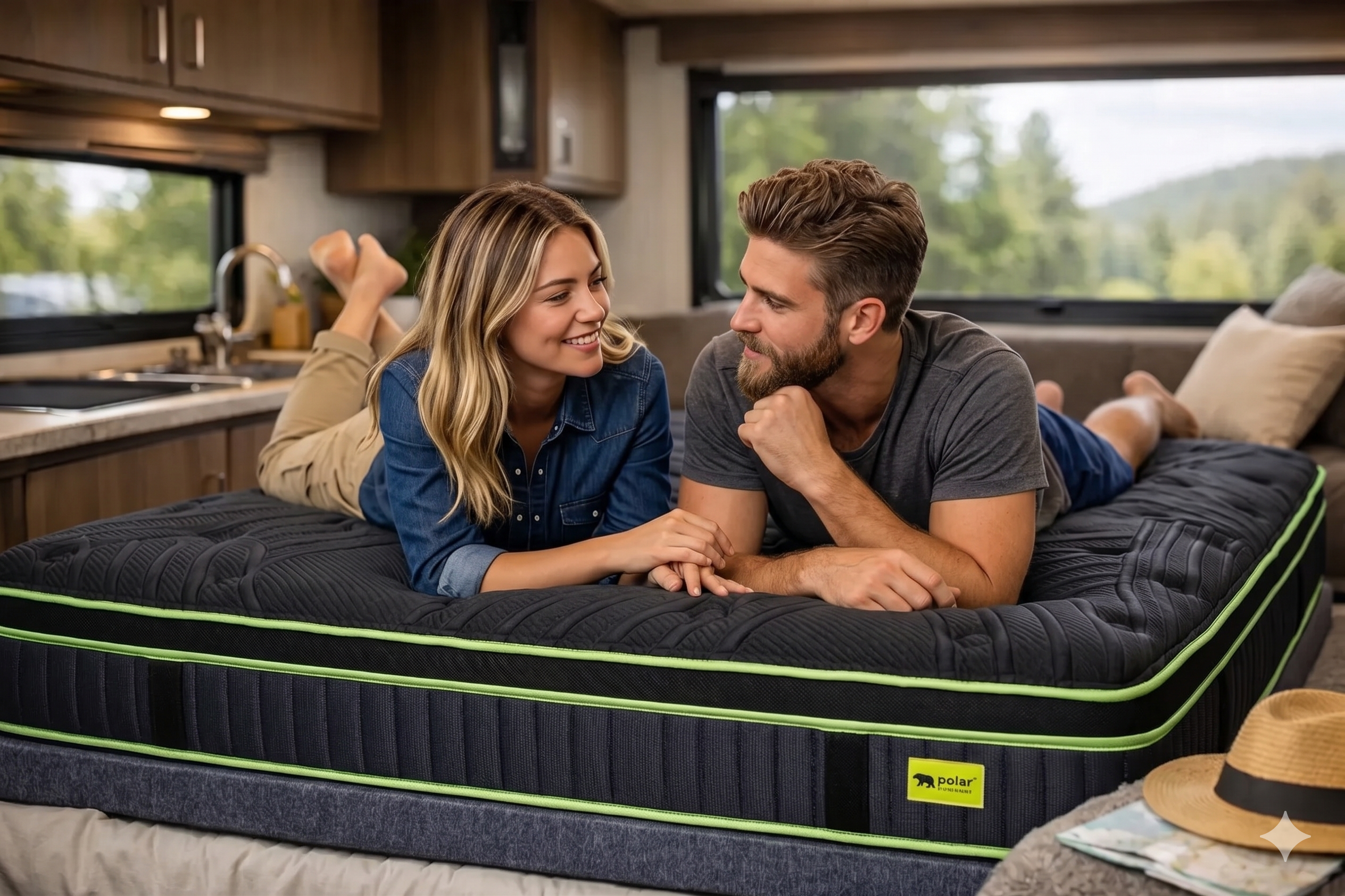
That thin factory mattress feels even thinner after three nights on the road. If you're waking up sore, sleeping hot, or feeling every move your partner makes, a coil on coil mattress RV upgrade is one of the few changes that can make your camper feel closer to a real bedroom.
This construction is exactly what it sounds like - two coil systems working together instead of a simple foam stack over a basic support core. For RV owners who want stronger support, better airflow, and more durability than the average stock bed can deliver, that matters. But it is not the right fit for every rig or every sleeper, and that is where the details matter.
What a coil on coil mattress RV actually means
In most RV mattresses, the support system is fairly simple. You usually get a thin foam build, a basic innerspring, or a hybrid with one layer of coils under comfort foam. A coil on coil mattress RV design takes that a step further by pairing a responsive top coil layer with a deeper support coil unit underneath.
The benefit is not just more springs for the sake of more springs. The upper coil layer can contour more closely to your body, while the lower coil layer carries the heavier structural load. That separation lets the mattress do two jobs better at the same time: relieve pressure at the surface and hold your body in a more stable position through the night.
For RV sleepers, that combination solves a common problem. Many camper mattresses either feel too hard and flat, or too soft and unstable. Coil-on-coil construction aims for the middle ground - pressure relief without the sag, and support without the board-like feel.
Why RV owners look for coil-on-coil support
A house mattress can hide bad design with extra height and extra material. RV mattresses do not have that luxury. They often need to fit tight platforms, odd dimensions, corner cuts, and lower profile spaces. At the same time, they still need to support adults who may already deal with back pain, shoulder pressure, or overheating.
That is why support systems matter more in an RV than many shoppers expect. When your mattress is thinner than what you use at home, every layer has to work harder. A well-built coil-on-coil system creates more lift and resilience than most all-foam RV mattresses, especially for couples and combination sleepers.
It also helps with airflow. Coils leave open space inside the mattress, which allows heat to move out more easily than dense foam alone. If your current mattress traps warmth and makes the cabin feel even hotter at night, this construction can be a serious improvement.
The biggest advantages of a coil on coil mattress RV setup
The first advantage is support depth. With two active coil layers, the mattress can respond at the surface and still hold a stable base underneath. That matters if you sleep on your back, shift positions often, or carry more body weight through the hips and shoulders.
The second is pressure relief without the stuck feeling. Some memory foam RV mattresses soften nicely at first, then let you sink too far or feel trapped when turning over. Coil-on-coil builds usually feel easier to move on. For older sleepers, full-timers, and anyone who gets up during the night, that responsiveness is not a small thing.
The third is durability. RV mattresses get folded into tighter spaces, exposed to temperature swings, and used in ways that cheaper guest-room mattresses are not. A stronger support core generally holds its shape better over time, especially when it is paired with quality comfort materials rather than bargain foam.
The fourth is motion control with less compromise. This depends on the exact design, but zoned or pocketed coils in the upper layers can reduce the bounce transfer you get from old-school interconnected springs. You still get a more responsive feel than foam, but without as much partner disturbance.
Where coil-on-coil is not automatically the best choice
More advanced construction does not mean it wins for every RV.
Weight is the first trade-off. A coil-on-coil mattress can weigh more than a simple foam model. If you need to lift the bed platform often for storage access, or you are managing a strict weight profile in a smaller trailer, that is worth considering.
Height is the next one. Some RV bed frames, fitted sheets, and overhead clearances work better with lower-profile mattresses. If your sleep space is tight, a taller premium mattress can improve comfort but create a fit issue elsewhere.
Then there is feel. Not everyone wants the buoyant, lifted sensation that coils create. If you strongly prefer the slow, body-hugging contour of memory foam, a coil-on-coil mattress may feel more responsive than you want, even if it is objectively more supportive.
Price also enters the conversation. This is usually a premium construction. If you are only replacing a mattress for occasional weekend use, you may not need this level of performance. If you travel often, live in your RV, or are tired of cycling through short-lived budget options, the value equation changes fast.
How it compares to foam and standard hybrid RV mattresses
All-foam RV mattresses usually appeal for their lighter weight and lower cost. They can work well in bunks, smaller campers, or short-trip setups. But lower-end foam tends to sleep warmer, compress faster, and provide less edge and midsection support. That is where many RV owners start feeling back pain or bottoming out.
A standard hybrid, with one coil support layer and foam above it, is a meaningful step up from stock. For many shoppers, it is enough. You get better airflow, more pushback, and less sink than a simple foam bed.
A coil-on-coil design goes further by making the comfort layer active instead of passive. Rather than relying mostly on foam to cushion you, it uses a more engineered surface response. That usually translates to better alignment, stronger support retention, and a sleep feel that is closer to a premium residential mattress adapted for RV dimensions.
For shoppers comparing models, that is the key difference. Standard hybrids are often good. Coil-on-coil models are built for people who know they need more from their mattress.
What to look for before you buy
Do not shop by the words coil on coil alone. Construction quality matters more than the headline.
Look at the type of coils used. Pocketed coils are generally better for motion isolation and contouring than older interconnected systems. Zoned support is also worth attention, especially if you need firmer support under the lower back and hips.
Check the comfort materials on top of the coil layers. Gel memory foam, responsive transition foam, and cooling fabrics can all improve the feel, but poor-quality foam can still weaken an otherwise good design.
Pay close attention to RV sizing. This is where many mattress purchases go wrong. RV Queen is not always the same as standard Queen. RV King, short queen, three-quarter, and bunk sizes all vary, and some rigs need custom cuts or rounded corners. A premium mattress only works if it actually fits your platform correctly.
It also helps to consider sleep temperature. Coils promote airflow, but real cooling performance depends on the full build. If you sleep hot, look for conductive cooling materials or breathable covers rather than assuming springs alone will solve the issue.
Who should seriously consider this kind of mattress
If you are a full-time RVer, a frequent traveler, or someone replacing a mattress because of real discomfort, this category deserves a close look. It is especially compelling for couples, hot sleepers, back sleepers, and anyone frustrated by sagging foam or weak edge support.
It also makes sense for shoppers who want a residential-grade sleep experience in an RV-specific size. That is a narrower market, but it is exactly where specialized brands stand out. Polar RV Mattress, for example, focuses on RV fit and premium support systems rather than generic cut-down mattresses, and that specialization matters when dimensions and performance both have to be right.
If your main goal is simply a cheap replacement for occasional use, you can probably spend less. But if your mattress affects how you feel the next day, buying on price alone usually turns into buying twice.
Is a coil on coil mattress RV upgrade worth it?
For many RV owners, yes - especially when poor support, heat buildup, and durability are the problems you are trying to solve. A good coil-on-coil mattress offers a more stable, cooler, and more resilient sleep surface than the typical camper mattress, and those benefits show up quickly when you spend real time on the road.
The key is to match the mattress to your rig, your body, and how often you travel. Better construction is worth paying for when it solves the exact reasons you are sleeping badly now. If your RV is your getaway, your home base, or your full-time home, your mattress should be built like it matters.


Share:
Pocket Coil RV Mattress: Is It Worth It?
Gel Memory Foam RV Mattress Buying Guide