

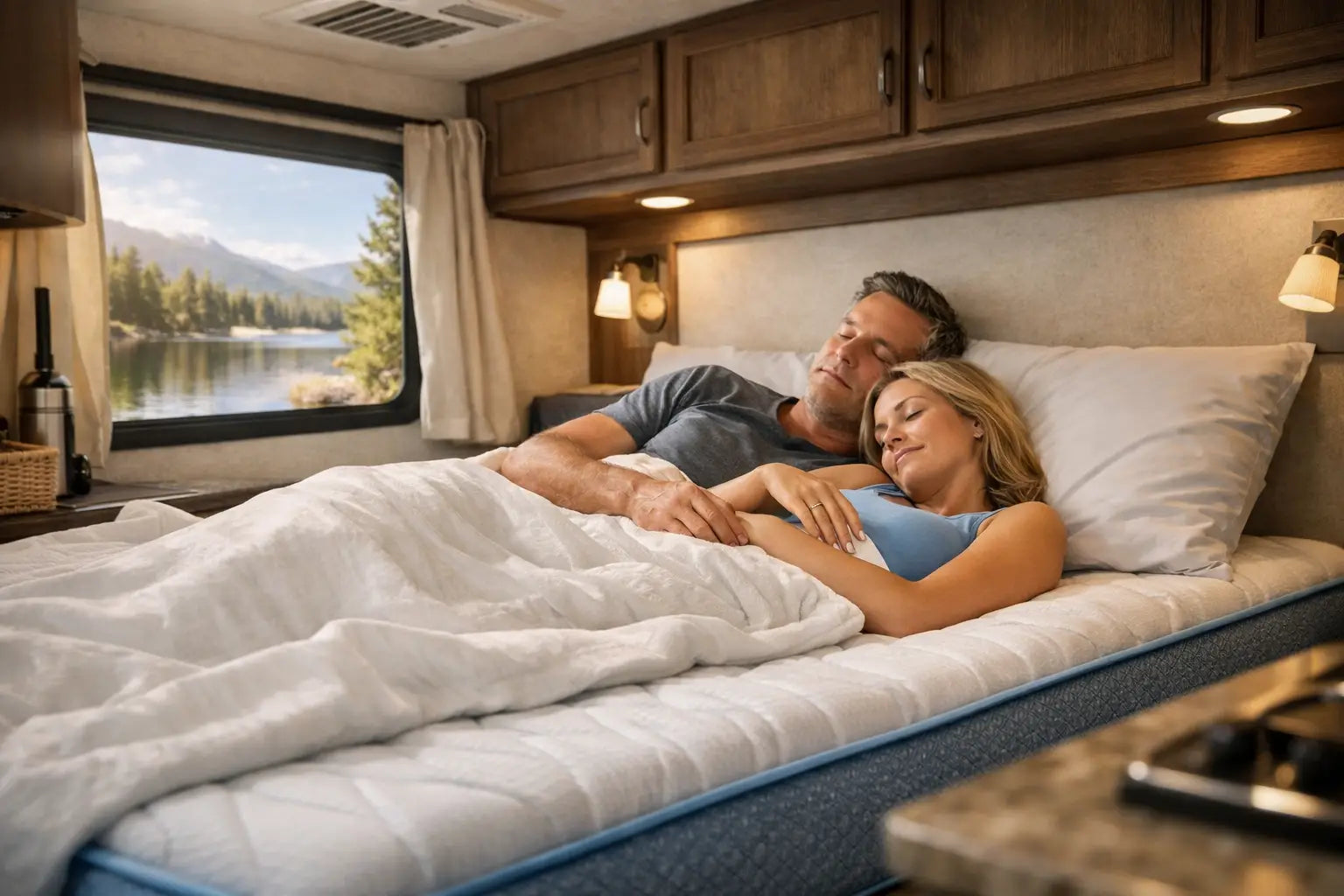
If your RV bed feels warm by midnight and stifling by 3 a.m., the problem usually is not just the weather. The wrong mattress for hot sleepers can trap body heat, hold humidity, and turn an otherwise comfortable night into a cycle of tossing, flipping the pillow, and waking up tired. In an RV, that issue gets worse fast because stock mattresses are often thin, dense, and built to hit a price point rather than deliver real cooling or support.
A better mattress can change that. Not because of marketing language, but because certain materials and constructions genuinely sleep cooler than others. If you are shopping for a mattress upgrade for your camper, travel trailer, fifth wheel, or motorhome, the goal is simple: choose a bed that reduces heat buildup without giving up pressure relief, support, or the correct RV fit.
What hot sleepers actually need from a mattress
Most people start by looking for the coolest cover or the coldest-sounding foam. That is understandable, but cooling performance is rarely about one feature. A mattress sleeps cool when the whole build works together to move heat away from the body, allow airflow through the bed, and prevent that stuck-in-the-mattress feeling that makes warm nights feel even warmer.
That is especially important in RVs. Space is tighter, airflow can be limited, and sleeping surfaces often sit on platforms that do not breathe much underneath. If your mattress is made from low-grade foam or overly dense comfort layers, it can store heat night after night. Add a warm climate, two sleepers, or a memory foam mattress with minimal airflow, and the problem becomes obvious.
The best mattress for hot sleepers usually balances three things at once: cooling materials, responsive support, and enough pressure relief to stay comfortable through the night. If one of those is missing, the mattress may solve one issue while creating another. A firmer mattress with great airflow may ease overheating but create shoulder or hip pressure. A plush all-foam bed may feel comfortable at first, then sleep too warm and let you sink too deeply.
Why many RV mattresses sleep hot
Factory RV mattresses are notorious for heat retention because they are designed for cost control and compact shipping, not premium sleep performance. Many are made with simple foam constructions that compress quickly, hold warmth, and offer limited support. They may fit the space, but they often fall short where it matters most after a long day on the road.
Heat is only part of the issue. When a mattress lacks support, your body can sink into the surface instead of resting on top of it. That deeper sink reduces airflow around your body and increases heat buildup. It also tends to create pressure points and motion transfer, which is the opposite of what most RV owners want when upgrading from stock sleep setups.
This is why cooling and support should be evaluated together, not as separate features. A mattress that keeps you lifted, aligned, and ventilated will usually outperform a softer, heat-trapping bed even if both claim to have cooling technology.
The best mattress for hot sleepers uses the right materials
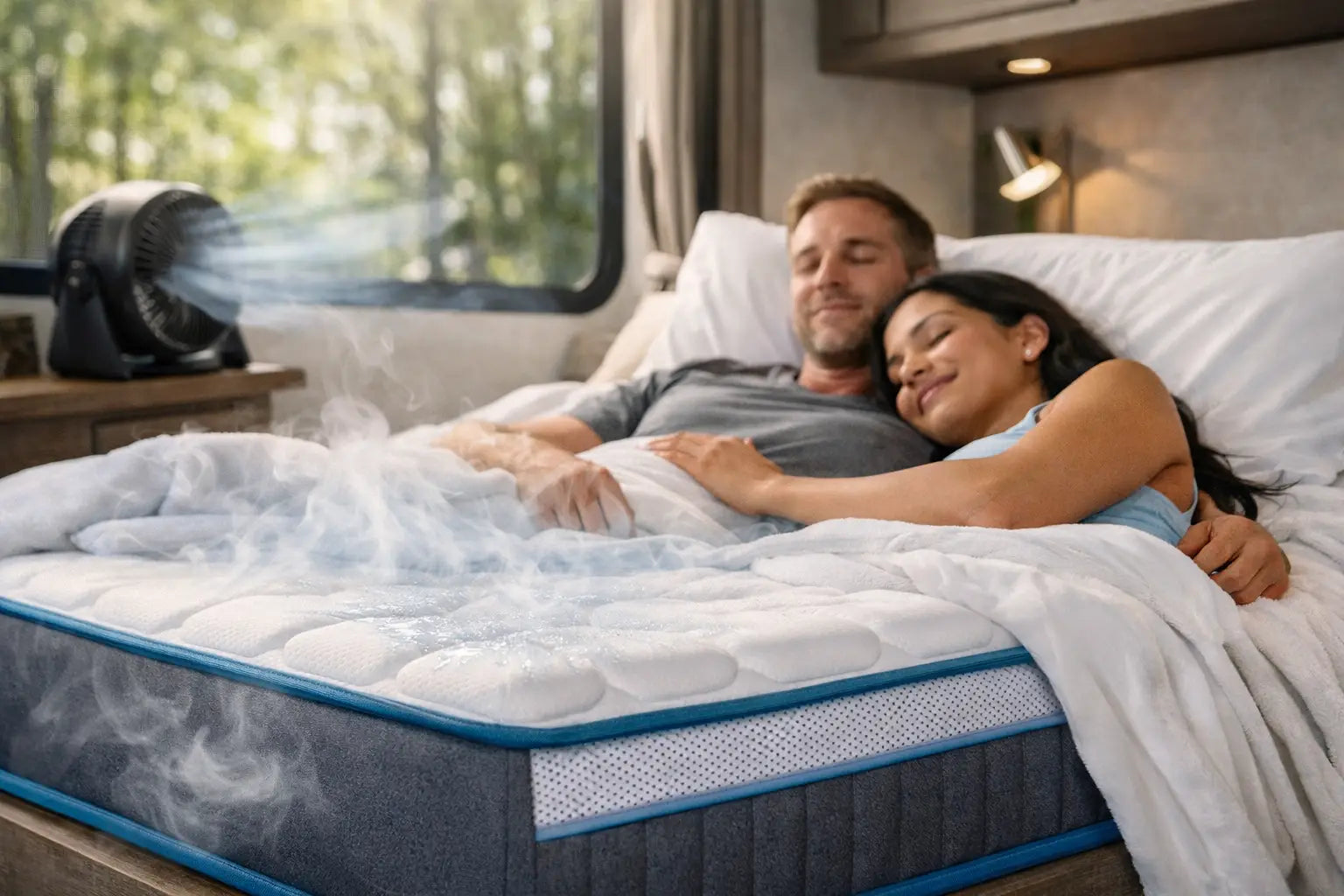
If cooling is a priority, materials matter. Traditional memory foam can contour well, but lower-quality versions often retain heat. Gel memory foam can help, but gel alone is not a cure-all. It may feel cooler initially, yet the mattress still needs airflow and support underneath that comfort layer to maintain a cooler sleep environment through the night.
Pocketed coils are often one of the biggest upgrades for hot sleepers because they create open space inside the mattress. That space improves airflow far better than a solid block of foam. Coils also provide more pushback, which helps prevent the excessive sink that traps heat around the body.
Conductive cooling fabrics and advanced cooling covers can make a noticeable difference too, especially in the first few hours of sleep when body heat starts building at the surface. These materials work best when paired with breathable internal construction rather than used as a cosmetic feature on top of a heat-retaining core.
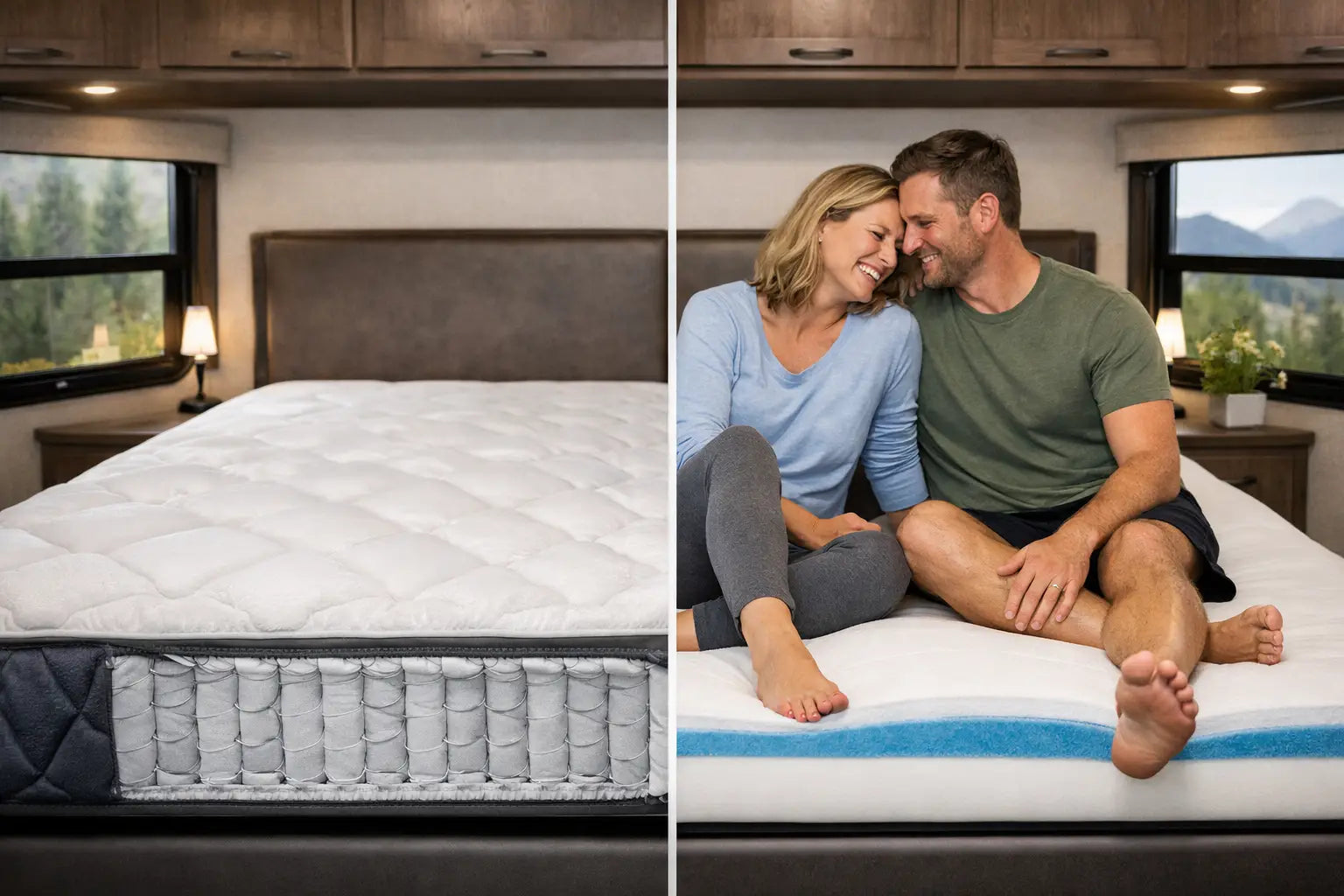
For RV owners, hybrid mattresses are often the strongest option because they combine contouring comfort with the airflow and structure of coils. A well-built hybrid can reduce heat, improve motion isolation, and deliver the kind of support that thin RV mattresses simply do not provide.
How firmness affects temperature
Firmness is not just about comfort preference. It can influence how warm a mattress sleeps. Softer mattresses allow more sink, which can increase heat retention because more of your body is surrounded by the bed. Firmer mattresses usually sleep a bit cooler because they keep you more elevated on the surface.
That said, firmer is not automatically better. Side sleepers often need more cushioning at the shoulders and hips, and if the mattress is too firm, pressure points can disrupt sleep just as much as overheating. Back and stomach sleepers usually do better with stronger support and less sink, which can help with both alignment and temperature control.
For couples, the right balance matters even more. One partner may sleep hot while the other wants more plush comfort. In that case, a hybrid with targeted support and responsive comfort layers tends to be a better middle ground than an all-foam mattress that runs warm or a very firm bed that feels too rigid.
RV sizing matters more than most shoppers expect
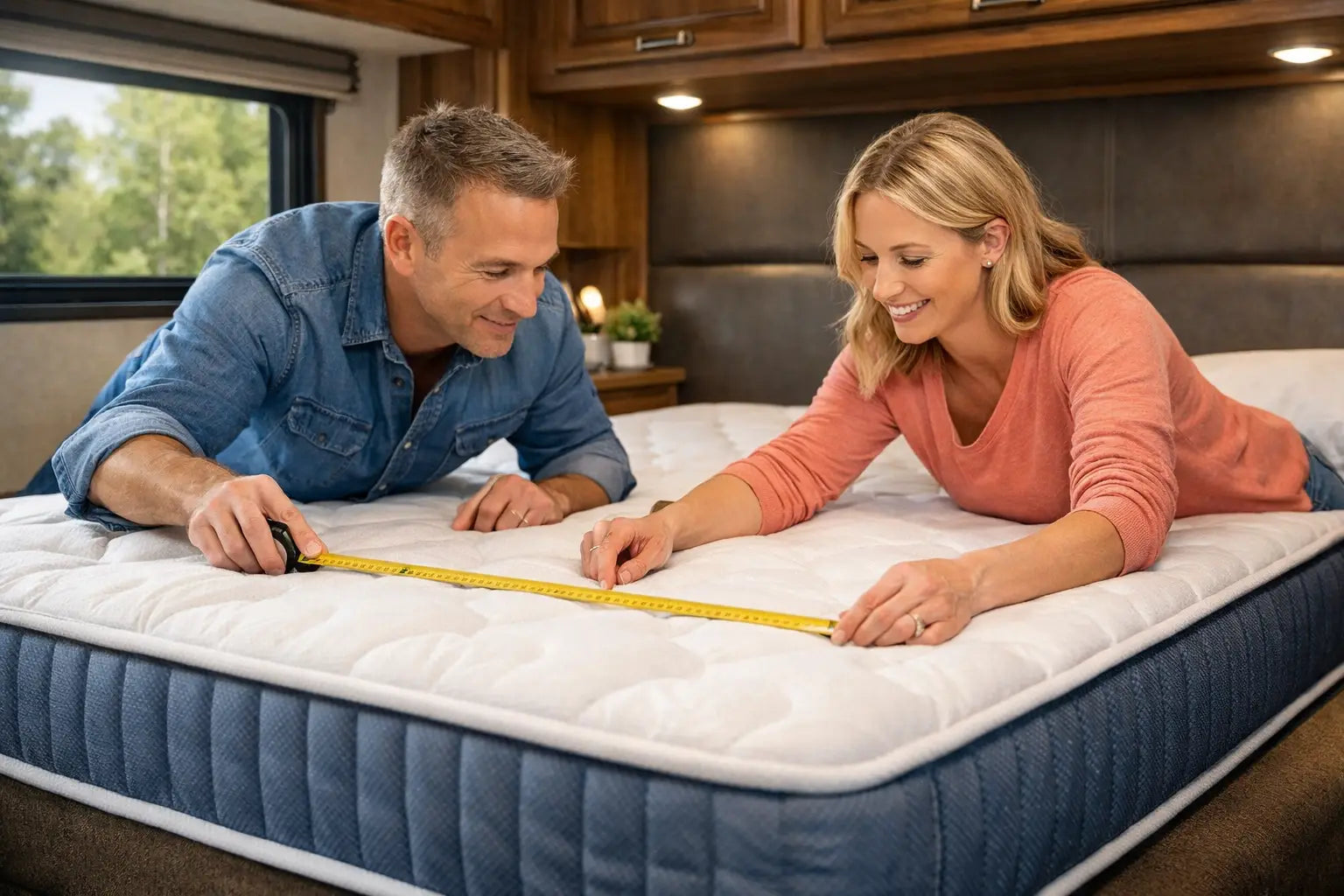
You can find a residential mattress with decent cooling features almost anywhere. Finding one that actually fits an RV correctly is a different story. RV King, RV Queen, RV Full, and bunk sizes do not always match standard residential dimensions, and trying to force the wrong size into a tight space leads to poor fit, installation hassle, and wasted money.
This is where specialty RV mattresses separate themselves from generic online options. A mattress can have impressive cooling claims, but if it hangs over cabinetry, leaves gaps, or does not work with your bed platform, it is not the right solution. The best RV mattress for hot sleepers has to do two jobs at once: sleep cool and fit the coach properly.
That is one reason specialized RV brands have an advantage. They build around the actual dimensions and constraints RV owners deal with, instead of asking shoppers to compromise with residential sizes that are close enough.
What to look for before you buy
When comparing options, pay attention to the full construction, not just the headline feature. Cooling covers, gel foams, and breathable fabrics are helpful, but they should be backed by strong support layers and airflow-friendly design. If the mattress uses zoned coils, that can also improve alignment and reduce pressure buildup in heavier areas of the body.
It is also worth considering motion isolation, especially for couples. A mattress that sleeps cooler but transfers every movement may still lead to poor sleep. Better hybrids can reduce motion surprisingly well while still offering the airflow benefits of coils.
Durability matters too. In an RV, mattresses deal with frequent use, changing temperatures, and in some cases seasonal storage. Lower-end foams can break down faster under those conditions, which often leads to more sink, more heat retention, and less support over time.
A strong return policy and sleep trial can reduce the risk. Cooling comfort is personal, and what feels right in a showroom or after one night is not always how the mattress performs over several weeks. Brands that offer real trial periods and knowledgeable customer support make the buying decision easier.
A smarter way to choose a mattress for hot sleepers
If you sleep warm in an RV, do not shop by buzzwords alone. Look for a mattress built with breathable comfort layers, real coil support, and a cooling surface that is part of a complete sleep system. Then make sure it is available in the exact RV size you need.
That combination is what separates a real upgrade from another short-term fix. For many RV owners, that means moving past thin stock mattresses and into a purpose-built hybrid designed for cooling, pressure relief, support, and proper fit. Brands like Polar RV Mattress focus on that specific problem, which is why specialty construction tends to outperform generic bed-in-a-box options in mobile sleep spaces.
The best choice depends on how you sleep, how firm you like your bed, and how your RV is set up. But if overheating is keeping you up, the right mattress can do more than feel cooler at first touch. It can help you sleep deeper, recover better, and wake up ready for the next leg of the trip instead of counting the hours you spent trying to cool down.
Share:
What Size Mattress Fits Camper Beds?
RV Hybrid Mattress Review: What Actually Matters