


You usually notice factory rv mattress problems around the second or third trip - when the excitement of the campground wears off and your back starts keeping score. What felt acceptable on a dealer lot can turn into hot sleep, pressure points, partner motion, and that familiar morning stiffness that makes coffee feel like a medical device.
That pattern is not random. Most factory-installed RV mattresses are built to hit a price target, not a sleep standard. They help the manufacturer complete the coach, but they are rarely the part of the rig designed for long-term comfort. If you use your RV more than a few weekends a year, the mattress becomes one of the first weak links in the entire setup.
Why factory RV mattress problems show up so fast
The biggest issue is construction. A stock RV mattress is often thinner than a residential mattress and made with lower-density foam or simplified support layers. That saves weight and cost, which matters during production, but it also means less pressure relief and less structural support under real bodies night after night.
The thinner profile creates a chain reaction. Hips and shoulders compress the comfort layers too quickly, which can leave you feeling the platform beneath the mattress. Back and stomach sleepers often notice a lack of lumbar support first. Side sleepers usually feel it in the shoulders and hips. Couples tend to notice motion transfer and edge collapse, especially when one person changes position during the night.
Heat is another common complaint. Traditional low-cost foam can trap warmth, and RVs already present more temperature challenges than a typical bedroom. If your coach holds daytime heat or you camp in warmer regions, a heat-retaining mattress gets uncomfortable fast. A mattress that sleeps hot in a house usually sleeps even hotter in an RV.
Then there is durability. Many stock mattresses look decent when new because the cover is clean and the foam has not broken down yet. But lower-grade materials soften quickly. Once that happens, the mattress starts losing support in the spots you use most, and comfort drops off well before the rest of the RV shows any real wear.
The most common factory RV mattress complaints
Poor support is the one complaint that tends to drive replacement. If you wake up with lower back pain, numb arms, sore hips, or the sense that your body is sinking unevenly, the mattress is not doing its job. This is especially common in RVs where the original bed feels more like a padded cushion than a true sleep system.
Sagging is close behind. Even a slight body impression can throw off alignment in a compact sleep space. In an RV, where bed platforms are often firm and ventilation underneath may be limited, low-quality foams can fatigue early. What starts as a soft spot turns into a nightly problem.
Bad temperature regulation is another major factor. Many owners assume the RV itself is the whole reason they sleep hot. Sometimes it is. But often the mattress is amplifying the issue. If you toss the covers off at 2 a.m. and still feel warm from the bed upward, the mattress materials are likely part of the problem.
Fit issues matter more than shoppers expect. RV beds are not always standard queen or king sizes, and corners may be rounded or cut to fit the layout. Factory mattresses are sized for the platform, but when you replace one, guesswork can create gaps, overhang, or interference with under-bed storage and slide clearance. This is why RV-specific sizing is not a minor detail. It is part of getting the upgrade right.
Why the dealer test rarely tells the full story
Five minutes on a showroom bed is not enough time to expose mattress weaknesses. A factory mattress can feel passable at first contact because almost any new foam surface feels smoother than one that has been used for years. The real test is what happens after several hours in one position, after body heat builds up, and after repeated compression starts wearing the materials in.
There is also a psychology issue. When buyers are focused on floorplan, towing capacity, tank size, or financing, the mattress often gets mentally downgraded to something they will deal with later. That is understandable. But once you start traveling, sleep quality affects every part of the RV experience - driving focus, energy level, recovery after long hikes, and how much patience you have in close quarters.
When a factory mattress is good enough
Not every stock mattress is an immediate disaster. If you use the RV only a few times a season, sleep mostly on your back, and do not deal with pain, overheating, or partner disturbance, you may get by for a while. Some travelers also use toppers successfully as a short-term fix.
But there is a trade-off. A topper can add surface softness, yet it usually does not solve weak support underneath. In some RVs, adding height also creates practical issues with fitted sheets, overhead clearance, Murphy bed closure, or bunk setup. If the base mattress is already sagging or sleeping hot, a topper may just mask the issue temporarily.
Signs it is time to replace the stock mattress
If you dread the bed in your RV but sleep better at home, that is a strong signal. If your back loosens up after an hour out of bed, the support is likely off. If you wake your partner every time you move, the mattress is probably isolating motion poorly. And if you are searching for hacks like extra blankets under your hips or sleeping diagonally to avoid a dip, the mattress has already failed the practical test.
Frequent RVers and full-timers should be especially realistic here. A coach can be a second home or a primary home, and the mattress should match that reality. The more nights you spend on it, the less sense it makes to accept entry-level sleep quality.
What to look for in a real RV mattress upgrade
Start with fit. RV mattresses need to match the actual platform dimensions, not what you assume the size should be. Measure width, length, and height limits, and check for rounded corners or hinge requirements. This prevents one of the most frustrating replacement mistakes - buying a mattress that is comfortable but physically wrong for the space.
Next, focus on support design. Better support usually comes from stronger foam architecture, pocketed coils, or hybrid construction that keeps your spine in a healthier position without feeling hard. This matters even more for couples and for sleepers dealing with pressure points or lower back discomfort.
Cooling should be treated as a core feature, not a luxury add-on. Materials that move heat away from the body, breathable covers, and coil systems that improve airflow can make a major difference in RV sleeping conditions. If hot sleep is already one of your main complaints, this is not the place to compromise.
Durability is what protects the investment. Better foams, stronger coil units, and more stable edge support help the mattress perform over time instead of feeling great for one season and flat by the next. For RV owners who travel often, this matters just as much as first-night comfort.
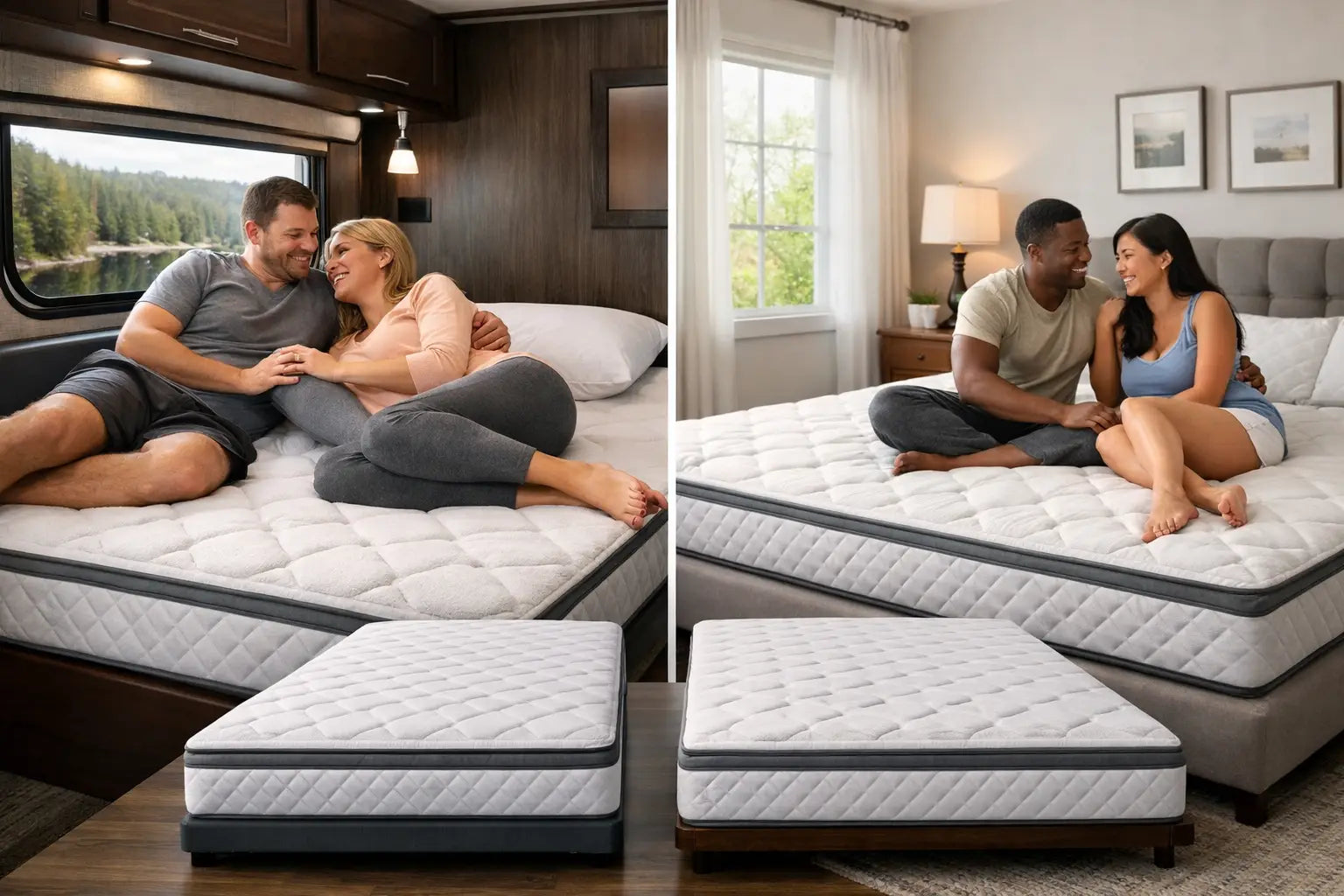
A specialized RV brand also removes sizing confusion. That alone has value. When a company builds specifically for RV queen, RV king, RV full, and bunk formats, the buying process gets simpler and the odds of getting the right fit go up. That is one reason many RV owners move to a dedicated product instead of trying to force a residential mattress into a mobile space. Brands like Polar RV Mattress are built around that exact problem.
The cost question most shoppers ask
Yes, a premium RV mattress costs more than keeping the stock one. But the better comparison is not mattress versus free. It is mattress versus repeated bad sleep on trips you already spent thousands planning and paying for. When you factor in discomfort, poor recovery, and the short lifespan of many factory beds, the cheaper option often stops looking cheap.
That does not mean every buyer needs the most expensive model available. It depends on how often you travel, how sensitive you are to heat and pressure points, and whether you are replacing the mattress for fit, comfort, or both. The key is buying for actual sleep performance, not just checking a box.
Your RV is supposed to expand where you can go, not limit how well you rest once you get there. If the bed is the part of the trip you tolerate instead of enjoy, that is usually your answer.
Share:
How to Improve RV Sleep for Real Comfort
RV King vs Eastern King: What Fits Best?