

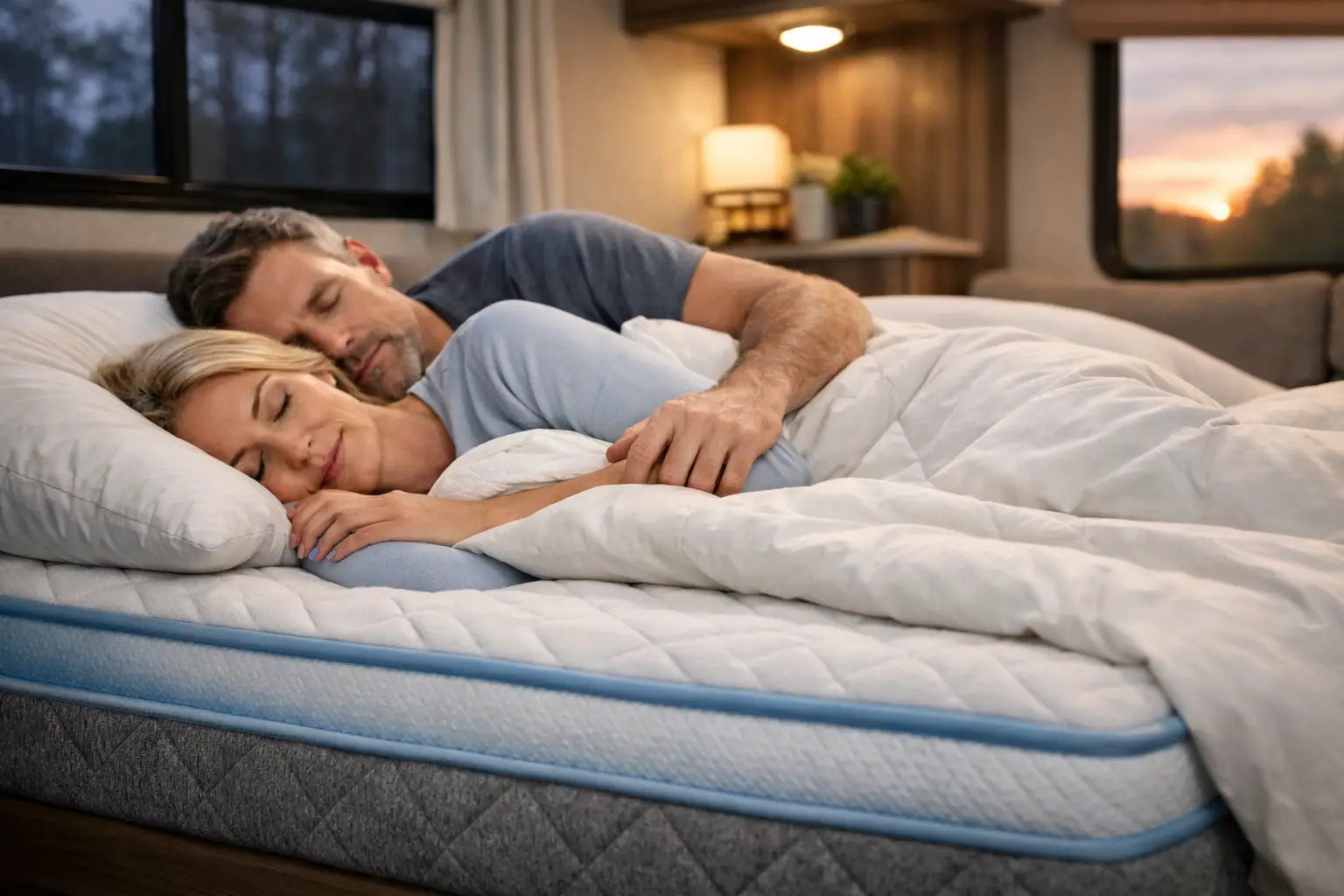
If you are wondering how to improve RV sleep, start with the part most RV owners try to tolerate for too long: the bed itself. A bad night in an RV rarely comes from one big problem. It usually comes from a stack of smaller ones - trapped heat, weak support, pressure points, partner movement, outside noise, and a mattress that never fit the space or your body very well in the first place.
That is why quick fixes only go so far. A thicker blanket may help with temperature on one trip, and a white noise app may help at one campground, but better RV sleep usually comes from building the right sleep setup. When your mattress, bedding, airflow, and evening routine are all working together, the difference is immediate.
What actually ruins sleep in an RV
Most RV bedrooms ask more from a mattress than a house bedroom does. Space is tighter, ventilation is weaker, and many factory mattresses are built to meet a price point, not deliver consistent support. They are often thin, heat-retaining, and quick to sag. If you wake up sore at the hips, shoulders, or lower back, your mattress is not just uncomfortable - it is failing at pressure relief and alignment.
Temperature is another major issue. RVs heat up fast during the day and hold warmth in compact sleeping areas at night. If your mattress traps body heat, you feel it quickly. That hot, restless feeling leads to more tossing, more wake-ups, and lighter sleep.
Then there is motion transfer. In a small RV, every shift can feel amplified. If one person rolls over, gets up early, or climbs back into bed late, the other person feels it. Good motion isolation matters more in RV sleeping than many people expect.
How to improve RV sleep at the foundation level
The biggest upgrade is usually replacing the stock mattress with one made specifically for RV use. This is not just about comfort. It is about fit, support, and durability in a space with non-standard dimensions.
A residential mattress that is close enough in size can create its own problems. It may press against cabinetry, overhang the platform, block storage access, or simply feel awkward in a tight room. An RV mattress should fit the footprint correctly and still deliver the kind of support you expect at home.
Look for a mattress that addresses four things at once: cooling, pressure relief, support, and motion isolation. If you sleep hot, conductive cooling materials and breathable construction matter. If you wake up sore, foam comfort layers and targeted support zones can reduce pressure at the shoulders and hips while keeping your spine better aligned. If you travel as a couple, pocketed coils or advanced foam layers can cut down on motion transfer.
This is where many RV owners see the biggest change fastest. Upgrading from a basic stock mattress to a premium RV-specific design often improves sleep more than any accessory ever will.
Choose the right firmness for how you actually sleep
Firmness is not one-size-fits-all, and in an RV it matters even more because the mattress usually sits on a solid platform. Side sleepers usually do better with more pressure relief around the shoulders and hips. Back sleepers often need a balanced feel that supports the lumbar area without feeling hard. Stomach sleepers generally need firmer support to keep the midsection from sinking too far.
Body weight also changes what a mattress feels like. A mattress that feels supportive to one sleeper may feel too soft or too firm to another. If two people share the bed and have different preferences, look for a construction that balances cushioning with strong underlying support instead of chasing extremes.
Don’t ignore bed base support
Sometimes the mattress gets blamed for what the platform is causing. If the bed base flexes, sags, or has uneven support, sleep quality drops with it. Check the platform for weak spots, bowed panels, or slats that are too far apart. Even a premium mattress performs poorly if the foundation underneath it is unstable.
If your RV bed lifts for storage, make sure the platform still feels secure and level when closed. A simple reinforcement can eliminate squeaks and reduce the subtle shifting that keeps light sleepers awake.
Control temperature before bedtime, not after
Cooling is one of the fastest ways to improve sleep quality in an RV. Once your body overheats, it is harder to settle back down. That is why it helps to manage the room before you get into bed.
Start by venting warm air out of the sleeping area in the evening. Use roof vents or fans to move trapped heat out, especially after a hot travel day. If hookups allow it, run the AC long enough to bring the bedroom down to a comfortable sleeping temperature before lights out. Blackout shades can also help by reducing heat gain late in the day.
Your bedding matters too. Heavy comforters and low-breathability sheets can make a warm mattress feel even warmer. Lighter layers usually work better in RVs because they let you adjust through the night. If you sleep hot, choose breathable sheets and avoid piling on dense bedding unless conditions truly call for it.
A cooling mattress is the strongest long-term fix because it deals with the heat at the source - where your body meets the bed.
Reduce motion, noise, and light
Small spaces magnify disturbances. If you want to sleep deeper, reduce the things that keep pulling you back to the surface.
Motion starts with the mattress, but it also comes from the setup around it. Loose bed frames, rattling blinds, unsecured items in overhead storage, and fans with inconsistent noise can all add low-level disruption. Tighten what rattles. Pad what knocks. The quieter your sleep environment, the less your brain has to monitor.
For light, treat the RV bedroom like any serious sleep space. Exterior campground lighting, early sunrise, and glowing electronics can all interfere with falling asleep and staying asleep. Blackout window coverings help more than many people think, especially for full-timers and frequent travelers who cannot control where they park each night.
If noise is the main issue, a steady fan often works better than total silence. It masks campground sounds without demanding your attention.
Make the bed easier to use every night
A bed that is hard to get into, hard to make, or awkward around the edges can quietly wear down your routine. This is especially true in short queens, corner beds, and tighter walk-around layouts.
If your fitted sheet constantly slips off, it may be the wrong size for the mattress profile. If blankets bunch up at the wall side, simplify the layers. If one partner struggles to climb in without waking the other, adjust the setup so the path is cleaner and the movement is smaller.
These sound like minor annoyances, but repeated friction changes how restful a space feels. Better RV sleep is not only about what happens while you are asleep. It is also about how easy it is to settle in without frustration.
Keep your evening routine travel-proof
RV life changes scenery often, but your sleep cues should stay steady. That does not mean an elaborate bedtime routine. It means a few repeatable habits that tell your body it is time to slow down.
Keep lighting lower in the hour before bed. Limit heavy meals and alcohol too close to bedtime if they tend to disrupt your sleep. Give yourself a little buffer after setup and arrival rather than going straight from driving stress to trying to sleep.
This matters even more after long travel days. Your body may be tired, but not always ready for deep sleep right away. A short reset helps.
When the problem is your mattress and not your schedule
A lot of RV owners blame poor sleep on the road itself, when the real issue is that the mattress never had a chance of performing well. If you consistently wake up hot, stiff, or unrested, and those problems improve in other beds, your RV mattress is the likely bottleneck.
That is where a purpose-built replacement makes sense. Specialized RV mattresses now offer the same features serious sleepers look for at home: cooling technology, stronger support systems, pressure relief foams, and better motion control. A brand like Polar RV Mattress focuses on that exact gap - replacing compromise with residential-level sleep performance in true RV sizes.
The trade-off is simple. A better mattress costs more than tolerating the stock one for another season. But if you travel often, sleep two adults in a small space, or deal with back pain, heat, or restless nights, the return shows up fast in how you feel every morning.
Better RV sleep is rarely about chasing one miracle product. It is about fixing the obvious weak points first, starting with the mattress, then tightening up temperature, noise, light, and routine. When your bed actually supports you and your sleep environment stops working against you, the road feels a lot easier the next day.
Share:
Fast Shipping RV Mattress: What to Look For