

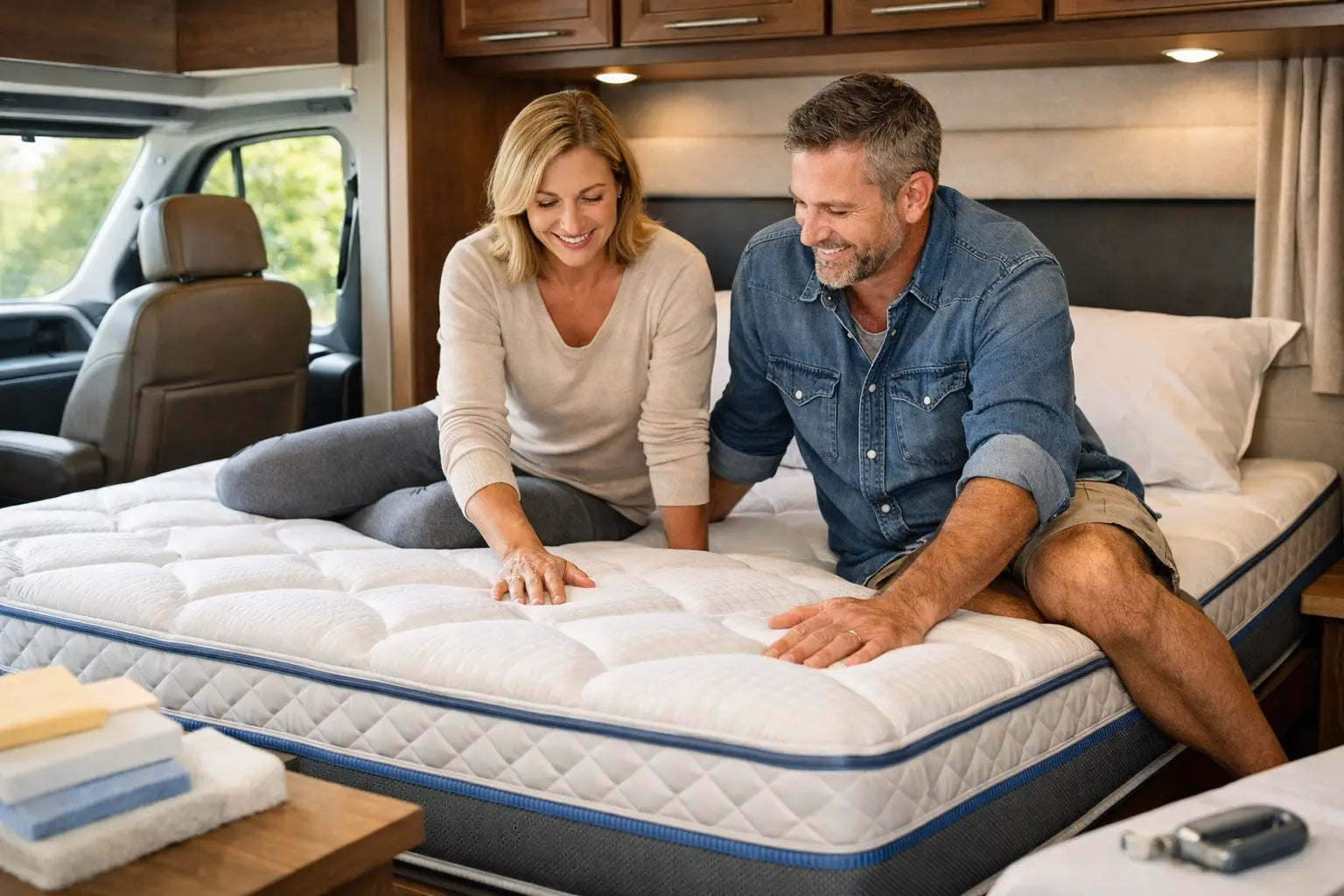
The problem usually starts the first night you try to sleep on the factory mattress. It feels too short, too thin, too hot, or all three. If you are shopping for a guide to custom RV mattress options, you are probably past the point of tolerating a poor fit and ready for a real upgrade that matches the way you travel.
A custom RV mattress is not just a residential mattress cut down to size. The right one has to fit non-standard RV dimensions, work within height and weight limits, and still deliver the cooling, pressure relief, and support you would expect at home. That balance is what separates a true RV sleep upgrade from another compromise.
Why a custom RV mattress makes sense
RV bedrooms are rarely built around standard mattress sizes. You might have a short queen, an RV king, a three-quarter full, a bunk, or a corner-cut layout that looks close to a household size until you try to install it. That is where many shoppers lose time and money. A mattress that is even an inch off can create install problems, interfere with slide-outs, or leave gaps that make the bed feel unfinished.
Comfort is the other issue. Stock RV mattresses are often built to hit a price target, not a sleep standard. They tend to run thin, trap heat, and break down early. If you wake up with lower back pain, numb shoulders, or feel every move your partner makes, that is usually a construction problem, not just a preference issue.
A custom option solves both problems at once. It lets you buy for fit and for performance, instead of choosing one and settling on the other.
Guide to custom RV mattress sizing
Before you think about firmness or cooling features, get the measurements right. This is the step that matters most.
Start by measuring the sleeping platform itself, not the old mattress. Older RV mattresses can bow, compress, or come mislabeled. Measure width, length, and the maximum height your setup allows. If your bed area has a corner cut, rounded edge, hinge, or odd offset, note every detail. In RVs, small shape differences matter.
It also helps to check the surrounding clearance. Look at nightstands, overhead cabinets, bed lifts, and slide mechanisms. A thicker mattress can improve comfort, but if it prevents a platform from closing or crowds the room too much, it may not be the right choice. This is where custom sizing is especially valuable. You can match the footprint you need without forcing a standard residential size into a space that was never built for it.
If you are replacing a mattress in a bunk room, measure each bunk separately. Two bunks in the same camper are not always identical. If you are buying for a motorhome or travel trailer with a walk-around bed, pay attention to whether the corners are squared or angled. Those details determine whether the mattress installs cleanly.
What to look for beyond size
Fit gets the mattress into the RV. Construction determines whether you actually sleep better.
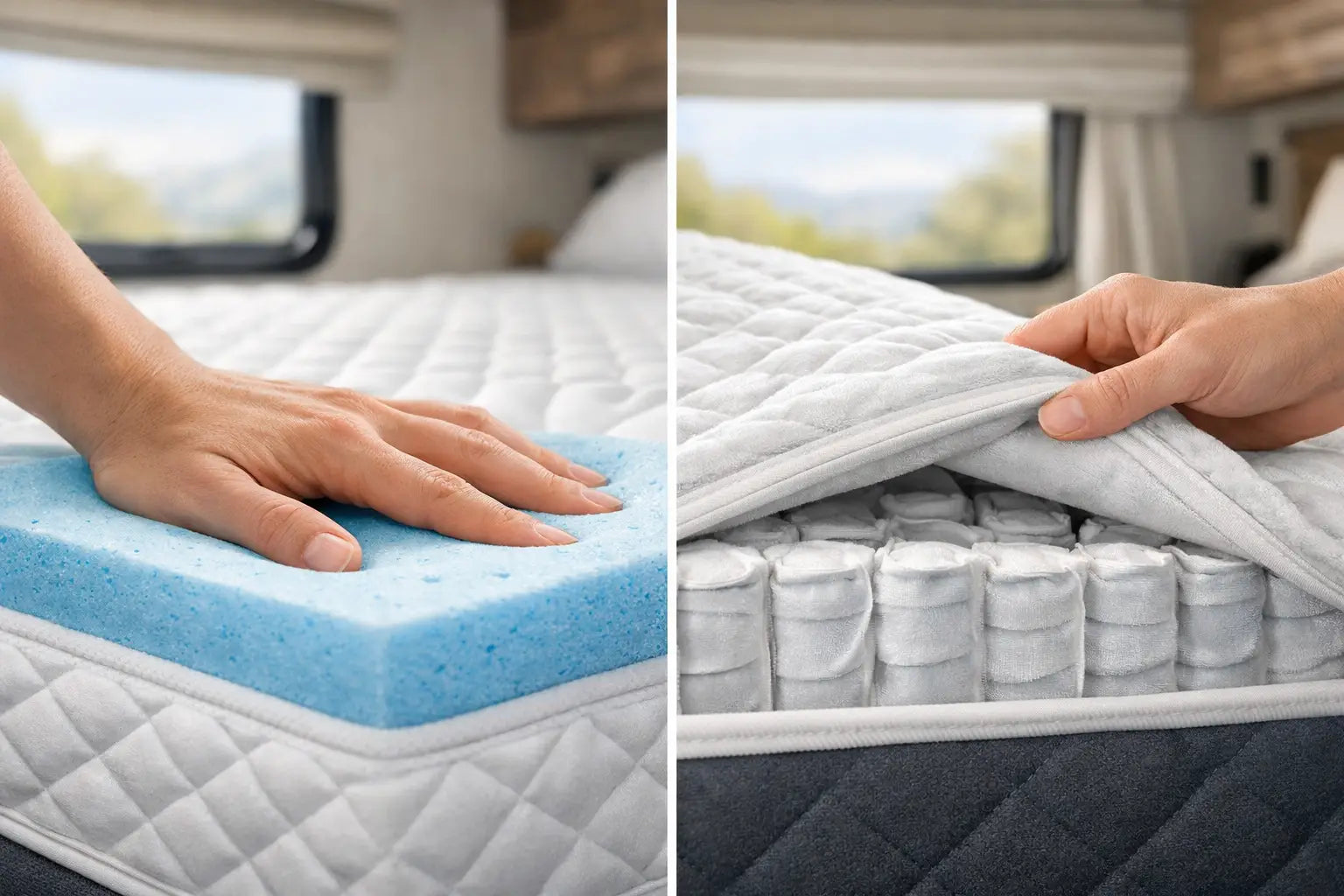
Cooling should be high on the list. RVs can heat up fast, especially in summer travel or warmer climates, and a heat-trapping foam mattress can make a small sleeping area feel even hotter. Materials such as conductive cooling covers, breathable coil systems, and gel-infused comfort layers usually perform better than basic all-foam builds that hold heat.
Support matters just as much. Many RV owners buy based on softness and then regret it after a few weeks. If the mattress does not keep your body aligned, pressure relief alone will not solve morning aches. Zoned support, quality pocketed coils, and stronger base layers tend to hold up better than low-density foam cores, especially for couples and full-time RVers.
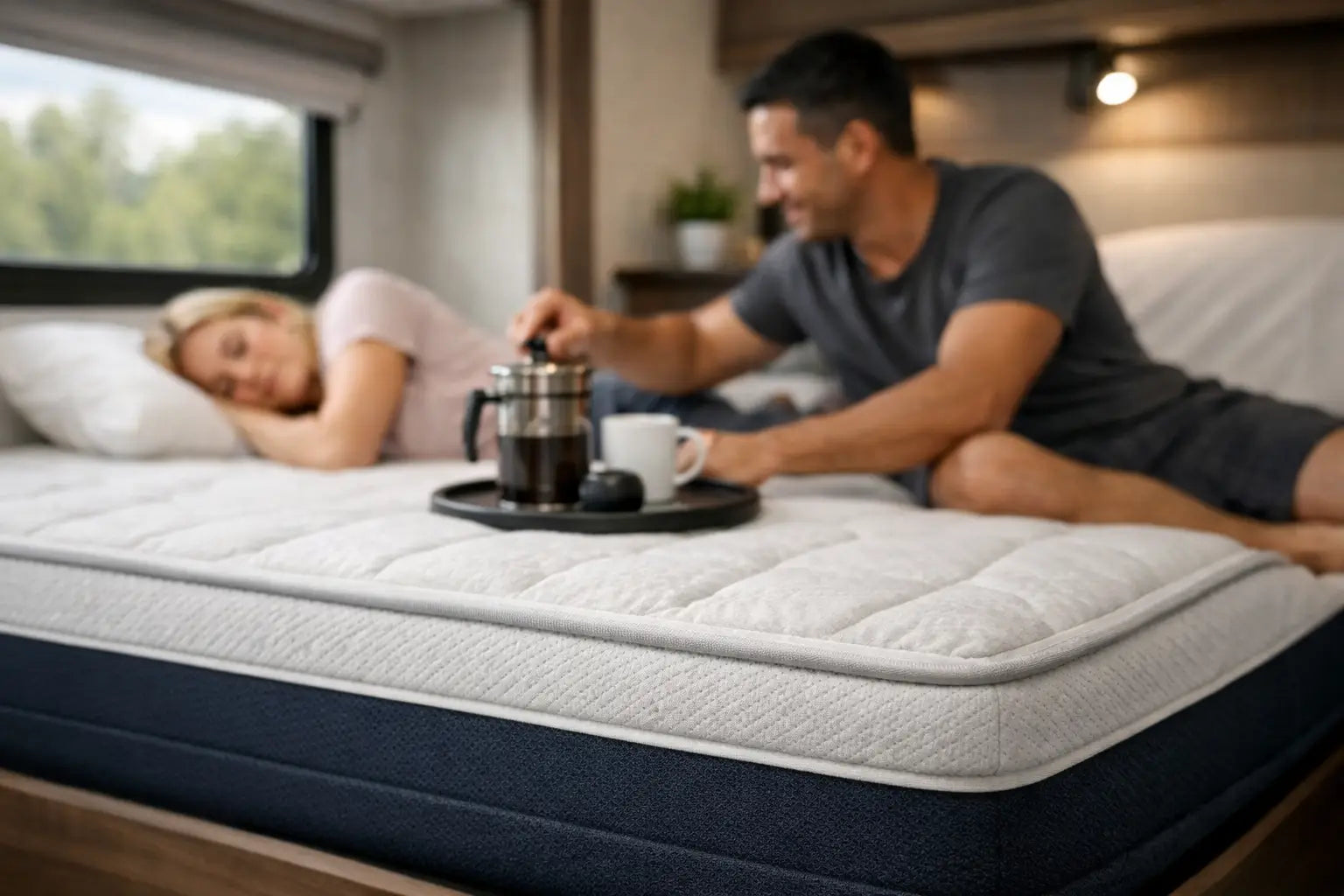
Motion isolation is another feature that becomes more noticeable in an RV than at home. Smaller sleep spaces make partner movement feel more pronounced. If one person gets up early or changes position often, a mattress with better motion control can make a major difference.
Durability deserves honest attention too. An RV mattress may be used seasonally, but many see heavy wear from travel, temperature swings, and repeated setup cycles. Cheap materials break down quickly under those conditions. A mattress that feels decent for the first month is not necessarily a good value if it loses support during the first travel season.
Choosing the right mattress type for your RV
There is no single best build for every RV owner. The better question is what problem you are trying to solve.
If overheating is your biggest complaint, prioritize cooling-oriented hybrids and premium materials that move air and dissipate heat more effectively. If back pain is your issue, look for stronger support systems and pressure relief that keeps your hips and shoulders from sinking too far. If partner disturbance is the main problem, a design with quality foam comfort layers over pocketed coils often gives a better balance of bounce control and support.
Thickness is also part of the decision. A thicker mattress often feels more substantial, but not every RV can handle extra height. Some bed platforms need to lift for storage. Some slide rooms need a lower profile to clear when closed. In those cases, the best mattress is the one that gives the most support and comfort within the height your RV can realistically handle.
For many shoppers, hybrid construction is the sweet spot. It tends to outperform basic foam in airflow, support, and longevity, while still offering the pressure relief people want from modern comfort layers. Higher-end RV-specific designs can also include features like zoned coils or coil-on-coil support that make the bed feel much closer to a premium residential mattress.
Common mistakes this guide to custom RV mattress shoppers should avoid
The first mistake is assuming that "RV queen" or "RV king" is enough information. Those labels help, but they are not universal. Always verify actual dimensions.
The second is focusing only on softness. A mattress can feel plush in a showroom-style description and still fail to support your spine through the night. Comfort without structure does not hold up.
The third is ignoring edge support and overall stability. In RVs, people often sit on the side of the bed to dress or move around in tight spaces. Weak edges can make the mattress feel smaller and less secure.
Another common issue is choosing the cheapest replacement because the mattress is "just for camping." That logic rarely lasts. If you spend multiple weekends a year, take extended trips, or live in your RV full time, sleep quality affects energy, recovery, and enjoyment more than almost any other comfort upgrade.
How to judge value, not just price
A better RV mattress usually costs more than the factory replacement options people first consider. That does not make it expensive. It makes it purpose-built.
The real value comes from how well it fits, how long it lasts, and how much better you feel after sleeping on it. A mattress that arrives quickly, matches your RV dimensions correctly, and gives you stronger cooling and support is worth more than a cheaper option that still leaves you sleeping hot or waking up sore.
This is also where service matters. Buying a mattress online can feel risky if you are dealing with custom dimensions, so expert guidance, fast shipping, and a meaningful sleep trial reduce that friction. Brands that specialize in RV sleep generally understand the sizing and install issues far better than broad mattress retailers. Polar RV Mattress is a good example of this specialized approach, especially for shoppers who want premium construction and RV-specific fit without guesswork.
Who benefits most from going custom
Custom is not only for unusual floorplans. It makes sense for road-tripping couples who want less partner disturbance, for retirees who need better pressure relief, for full-time RVers who need residential-level support, and for families replacing thin bunk mattresses with something kids will actually sleep on.
It is also the right move if you have already tried toppers, pads, or temporary fixes. Those products can help around the edges, but they do not solve a mattress that is fundamentally too hot, too flimsy, or the wrong size.
A better way to shop
The smartest way to buy is to start with your RV measurements, then work backward from your biggest sleep complaint. If you sleep hot, shop cooling first. If your back hurts, shop support first. If your partner wakes you up, shop motion isolation first. Once you know the main problem, it becomes much easier to compare mattress builds and avoid marketing that sounds good but does not match your needs.
A custom RV mattress should make your RV feel less like a compromise and more like a place where you genuinely rest well. When the fit is right and the construction is strong, you stop thinking about the mattress altogether - which is exactly the point when you are supposed to be enjoying the road.
Share:
Motion Isolation RV Mattress: What Matters