

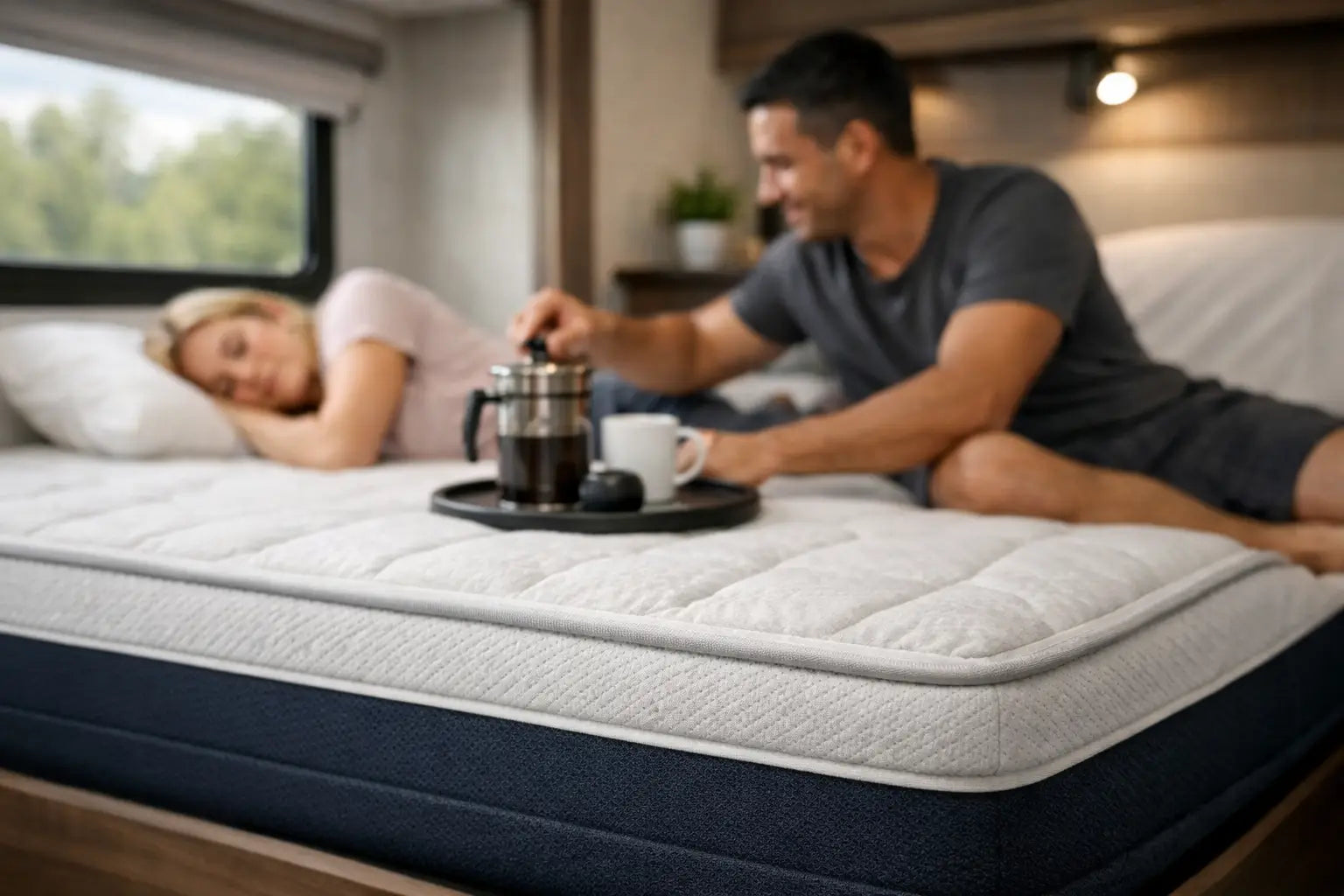
If your partner rolls over and you feel the whole bed shift, your RV mattress is doing exactly what a good one should not do. A motion isolation RV mattress is built to limit that ripple effect so one sleeper can move, get up, or change positions without constantly waking the other. For couples, full-timers, and anyone tired of restless nights on the road, that one feature can make a bigger difference than people expect.
In an RV, the problem gets worse because the sleep setup is already working against you. Factory mattresses are often thinner, lighter, and less stable than residential mattresses. That makes them easier to manufacture and easier to squeeze into tight floorplans, but it also means they tend to transfer movement fast. Add a compact sleeping space, uneven campsites, and long travel days, and small sleep disruptions start to feel much bigger.
Why motion isolation matters more in an RV
At home, poor motion control is annoying. In an RV, it can become a nightly pattern. One person gets up early to walk the dog, shifts positions because of shoulder pressure, or climbs back into bed after checking a noise outside. The other person feels all of it.
That matters because better sleep is not just about softness. It is about staying asleep. A mattress can feel comfortable for twenty minutes when you first lie down and still fail you over eight hours if every movement carries across the surface. Good motion isolation protects sleep continuity, which is often what RV owners are actually missing.
This is especially important for retirees, road-tripping couples, and full-time RVers who rely on real recovery after long drives or active days. If your mattress keeps passing movement from one side to the other, both sleepers end up compromising.
What actually creates motion isolation in an RV mattress
Motion isolation is not magic, and it is not just a marketing phrase. It comes from how the mattress is built.
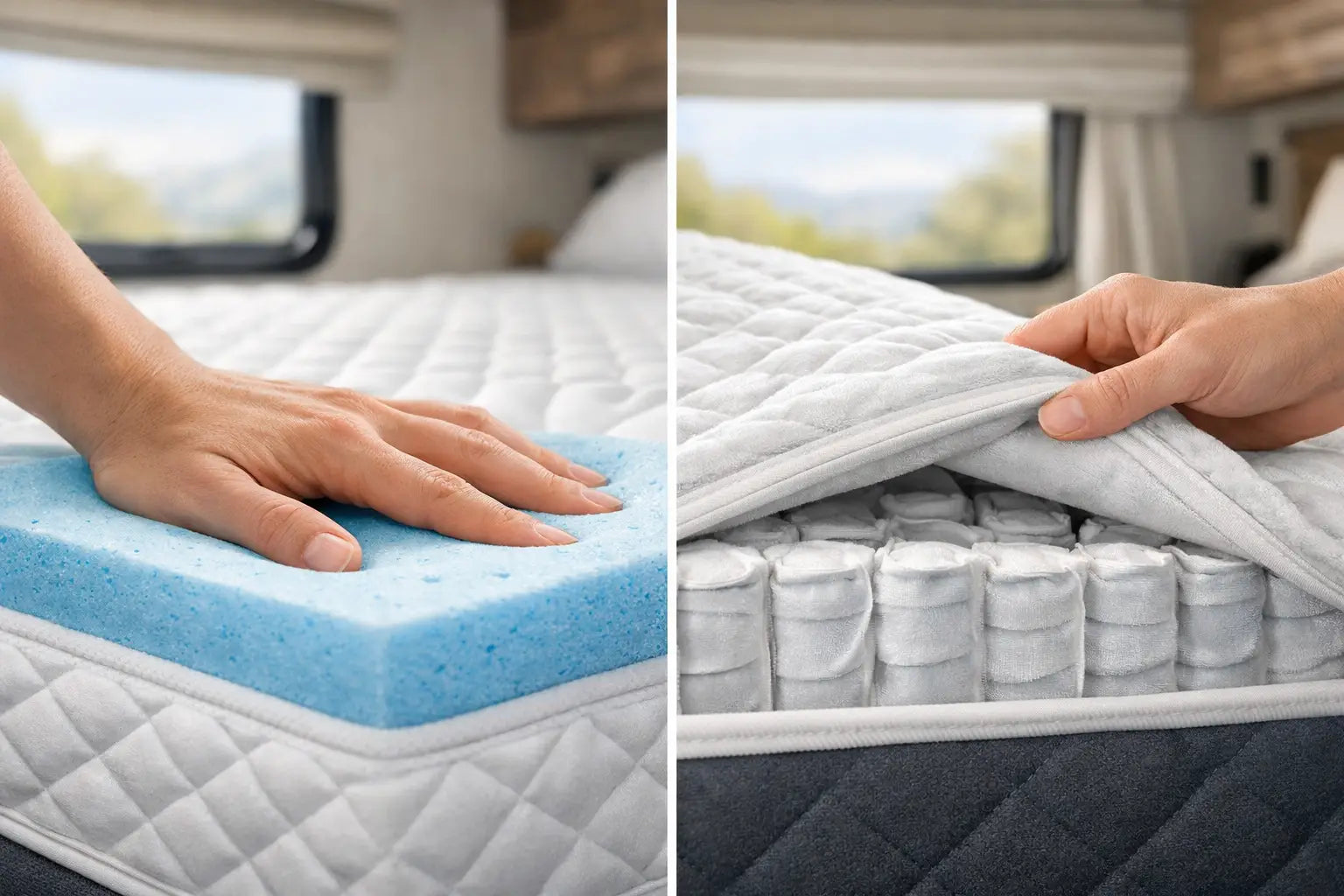
Foam layers are a big part of it. Memory foam and responsive comfort foams absorb energy instead of bouncing it across the bed. When one person moves, the foam compresses around that area and helps keep the disturbance local. This is one reason many stock innerspring RV mattresses perform so poorly - they often have minimal comfort material and plenty of bounce.
Coil construction matters too. A mattress with old-style connected coils will usually transfer more motion because the springs react as a system. Zoned pocketed coils are different. Each coil can respond more independently, which cuts down on movement spreading across the surface. For RV owners who want stronger support without the lively, springy feel of a basic innerspring, pocketed coils are usually a much better fit.
Layer balance matters just as much as materials. Too much soft foam can reduce motion, but it may also create sagging, heat buildup, or a stuck feeling. Too much spring response can improve mobility but increase transfer. The best RV mattresses balance pressure relief, support, cooling, and motion control instead of chasing only one feature.
The best motion isolation RV mattress is not always all-foam
A lot of shoppers assume an all-foam bed is automatically the best choice for motion isolation. Sometimes it is. But for many RV owners, especially couples, that answer is too simple.
All-foam mattresses can do an excellent job absorbing movement. They also tend to contour well, which helps with pressure points at the shoulders and hips. The trade-off is that some all-foam designs sleep warmer, feel slower to respond, and offer less edge support. In an RV, where airflow is tighter and bed platforms can be more confined, those trade-offs matter.
A well-built hybrid can often be the better long-term choice. When you combine quality foam comfort layers with zoned pocketed coils, you can get strong motion control along with better support, improved airflow, and easier repositioning. That is a more complete sleep solution for RV owners who want residential comfort without giving up practical performance.
In other words, the right answer depends on how you sleep. If motion transfer is your only concern, foam-heavy designs deserve a close look. If you also care about cooling, spinal support, and durability, a premium hybrid often wins.
How to tell when your current RV mattress is the problem
Sometimes people blame RV living for poor sleep when the mattress is the real issue. If you are waking each other up repeatedly, the signs are usually clear.
One common clue is the "bounce test." If one person sits down or turns over and the other side noticeably moves, your mattress is transferring too much motion. Another clue is fragmented sleep without a clear cause. You may not fully wake up each time your partner shifts, but your body still reacts, and that adds up.
Discomfort can also make motion transfer worse. If your mattress creates pressure points or poor alignment, both sleepers move around more trying to get comfortable. That means the bed is not only passing movement - it is causing more of it. This is why a better mattress needs to do more than isolate motion. It needs to reduce the reasons people toss and turn in the first place.
What RV couples should look for first
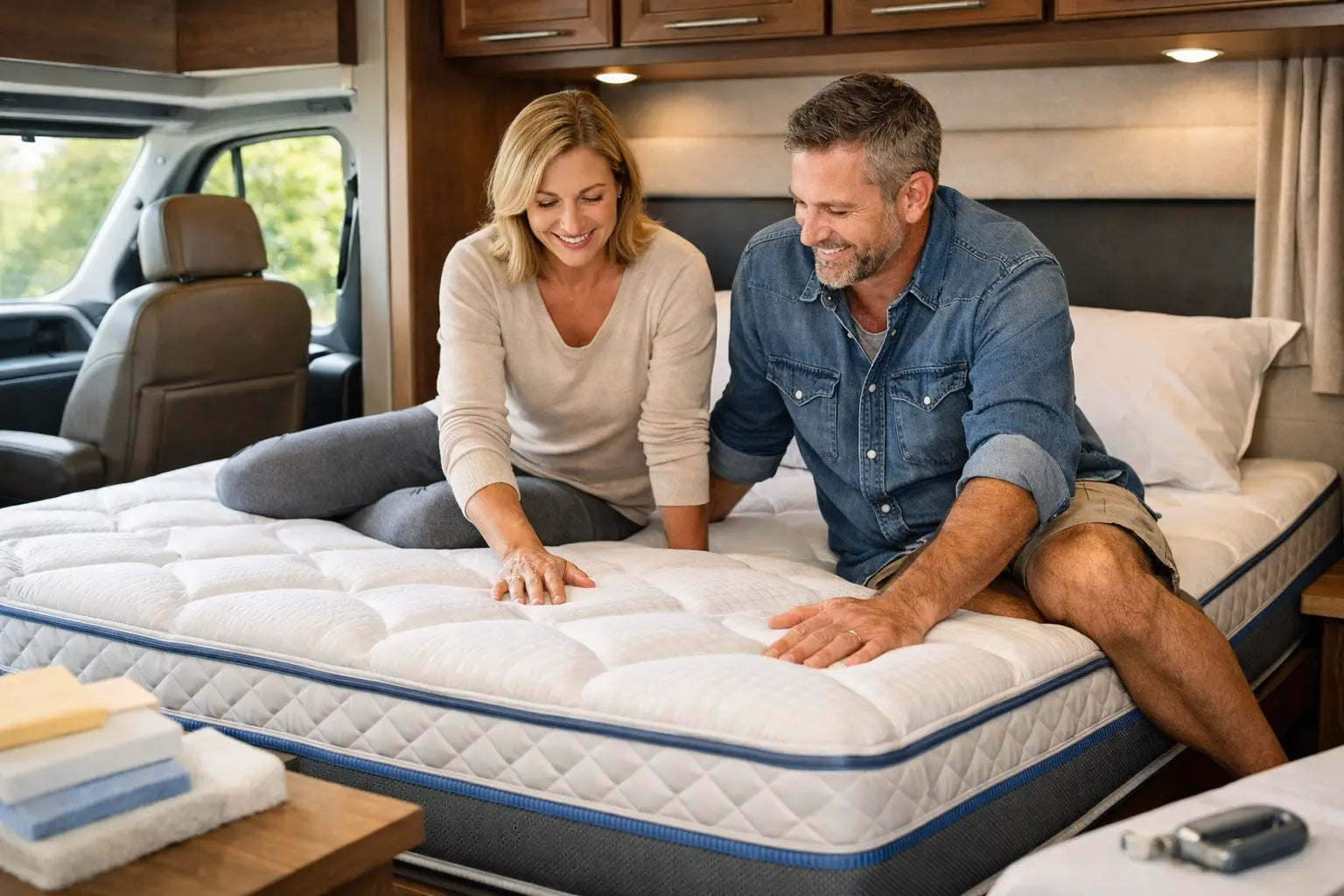
If you share your RV bed, start with construction, not just firmness labels. Firmness tells you how a mattress feels at first touch. It does not tell you how well it controls motion.
Look for comfort layers that absorb movement rather than amplify it. Gel memory foam can help here, especially when it is paired with a more stable support core. Pocketed coils are a strong sign that the mattress is designed for less transfer than a basic interconnected spring system. Edge support also deserves attention because many RV sleepers use the full width of the mattress and need a stable perimeter when getting in and out.
Thickness is another factor that gets overlooked. Very thin RV mattresses often struggle with motion control because there is simply less material available to absorb movement. A more substantial build usually performs better, assuming it still fits your RV frame and clearance needs.
And of course, size has to be exact. A mattress that almost fits can create its own problems, including uneven support and shifting on the platform. RV Queen, RV King, RV Full, and bunk sizes are not the same as standard residential dimensions, so precise RV sizing is part of sleep performance, not just convenience.
Motion isolation should not come at the cost of cooling and support
This is where many mattresses fall short. They promise less partner disturbance but ignore the other reasons people replace an RV mattress in the first place. If the bed sleeps hot, sinks too much, or loses support over time, improved motion isolation will not save the experience.
That is why premium materials matter. Cooling technology helps offset the heat retention that can come with dense foam layers. Zoned support helps keep heavier parts of the body aligned so the mattress feels stable instead of uneven. Better steel, stronger foam densities, and smarter layering all contribute to a mattress that performs consistently instead of feeling good for a few months and then breaking down.
For RV owners making a real upgrade, the goal is not a mattress that is good at one thing. The goal is a mattress that helps you sleep through the night, wake up without aches, and stop negotiating every movement with your partner.
A smarter way to shop for a motion isolation RV mattress
Do not shop by buzzwords alone. Ask what is inside the mattress, how the support system works, whether the size is truly RV-specific, and how the brand handles trial periods and customer support. Those details tell you whether you are looking at a serious RV sleep product or just a generic mattress cut down to fit a camper.
This is one reason specialized RV brands tend to serve buyers better than one-size-fits-all mattress sellers. RV sleep comes with unique dimensions, weight considerations, and comfort challenges. A brand focused on this category is more likely to build for those realities from the start.
Polar RV Mattress, for example, centers its designs around RV-specific sizing and premium sleep features that matter in real-world travel, including cooling, support, and motion control. That specialized approach makes more sense than settling for the same thin, unstable mattress many RVs come with from the factory.
If you are waking up every time your partner moves, treat that as a fixable mattress problem, not just part of RV life. Better sleep on the road starts with a bed that keeps movement contained, supports your body correctly, and fits your RV like it was meant to be there.
Share:
Gel Foam vs Pocket Coils for RV Mattresses
Guide to Custom RV Mattress Buying