

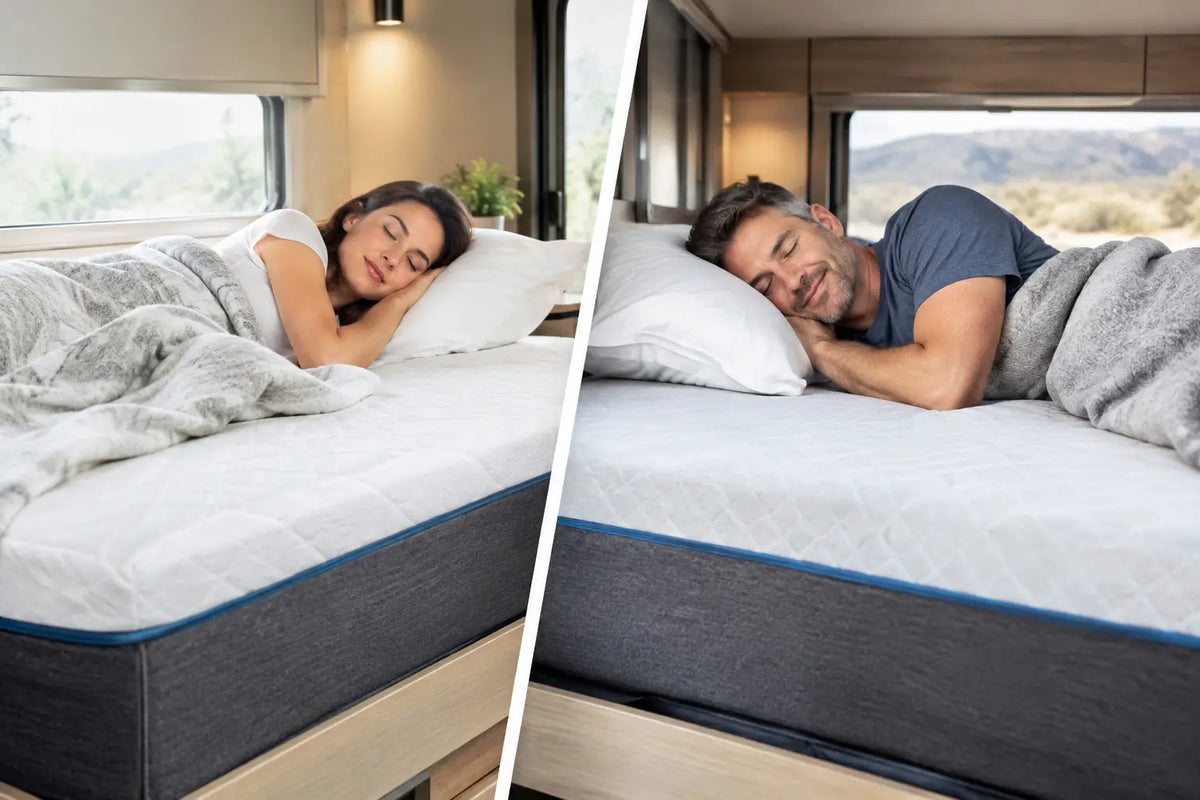
A factory RV mattress can make even a well-planned trip feel longer by morning. When comparing a latex versus foam RV mattress, the real question is not which material sounds more premium. It is which construction solves your specific sleep problem: overheating, pressure points, back pain, partner movement, or the awkward dimensions of an RV bed platform.
Both can be a major improvement over the thin, flat, heat-trapping mattress that came with your rig. But they create comfort differently, and that difference matters when you are sleeping in a compact space, dealing with changing temperatures, or spending weeks at a time on the road.
Latex Versus Foam RV Mattress: The Core Difference
Latex is a resilient, springy foam material. It compresses under your body, but it pushes back quickly when you shift positions. That creates a more buoyant feel, often described as sleeping on the mattress rather than sinking deeply into it. Latex is usually a strong choice for sleepers who want easier movement, a naturally cooler surface feel, and support that stays noticeable throughout the night.
Memory foam, on the other hand, is designed to contour. It responds to body heat and pressure, allowing the comfort layer to hug the shoulders, hips, and lower back. For side sleepers and people who wake up with sore pressure points, that close contouring can be a real advantage. Foam also excels at absorbing movement, which is especially valuable when two people share an RV Queen or RV King.
The comparison gets more complicated because “foam” covers several materials. Basic polyurethane foam is common in low-cost RV mattresses, but it often compresses quickly and offers limited cooling. Gel memory foam and higher-density comfort foams are a different category, built to improve pressure relief, durability, and temperature control. Construction quality matters as much as the label on the material.
Choose Latex if You Sleep Hot or Change Positions Often
Latex has an open, responsive feel that appeals to combination sleepers. If you move from your side to your back during the night, you are less likely to feel stuck in the surface. That can be a meaningful advantage in an RV, where warmer interiors, limited airflow, and summer travel can make dense comfort layers feel warmer than they do at home.
Latex also has a naturally breathable structure. Air can move through the material more freely than through traditional dense memory foam, helping reduce the sensation of heat building around your body. That said, latex alone is not a complete cooling system. A breathable cover, the mattress foundation, room temperature, bedding, and overall mattress thickness all affect how cool you sleep.
Support is another reason RV owners consider latex. Its immediate pushback can help keep the midsection from sinking too far, particularly for back and stomach sleepers. Heavier sleepers may appreciate that stable, lifted feel, although they should still pay close attention to the support core beneath the latex. A soft latex layer over weak base foam will not deliver lasting alignment.
There are trade-offs. Quality latex mattresses can be heavier and more expensive than comparable foam models. Weight matters when you need to lift a mattress into a fifth wheel bedroom, navigate a tight hallway, or stay aware of cargo capacity. Latex may also transfer more movement than memory foam, so light sleepers sharing a bed may notice a partner getting up earlier.
Choose Foam for Deep Pressure Relief and Motion Isolation
A well-built foam mattress is often the better answer when joint comfort is the priority. Memory foam distributes weight across a wider surface area, cushioning the shoulders and hips instead of forcing them to carry concentrated pressure. This is why many side sleepers find foam more comfortable than highly responsive materials.
Foam is also one of the strongest materials for motion isolation. When your partner turns over, climbs into bed late, or gets up for an early drive day, the foam absorbs much of that movement before it travels across the mattress. In a smaller RV bedroom, where one person's movement can feel amplified, that quieter sleep surface is worth considering.
The concern most shoppers have is heat, and it is a fair one. Traditional memory foam can retain warmth, especially in an RV parked in direct sun or running limited overnight air conditioning. Better foam mattresses address this with gel-infused foams, conductive cooling fabrics, breathable covers, and coil support systems that allow more air circulation beneath the comfort layers.
Do not assume every gel foam mattress sleeps cool simply because it says “gel.” Look at the whole design. A cooling cover helps draw heat away from the surface. A breathable transition layer prevents warmth from getting trapped. Pocketed coils or coil-on-coil support can increase airflow while adding stronger support than a thick slab of low-density base foam. This layered approach is what turns foam from a soft temporary fix into a serious RV sleep upgrade.
The Support System Matters More Than Most Shoppers Expect
A mattress is not just its top comfort layer. Latex and foam control the first impression - pressure relief, responsiveness, and surface temperature - but the support system determines how well the mattress holds your body over time.
An all-foam mattress can work well when it uses dense, durable support foam. It may be lighter, easier to maneuver through an RV, and excellent at minimizing motion transfer. However, lower-quality all-foam designs can develop body impressions, soften near the middle, and make it harder to change positions after repeated use.
Hybrid designs pair foam or latex comfort layers with pocketed coils. This is often a compelling option for RV owners who want pressure relief without giving up reinforcement, edge stability, or airflow. Zoned pocketed coils can provide more targeted support under the lumbar area while allowing more cushioning at the shoulders and hips. For couples, individually wrapped coils also reduce the broad, rolling motion associated with older connected-coil mattresses.
If you have back discomfort, focus less on whether latex or foam is automatically “better” and more on whether the mattress keeps your spine in a neutral position. Side sleepers typically need enough give at the shoulder and hip. Back sleepers need consistent lumbar support. Stomach sleepers generally need a firmer, flatter surface to avoid excess hip sink. Your preferred position should guide the comfort level first, then the material choice.
RV Fit Can Change the Best Choice
Residential mattress shopping advice often overlooks the practical challenge of RV sizing. An RV Queen may not match a standard Queen. An RV King can vary by manufacturer. Corner cuts, slide-out clearances, rounded corners, bunk platforms, and restricted bedroom doors can all affect what will actually fit.
Before choosing any RV mattress, measure the platform length and width in several places, not just the old mattress. Check the available height as well. A tall mattress may feel luxurious, but it can block a window, interfere with a slide, or make it difficult to sit up beneath overhead cabinetry. Also measure the route from the entry door to the bedroom. The best mattress on paper is not the right mattress if it cannot be maneuvered into the coach safely.
This is where a specialty RV mattress brand has a clear advantage. Polar RV Mattress builds for RV-specific sizes and sleep needs, giving owners a more direct path to a proper fit than trying to force a residential mattress onto a non-standard platform.
How to Make the Right Call
Choose latex when you want a cooler, more responsive surface and you dislike the slow sink of memory foam. It is especially appealing for combination sleepers, back sleepers, and travelers who tend to sleep warm.
Choose foam when pressure relief and motion isolation are at the top of your list. Side sleepers, couples with different schedules, and anyone who prefers a body-contouring feel may sleep better on a quality foam design with credible cooling features.
Choose a hybrid when you want the contouring comfort of foam or the responsiveness of latex with stronger coil support, better airflow, and a more substantial feel. For many full-time RVers and frequent travelers, this balance is the most practical answer.
The material is only one part of the decision. Prioritize a mattress that fits your exact RV platform, matches your sleep position, manages the heat you experience on the road, and uses components built for more than an occasional weekend. Better sleep should not be the compromise you make to keep traveling.
Share:
Top Mattresses for Camper Families That Fit
Why RV Edge Support Matters for Better Sleep