

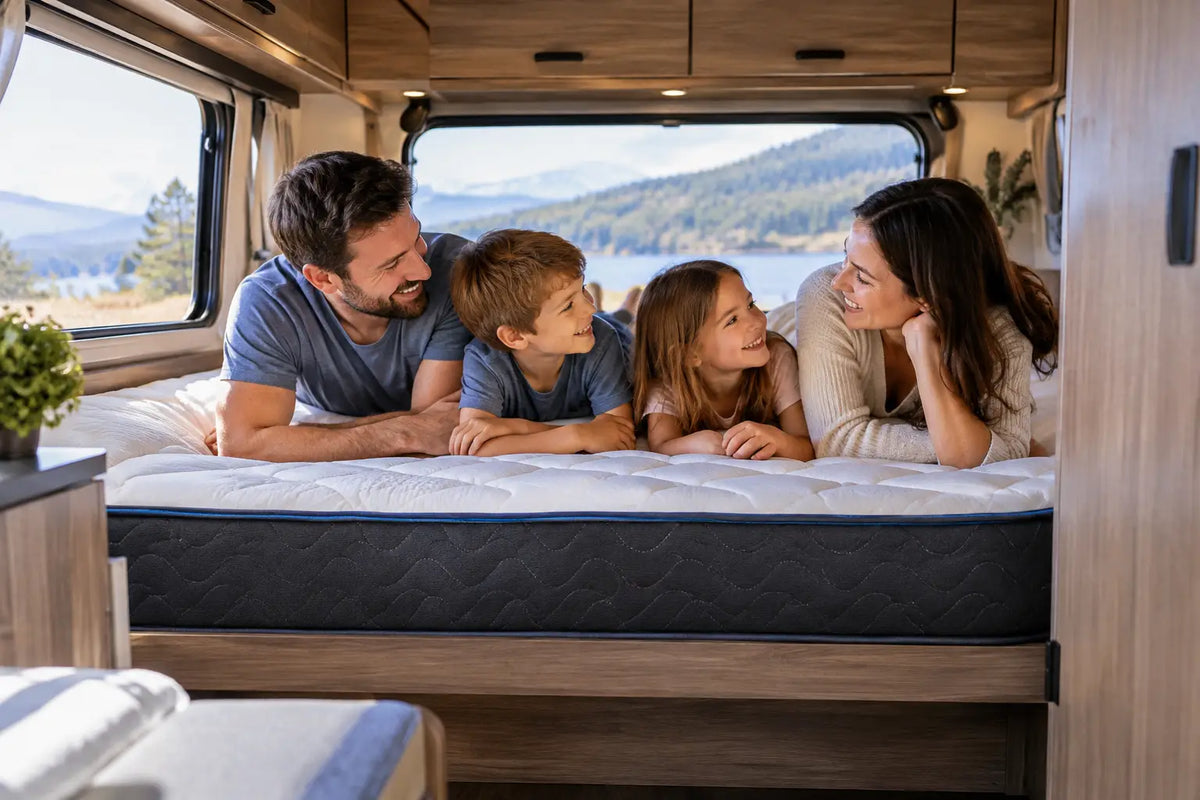
A camper can have a smart floor plan, a great kitchen, and enough storage for a week off-grid, yet still feel miserable after two poor nights of sleep. The top mattresses for camper families solve the problem that factory RV beds create: thin comfort layers, trapped heat, weak support, and sizes that rarely match a standard mattress label.
For families, the stakes are higher. Kids need dependable sleep after a full day outside. Parents need pressure relief and support that hold up after driving, hiking, cooking, and managing the entire trip. And when everyone sleeps in a compact space, one restless sleeper can affect the whole camper. The right RV mattress is not a luxury add-on. It is part of what makes the camper usable for long weekends, school breaks, and extended travel.
What Camper Families Need From a Mattress
A family camper has more sleep zones than most people realize. The main bed may need to support two adults with different comfort preferences. Bunks need to fit tightly without making it difficult to sit up or use the safety rail. A convertible dinette or sofa bed may only be used occasionally, but it still needs to be comfortable enough that no one dreads drawing the short straw.
That makes the best choice less about finding one universally "perfect" mattress and more about matching construction, height, and size to each sleeping space. Start with the main bed, where better support and cooling create the biggest improvement. Then look at bunks and secondary beds, where exact dimensions, manageable mattress weight, and durable materials matter most.
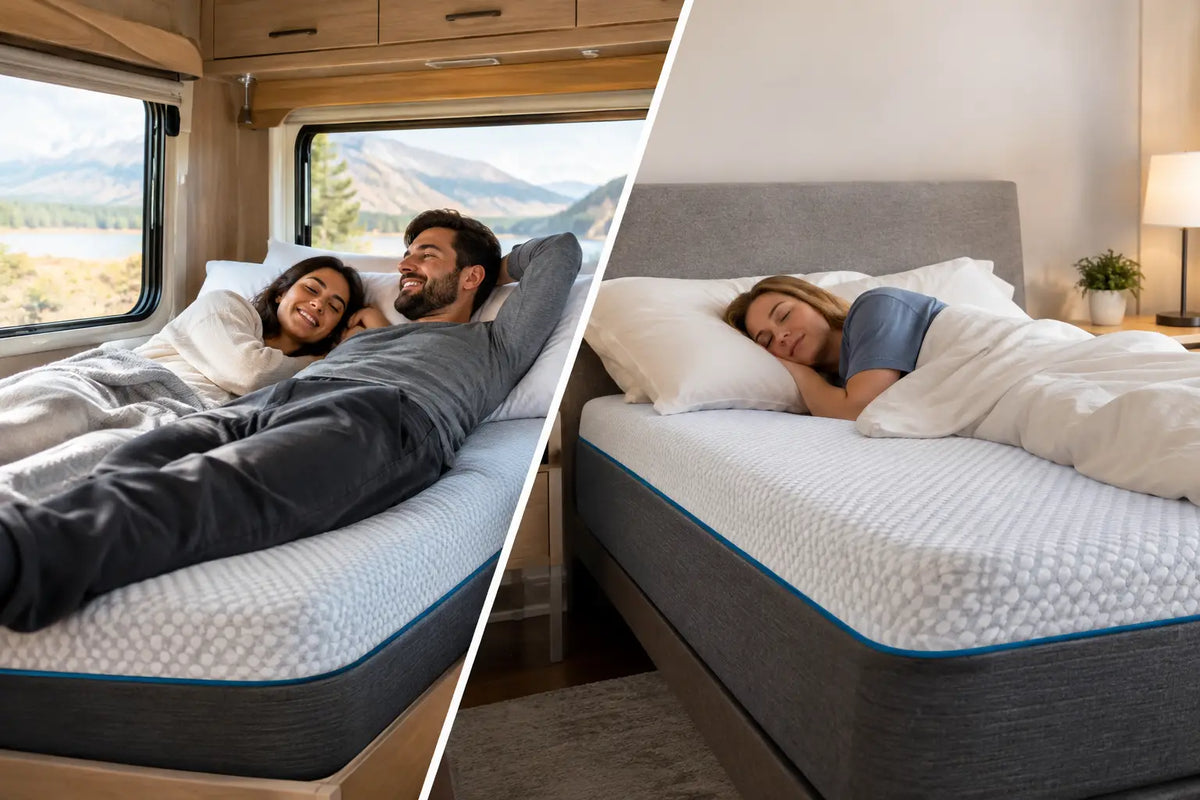
A good RV mattress should also be built for the reality of travel. It needs to recover after repeated use, manage motion on uneven campsites, and fit through the RV door or around tight hallways during installation. Residential mattresses can be excellent, but they are often too long, too wide, too tall, or simply too difficult to maneuver inside a camper.
Top Mattresses for Camper Families Start With Fit
The quickest way to make an expensive mistake is to order a mattress based on the name printed on the old tag. RV mattress dimensions vary significantly, even when the label says queen, king, full, or twin. A standard queen is not automatically an RV Queen, and an RV King can come in more than one width.
Measure the platform itself, not the old mattress. Take the inside length and width at the narrowest point, then measure any corners, wheel wells, cabinets, ledges, or slide mechanisms that limit the available space. If the platform has rounded corners or an unusual shape, note that before shopping. Also measure the path from the entry door to the bedroom. A taller or heavier mattress may be worth it for the primary bed, but only if it can be installed without a battle.
Thickness deserves equal attention. Many factory RV mattresses are thin because manufacturers prioritize clearance and cost. Moving to a thicker mattress can be a major comfort upgrade, but check overhead cabinets, slide clearance, bunk rails, and windows before choosing. On a child’s bunk, extra height can reduce safety rail effectiveness. On the main bed, too much height can make access to storage or a window awkward.
For most camper families, purpose-built RV sizes are the safest answer. Polar RV Mattress offers RV-specific options including RV King, RV Queen, RV Full/3/4, and RV Twin/Bunk, so buyers can upgrade comfort without forcing a household-size mattress into a nonstandard space.
Choose Support Based on Who Sleeps There
Support is where a mattress proves its value after the first few nights. A flat, low-density foam slab may feel acceptable for an hour, then allow the hips and shoulders to sink too far. That can leave side sleepers with shoulder pressure, back sleepers with a strained lower back, and stomach sleepers with an uncomfortable sway through the midsection.
For the primary RV bed, a hybrid design is often the strongest choice for camper families. Pocketed coils create more targeted support than a basic open-coil unit, while foam comfort layers cushion pressure points. Zoned coils can provide firmer support through the lumbar area and a more forgiving feel at the shoulders and legs. This balance matters when one partner is lighter, one is broader, or both sleep in different positions.
A coil-on-coil system can be especially appealing for full-time RVers and frequent travelers who want a more substantial, residential-style feel. The trade-off is weight and profile. If a mattress must lift with a storage platform or fit on a narrow bunk, a simpler, lighter construction may be the smarter choice.
Memory foam can work well when pressure relief is the priority, particularly for side sleepers or anyone who wakes with sore hips and shoulders. The concern is heat. Traditional foam can hold warmth, and campers already deal with uneven temperatures, limited airflow, and warm summer hookups. Look for gel-infused or conductive cooling materials rather than assuming every foam mattress sleeps cool.
Cooling Is a Family Comfort Feature
Heat is one of the most common reasons RV owners replace a stock mattress. A camper bedroom can run warmer than the rest of the coach, especially when it sits over an engine bay, near a rear wall, or under a low roof. Add two adults, closed blinds, and a humid July night, and a heat-trapping mattress becomes impossible to ignore.
Cooling should come from the mattress construction, not just a cover that feels cool at first touch. Conductive cooling technology helps move heat away from the sleeper, while breathable comfort layers and coil systems encourage more airflow than dense, solid foam. For families traveling through hot states or relying on limited overnight power, that difference can mean fewer wake-ups and less reliance on blasting the air conditioner.
Still, cooling is not a single feature. A mattress can be highly breathable but feel too firm for a side sleeper. It can have plush pressure relief but retain heat. The right model balances temperature management with the support level your family needs. That is why a well-designed RV mattress should not be selected on a cooling claim alone.
Motion Isolation Matters in a Small Camper
In a house, a restless partner may be several feet away with a heavy bed frame between you. In an RV, every movement feels closer. When one person gets up early to make coffee, shifts position, or climbs back into bed after checking on a child, a bouncy mattress can wake the other sleeper immediately.
Pocketed coils and quality foam layers help isolate motion because each coil responds more independently than a traditional connected spring system. That is a meaningful advantage for parents sharing an RV Queen or RV King. It is also useful when kids have different sleep schedules in a bunkhouse, though bunk mattresses should never be so tall that they compromise safety or access.
If one adult is significantly heavier than the other, prioritize a mattress with stronger perimeter and center support. If both sleepers are light and primarily sleep on their sides, pressure relief may deserve more weight in the decision. There is no benefit to buying the firmest mattress available if it creates numb shoulders or frequent tossing and turning.
Match Each Bed to Its Job
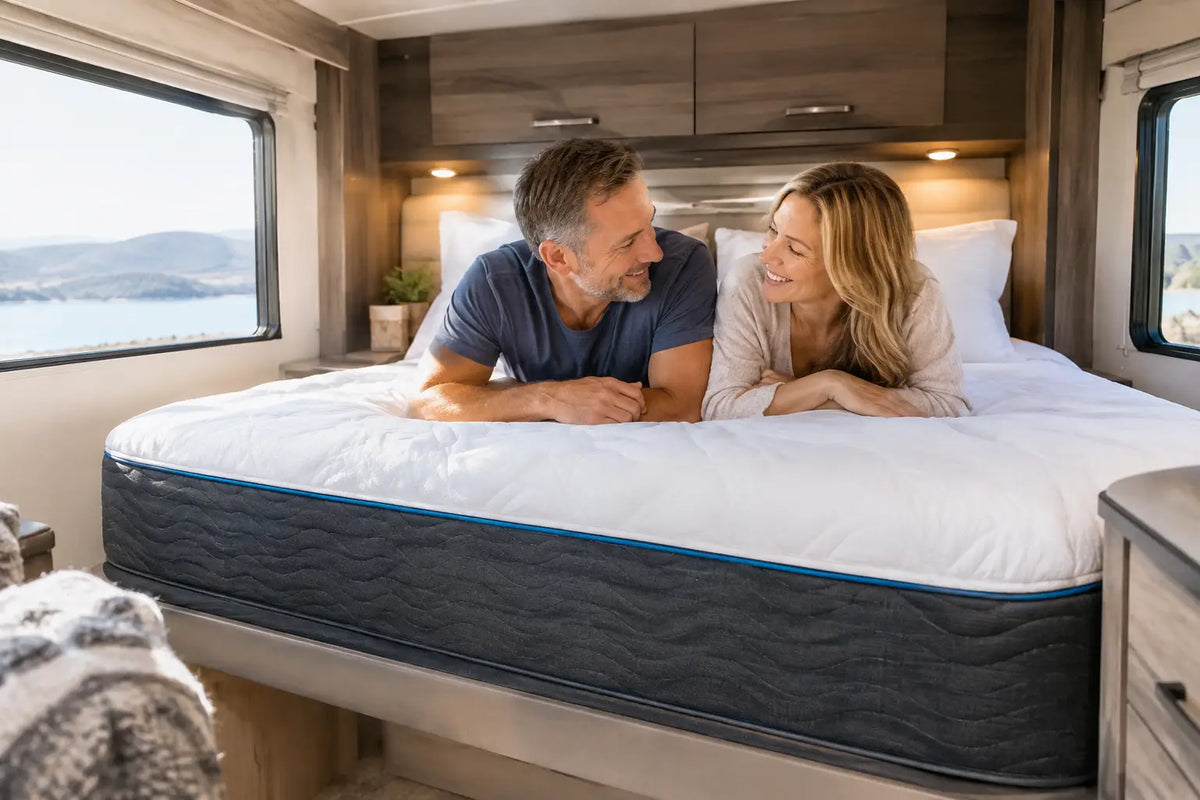
The main bedroom should receive the largest share of the mattress budget because it serves the adults who drive, set up camp, and need reliable recovery night after night. Choose a premium hybrid or advanced support design if you camp often, deal with back discomfort, or want better temperature control.
Bunks call for a different calculation. The goal is a supportive, durable mattress that fits precisely and does not overwhelm the space. A child may not need the same high-profile construction as an adult, but they still need more than the thin pad many RVs include from the factory. Better materials can help children fall asleep faster and stay asleep after active travel days.
For guest beds and fold-out spaces, keep realistic expectations. A replacement mattress can improve comfort, but the platform underneath still matters. Check for bars, gaps, hinges, or uneven surfaces. In some cases, the better move is a lower-profile mattress that works with the mechanism rather than a thick model that interferes with folding or storage.
Do Not Overlook the Ownership Details
A mattress that sounds impressive on paper is only a good purchase if ordering and installation are straightforward. Confirm the exact RV size, verify shipping expectations before an upcoming trip, and understand the sleep trial and warranty. For a major comfort purchase, a 365-night satisfaction guarantee gives families time to experience the mattress through different seasons, campsites, and sleep routines.
Ask whether the mattress is designed for the RV environment rather than merely available in a close-enough size. Construction quality matters too. Strong coil systems, durable edge support, cooling materials, and pressure-relieving foams should work together, not appear as isolated marketing features.
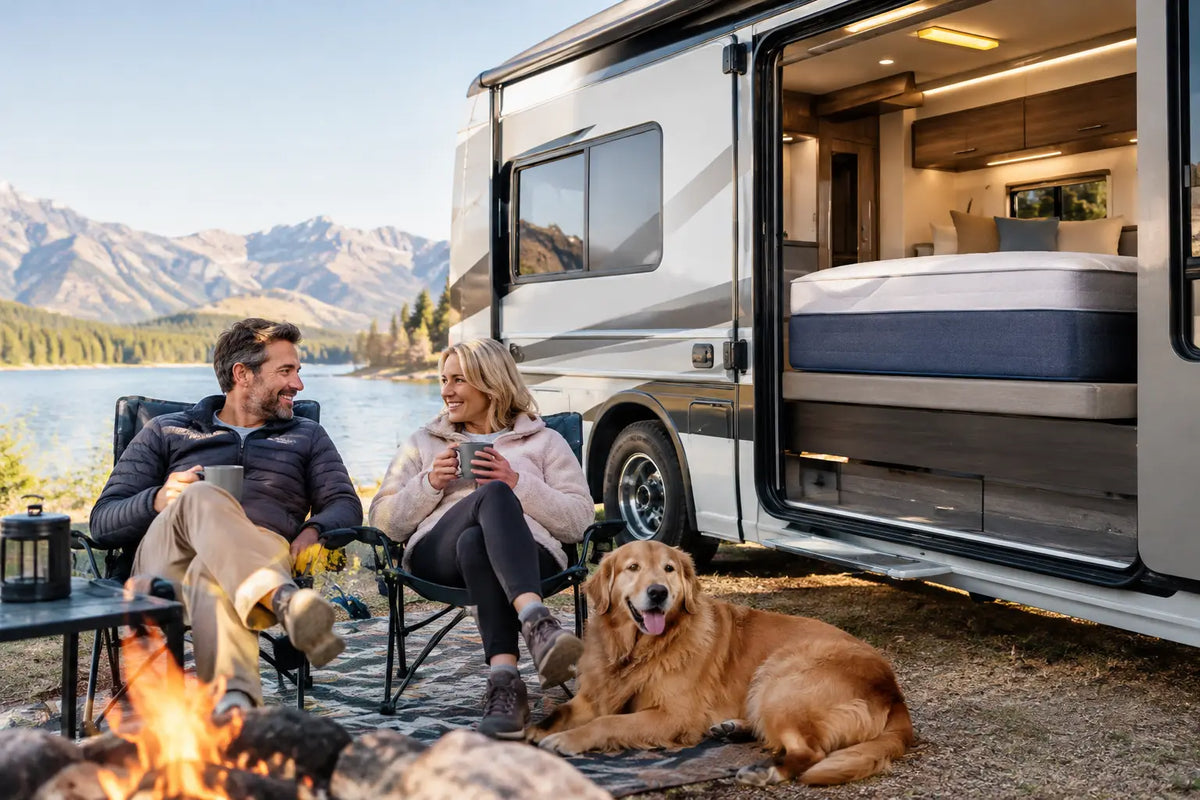
Your camper is where your family wakes up for trail days, lake mornings, long drives, and quiet nights under the awning. Give every bed a job, measure before ordering, and make the main mattress the upgrade that makes the whole trip feel better.
Share:
Can RV Mattresses Be Folded? What to Know
Latex Versus Foam RV Mattress for Better Sleep