

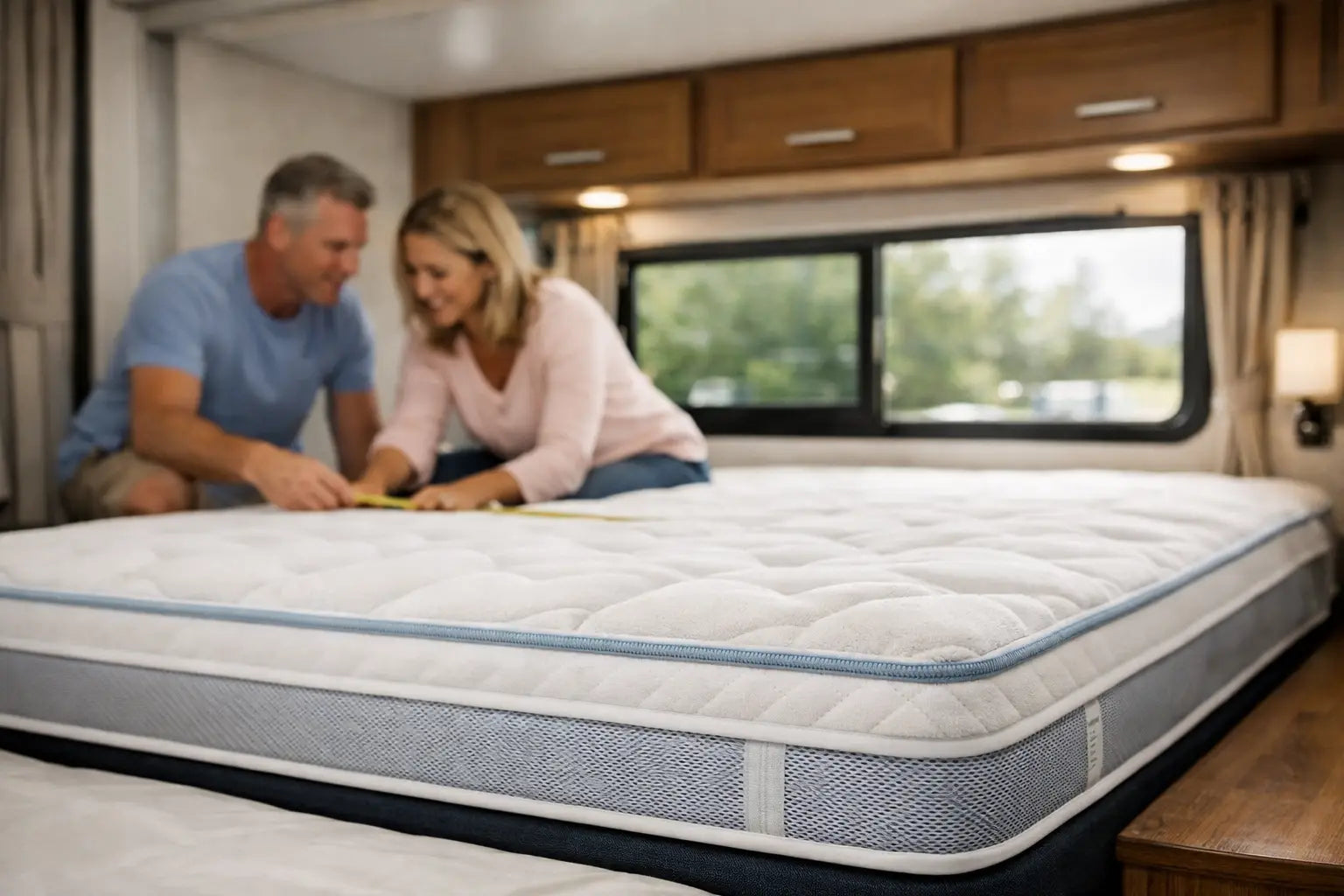
A mattress that is off by a few inches can turn a simple RV upgrade into a frustrating fit problem. RV full mattress dimensions are often called standard, but RV manufacturers do not always build their platforms to one exact measurement. Before ordering, measure the bed base, check nearby clearance, and choose comfort that works with the way you travel.
What Are RV Full Mattress Dimensions?
The most common RV full mattress size, also called an RV three-quarter mattress, measures 48 inches wide by 75 inches long. It is narrower than a residential full mattress, which measures 54 by 75 inches. That six-inch difference matters when your mattress sits between walls, inside a slide-out, or under cabinetry.
An RV full is a practical size for many compact travel trailers, Class B and Class C motorhomes, and smaller fifth wheels. It gives one adult plenty of room and can work for two people who prefer a close sleeping space. For couples who spend extended time on the road, though, a 48-inch-wide bed can feel tight. In that case, the available platform space - not the name printed in the RV brochure - should guide the decision.
RV Full vs. a Standard Full Mattress
A standard full mattress is 54 inches wide and 75 inches long. The length matches the typical RV full, but the width does not. Trying to place a residential full on a true 48-inch RV platform usually means the mattress will bow at the sides, block a walkway, or interfere with a slide mechanism.
Some RV bed platforms are designed with a little extra width, and some owners intentionally choose a 54-inch mattress after confirming the space. That can be a smart upgrade if the platform, walls, and slide clearance support it. It is not a safe assumption. Measure first, especially if your bed is against a wall or the mattress must move with a slide-out.
Why RV Full Mattress Dimensions Can Vary
RV sizes are more consistent than they once were, but they are not as standardized as residential bed sizes. A manufacturer may label a bed “full,” “three-quarter,” or “RV full” while using a platform that is slightly shorter, narrower, rounded at the corners, or shaped around a wheel well.
You may see dimensions close to 48 by 74, 48 by 75, or 48 by 80 inches. A few inches of variation can be intentional, particularly in older coaches and compact floor plans where every inch has a job to do. The mattress may also need a corner cut, a radius corner, or a custom profile to fit the space correctly.
Do not rely only on the size of the worn factory mattress. Stock RV mattresses can compress, curl, or extend over the edge of the platform, making them poor measuring references. Measure the actual support surface underneath it.
How to Measure Your RV Bed Platform Correctly
Remove the old mattress if possible, then measure the flat platform from side to side and head to foot. Take the width measurement in at least three places: at the head, center, and foot. RV walls are not always perfectly square, and a bed frame can narrow near a cabinet or corner.
Next, measure the usable length. Include the full platform only if nothing at the headboard or footboard reduces the space. If the mattress tucks beneath a ledge, under an overhead cabinet, or against a molded wall, measure the tightest point rather than the open floor around it.
Height deserves the same attention. A thicker mattress can feel dramatically better than a thin factory model, but it can also affect the ability to sit up in bed, access storage, close a Murphy bed, or clear an overhead bunk. Check the space from the platform to any cabinet, window, ceiling, or slide component before selecting thickness.
For slide-out beds, measure with the slide fully extended and fully retracted. Watch for trim, straps, rollers, and wall contact points. A mattress that fits when parked may still rub or pinch during travel if the clearance is too tight.
Choosing the Right Mattress Height for an RV Full
Many factory RV mattresses are thin because manufacturers prioritize weight, cost, and installation speed. That does not mean thin is the only option. The right profile depends on your bed design and the support level you want.
A lower-profile mattress can be the practical choice for an upper bunk, a cab-over sleeping area, or a bed with limited headroom. A thicker mattress usually gives more room for comfort layers and stronger support systems, which can make a noticeable difference for side sleepers, people with shoulder or hip pressure, and RVers dealing with morning back stiffness.
The goal is not to buy the tallest mattress available. It is to choose a profile that provides real cushioning and support without compromising your RV's function. If your current mattress leaves you feeling the plywood or metal frame beneath it, adding height alone may not solve the problem. Construction matters just as much.
What Makes an RV Full Mattress Feel Better
A correct fit prevents hassle. A well-built mattress improves every night you spend in the coach. For most RV owners, the biggest upgrades over a stock mattress come from cooling, pressure relief, motion isolation, and dependable support.
Memory foam can contour around hips and shoulders, reducing pressure points for side sleepers. Gel-infused foams can help moderate heat, though not all foam mattresses sleep equally cool. If you regularly wake up warm in your RV, look for purposeful cooling materials rather than relying on a cooling label alone.
Pocketed coils are especially valuable for couples. Each coil responds more independently than a traditional interconnected spring unit, which helps limit motion transfer when one person gets up early or shifts positions. Zoned coils can also provide firmer support through the lower back and hips while allowing more give around the shoulders.
For travelers who need a more substantial feel, coil-on-coil construction can deliver a stronger, more residential-style support system without sacrificing pressure relief. It is a good match for full-time RVers, larger sleepers, and anyone tired of replacing a mattress that has softened too quickly.
At Polar RV Mattress, RV-specific sizing is paired with premium sleep features designed for the road, including cooling materials, pressure-relieving foam, and advanced coil support. The point is simple: a compact RV bed should not force you to accept a compromised night's sleep.
When an RV Full Is the Wrong Size
An RV full makes sense when the platform is truly about 48 by 75 inches and the space serves a solo sleeper, a child, or a couple comfortable with a narrower bed. It may not be the best long-term choice if you and your partner are tall, broad-shouldered, restless sleepers, or living in the RV full time.
If the platform allows it, moving up to an RV queen can provide meaningful extra room. If width is limited but length is the issue, an 80-inch option may be more valuable than a wider mattress. This is where careful measurements protect you from buying based on a label instead of your actual sleep needs.
Custom sizing is worth considering when the bed has unusual angles, curved corners, or dimensions that fall between common RV mattress sizes. A mattress that follows the platform precisely looks cleaner, stays in place better, and avoids wasted sleeping space.
Common Fit Mistakes to Avoid
The most common mistake is ordering a standard residential full because the RV listing says “full bed.” The second is measuring only the old mattress instead of the platform. Both can leave you with a mattress that technically arrives in the right category but physically does not work in the coach.
Another mistake is overlooking bedding. A 48-inch RV full often needs RV-specific sheets for a secure fit, while a 54-inch residential full uses standard full sheets. Mattress depth also changes sheet compatibility, particularly when upgrading from a thin stock mattress to a premium model.
Finally, do not ignore weight and access. Measure door openings, hallway turns, and the route to the bedroom. A compressed mattress is easier to bring inside, but the final mattress still needs to sit flat on a properly supported base.
A properly measured RV full mattress gives you more than a clean fit. It gives you a bed that supports recovery after a long drive, keeps its comfort through repeated trips, and makes your RV feel like a place you are ready to stay another night.

Share:
How to Choose an RV Mattress for Bad Backs
How to Fit a Mattress in a Fifth Wheel Properly