


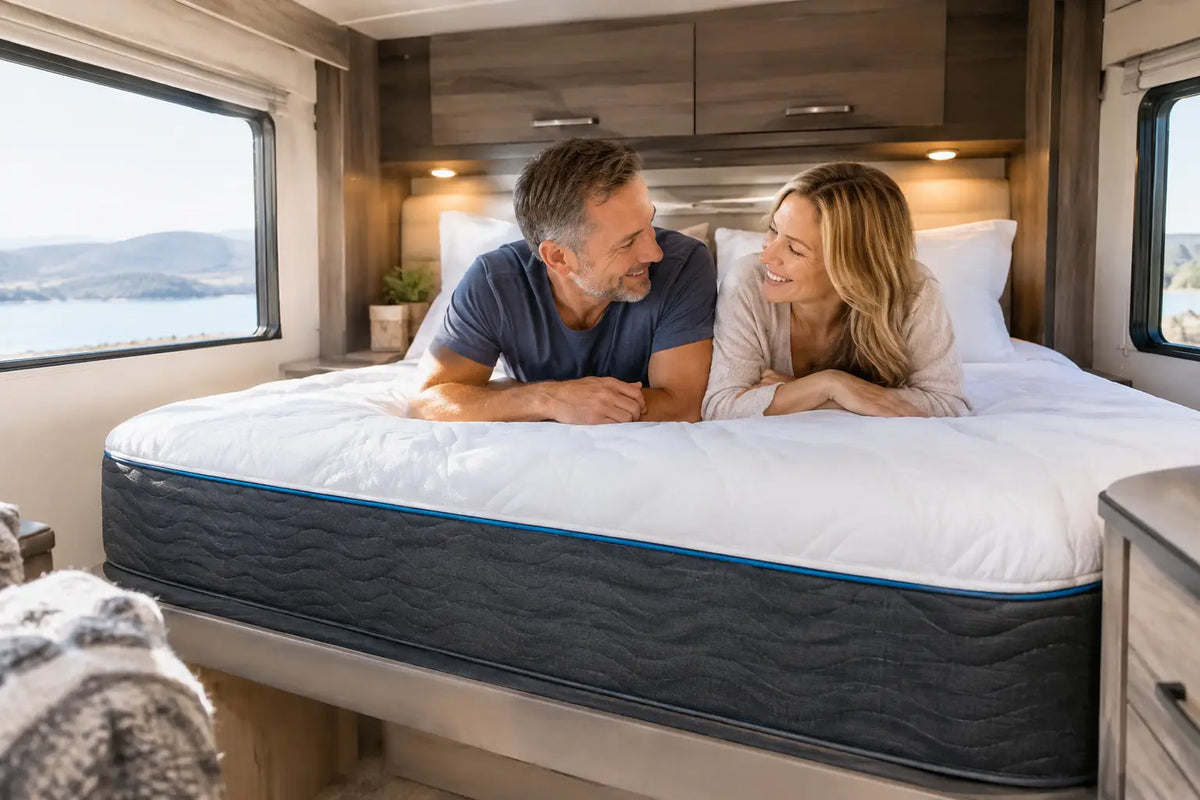
A mattress that hangs over the bed platform, blocks a cabinet door, or leaves no room to walk around is not an upgrade. That is why the answer to what is a short queen mattress starts with one practical fact: it is made to deliver queen-width comfort in the tighter footprint of an RV bedroom.
For many couples, the short queen is the most familiar RV mattress size - and one of the easiest to misunderstand. It looks close to a residential queen, but the missing length matters when you are replacing a factory mattress, choosing a thicker comfort upgrade, or trying to preserve every usable inch in a motorhome or travel trailer.
What Is a Short Queen Mattress?
A short queen mattress is typically 60 inches wide by 75 inches long. It has the same width as a standard residential queen but is five inches shorter. A standard queen measures 60 by 80 inches.
That five-inch difference gives RV manufacturers room for wardrobes, nightstands, slide mechanisms, and narrow walkways. It also helps make a queen-size sleep surface possible in bedrooms that could not accommodate a full-length residential queen.
The term is commonly used for mattresses in travel trailers, fifth wheels, motorhomes, and some campers. Still, “short queen” should be treated as a starting point, not a final measurement. RVs are built around space constraints, and mattress platforms can vary by model year, manufacturer, and slide configuration.
Short Queen vs. Standard Queen
The distinction is simple on paper:
| Mattress size | Width | Length | Best fit |
| --- | ---: | ---: | --- |
| Short queen | 60 inches | 75 inches | Most RV queen platforms |
| Standard queen | 60 inches | 80 inches | Residential bedrooms and larger RV rooms |
Both sizes give two sleepers the same 60-inch width. The trade-off is legroom. A short queen works well for many RV couples, particularly when both sleepers are average height or tend to sleep curled or on their side. Taller sleepers may notice the shorter length, especially if they sleep flat on their back or stomach.
A standard queen may seem like the obvious comfort choice for a taller person, but it can create problems in an RV. Five extra inches can make it difficult to access storage, close a door, move through the bedroom, or retract a slide. The right mattress is not merely the biggest one that can be forced into the room. It is the one that fits the platform and lets the space function as intended.
Why RVs Use the Short Queen Mattress Size
RV bedrooms ask one room to do several jobs. It has to provide comfortable sleep, allow access to storage, accommodate built-in furniture, and keep the coach layout practical on travel days. A short queen creates needed clearance without reducing the bed to a narrow full-size mattress.
That width is a major reason the size remains popular. Couples do not have to sacrifice personal space just because they are traveling. Compared with many RV full or three-quarter beds, a short queen offers a more familiar shared sleep surface while keeping the length compact.
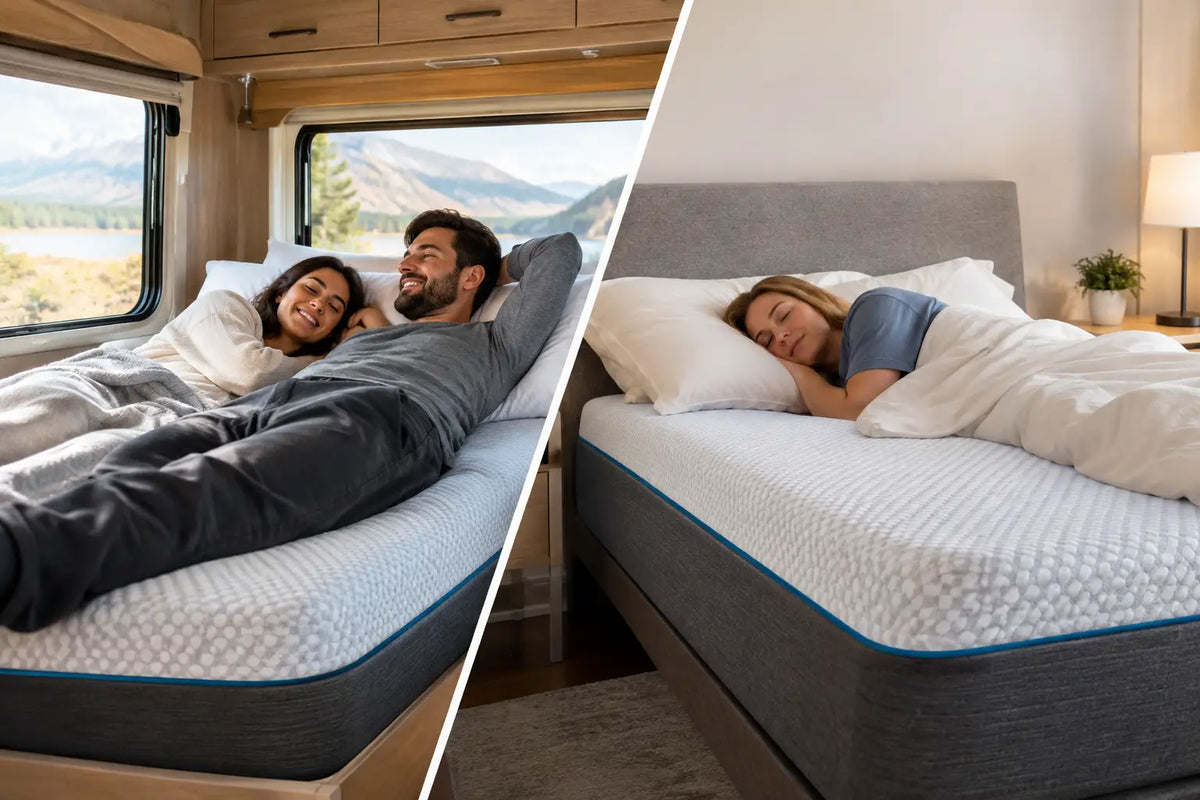
It also explains why replacing the original RV mattress requires more thought than buying a mattress for a house. Factory RV mattresses are often thin, firm in the wrong places, and prone to trapping heat. Replacing one with a premium mattress can improve pressure relief, support, and motion isolation. But if the replacement is longer, wider, or dramatically thicker without planning for it, the bedroom can become harder to use.
How to Measure for a Short Queen RV Mattress
Do not rely only on the label printed on the old mattress. Measure the actual bed platform before ordering. Remove bedding, then measure the usable width and length from edge to edge. If the platform has a raised lip, angled corners, a curved wall, or an obstruction at the foot of the bed, measure those details too.
Next, check the clearance around the mattress. Open nearby cabinet doors and drawers. Confirm that there is enough space to walk at the foot and sides of the bed. If the bed sits in a slide, make sure the new mattress will not interfere when the slide is retracted.
Thickness deserves the same attention. A 12-inch mattress can be a serious comfort improvement over a thin stock bed, but it raises the sleep surface. That may affect window access, headroom, under-bed storage, and the ease of getting in and out of bed. There is no universally perfect profile. The best thickness depends on the bed base, bedroom layout, and how you use the RV.
Finally, measure the route into the RV. Tight hallways, entry doors, and sharp turns can make a rigid mattress difficult to install. A mattress designed to ship compressed and expand in the room can make the replacement process far easier.
Who Should Choose a Short Queen?
A short queen is a strong choice for couples whose RV already has a 60-by-75-inch platform. It is also a sensible option for travelers who want queen-level width without giving up bedroom clearance. Retirees spending extended time on the road, weekend campers, and full-time RVers all benefit from a fit that does not require modifying the coach.
Height is the main reason to pause. If one sleeper is well over six feet tall, a short queen can feel limiting. That does not automatically mean it is the wrong size. Some tall RV owners sleep comfortably on one, particularly with a supportive mattress that prevents sliding or sagging. But it is worth testing your sleeping position at home or comparing the available length to your current bed before committing.
A short queen may also not be the answer if your RV platform is actually an RV king, RV full, or a custom size. RV labels are inconsistent, and a mattress that is only an inch or two off can leave gaps, bunch the corners, or compromise support near the edge.
Choosing Comfort Without Giving Up the Right Fit
Once you confirm the dimensions, focus on the construction that addresses the weaknesses of the mattress you are replacing. Size gets the mattress into the room. Materials determine whether you sleep better once you are there.
Cooling should be a priority for RV owners who wake up hot. RV bedrooms can retain heat, and basic foam often holds onto it. Look for breathable comfort layers and cooling materials that help move heat away from the body rather than allowing it to build up through the night.
Support matters just as much. A mattress that feels soft in a showroom can still allow the hips to sink too far, creating lower-back discomfort by morning. Zoned pocketed coils can provide stronger support where body weight concentrates while allowing more give at the shoulders. They also reduce motion transfer compared with old-fashioned connected coil systems, so a partner getting up early is less likely to disturb the other sleeper.
Pressure relief is the final part of the equation. Quality foam layers can cushion shoulders and hips, especially for side sleepers, while a stable coil system helps prevent the stuck-in-the-bed feel that some all-foam mattresses create. The goal is balanced comfort: enough contouring to relieve pressure, enough support to keep your spine in a healthier position.
At Polar RV Mattress, that balance is built around RV-specific sizing and upgraded constructions rather than asking RV owners to settle for another thin factory replacement. The right model still depends on your preferred feel, body type, sleep position, and the physical limits of your RV bedroom.
Bedding for a Short Queen Mattress
Short queen fitted sheets are the cleanest choice because they match the 75-inch length. Standard queen flat sheets usually work without issue, since extra fabric can be tucked in. A standard queen fitted sheet may fit loosely at the foot, however, and can pull free more easily during the night.
When shopping for a mattress protector, fitted sheet, or heated mattress pad, verify both the 60-by-75-inch dimensions and the pocket depth. This is especially relevant after upgrading to a thicker mattress. Bedding that fits the length but lacks enough depth around the corners will not stay secure.
A Better Night Starts With the Tape Measure
A short queen mattress is not a compromise by default. In the right RV, it is the smart way to keep queen-width comfort while protecting the space that makes your coach livable. Measure the platform, account for clearance and thickness, then choose the sleep technology that solves your actual complaints - heat, pressure points, weak support, or partner movement. Your RV bedroom may be compact, but your sleep should not feel like an afterthought.

Share:
RV Twin Mattress Size: Measure Before You Buy
Do RV Mattresses Sleep Hotter? The Real Reason