

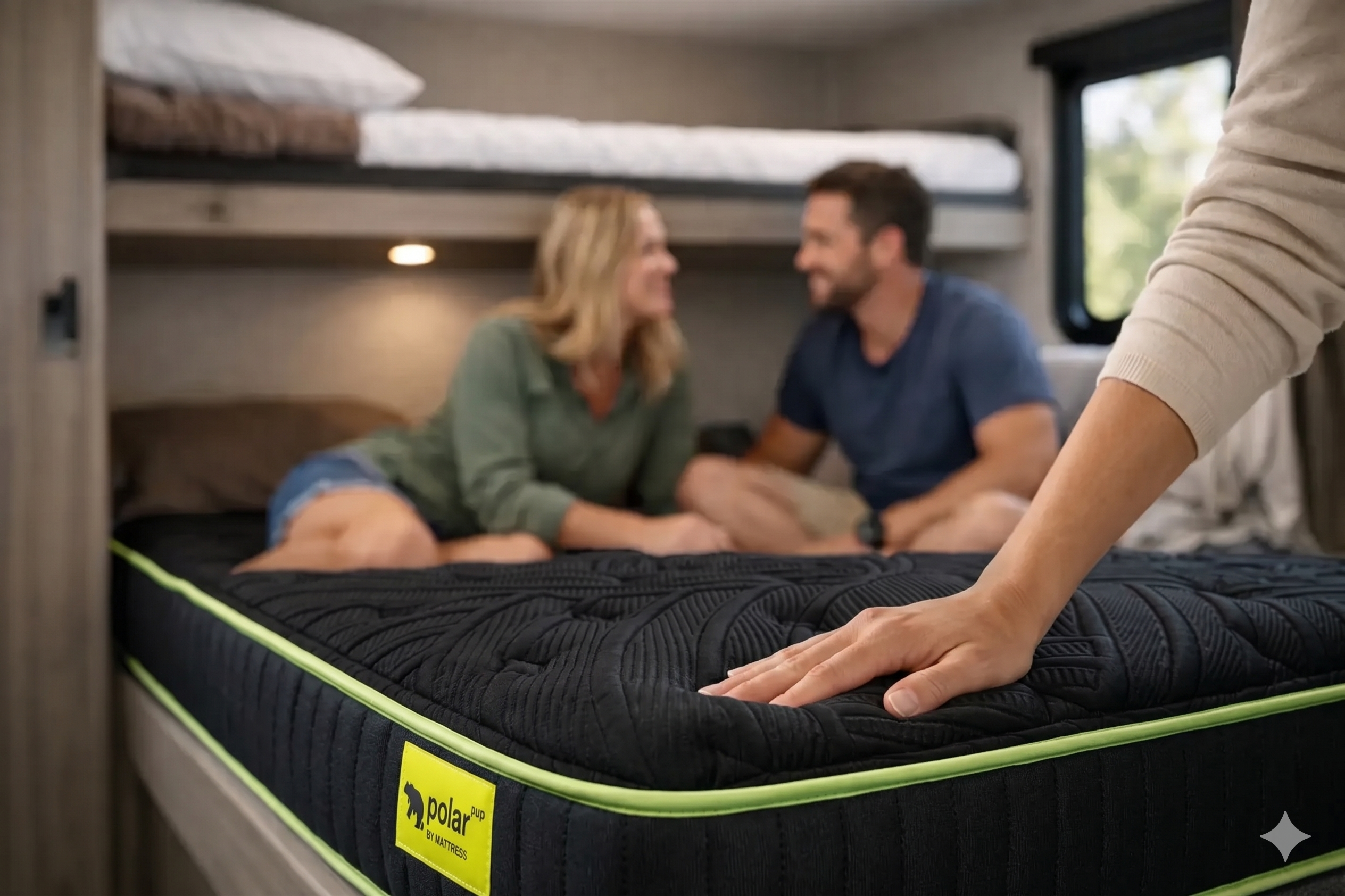
A bad bunk mattress gets exposed fast. Kids wake up cranky, guests feel every hard spot under their hips, and full-time RVers start dreading a space that should be easy to use. If you are shopping for a camper bunk mattress, the goal is not just finding something that fits the frame. It is finding a mattress that actually sleeps well in a tighter RV space, holds up to travel, and does not trap heat night after night.
That matters more than most RV owners expect. Factory bunk mattresses are often thin, basic foam slabs made to check a box, not deliver real support. In a camper, that usually means pressure points, poor airflow, and edges that collapse faster than they should. A real upgrade changes how the bunk gets used, whether it is for your kids, grandkids, overnight guests, or one of the primary sleeping spaces in your rig.
What makes a camper bunk mattress different?
A camper bunk mattress has to solve a different set of problems than a standard bedroom mattress. Size is the first one. RV bunks rarely match standard residential dimensions exactly, and even a small mismatch can create gaps, bunching, or a mattress that simply will not sit flat in the platform.
Thickness is the next issue. In a house, a taller mattress is often a comfort upgrade. In an RV bunk, too much height can make it harder to sit up, reduce guard rail effectiveness, or crowd the sleeper against the ceiling. That is why bunk mattresses usually need a tighter balance of profile, support, and comfort than larger RV beds.
Weight also matters. Every pound counts in a camper, especially when you are replacing more than one bunk mattress. The right construction should improve support and durability without adding unnecessary bulk. This is one reason many RV owners move toward specialty RV mattresses instead of adapting residential models that were never built for mobile use.
Start with fit before comfort
The most comfortable mattress in the wrong size is still the wrong mattress. Measure the sleeping platform carefully, including width, length, and any corner radius or cut-off shape. Do not assume your bunk is a standard twin just because it looks close. RV manufacturers use narrow, short, and custom bunk dimensions all the time.
Take measurements in more than one spot. Some platforms are not perfectly square, and wall curves can reduce usable space. If the bunk has a lip, rail, or ladder clearance issue, note that too. A proper RV fit prevents shifting during travel and avoids the frustration of forcing a mattress into a space it was never designed for.
This is where specialty sizing matters. Brands that build specifically for RVs understand common bunk dimensions and the reality that not every camper bed is standard. If custom sizing is available, it can be a major advantage when your floor plan does not follow the usual measurements.

How thick should a camper bunk mattress be?
For most RV bunks, the sweet spot is usually between 5 and 8 inches, but it depends on who will sleep there and how the bunk is built. A thinner mattress can preserve headroom and work well for occasional kid use. The trade-off is that lower-cost thin foam mattresses often bottom out under adults or side sleepers.
A thicker profile can improve pressure relief and support, especially for teens, adults, or frequent use. But there is a limit. If the mattress sits too high above the rail or makes climbing in awkward, the extra comfort may not be worth it. In an upper bunk, safety and clearance matter as much as cushioning.
That is why the best choice is not always the tallest mattress. It is the one with better materials and better support in the right height for the bunk. High-quality foams or a well-designed hybrid build can outperform a thicker but cheaper mattress very quickly.
The best camper bunk mattress materials
Material choice has a direct impact on comfort, temperature, and durability. Basic polyurethane foam is common in stock RV mattresses because it is inexpensive and light. It is also the first thing many RV owners want to replace. It tends to sleep hot, soften early, and provide limited pressure relief.
Gel memory foam is a stronger option for many bunk applications because it can contour better and reduce pressure points. For kids and lighter sleepers, it often delivers a noticeable improvement over standard foam. For adults, quality matters more. Cheap memory foam may feel soft in the showroom but still trap heat and lose support too quickly.
Hybrid construction can be the premium upgrade when the bunk height allows it. Coils improve airflow, support, and resilience, while comfort foams on top help with pressure relief. In a bunk used regularly by adults, this type of build often gives a more residential feel without sacrificing RV-specific fit. Zoned support and stronger edge design can also make a real difference, especially if the sleeper shifts positions or sits on the edge getting in and out.
Cooling matters more in a bunk than people think
Bunks can sleep warmer than larger RV beds. They are often tucked into tighter spaces with less airflow, and upper bunks naturally hold more heat. If the sleeper already runs warm, a heat-trapping mattress becomes a problem fast.
Look for materials designed to move heat away from the body instead of storing it. Cooling covers, conductive fibers, breathable comfort layers, and coil systems that allow more airflow all help. This is one area where premium construction pays off. A mattress that sleeps cooler is not just about comfort in July. It can also reduce tossing, turning, and broken sleep throughout the camping season.
Who is sleeping on the bunk?
This is where the right answer depends on use. If the bunk is mainly for small children on weekend trips, you may not need the same support system you would choose for an adult sleeper. You still want quality, but the performance demands are different.
If the bunk is used by teens, adult guests, or full-time RVers, do not shop it like a secondary mattress. Those sleepers will notice weak support, poor cooling, and thin comfort layers right away. A bunk that gets nightly use deserves real mattress construction, not a placeholder.
The same goes for weight range and sleep position. Side sleepers generally need more pressure relief at the shoulders and hips. Back and stomach sleepers often need firmer support to keep the body aligned. If you are buying for a mixed-use bunk, a medium feel with stronger underlying support is often the safest choice.
Durability is not optional in an RV
RV mattresses deal with more movement, more temperature fluctuation, and often more seasonal storage than residential mattresses. A camper bunk mattress that looks fine on day one can break down early if the foam density is too low or the support system is weak.
That is why durability should be part of the shopping decision, not an afterthought. Better materials hold their shape longer, recover faster after compression, and perform more consistently through travel and repeated use. Reinforced support systems, stronger foams, and better covers are not just premium features. They are what help the mattress keep sleeping well after a full season on the road.
When a custom-size camper bunk mattress is worth it
If your bunk has a non-standard width, shortened length, rounded corner, or unusual frame shape, custom sizing is often the smartest move. Trying to make a close-enough mattress work usually leads to sliding, corner gaps, or an awkward sleeping surface.
A custom bunk mattress is especially worth considering when the bunk is used often. The better the fit, the better the function. It looks cleaner, stays in place better, and feels like part of the RV instead of an improvised fix.
This is one area where a specialist brand has a clear advantage. Companies focused on RV sleep understand that fit is part of comfort, not a separate issue. Polar RV Mattress, for example, builds around RV-specific sizing because standard mattress assumptions rarely hold up inside a camper.
What to look for before you buy
Before you choose, focus on the factors that actually affect sleep quality: exact fit, appropriate thickness, cooling performance, support level, and construction durability. Fast shipping and a strong trial period also matter because buying an RV mattress online should feel low risk, not like a guess.
If you are comparing options, be careful with mattresses that sound premium but give few details about foam quality, support design, or cooling materials. Marketing language is easy. Good construction is specific. The more often the bunk gets used, the less room there is for compromise.
A camper bunk mattress should do more than fill the space. It should make the bunk a place people can sleep comfortably, even on longer trips, even in warmer weather, even when factory mattresses have already let you down. Choose for real support, real cooling, and a true RV fit, and that small bed becomes a much better part of your camper.
Share:
RV Queen vs Residential Queen
How to Choose RV Mattress the Right Way