

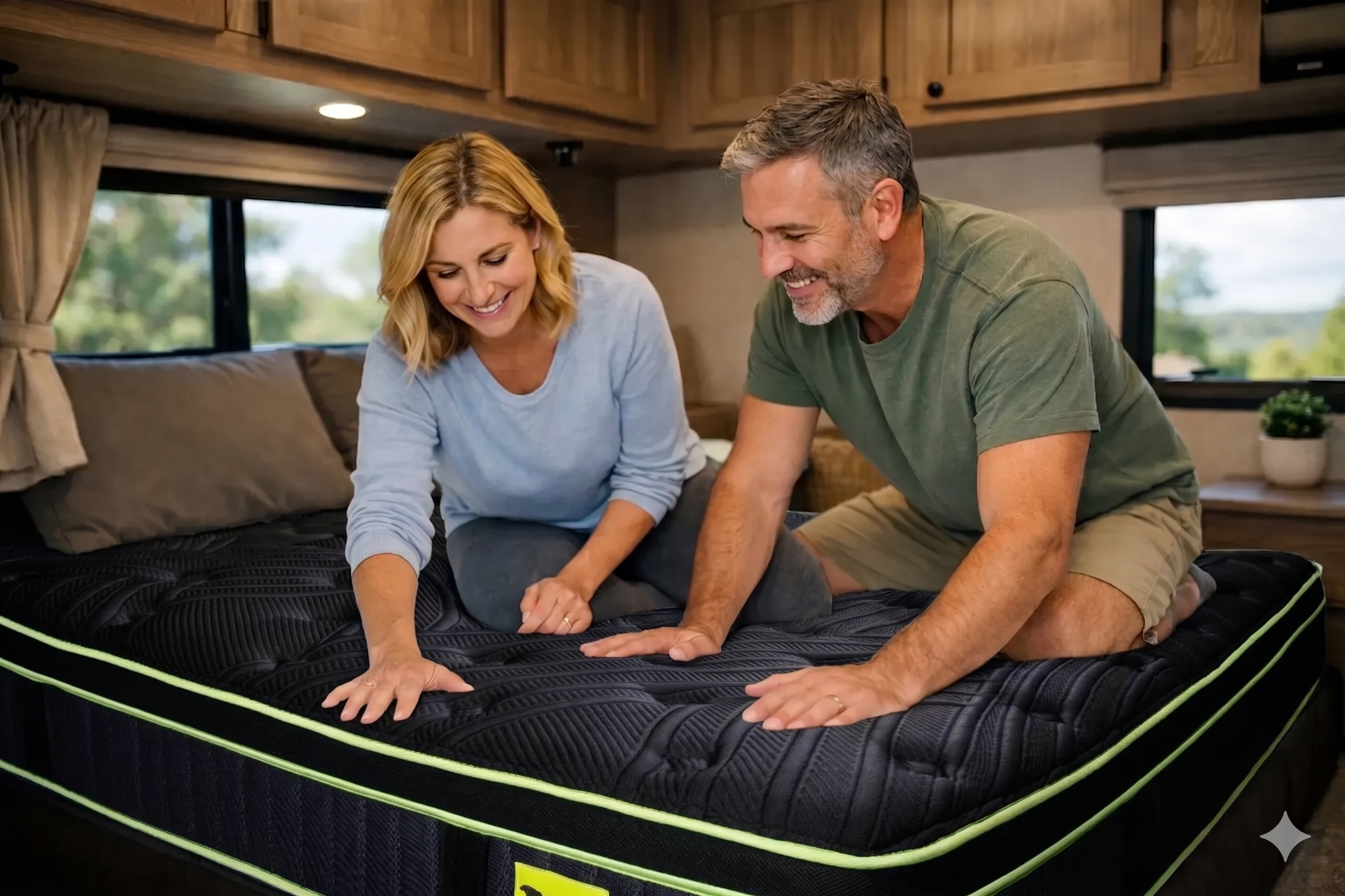
A bad RV mattress usually announces itself fast. You wake up with a sore lower back, your shoulder goes numb, or the bed sleeps so hot you end up kicking off the covers at 2 a.m. For most RV owners, the problem is not just age or wear. It is that the original mattress was built to meet a price point, not to deliver real comfort. If you are figuring out how to choose RV mattress options that actually improve sleep, the goal is simple: get the right size, the right support, and the right construction for the way you travel.
That sounds straightforward, but RV mattresses are not one-size-fits-all. The wrong pick can create fit issues, reduce overhead clearance, trap heat, or leave you with the same pressure point pain you were trying to fix. The best choice is the one that matches your RV layout and your body, not just the one with the most marketing attached to it.
Start with fit before comfort
The first step in how to choose RV mattress products is measuring correctly. RV beds often look close to standard residential sizes, but close is not good enough. An RV Queen, short queen, RV King, RV Full, or bunk size can differ by several inches, and those inches matter when you are trying to open a slide, clear a cabinet, or make a fitted sheet work.
Measure width and length first, then check the height your space can handle. In many RVs, mattress thickness affects more than feel. A taller mattress can interfere with overhead storage, window access, or the ability to sit up comfortably in bed. If your bed platform has rounded corners or a custom cut, account for that too.
This is where many shoppers make the wrong trade-off. They focus on comfort specs before confirming whether the mattress is actually built for an RV footprint. A premium mattress that does not fit correctly is still the wrong mattress.
How to choose RV mattress thickness
Thickness changes both comfort and practicality. In a house, going thicker is often treated like an automatic upgrade. In an RV, it depends.
A mattress in the 8- to 10-inch range can work well when space is tight, especially in bunks, pop-ups, and low-clearance bedrooms. A 10- to 12-inch mattress often delivers a more residential feel for main bedrooms, especially for couples or full-time RVers who want stronger support and better pressure relief. Beyond that, you need to be careful. More height can mean less usable space around the bed.
The real question is not what looks most luxurious. It is whether the thickness gives you enough comfort layers and support without creating layout problems. If you are replacing a thin stock mattress, even a moderate jump in thickness can be a major upgrade.
Match the support to your sleep position and body type
Support is where good sleep starts. If your hips sink too far or your shoulders do not get enough give, you will feel it by morning.
Side sleepers usually need more pressure relief around the shoulders and hips. Back sleepers tend to do best with balanced support that keeps the spine in a neutral position. Stomach sleepers often need a firmer feel to avoid excessive sink. Couples need another layer of consideration because one person’s perfect comfort level may be too soft or too firm for the other.
Body weight matters too. Lighter sleepers may prefer more contouring from foam comfort layers, while heavier sleepers often need stronger support systems to avoid bottoming out or sagging over time. That is one reason hybrid builds with quality coil systems can outperform basic all-foam designs in RV applications. Better support cores generally hold their shape longer and provide more pushback where it counts.
If you are shopping because of back pain, do not just search for the softest bed. Most RV owners with back discomfort actually need more structured support, not less. Pressure relief matters, but so does alignment.
Cooling is not a luxury in an RV
Heat retention is one of the biggest complaints with stock RV mattresses, especially in summer travel or warmer climates. Small sleeping spaces, limited airflow, and heat-trapping foam can make an RV bed uncomfortable fast.
That is why cooling should be high on your checklist. Breathable covers, conductive cooling fabrics, gel-infused foams, and coil systems that allow more airflow can all help. Not all cooling claims are equal, though. Some materials feel cool for a few minutes and then stop making a difference. Others are designed to pull heat away through the night and allow it to dissipate more effectively.
If you sleep hot, do not treat cooling as a bonus feature. Treat it as a core performance feature. A mattress that supports you well but sleeps hot can still ruin your nights on the road.
Foam, hybrid, or coil-on-coil?
Material choice has a direct impact on comfort, temperature, motion transfer, and durability.
Foam mattresses can be a solid option if you want contouring and a lighter overall weight. They usually isolate motion well, which helps if your partner shifts during the night. The downside is that lower-quality foam can trap heat and soften too much over time.
Hybrid mattresses combine foam comfort layers with a coil support system. For many RV owners, this is the sweet spot. You get pressure relief from the foam and stronger support, better airflow, and more durability from the coils. A well-built hybrid can feel far more like a serious residential mattress than the average RV replacement bed.
Coil-on-coil designs push support even further. These are more premium constructions built for sleepers who want a stable, responsive feel with elevated pressure relief and stronger long-term performance. They are especially appealing for full-time RVers or anyone who is done settling for entry-level sleep.
There is no single best construction for everyone. But if you want the strongest combination of cooling, support, and durability, premium hybrid designs usually stand out.
Motion isolation matters more for couples
RV bedrooms are compact, and movement is more noticeable in smaller spaces. If one partner tosses and turns, gets up early, or comes in late after checking the campsite, a mattress with poor motion isolation can turn one sleeper’s routine into the other sleeper’s problem.
Foam generally absorbs movement well. Pocketed coils also perform much better than older connected coil systems because they respond more independently. If you share your RV bed, look for a build designed to reduce partner disturbance rather than simply maximize bounce.
This is one of those features shoppers often ignore until after purchase. If you travel as a couple, it deserves more attention than people usually give it.
Durability is not optional
An RV mattress works hard. It deals with road vibration, temperature swings, seasonal storage, and often more concentrated use than a guest room mattress at home. Cheap materials break down quickly in those conditions.
Look for stronger support systems, quality foams, and construction that is built to hold shape over time. Sagging does not just mean the mattress is aging. It usually means your support is failing. When that happens, sleep quality drops fast.
This is where buying on price alone tends to backfire. A bargain mattress can cost less upfront but wear out much sooner, leaving you right back where you started. A better-built RV mattress is not just a comfort upgrade. It is a durability upgrade.
Don’t forget the practical buying factors
Knowing how to choose RV mattress comfort is one thing. Buying with confidence is another. Shipping speed, custom sizing, trial periods, and warranty coverage all matter, especially when you are ordering a specialty size online.
Fast delivery helps if you are trying to replace a mattress before a trip. Custom sizing is valuable if your RV has a non-standard footprint. A meaningful sleep trial reduces risk because a mattress that feels good for ten minutes is not the same as one that works over several weeks. Strong customer support also matters more than most shoppers expect, especially if you are comparing thickness options or trying to confirm fit.
That is one reason specialized RV mattress brands tend to outperform general mattress companies in this category. They are solving for RV sleep, not trying to force a residential mattress into a mobile space.
The best way to narrow it down
If you want a simple filter, start with these questions. Does it fit your exact RV bed size? Is the thickness practical for your layout? Will the support match how you sleep? Does the construction address your biggest pain point, whether that is heat, back discomfort, pressure points, or motion transfer? And is it built to last longer than the thin mattress you are replacing?
Once you answer those honestly, your options become much clearer. For many RV owners, the right upgrade ends up being a premium RV-specific hybrid with real cooling features and a support system strong enough for regular use. That is the category where the biggest jump in sleep quality usually happens.
A better RV mattress changes more than bedtime. It affects how you recover after long drives, how your body feels in the morning, and how much you enjoy the trip itself. Choose the mattress that fits your RV and supports the way you actually sleep, and the road starts feeling a lot more comfortable.


Share:
How to Choose a Camper Bunk Mattress
RV Queen Mattress Buying Guide