

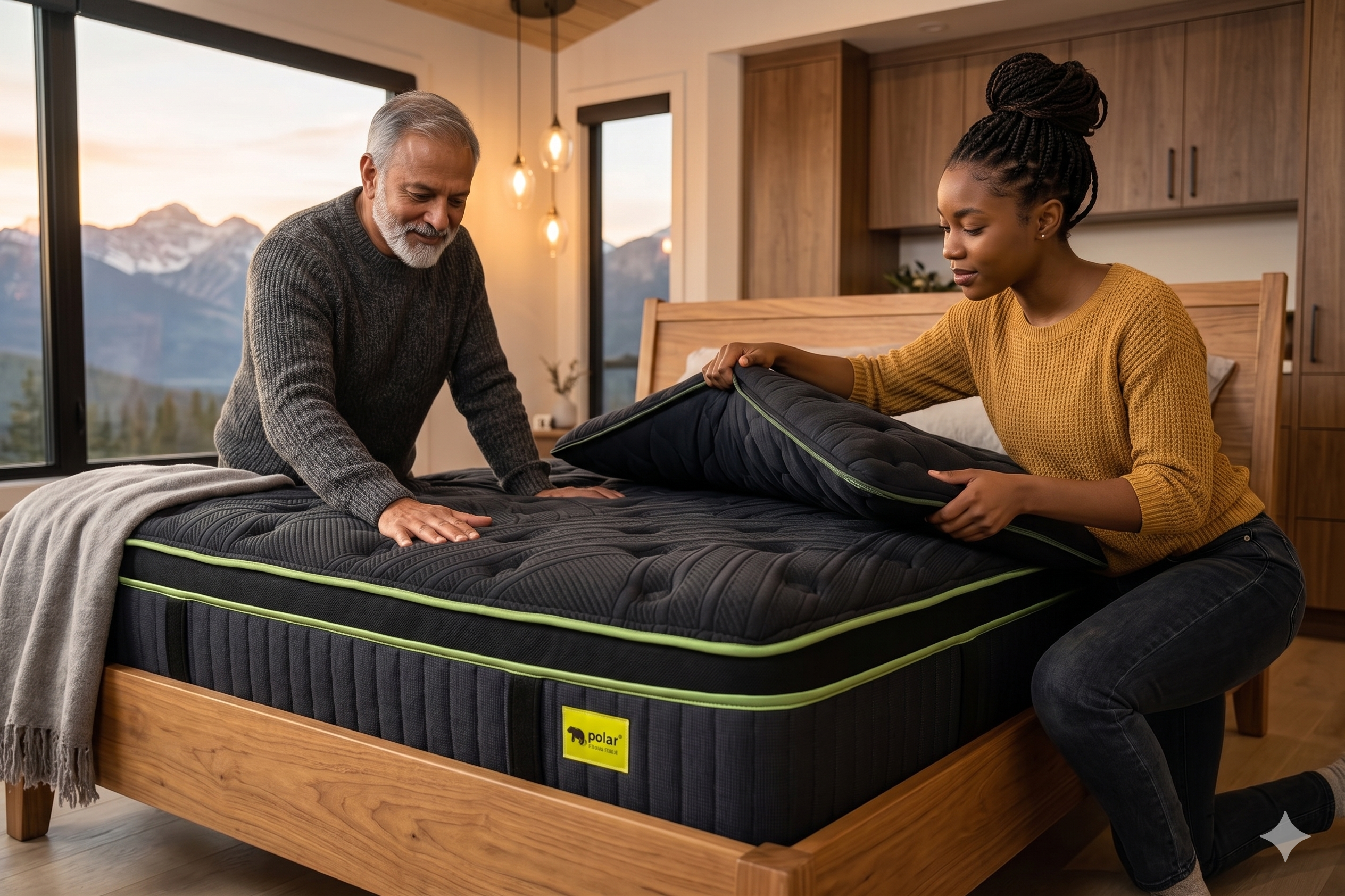
That sore lower back after a weekend trip is not just part of RV life. For many owners, the real problem is a stock bed that was built to meet a price point, not deliver real support. If you need to replace camper mattress comfort that has flattened out, sleeps hot, or never felt right to begin with, the smartest move is to treat it like an RV fit and sleep-performance decision - not a basic bedding swap.
A camper mattress affects more than comfort. It changes how well you recover after long drives, how much motion you feel when your partner shifts, and whether you wake up rested or stiff. In a small sleep space where ventilation can be limited and dimensions are often non-standard, the wrong mattress shows its flaws fast.
Why owners replace a camper mattress sooner than expected
Most factory-installed RV mattresses are thin, lightweight, and built around cost control. That helps manufacturers keep weight and production costs down, but it does not help much when you are trying to sleep seven hours without pressure points in your shoulders or hips.
The most common complaint is simple - the mattress feels worn out almost immediately. In many campers, the original bed lacks the density, coil support, or cooling materials needed for regular use. That can be tolerable for occasional weekend trips. It becomes a real issue for extended travel, full-time RVing, and anyone who already deals with back pain or side-sleeping pressure.
Heat is another big reason people replace a camper mattress. RV bedrooms can hold warmth, especially in summer or in tightly enclosed sleeping areas. A foam bed with poor airflow can turn a normal night into a sweaty one. If you are constantly kicking off blankets or waking up overheated, mattress construction matters more than most people realize.
Then there is fit. RVs rarely use the same dimensions as standard bedroom sets. An RV Queen, short queen, RV King, bunk, or three-quarter mattress may look close enough to a residential size on paper, but close is not the same as correct. A mattress that overhangs the platform, blocks storage access, or leaves gaps around the edges is not an upgrade.
Signs it is time to replace camper mattress support
Sometimes the answer is obvious. If you can feel sagging, lumps, edge collapse, or uneven spots, the bed is done. Other times, the signs show up in your body before you notice them in the mattress.
If you wake up with stiffness that improves after you get moving, your mattress may no longer be holding your spine in a neutral position. If your hips dip too far or your shoulders are jammed against a too-firm surface, that is a support issue. If one partner feels every movement from the other side of the bed, that is a motion-isolation issue.
A replacement also makes sense if your travel style has changed. Maybe the camper was fine for three weekends a year, but now you are taking month-long trips. Maybe you have moved into full-time RV living. Maybe you bought the camper used and inherited a mattress that was never good in the first place. Those are all valid reasons to upgrade before the bed fully fails.
How to measure before you replace a camper mattress
This is where many buyers make the wrong call. They assume the mattress size based on the RV brochure or the seller listing, then end up forcing a standard mattress into an RV-specific space.
Measure the sleeping platform itself, not just the old mattress. Get the exact width and length, then check height clearance. In some RVs, mattress thickness affects whether cabinet doors open, whether a slide clears properly, or whether you can sit up in bed comfortably. If the bed sits in a corner, think about how fitted sheets will go on and whether square corners or radius corners matter.
You should also check access points into the RV. A premium mattress that fits the platform still has to make it through the door and around tight turns. This is one reason RV-specific mattress brands have an advantage over general mattress companies. They understand that size is not a small detail. It is the starting point.
What to look for in a serious replacement
When you replace a camper mattress, the goal is not just more padding. It is better sleep performance in the conditions RV owners actually deal with.
Support comes first. If your current mattress bottoms out under your hips or lower back, look for a construction that can hold weight more evenly and resist body impressions over time. Zoned support, quality coil systems, and higher-grade foams typically outperform basic all-foam stock beds.
Cooling should be close behind. In a camper, trapped heat is common, so breathable construction matters. Gel memory foam, conductive cooling materials, and coil systems that allow more airflow can make a real difference. This is especially important for hot sleepers and couples sharing a bed in a compact space.
Motion isolation matters more than people expect in an RV. One person getting in or out of bed, shifting position, or reacting to a different sleeping schedule can disturb the other partner quickly in a smaller environment. Hybrid constructions that balance support and motion control tend to perform well here.
Durability also deserves attention. A mattress that feels fine for 30 nights but breaks down after a season is not a value buy. Stronger edge support, quality materials, and better internal design usually cost more upfront, but they are far more likely to hold comfort over time.
Foam, hybrid, or something more supportive?
There is no single right answer for every sleeper, but there are clear trade-offs.
Basic foam mattresses are often lighter and simpler, which can help in some RV setups. The downside is that lower-quality foam tends to trap heat and lose shape faster. If you are replacing a thin stock mattress with another low-cost foam bed, you may solve very little.
Memory foam can improve pressure relief, especially for side sleepers, but it depends on the foam quality and cooling features. Cheap memory foam can feel comfortable at first and then sleep hot or soften too much under heavier body areas.
Hybrid mattresses are often the strongest upgrade path for RV owners who want more residential-style sleep. Pocketed coils improve airflow and support, while comfort foams add pressure relief. For couples, hybrids also tend to do a better job balancing bounce, support, and motion control than entry-level foam beds.
If you want the shortest version, a better RV mattress should feel cooler, hold you up better, and fit the platform correctly. If it only fixes one of those three, keep shopping.
Why RV-specific sizing matters so much
A residential mattress brand may offer great materials but still be the wrong choice if the dimensions are off. RV beds are notorious for near-standard sizes that create expensive mistakes. A standard queen can be too long. A king can interfere with walk-around space. Bunk dimensions vary widely. Three-quarter and short sizes are common and often overlooked.
This is where a specialized brand earns its value. Companies focused on RV sleep know that correct fit is part of comfort. They also tend to offer more useful guidance on mattress height, profile, corner shape, and custom sizing when your floorplan does not match a standard label.
For buyers who want premium cooling, stronger support, and proper RV fit without guesswork, that specialization is exactly the point. Brands like Polar RV Mattress are built around those problems, not trying to adapt a residential lineup after the fact.
Is it worth replacing the mattress in an older camper?
Usually, yes - if the rest of the RV still fits your travel plans. A mattress upgrade can be one of the highest-impact comfort changes you make because you feel it every single night. It affects sleep, recovery, mood, and how much you enjoy the trip.
It may not be worth it if you are about to sell the camper and do not care about using it much before then. But if you plan to keep traveling, a proper mattress replacement often does more for day-to-day comfort than many bigger-ticket upgrades.
A better bed will not fix bad suspension, campground noise, or 95-degree weather. It will give you a much better chance of sleeping through all three.
Before you buy, measure carefully, think honestly about how you sleep, and choose construction that matches real use - not just a price tag. If your current bed leaves you hot, stiff, or counting the hours until morning, that is your answer. Replace it with something built for the way RV owners actually sleep.
Share:
Gel Memory Foam RV Mattress Buying Guide
Why Are RV Mattresses Uncomfortable?