

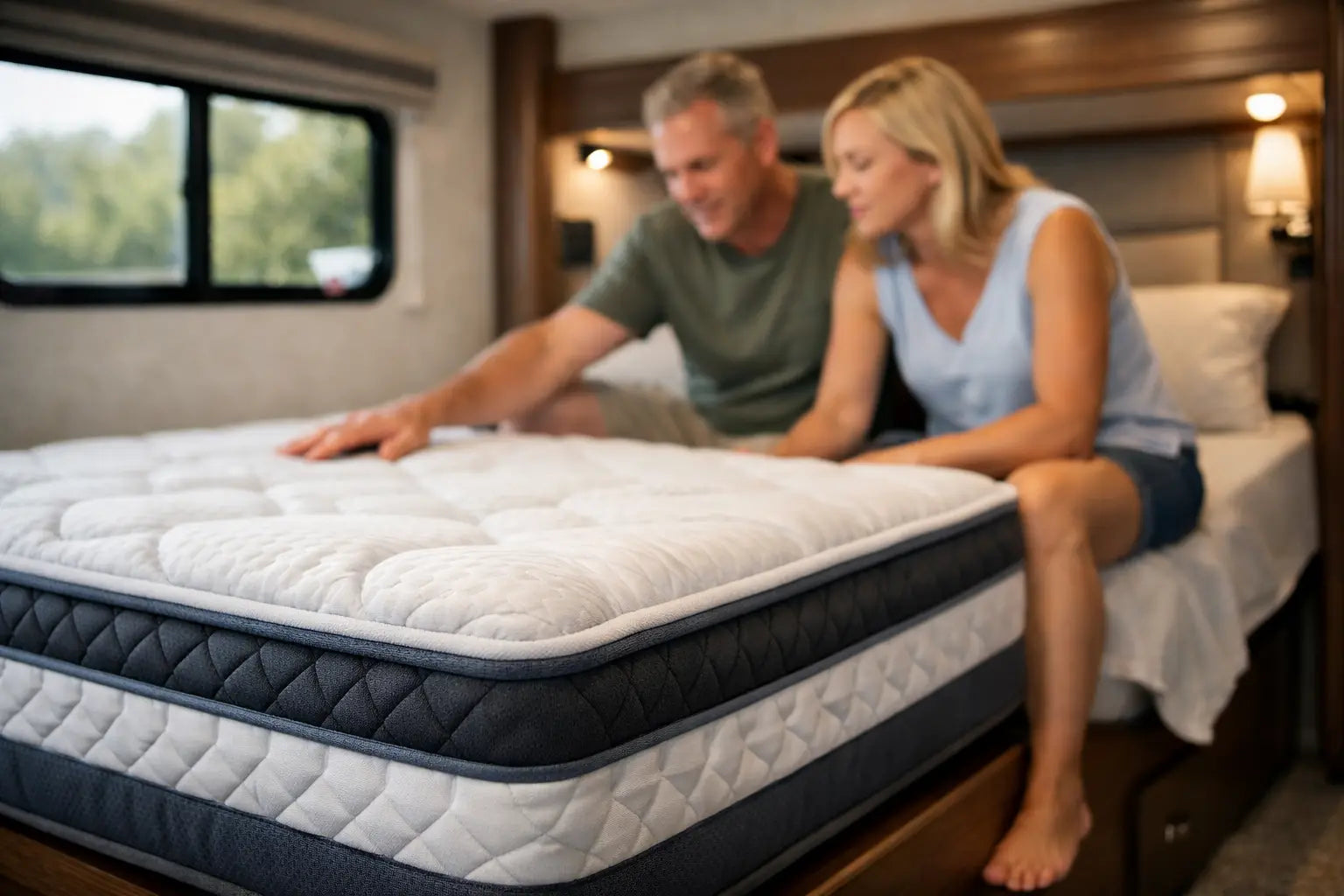
You notice it the first time you try to replace a factory bed with a standard mattress - the numbers do not line up. A mattress that fits perfectly in a house suddenly looks too long, too wide, or impossible to maneuver into the bedroom. If you have been wondering why are RV mattresses shorter, the answer is simple: RVs are built around tight layouts, moving parts, and weight limits, not standard residential dimensions.
That shorter length is not a random downgrade. It is usually a space-saving decision tied to how the coach is designed. In many RVs, trimming a few inches off the mattress makes room for walkways, cabinets, nightstands, slide mechanisms, and the curve of the front cap. The problem is that while the size makes sense for the vehicle, the stock mattress itself often does not deliver the comfort, support, or cooling most RV owners actually need.
Why are RV mattresses shorter in the first place?
The biggest reason is floorplan efficiency. Every inch inside an RV has to do multiple jobs. Designers are balancing sleeping space against bathroom clearance, wardrobe storage, kitchen footprint, and the ability to move around the bed without climbing over each other.
A residential queen is typically 60 inches by 80 inches. An RV queen is often 60 inches by 75 inches. Those five inches matter. They can create just enough clearance to open a door fully, fit a bedside cabinet, or allow you to walk past the foot of the bed. In a compact travel trailer or fifth wheel, that difference can determine whether the bedroom feels usable or cramped.
There is also the issue of vehicle shape. RV bedrooms are not always built inside neat square rooms. Many front bedrooms narrow toward the nose of the coach. Some rear layouts have corner cutouts or rounded edges. Shorter mattresses help manufacturers work around those irregular dimensions without redesigning the entire interior.
Shorter does not always mean smaller in every direction
This is where shoppers get tripped up. RV mattress sizing is not one standard category. Some RV mattresses are shorter than residential versions, but others are narrower, lighter, or custom-shaped instead. You might see an RV king, RV queen, RV full, three-quarter mattress, bunk size, or a custom size made for a specific floorplan.
That matters because replacing your mattress is not just about saying, "I need a queen." You need the exact dimensions that fit your platform and allow enough clearance around the bed. In RVs, even one or two inches can create a real problem.
A mattress that is too long may block under-bed storage from opening properly. One that is too tall can interfere with overhead cabinets or make it harder to sit up in bed. One that is too wide may rub against a slide wall or make bed-making more difficult than it already is in a tight room.
The real constraint is the room, not the mattress
Manufacturers are not shortening RV mattresses just to cut corners. They are designing around the room envelope. In many RV bedrooms, the bed platform itself is built to a non-standard size because that is the only way the overall layout works.
That is why a residential mattress swap often fails, even when the width looks close enough. Length, height, weight, and corner shape all affect fit inside an RV.
Weight matters more in an RV than at home
Another reason RV mattresses are often shorter is weight control. Every component in an RV affects towing, fuel efficiency, cargo capacity, and overall handling. A shorter mattress generally uses fewer materials, which helps reduce total weight.
Now, shorter does not automatically mean better. Many stock RV mattresses are lighter because they are built with cheaper materials and thinner profiles, not just because they are shorter. That is where buyers feel the difference at night. A lightweight mattress that lacks real support can lead to pressure points, back discomfort, poor motion isolation, and heat buildup.
A better RV mattress has to balance both sides of the equation. It needs to fit the space and respect RV weight realities, but it also needs enough quality construction to perform like a real mattress, not a temporary pad.
Slide-outs, storage lifts, and front caps change the math
If your RV has a slide-out bed, under-bed storage, or a front cap bedroom, the mattress dimensions become even more specific. Slide rooms need tight tolerances so the bed can move in and out without catching. Storage platforms often use gas struts, which can become harder to lift if the mattress is too heavy or awkwardly sized.
In front bedrooms, the nose of the RV may taper inward. That creates a common problem: a mattress can technically fit the platform but still press into the walls or limit access around the corners. In these layouts, shorter lengths and occasional corner modifications are a practical fix.
This is also why custom sizing has real value in RV sleep. Some owners do not need a completely different mattress model - they need the right dimensions in a mattress that still provides serious cooling, support, and durability.
Why stock RV mattresses still disappoint
The size is only half the story. RV mattresses are shorter for practical reasons, but the reason so many owners replace them is quality. Factory mattresses are often built to meet a price point, not to deliver strong pressure relief or long-term support.
That usually shows up in a few familiar ways. The mattress sleeps hot. It feels thin under the hips and shoulders. You notice your partner every time they move. After a season or two, the comfort layer starts flattening out.
For weekend campers, that can be annoying. For full-time RVers or long-trip travelers, it becomes a real sleep problem. Better sleep in an RV is not a luxury purchase. It affects recovery, driving comfort, energy levels, and how much you actually enjoy the trip.
How to shop when you know why RV mattresses are shorter
Once you understand why RV mattresses are shorter, the buying decision gets easier. The goal is not to force a residential mattress into an RV space. The goal is to get a mattress built for RV dimensions without settling for low-end comfort.
Start with exact measurements of the sleeping platform, not the old mattress label. Measure width, length, and available height. Check whether there are rounded corners, side cabinets, low windows, or storage hinges that affect fit. If your bed sits in a slide-out, confirm the tolerances carefully.
Then think about performance, not just size. If you sleep hot, cooling materials matter. If you have back pain or shoulder pressure, support design matters. If you travel as a couple, motion isolation matters. And if you are replacing a short queen or RV king, construction quality matters because a properly fitted mattress only solves half the problem if the comfort layer breaks down too quickly.
A premium RV mattress should feel like a real upgrade, not just a correct measurement. That means better support systems, stronger edge stability where relevant, durable materials, and temperature control that can handle changing climates.
Should you ever use a regular mattress in an RV?
Sometimes, yes - but only if the dimensions truly work. In a larger motorhome or a toy hauler with more generous room, a residential mattress may fit. Even then, you still need to consider height, weight, bed lift function, and installation clearance through the RV door and hallway.
For many owners, a residential mattress sounds easier until it arrives and turns into a fit problem. That is why RV-specific sizing is usually the safer route. It removes the guesswork and gives you a mattress designed around how RV bedrooms actually function.
The trade-off is space efficiency versus sleeping length
There is one honest downside to shorter RV mattresses: taller sleepers may notice the missing inches. If you are over six feet tall, an RV queen can feel tight compared with a standard queen. That does not mean you are stuck. It means you should be more selective about your size options and layout constraints.
Some RVs can accommodate longer models. Others cannot without sacrificing access around the bed. This is one of those areas where it depends on your floorplan and how you use the space. A couple doing occasional weekend trips may prioritize bedroom access. A full-timer who is six-foot-three may prioritize every extra inch of sleeping length.
The best choice is the one that fits your RV and supports how you actually sleep. That is where specialized RV mattress brands stand apart. Companies like Polar RV Mattress focus on the part generic mattress sellers usually miss - getting the fit right without giving up the cooling, comfort, and support people expect from a premium bed.
So, why are RV mattresses shorter? Because RVs demand tighter dimensions, smarter space use, and lighter, more adaptable components. The good news is shorter does not have to mean worse. If your current mattress is leaving you sore, overheated, or tired, the right RV-sized replacement can make your next trip feel a lot more like real rest.
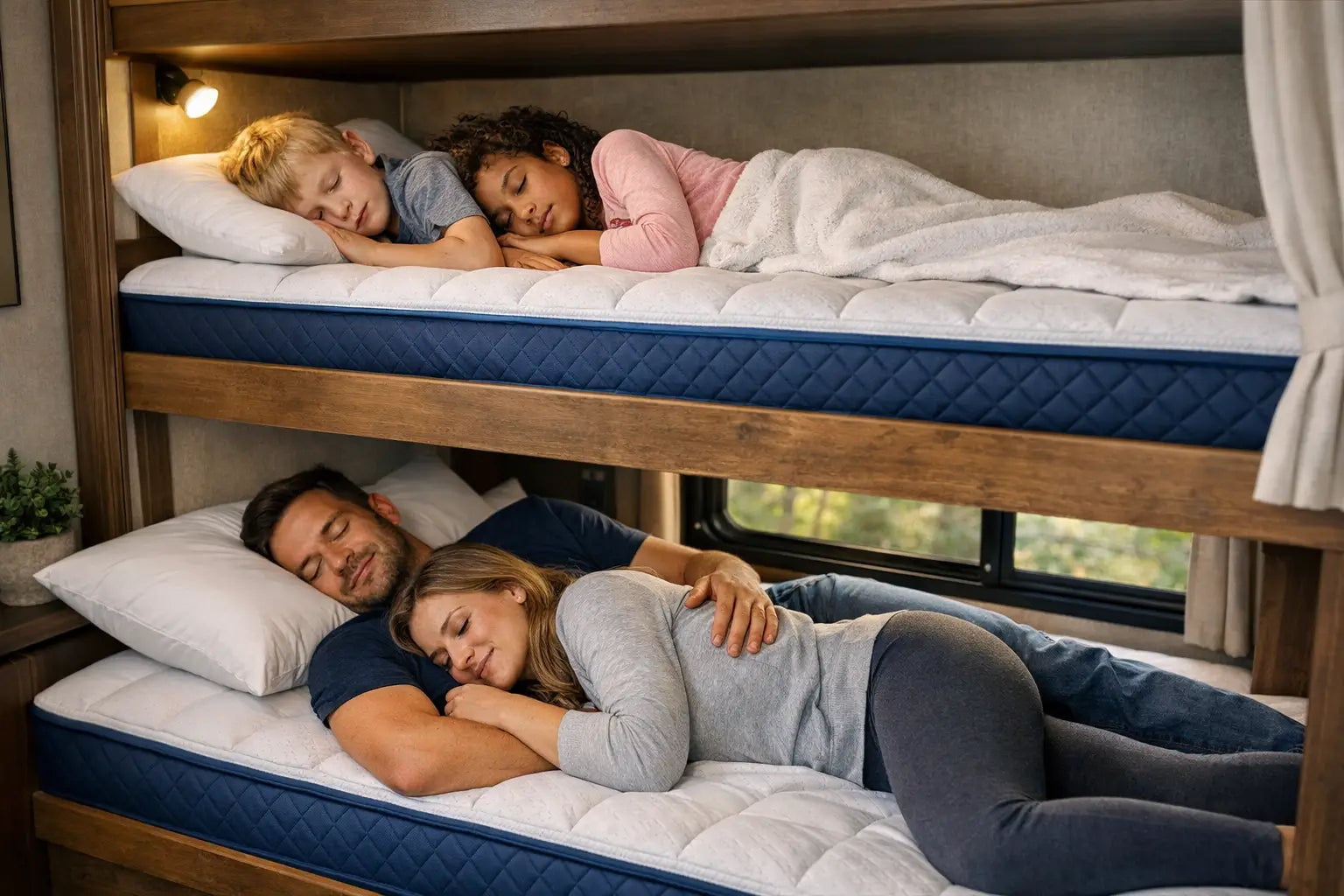
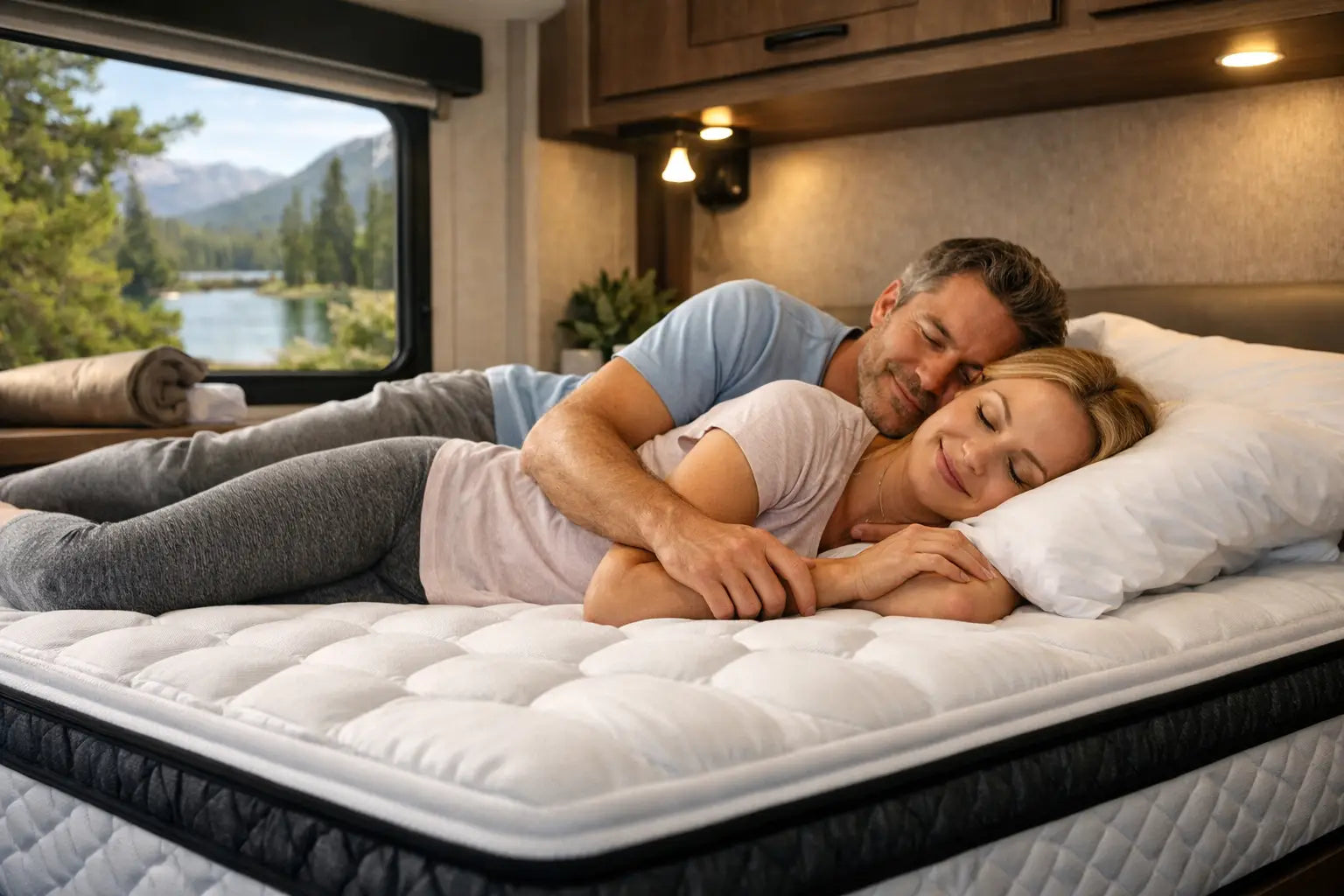
Share:
Best RV Bunk Mattress Options for Better Sleep