

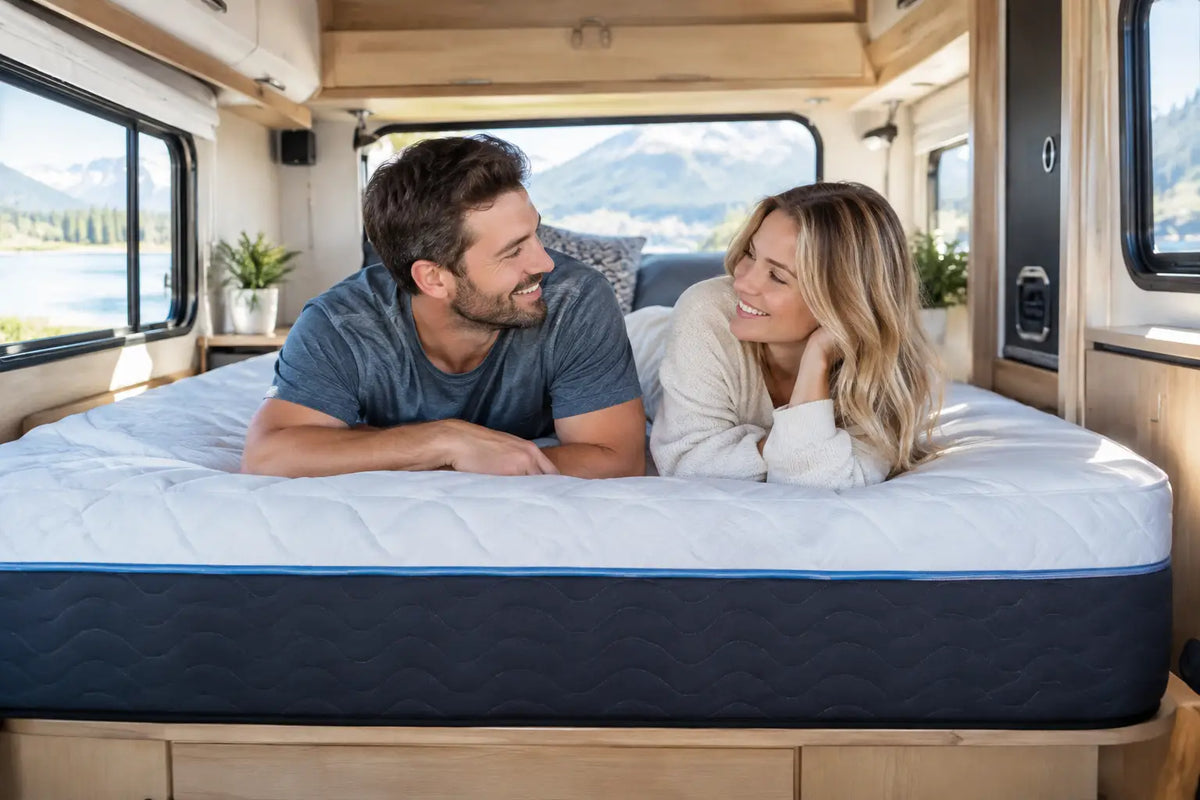
A mattress can look perfectly fine when you make the bed in your RV, then feel painfully inadequate after one hot, restless night. Thin factory mattresses often trap heat, flatten under the hips and shoulders, and transfer every movement from one side of the bed to the other. Understanding the best RV mattress materials is the fastest way to replace that compromise with sleep that actually supports your next day on the road.
The right material is not simply the softest one or the most expensive one. RV owners need to balance cooling, pressure relief, body support, motion isolation, mattress height, and the realities of a non-standard RV bed platform. A couple spending months in a fifth wheel has different needs from a family upgrading bunks for weekend trips. Still, the strongest RV mattresses tend to share one thing: they combine materials instead of asking one layer to do every job.
What Makes RV Mattress Materials Different?
An RV mattress works in a smaller, more variable sleep environment than a bedroom mattress. Temperatures can change quickly between campgrounds, ventilation may be limited, and the bed platform may sit against a wall or over storage. Add a tight bedroom slide or a raised bunk clearance, and height and flexibility matter as much as comfort.
The mattress also has to fit correctly. An RV Queen, RV King, RV Full/3/4, or bunk mattress may not match standard residential dimensions. Buying a good material in the wrong size creates gaps, pinched corners, and an awkward fit that undermines the whole upgrade.
That is why material selection should start with how you sleep and how you use your RV. If you wake hot, cooling should lead the decision. If your lower back aches after a night on the road, support construction matters more than a plush top layer. If one partner tosses and turns, look closely at motion isolation and individually responsive coils.
Best RV Mattress Materials by Sleep Need
Gel memory foam for pressure relief and motion control
Memory foam is popular because it contours around the body. It can relieve pressure at the shoulders, hips, and knees, which is especially valuable for side sleepers and travelers who wake stiff after sleeping on a thin stock mattress. It also absorbs movement well, so a partner getting up early is less likely to shake the whole bed.
Traditional memory foam has one clear drawback: it can retain heat. That does not make foam a poor choice, but it does make construction critical. Gel-infused memory foam can help disperse heat, while an open-cell foam structure allows more air movement than dense, closed foam. A breathable cover and a ventilated support layer improve the result further.
Foam-only mattresses are often lighter than coil models, which can be useful when weight is a major concern. But very soft or low-density foam can lose support over time, particularly under heavier body weights. For full-time RV use, look for foam that is part of a deliberate support system rather than a thick comfort layer sitting on weak base foam.
Latex for buoyant comfort and natural airflow
Latex feels different from memory foam. Instead of slowly hugging your body, it has a responsive, buoyant feel that makes changing positions easier. It is often a strong fit for combination sleepers who shift from side to back throughout the night.
Its open structure promotes airflow, and latex generally sleeps cooler than traditional memory foam. It is also durable and naturally resilient, meaning it resists the deep body impressions that can develop in lower-quality foam mattresses.
The trade-off is feel and cost. Latex has more pushback than memory foam, so sleepers who want a deeply cradled sensation may prefer gel memory foam. Quality latex can also increase the price of a mattress. It works best when you value responsiveness, long-term resilience, and a less heat-trapping sleep surface.
Pocketed coils for stronger support and cooler sleep
Pocketed coils are one of the most important materials in a premium RV mattress because they address two common factory-mattress failures: weak support and trapped heat. Each coil is wrapped individually, allowing it to respond more independently to the body. Your hips can receive support without forcing your shoulders into an uncomfortable position.
The open space around coils encourages airflow, making coil systems a smart foundation for people who sleep warm. They also provide a more stable, lifted feel than all-foam mattresses, which can be particularly helpful for back sleepers, stomach sleepers, and larger sleepers who need resistance under the lumbar area.
Not all coils are equal. A zoned pocketed-coil system places different support levels in different areas of the mattress, typically firmer support through the center where the hips and lower back rest. That zoning can make a noticeable difference on long trips, when a marginal mattress becomes a nightly source of fatigue.
Motion transfer in a pocketed-coil mattress is generally much lower than in an old-fashioned interconnected spring mattress. It may not be as still as dense memory foam, but high-quality pocketed coils paired with foam comfort layers give most couples an excellent balance of support and partner-friendly movement control.
Hybrid construction for the most complete upgrade
For many RV owners, hybrid construction is the best answer because it layers the strengths of several materials. A quality hybrid typically uses pocketed coils for support and airflow, then adds comfort materials such as gel memory foam, responsive foam, or latex near the surface.
This approach solves the all-or-nothing problem. You do not have to choose between contouring pressure relief and stable coil support. You can get a cooler, more breathable mattress without giving up the cushioning that side sleepers need.
A premium hybrid is especially worth considering for couples with different sleep styles. One person may need pressure relief at the shoulder, while the other needs stronger lumbar support and less sink. Zoned coils and well-designed comfort layers create a more adaptable sleep surface than a basic slab of foam.
For an even more supportive option, coil-on-coil construction uses a second coil system above the primary support coils. This creates a substantial, residential-style feel while preserving airflow and responsiveness. It is a serious upgrade for full-time RVers and anyone who refuses to treat travel sleep as second-rate sleep.
Cooling Materials Matter More Than a “Cooling” Label
A mattress is not truly cool because its cover feels cold for the first five minutes. Lasting temperature regulation depends on how heat moves through the entire mattress. Conductive cooling materials can pull heat away from the body at the surface, while gel foams, breathable transition layers, and coils help prevent it from building up below.
Pay attention to the full stack. A cool-to-the-touch cover over thick, dense foam can still sleep warm. By contrast, a mattress with a conductive cover, breathable comfort foams, and a pocketed-coil core has multiple pathways for heat to escape.
This is particularly relevant in an RV, where nighttime air conditioning may cycle off, shore power may be limited, or a warm climate may make the bedroom feel stuffy. Better mattress airflow does not replace proper ventilation, but it can stop the bed itself from becoming the heat source.
Don’t Overlook the Cover, Edge Support, and Height
The cover is not just a cosmetic layer. A breathable, stretch-knit cover allows the comfort materials underneath to respond properly and can improve surface airflow. Covers with cooling fibers or conductive technology add value when they are supported by breathable layers below them.
Edge support matters in RV bedrooms because usable floor space is limited. You may sit on the side of the bed to get dressed or sleep close to the edge to make room for a partner, child, or pet. Reinforced perimeter coils or firmer edge foam help prevent that unstable roll-off feeling.
Height deserves the same practical attention. A thick residential mattress may be comfortable but create clearance problems in a bunk, slide-out, or tight bedroom. Measure the platform, surrounding cabinets, and available headroom before ordering. The goal is a mattress that delivers premium comfort without making everyday RV living harder.
How to Choose the Right Material Mix
Start with your main complaint. Hot sleepers should prioritize conductive cooling features, breathable foam, and coils. Side sleepers should look for pressure-relieving comfort layers over responsive support. Back and stomach sleepers usually benefit from firmer, zoned coil support that keeps the hips from sinking too far.
Couples should favor pocketed coils and memory foam or other motion-dampening layers. Full-time RVers should place durability high on the list, since nightly use exposes weak foams and basic spring systems quickly. And every buyer should confirm the exact RV mattress dimensions before choosing a model.
Polar RV Mattress builds its RV-specific designs around this kind of material balance: cooling comfort layers, pressure relief, and stronger support systems sized for real RV platforms rather than forcing a residential mattress into an RV bedroom.
The best choice is the material combination that fixes the sleep problem you actually have, fits your RV precisely, and still feels supportive after weeks on the road. A well-built mattress turns the place you park each night into a place you can genuinely recover.

Share:
Guide to RV Mattress Ventilation for Better Sleep
RV Mattress Topper Review: Is It Enough for You?