

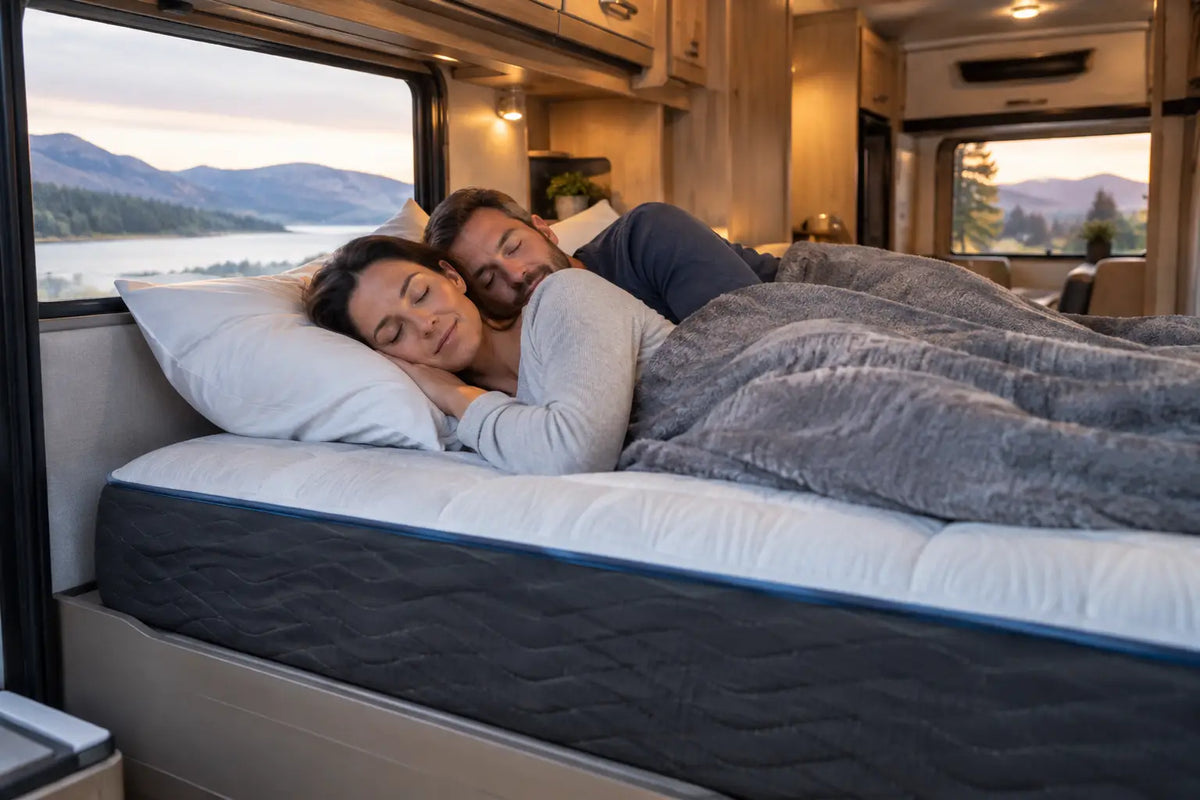
A full-time RV lifestyle can put you beside a mountain lake one week and under desert stars the next. It can also leave you waking at 3 a.m. because the mattress traps heat, the trailer rocks when your partner turns over, or a thin factory bed has your hips and lower back protesting by morning. This full time RV sleep guide focuses on the upgrades and habits that make rest reliable, not accidental.
Sleep is not a minor comfort issue when your RV is home. It affects how safely you drive, how much you enjoy moving days, and whether your favorite campsite feels restorative or just cramped. The good news is that better RV sleep usually comes down to a few practical decisions: start with the right mattress, manage your sleeping environment, and build routines that work even when your view changes every few days.
Start With the Mattress You Actually Need
Most factory RV mattresses are built to meet a price point and fit a floor plan. They are often thin, low-density, poorly ventilated, and short on the support needed for nightly use. That may be acceptable for a few weekends each summer. It is rarely enough for full-time living.
A mattress topper can soften an overly firm surface, but it cannot repair sagging foam, weak support, or a bed that is too hot. If you wake with pressure at your shoulders or hips, lower-back stiffness, or the feeling that you rolled toward the middle overnight, the mattress itself is usually the first problem to solve.
For most full-timers, support should be the first filter. Side sleepers generally need enough contouring to relieve pressure at the shoulder and hip, while still keeping the waist supported. Back sleepers need more even lumbar support. Stomach sleepers often do better on a firmer feel that prevents the pelvis from sinking too far. Couples also benefit from strong motion isolation, especially in compact RV bedrooms where every movement is more noticeable.
A quality RV mattress should deliver residential-style comfort without ignoring the realities of a mobile home. Zoned pocketed coils can support heavier areas of the body while reducing pressure elsewhere. Gel memory foam adds contouring, and stronger coil systems improve stability and durability. These details matter when the bed is used 365 nights a year rather than only on occasional trips.
Get RV Mattress Sizing Right Before You Buy
“Queen” is not always a queen in an RV. RV Queen, RV King, RV Full/3/4, and bunk sizes can differ from standard residential dimensions, sometimes by several inches. Those inches determine whether a mattress clears a wardrobe, allows a slide-out to close, or leaves room to walk around the bed.
Measure the existing mattress, not just the platform. Take the length, width, and height, then check for rounded corners, wall cutouts, raised wheel wells, and overhead cabinets. Measure the clearance above the mattress too. A thicker bed may feel better, but it should not make it difficult to sit up, access storage, or close a slide.
It also helps to inspect the foundation. A solid plywood deck can limit airflow under a foam mattress, which may contribute to heat and moisture buildup. Slatted bases should have secure, evenly spaced slats and adequate center support. If the platform flexes or squeaks, address that before blaming the new mattress.
The right fit is more than a tidy appearance. A mattress that sits flat and fully supported will perform better, last longer, and make a small bedroom feel easier to live in.
Make Cooling a Year-Round Sleep Priority
RVs heat up quickly. Thin walls, direct sun, limited air circulation, and a smaller sleeping area can turn a warm night into a restless one long before the thermostat looks alarming. Stock mattresses commonly retain heat because they use basic foam with little airflow or temperature regulation.
Cooling starts at the mattress surface. Materials designed to pull heat away from the body and breathable coil systems can make a meaningful difference. Unlike a dense all-foam bed, a hybrid design allows more air to move through the mattress while retaining the pressure relief many sleepers want.
Your bedding choices matter just as much. Use breathable sheets and avoid stacking heavy synthetic blankets unless temperatures truly call for them. A lightweight quilt paired with layers is easier to adjust than one thick comforter. If you rely on a fan, aim it across the bed rather than directly at your face. That creates circulation without the dry, chilled feeling that can interrupt sleep.
Parking strategy is part of temperature control too. In warm weather, shade is valuable, but so is airflow. Open the right windows, use roof ventilation safely, and close blinds before afternoon sun heats the bedroom. In colder climates, balance ventilation with moisture control. Condensation is not merely annoying - it can create a damp sleeping environment and affect comfort over time.
Reduce Movement, Noise, and Light
An RV is not a fixed house. A dog jumping down, a partner getting up early, wind moving through the rig, or a nearby generator can all become part of the sleep environment. You cannot eliminate every disruption, but you can reduce the ones inside your control.
For couples, motion isolation is worth prioritizing. Pocketed coils move more independently than connected coil systems, and responsive comfort layers can help prevent one person’s movement from traveling across the entire bed. This is especially valuable if one partner sleeps lightly or has a different schedule.
Leveling also deserves more attention than it gets. Even a slight head-down or side-to-side angle can create discomfort, reflux, or the sensation of sliding all night. Take an extra few minutes to level the RV before setting up camp. If the site is noisy, choose the bedroom side of the rig carefully when possible, use window coverings, and run a steady fan or white-noise source to mask irregular sounds.
Light is another frequent culprit. Campground lamps, early sunrise, and passing headlights can enter through RV window coverings more easily than expected. Add blackout coverage where needed, particularly around the bed. The goal is not a perfectly silent, pitch-black room at every stop. It is a predictable sleep cue your body recognizes.
Build a Full Time RV Sleep Routine That Travels Well
Travel days often wreck sleep because they push dinner late, add stress, and keep the mind active after parking. A routine gives your brain a repeatable off-ramp, even when the campsite, climate, and schedule have changed.
Keep the final hour before bed simple. Dim the lights, put away route planning and campground research, and avoid doing major RV maintenance at night unless it is urgent. A short walk, a shower, light stretching, or reading can help signal that the day is over. The specific habit matters less than repeating it consistently.
Be realistic about caffeine and alcohol as well. Coffee can be part of the morning ritual, but late-day caffeine often hits harder when you are tired from driving. Alcohol may make you sleepy initially, yet it can fragment sleep later in the night. If you are waking often, test small changes before assuming the mattress is the only cause.
On travel days, protect the bed from becoming a catch-all storage zone. Bags, laundry, tools, and pet supplies tend to land there during setup. Clearing the bed before dinner makes bedtime feel less like another task. It also prevents clutter from turning a compact bedroom into a stressful space.
Know When an Upgrade Is the Smart Move
A mattress replacement is justified when discomfort follows you from campground to campground, when you sleep better in a hotel than in your own RV, or when the current bed shows visible sagging, permanent body impressions, or edge collapse. Do not wait until the mattress is completely unusable. Chronic poor sleep has a way of making every other part of RV life feel harder.
Choose based on your body, your climate, your sleep position, and your RV’s exact dimensions. The best RV mattress for cooling, comfort, and support is not necessarily the softest or the thickest. It is the one that fits the platform correctly, keeps your spine aligned, limits pressure points, and stays comfortable when the temperature shifts.
Polar RV Mattress is built around those RV-specific needs, with dedicated sizes and premium constructions designed to replace the compromises common in factory beds. More importantly, any mattress you choose should give you enough time to evaluate it through normal travel, not just one unusually good or bad night.
A great campsite is easier to appreciate after real rest. Make the bed a serious part of your full-time setup, then give yourself a consistent place to recover no matter where you park next.
Share:
A Travel Trailer Mattress Upgrade Example That Works
Guide to RV Mattress Ventilation for Better Sleep