

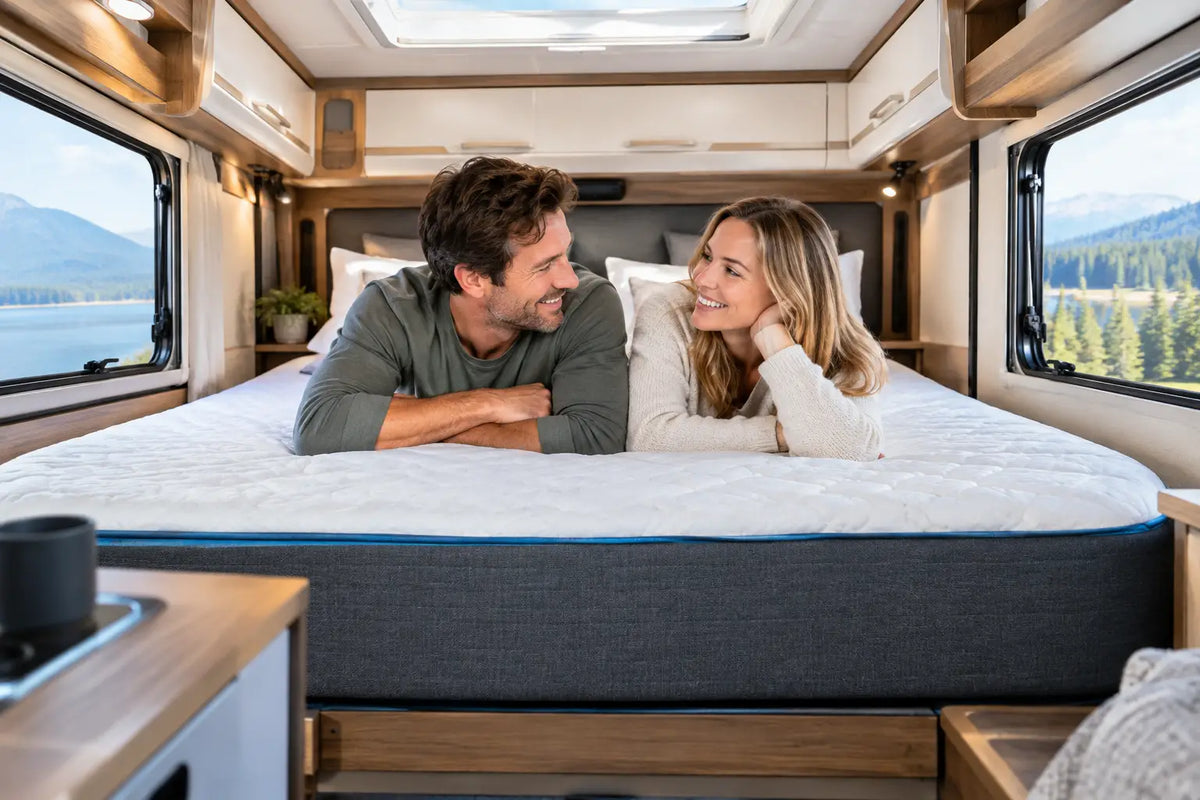
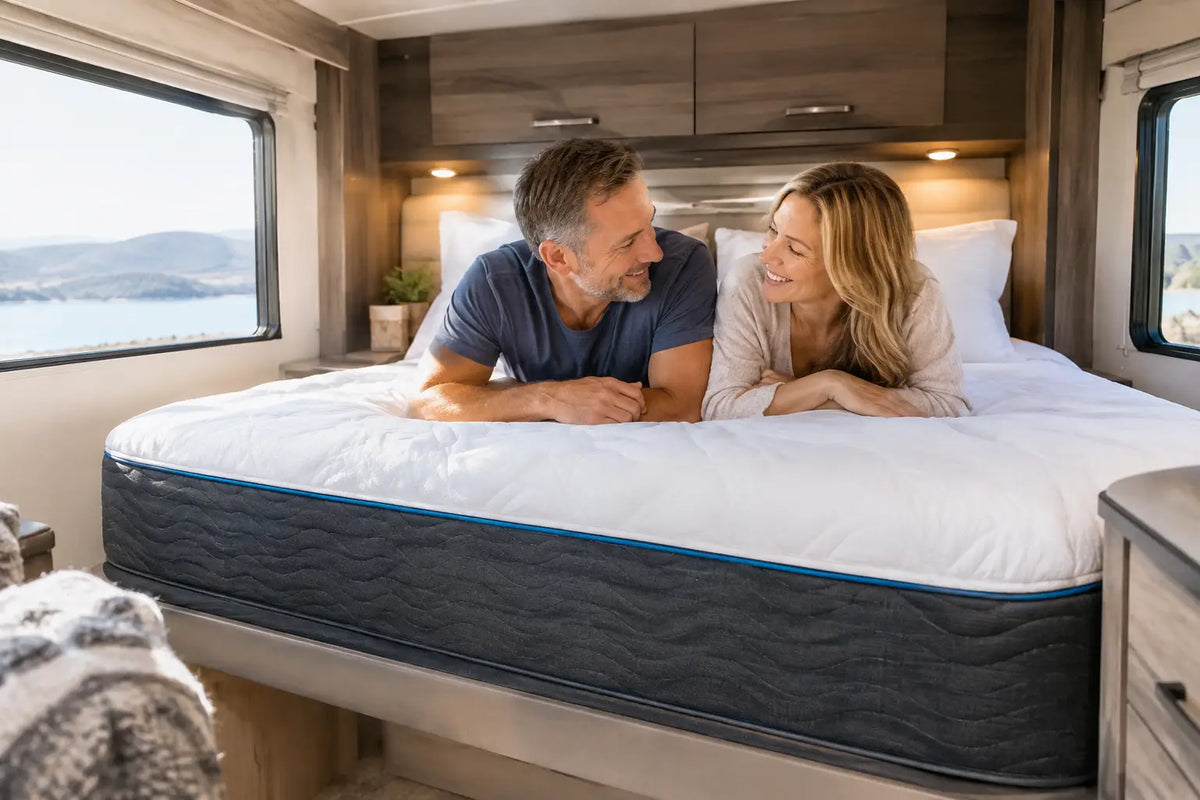
A motorhome bed can look like a standard queen from the doorway, then reveal its real character when you try to replace the mattress. Rounded corners, tight walkways, slide-out clearances, and shortened dimensions all change the equation. So, do hybrid mattresses fit motorhomes? Yes, many do - but only when the mattress size, profile, weight, and access route match the space you actually have.
A hybrid mattress can be a major step up from a thin factory RV mattress. It combines foam comfort layers with a coil support system, giving many travelers better pressure relief, cooler sleep, and less partner movement. The mistake is assuming any residential hybrid labeled “queen” will fit because your motorhome brochure says it has a queen bed.
Do Hybrid Mattresses Fit Motorhomes? Usually, With the Right Size
The word “queen” is not enough information. A standard residential queen is typically 60 by 80 inches. An RV queen is commonly 60 by 74 or 75 inches. Those missing five or six inches matter when the mattress sits against a rear wall, under cabinets, or inside a slide.
Motorhomes also use RV king, short king, full/three-quarter, and bunk dimensions that differ from household mattress sizes. Some beds are slightly narrower or shorter than their name suggests. Others have cut corners or a radius shape that lets you walk around the foot of the bed. A rectangular mattress may physically fit on the platform but block a drawer, scrape a cabinet, or make the bedroom frustrating to use.
A hybrid will fit well when it is built to the correct RV dimensions and shape. A standard hybrid may still work if your platform is truly standard-size and there is enough clearance around it. Measure first, then shop. That is the difference between a sleep upgrade and an expensive return problem.
Four Fit Checks Before You Order
Before choosing firmness, cooling features, or coil count, confirm these practical details. They determine whether the mattress belongs in your motorhome.
- Measure the platform, not the old mattress. Remove bedding and measure the usable length and width at the base. Take measurements in several places, especially if walls are not perfectly square. Record any corner cuts, wheel-well bumps, hinged sections, or raised lips around the platform.
- Measure vertical clearance. A hybrid is often thicker than the RV mattress it replaces. Check cabinet doors, reading lights, windows, headboard shelves, and slide-out clearance. A 12-inch mattress may provide excellent comfort but can be too tall for a bed that was designed around a 6-inch factory mattress.
- Check how the mattress gets inside. A mattress may fit the bed yet be difficult to move through a narrow motorhome entry, hall, or bedroom door. Bed-in-a-box hybrids simplify delivery and installation because they arrive compressed, but plan the route before opening the package.
- Confirm the foundation can support it. Inspect plywood decks, slatted frames, lift-up storage bases, and slide-out mechanisms. A quality hybrid is heavier than basic foam, so the platform should be solid, level, and properly supported.
Why Mattress Height Matters More in a Motorhome
Height is one of the most overlooked RV mattress specifications. In a house, a thicker mattress mostly changes the look of the bed. In a motorhome, it can change how the entire bedroom functions.
A taller mattress raises the sleeping surface, which can be welcome for people with sore knees or hips. It also gives manufacturers room for more substantial comfort layers and coil systems. But extra height can cover a headboard outlet, make bedside shelves less useful, or prevent an overhead cabinet from opening fully.
For most motorhomes, a profile around 10 to 12 inches offers a strong balance of comfort and clearance. There are exceptions. A large Class A with a generous rear bedroom may handle a thicker design easily, while a compact Class B, Class C, or motorhome with a slide-out bed may need a lower-profile option.
Do not judge profile only by the mattress label. Measure from the platform to the lowest obstacle above and around the bed. Leave room for fitted sheets and normal movement rather than planning for a mattress that clears by a fraction of an inch.
Weight Is a Real Trade-Off, Not a Reason to Avoid Hybrids
Hybrids weigh more than many all-foam mattresses because coils add steel and structure. For some RV owners, that immediately raises concerns about cargo capacity and slide mechanisms. Those concerns are reasonable, but they need context.
The relevant question is not whether a hybrid is heavier. It is whether the difference between your current mattress and your new one affects your motorhome’s available carrying capacity or bed base. In a larger motorhome with a fixed bed, the added weight is often modest compared with the benefit of stronger support and improved durability. In a smaller rig, a lift-up storage bed, or a slide-out setup, it deserves closer attention.
Check your owner’s manual for bed and slide specifications if available. Inspect the platform for sagging or weak hinges. If you regularly travel close to your weight limit, weigh the old mattress before disposal and compare it with the new mattress specification. A few minutes of planning is better than guessing.
What a Hybrid Changes About RV Sleep
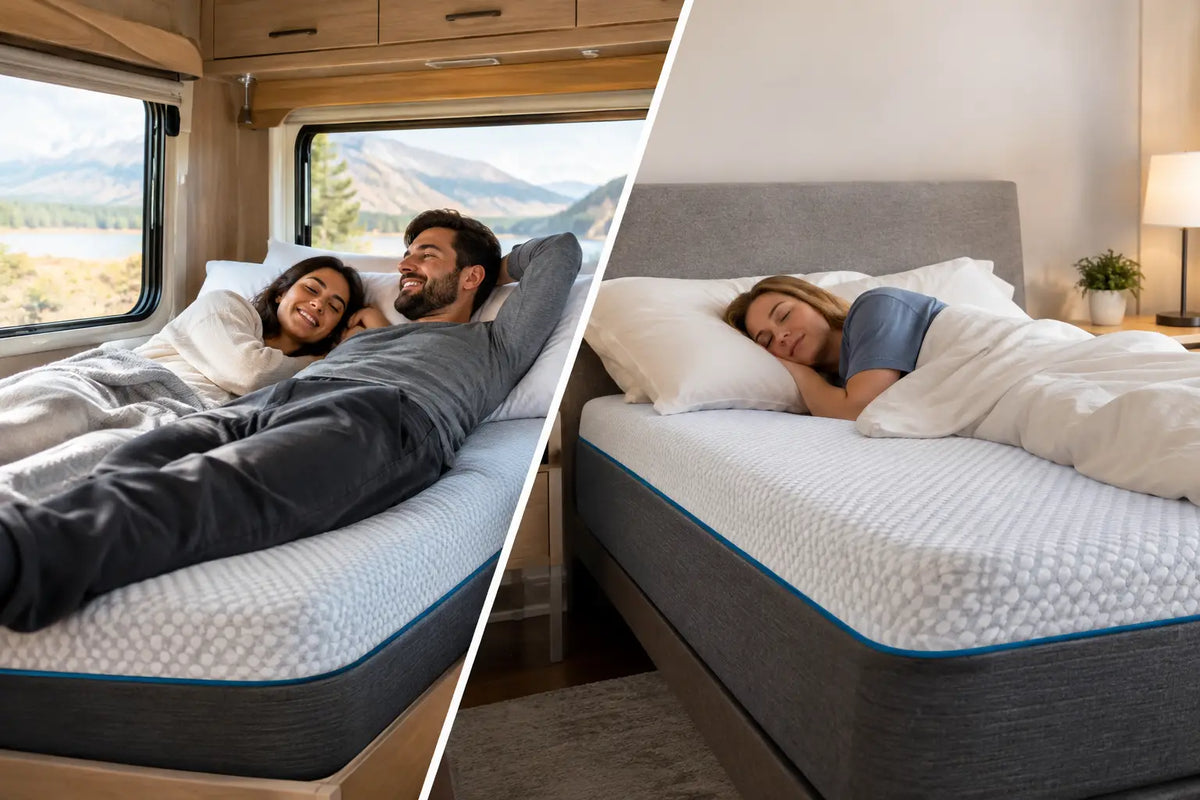
A well-built hybrid solves several common complaints about stock RV mattresses. The coil system supports the body more evenly than a thin slab of basic foam, particularly through the lower back and hips. Comfort foams cushion shoulders and pressure points. Pocketed coils can also reduce motion transfer, which matters when one person gets up early or shifts positions during the night.
Cooling is another meaningful advantage. Motorhome bedrooms can retain heat, especially when the bed is near the rear wall or surrounded by cabinetry. Foam-only mattresses may hold more heat around the body, depending on their construction. Hybrids generally allow more airflow through the coil core, and cooling foams or conductive cover materials can improve the sleeping surface further.
Still, not every hybrid is equally suited to RV use. A mattress with weak edge support can feel unstable when you sit to put on shoes in a tight bedroom. An overly plush top may make it harder to change positions. A mattress designed for a fixed residential foundation may not perform as intended on widely spaced slats or an uneven deck.
Look for a design with durable support, meaningful edge reinforcement, and layers chosen for temperature control rather than marketing labels alone. Zoned coils can be especially useful for travelers who need firmer support through the lumbar area with gentler cushioning at the shoulders.
Choose an RV-Specific Hybrid When Dimensions Are Unusual
If your motorhome uses a true residential queen or king and the bedroom has adequate clearance, a standard-size hybrid can be a practical choice. But RV-specific sizing removes much of the uncertainty for short queens, RV kings, three-quarter beds, bunks, and custom shapes.
This matters because forcing a too-long mattress into a short platform does not create extra comfort. It creates a bowed edge, compressed foam, and a poor fit that can shorten the life of the mattress. Settling for a too-small mattress is not better. Gaps along the sides invite lost pillows, poor edge stability, and an unfinished feel.
Polar RV Mattress is designed around the dimensions and space limitations found in RVs, pairing RV-specific fits with cooling foam and supportive coil options. For motorhome owners replacing a factory mattress, that specialized fit is often just as valuable as the comfort materials inside it.
A Better Way to Make the Decision
Start with a simple sketch of your bed platform, including every measurement and obstacle. Then decide the maximum mattress height your space can accept, evaluate the support underneath, and confirm the route from the motorhome door to the bedroom. Only after those details are clear should you compare feel and construction.
If you sleep hot, prioritize airflow and cooling materials. If back pain is the problem, focus on support and a firmness level that keeps your spine from dipping. If you share the bed, pocketed coils and motion isolation should move higher on the list. The right hybrid is not simply the thickest or softest one. It is the one that fits your motorhome precisely and lets you wake up ready to enjoy the miles ahead.

Share:
How to Reduce Partner Movement in an RV Bed
RV Mattress Warranty Comparison That Protects You