

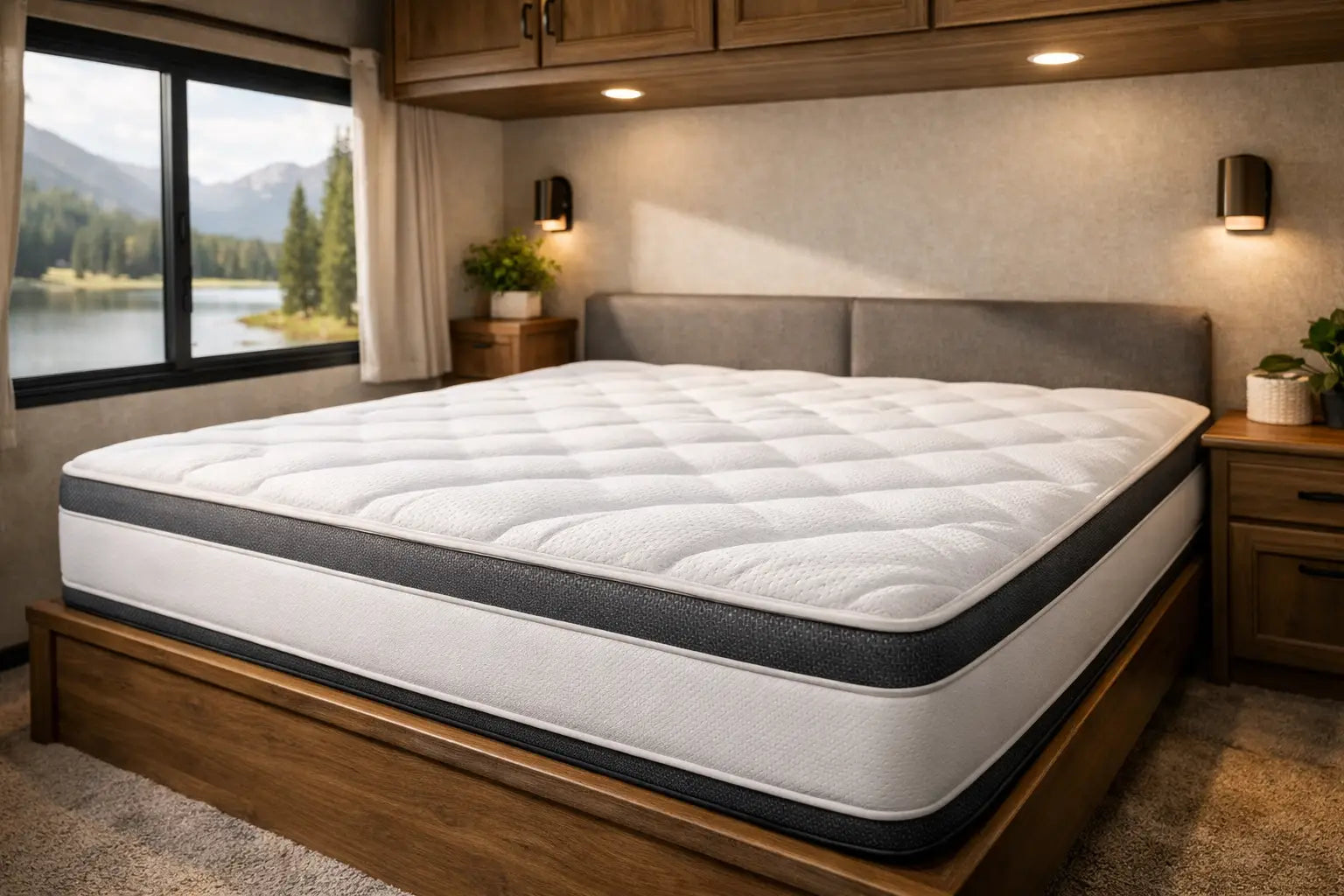
You notice a bad mattress faster in an RV than you ever do at home. In a smaller sleep space, with more temperature swings and less forgiveness in the base underneath, a weak bed shows itself quickly. That is why choosing the right rv king mattress is not just about getting a bigger size. It is about getting the right fit, the right support, and the right construction for life on the road.
A lot of RV owners start with the same assumption: king means spacious, so any king mattress should work. Usually, it does not. RV sizing is its own category, and that is where most buying mistakes happen. If you want residential comfort in an RV, you need to think beyond width and length and start looking at how the mattress is built for mobile living.
Why an RV king mattress is different
An RV king mattress is designed around the realities of RV floorplans, bed platforms, and weight limits. In many campers and motorhomes, the sleeping area is tighter than it appears on paper. You may have less walk-around space, corner cutouts, storage lifts, or odd platform dimensions that make a standard king a poor fit.
That matters because a mattress that is even slightly oversized can interfere with under-bed storage, press into cabinetry, or make it hard to move around the room. A mattress that is undersized creates gaps, shifts during travel, and looks unfinished. In an RV, correct sizing is not a minor detail. It is part of how the bedroom works.
There is also the comfort difference. Factory RV mattresses are often thin, heat-trapping, and underbuilt. They are made to meet a price point, not to deliver serious pressure relief or long-term support. If you are waking up with hip pain, shoulder pressure, lower back tightness, or feeling every movement from your partner, the problem is usually not your trip. It is your mattress.
What to look for in an rv king mattress
The best RV king mattress for cooling, comfort, and support gets the fundamentals right first. Size is step one, but construction is what determines whether the upgrade is worth it.
Accurate RV sizing
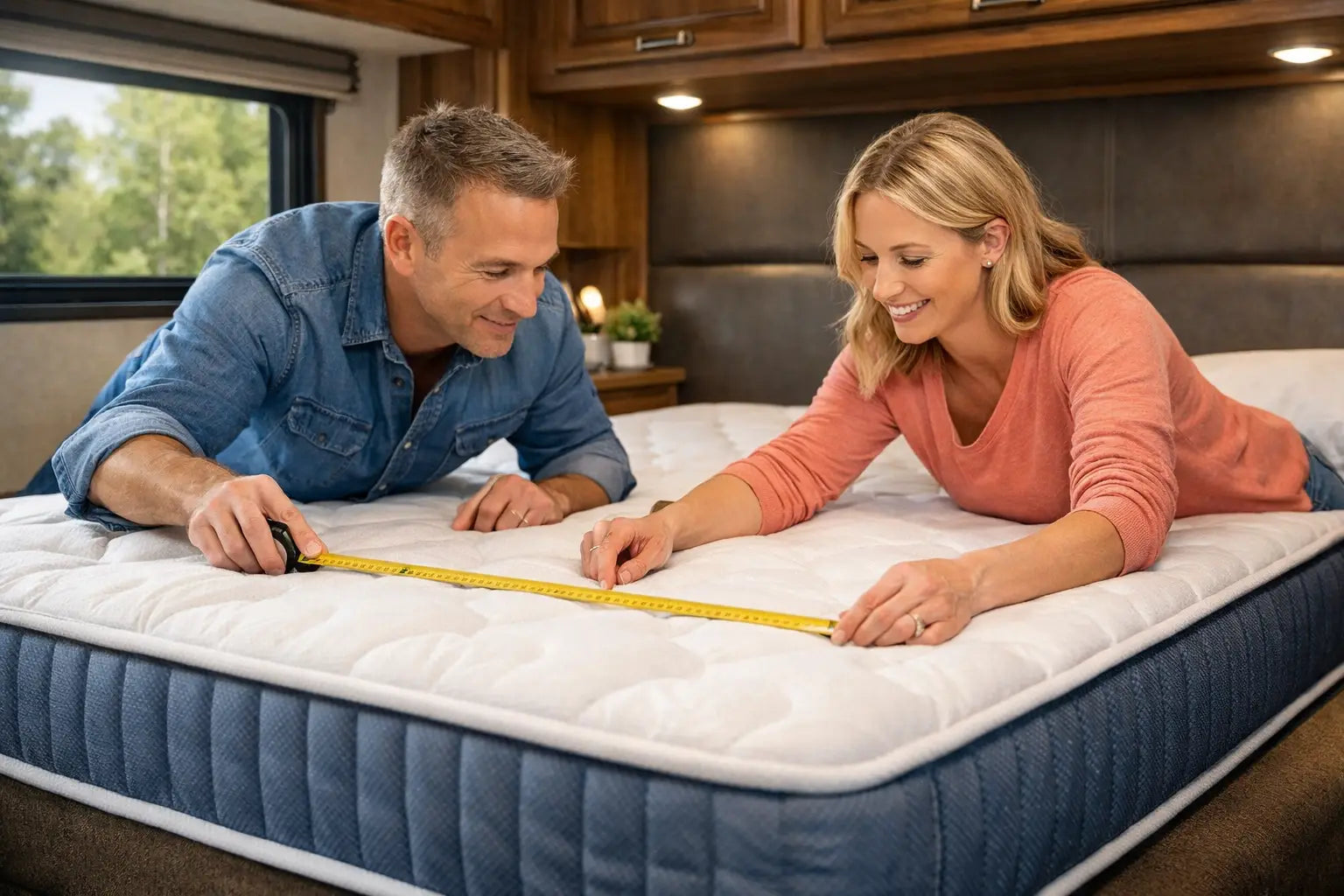
Before you compare materials or firmness, measure the sleeping platform itself. Do not rely only on the label from the original mattress. RV manufacturers are not always consistent, and previous owners sometimes replace the mattress with something close enough rather than something correct.
Measure width, length, and height clearance around the bed. If the platform sits near cabinets or windows, check those spaces too. If the bed lifts for storage, think about total mattress weight and flexibility. A luxury mattress that fits the dimensions but makes the platform hard to lift may not be the right choice for your setup.
Real support, not just foam height
A taller mattress is not automatically a better one. Support comes from how the interior works together. High-quality coils, zoned support, and dense comfort layers usually outperform basic all-foam builds, especially for couples and side sleepers.
If you spend long stretches in your RV or travel full-time, support should be a top priority. Roads are hard on bodies. Hiking, driving, setting up camp, and sleeping in new conditions every night all add up. A mattress that keeps your spine aligned and reduces pressure points can change how you feel the next day.
Cooling that holds up overnight
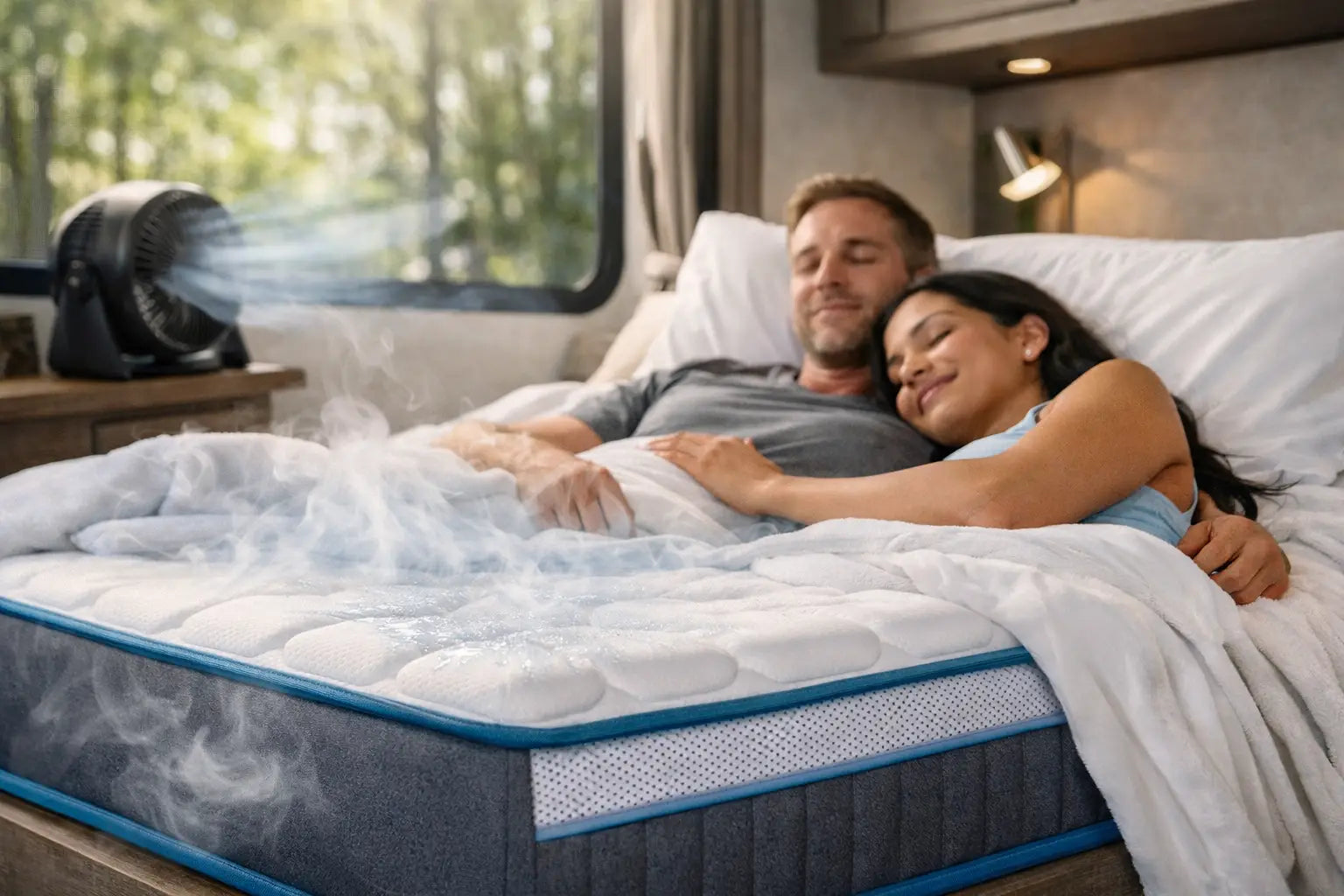
Overheating is one of the most common RV sleep complaints, and for good reason. RVs can retain heat, airflow is limited compared to a house, and many stock mattresses trap warmth badly. If you sleep hot, look for materials designed to move heat away from the body rather than simply cushion it.
Conductive cooling covers, breathable coil systems, and gel-infused foams can all help. The key is balance. A mattress should relieve pressure without surrounding you in dense, heat-holding foam. Cooling is not a luxury feature in an RV. For many sleepers, it is the difference between restless sleep and real recovery.
Motion isolation for couples
If one person gets up early, shifts positions often, or climbs in after a late drive, motion isolation matters. This is where better coil systems and well-designed comfort layers earn their keep. You want enough responsiveness to move comfortably, but not so much bounce that every turn transfers across the bed.
For couples sharing a smaller RV bedroom, that trade-off matters more. There is less physical separation, less room to adjust, and fewer ways to avoid partner disturbance. A well-built hybrid mattress usually performs better here than a cheap innerspring or a low-density foam bed.
Common mistakes RV owners make
The biggest mistake is buying a standard king and hoping it will be close enough. Sometimes it works. Often it creates avoidable problems with fit, airflow, and access around the bed.
Another mistake is choosing based only on firmness. Firmness matters, but it is personal. A mattress can feel plush on top and still provide strong support underneath. It can also feel firm initially and still fail to support the heavier parts of the body correctly. Construction tells you more than a simple soft-medium-firm label ever will.
The third mistake is focusing only on short-term price. A bargain mattress that sags early, sleeps hot, or leaves you sore is expensive in all the ways that count. RV owners who upgrade usually do it because they are tired of compromising. It makes more sense to buy for sleep performance than to replace a poor mattress twice.
Which construction works best for an RV king mattress?
There is no single answer for every sleeper, but there is a clear difference between basic and premium builds.
All-foam mattresses can work well for some RV owners, especially if weight and flexibility are priorities. They are often easier to maneuver into tight spaces and can feel very pressure relieving at first. The trade-off is that lower-quality foam tends to hold heat and lose shape faster, especially under regular use.
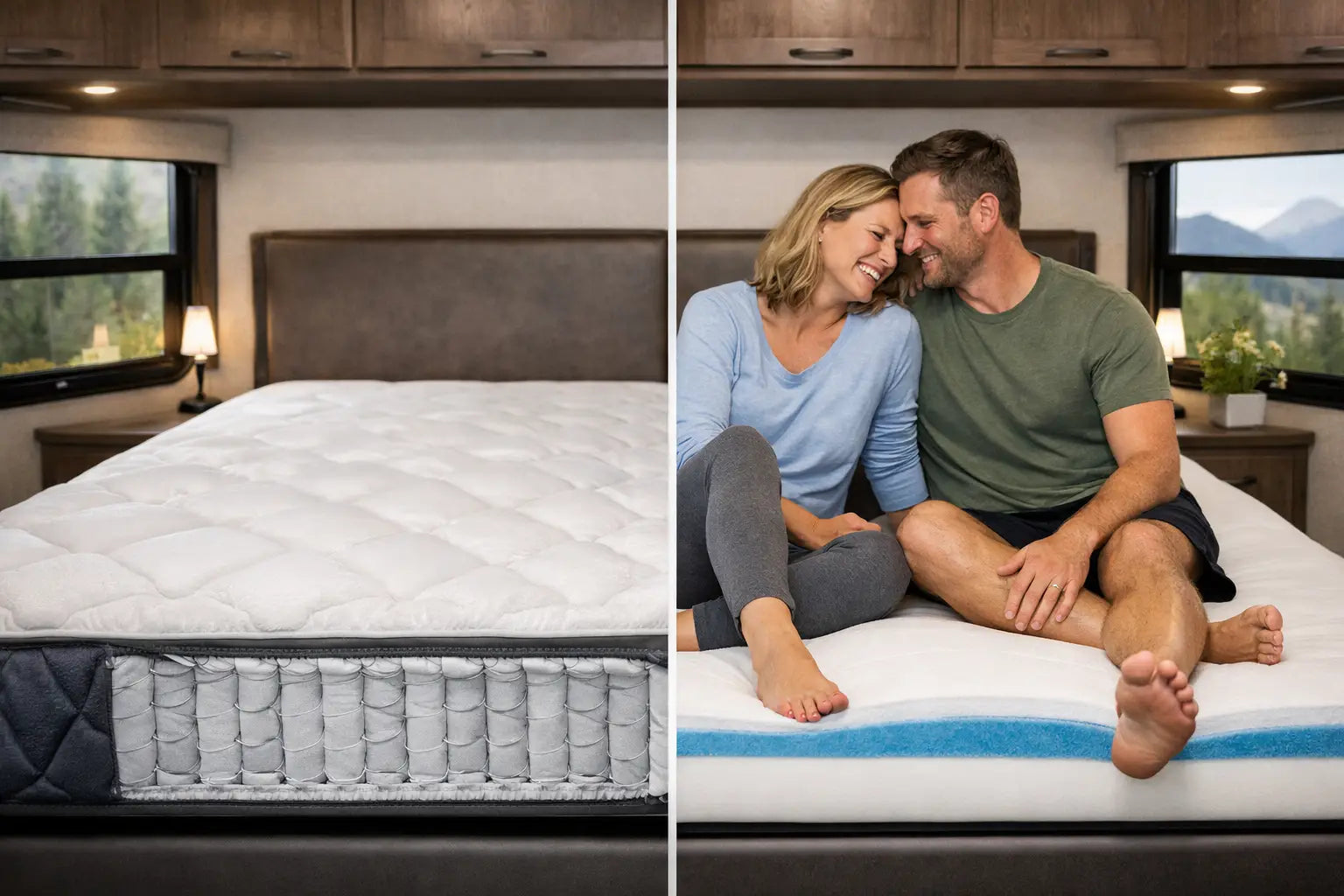
Hybrid mattresses are often the stronger choice for people who want a residential-style upgrade. A hybrid combines foam comfort layers with coil support, which usually means better airflow, stronger edge support, improved durability, and easier movement in bed. For many RV king shoppers, that combination lands in the sweet spot.
More advanced builds, including zoned coils or coil-on-coil systems, go a step further. These designs target support where your body needs it most and help the mattress maintain structure over time. If you are moving from a stock RV mattress, the difference is immediate.
How thick should an RV king mattress be?
Thickness depends on your RV layout as much as your comfort preferences. In general, a thicker mattress can offer deeper comfort layers and stronger support, but only if your space allows it.
If your bed sits under cabinets or near a slide wall, too much height can make the sleeping area feel cramped. It may also affect how easy it is to sit up in bed or change sheets. On the other hand, going too thin usually brings you back to the same problems you wanted to solve in the first place - pressure points, poor support, and a flatter feel.
A good target is the thickest, most supportive mattress your RV can comfortably accommodate without compromising access or function. That is why expert sizing guidance matters. It removes guesswork before you buy.
When custom sizing makes sense
Not every RV bedroom follows a clean standard. If your mattress platform has unusual dimensions, corner trims, or tight clearances, custom sizing may be the smartest move.
This is especially true for older RVs, remodeled units, and certain luxury coaches where the original bed footprint does not match common replacement sizes. A custom mattress costs more than a generic option, but it can save you from fit issues that never really go away. When the bed is the main place you recover during travel, precision is worth paying for.
The buying decision comes down to sleep quality
A good RV mattress should make your travel life easier, not force another compromise. That means cool sleep when the night stays warm, enough pressure relief to wake up without soreness, and enough support to keep your body aligned through the night. It also means a fit that works with your RV, not against it.
For shoppers who are serious about replacing a disappointing factory bed, a specialized brand like Polar RV Mattress has a clear advantage. RV sizing expertise, better cooling materials, stronger support systems, and a long trial window reduce the risk and raise the standard.
If you are shopping for an RV king mattress, think past the label and focus on performance. The right one should fit your space, support your body, and hold up trip after trip. Better sleep on the road is not a bonus feature. It is part of traveling well.
Share:
RV Mattress vs Regular Mattress
How to Measure RV Bed the Right Way